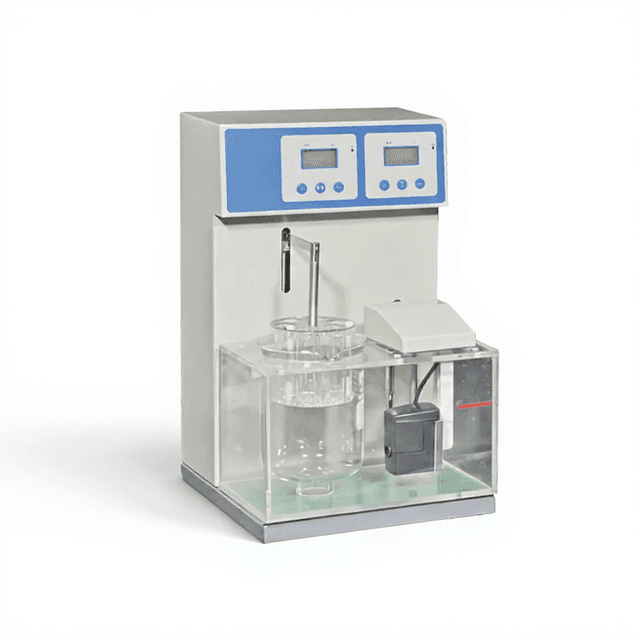
Desktop PDMS Cutting Machine
Benchtop cutting system for precise PDMS processing in microfluidics fabrication and soft lithography applications.

Louise Corscadden, PhD
Director of Science · ConductScience
Ask Louise about Desktop PDMS Cutting Machine fit, setup, configuration, or quote prep.
Already working with us? Sign in to connect this with My Scientist.
Key Specifications
Full details →- Model fit
- Configured during quote
- SKU family
- WHM-0045
- Shipping box
- 200.0 x 150.0 x 150.0 cm
- Ordering
- Online checkout and quote request available
- Category
- Lab Equipment
- Build notes
- Confirm accessories, station layout, and support needs before purchase
The Desktop PDMS Cutting Machine provides precise cutting and trimming capabilities for polydimethylsiloxane (PDMS) materials commonly used in microfluidics and soft lithography applications. This compact benchtop instrument addresses the challenge of achieving clean, accurate cuts in elastic materials that can deform under conventional cutting methods.
The system utilizes controlled blade positioning and adjustable cutting parameters to process PDMS substrates, molds, and devices without introducing tears or irregular edges that can compromise microfluidic channel integrity. The 200 x 150 mm working area accommodates standard microscope slide dimensions and larger substrates used in device fabrication.
How It Works
The cutting mechanism employs a controlled blade system that applies consistent downward force through the PDMS material. The blade assembly maintains perpendicular orientation to the substrate surface, preventing the lateral deformation common when cutting elastic materials with handheld tools. Cutting force and blade depth are adjustable to accommodate different PDMS formulations and curing conditions.
The work surface provides stable material positioning during cutting operations. The compact design utilizes mechanical force transmission rather than thermal or ultrasonic energy, preserving the bulk properties of the PDMS material and avoiding heat-induced changes in surface chemistry that could affect subsequent bonding or coating procedures.
Material positioning is achieved through the integrated work area, allowing operators to align PDMS substrates against reference edges for consistent cut placement. The cutting cycle is initiated manually, providing operator control over cutting timing and material positioning.
Features & Benefits
Automation Level
- manual
Brand
- ConductScience
Research Domain
- Analytical Chemistry
- Cell Biology
- Clinical Diagnostics
- Materials Science
- Microbiology
- Pharmaceutical QC
Shipping weight
- 5.0 lb
Shipping box
- L: 200.0 cm
- W: 150.0 cm
- H: 150.0 cm
| Feature | This Product | Typical Alternative | Advantage |
|---|---|---|---|
| Work Area Dimensions | 200 x 150 mm cutting area | Handheld tools offer unlimited working area but inconsistent results | Provides sufficient area for standard microfluidics substrates while maintaining cutting precision through controlled positioning. |
| Force Control | Adjustable cutting force mechanism | Manual tools rely on operator force application | Enables consistent cutting results across different operators and reduces variability in edge quality. |
| Footprint Requirements | Compact 200x150x150mm desktop unit | Industrial systems often require dedicated floor space | Integrates into existing laboratory workflows without requiring facility modifications or dedicated cutting stations. |
| Material Positioning | Integrated work surface with reference positioning | Cutting mats and rulers provide basic guidance | Improves dimensional accuracy and repeatability for applications requiring precise cut placement and alignment. |
| Operation Method | Manual cutting control with adjustable parameters | Fully automated systems offer higher throughput | Provides operator control for critical applications while maintaining consistent mechanical cutting performance. |
This desktop cutting machine offers controlled mechanical cutting for PDMS processing with adjustable force parameters and compact benchtop design. The 200x150mm work area handles standard research substrates while the 5kg portable design enables flexible laboratory placement.
Practical Tips
Test cutting parameters on sample PDMS pieces before processing critical substrates to determine optimal force and blade depth settings.
Why: PDMS properties vary with formulation and curing conditions, requiring parameter adjustment for consistent results.
Clean PDMS debris from the blade and work surface after each use to prevent material buildup that affects cutting quality.
Why: PDMS residue can interfere with blade performance and contaminate subsequent cutting operations.
Allow freshly cured PDMS to equilibrate to room temperature before cutting to achieve optimal material properties.
Why: Temperature affects PDMS elasticity and can influence cutting behavior and edge quality.
Always verify blade security and proper installation before operation, and keep hands clear of the cutting path.
Why: Loose blades or improper positioning can create safety hazards and compromise cutting accuracy.
Measure cut dimensions with appropriate metrology tools to verify accuracy for your specific application requirements.
Why: Cutting precision affects downstream applications like channel bonding and device functionality in microfluidics systems.
If cuts appear rough or torn, reduce cutting force, verify blade sharpness, and ensure proper material support during cutting.
Why: Poor edge quality indicates excessive force, blade wear, or material movement that compromises cutting precision.
Store cutting blades in protective holders when not in use to prevent damage and maintain edge sharpness.
Why: Blade condition directly affects cutting quality and consistency across multiple operations.
Periodically check blade alignment and perpendicularity to ensure consistent cutting geometry.
Why: Blade misalignment results in angled cuts that may not be suitable for precision bonding applications.
Setup Guide
What’s in the Box
- Desktop PDMS cutting machine
- Standard cutting blade (typical)
- Work surface mat (typical)
- User manual and operation guide (typical)
- Maintenance tools and spare parts kit (typical)
Warranty
ConductScience provides a one-year manufacturer warranty covering defects in materials and workmanship, with technical support available for setup and operation guidance.
Compliance
What PDMS thickness range can this machine handle effectively?
Cutting capacity depends on PDMS formulation and curing conditions. Test with your specific material thickness and hardness to determine optimal cutting parameters and maximum processable thickness.
How do I prevent blade dulling when cutting abrasive PDMS formulations?
Use appropriate cutting force settings to minimize blade wear, clean PDMS debris from the blade regularly, and replace blades when edge quality begins to degrade to maintain cutting precision.
Can this system cut other elastomeric materials besides PDMS?
The mechanical cutting system can process various soft elastomers. Test compatibility with your specific material to verify cutting quality and determine appropriate parameter settings.
What cutting tolerance can I expect for microfluidic channel features?
Cutting precision depends on blade condition, material properties, and operator technique. Perform test cuts and measure dimensional accuracy with your specific PDMS formulation and thickness.
How do I maintain consistent edge quality across multiple cuts?
Maintain consistent cutting force, ensure blade sharpness, clean the work surface between cuts, and use proper material positioning techniques to prevent movement during cutting.
What blade maintenance is required for optimal performance?
Regularly inspect blade condition, clean PDMS residue after use, store blades properly to prevent damage, and replace when cutting quality indicates edge wear.
Can I cut PDMS materials with embedded particles or fibers?
Filled PDMS materials may require modified cutting parameters or specialized blades. Test cutting quality and blade wear rates with your specific composite material formulation.
How do I achieve perpendicular cuts for bonding applications?
Verify blade alignment, use consistent cutting force application, ensure stable material positioning, and maintain blade sharpness for clean perpendicular edges suitable for PDMS bonding.
Have a question about this product?
Have a question? Just ask.
Send it over and we'll email you a personalized answer — no call, no scheduling.
Prefer to talk it through?