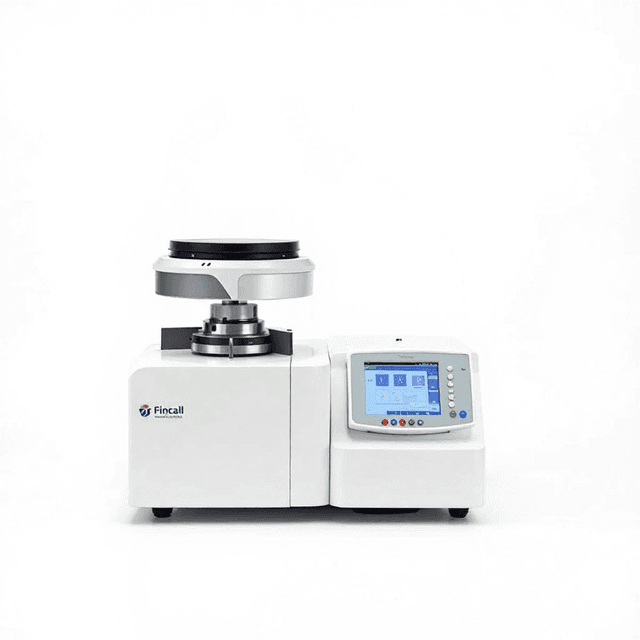
Digital Automatic Polarimeter
Digital automatic polarimeter with 0.001° accuracy for optical rotation and sugar concentration measurements, featuring LED light source and RS232 connectivity.
| Automation Level | fully-automated |
| Light Source | LED+interference filter |
| Measuring Range | ±45°(optical rotation)/±120°Z(sugar) |
| Wavelength | 589nm |
| Readable Accuracy | 0.001°(optical rotation) 0.01°Z(sugar) |
| Repeatability | ≤0.002°(optical rotation) |

The Digital Automatic Polarimeter is a precision optical instrument designed for measuring optical rotation and sugar concentration in laboratory samples. Utilizing a 589nm LED light source with interference filter, this benchtop polarimeter provides automated measurements with 0.001° optical rotation accuracy and ±0.002° repeatability. The instrument accommodates standard 200mm and 100mm test tubes and offers dual measurement modes for optical rotation analysis and sugar degree quantification.
The system features RS232 interface connectivity for data transfer and operates on standard AC power (110/220V). With its digital automation, the polarimeter eliminates manual reading errors common in traditional analog instruments while maintaining the precision required for analytical chemistry applications. The instrument requires minimum 1% sample transmittance for reliable measurements and provides a measuring range of ±45° for optical rotation and ±120°Z for sugar analysis.
How It Works
Polarimetry operates on the principle that optically active substances rotate the plane of polarized light when light passes through them. The Digital Automatic Polarimeter generates monochromatic light at 589nm using an LED source with interference filter, which is then polarized and directed through the sample tube containing the test solution. As the polarized light traverses the optically active sample, the plane of polarization rotates by an angle proportional to the concentration and specific rotation of the substance.
The instrument's detector system measures this rotation angle automatically using digital sensors, eliminating the need for manual null-point detection. The built-in microprocessor calculates optical rotation values and converts them to concentration units when operating in sugar degree mode. Temperature effects on rotation are minimized through the stable LED light source, while the interference filter ensures wavelength precision for reproducible measurements.
Sample path lengths of 200mm or 100mm are accommodated depending on sample concentration and expected rotation angles. The minimum 1% transmittance requirement ensures adequate light intensity reaches the detector for accurate angle determination, while the ±45° measurement range covers most common analytical requirements.
Features & Benefits
Automation Level
- fully-automated
Light Source
- LED+interference filter
Measuring Range
- ±45°(optical rotation)/±120°Z(sugar)
Wavelength
- 589nm
Readable Accuracy
- 0.001°(optical rotation) 0.01°Z(sugar)
Repeatability
- ≤0.002°(optical rotation)
Test Mode
- Optical rotation, sugar degree
Test Tube
- 200mm, 100mm
Sample Transmittance
- 1%
Interface
- RS232
External Size(W*D*H)
- 570*350*280mm
Package Size(W*D*H)
- 730*480*470mm
Brand
- ConductScience
Research Domain
- Analytical Chemistry
- Clinical Diagnostics
- Environmental Monitoring
- Food Science
- Materials Science
- Pharmaceutical QC
Power/Voltage
- AC110/220V, 50/60Hz
Weight
- 36kg
Weight
- 36.0 kg
Dimensions
- L: 28.0 mm
- W: 57.0 mm
- H: 35.0 mm
Comparison Guide
| Feature | This Product | Typical Alternative | Advantage |
|---|---|---|---|
| Measurement Accuracy | 0.001° optical rotation accuracy | Entry-level models often provide 0.01° to 0.05° accuracy | Higher precision enables detection of lower concentrations and more accurate quality control measurements |
| Light Source Technology | LED with interference filter at 589nm | Basic models may use sodium vapor lamps requiring warm-up time | Immediate operation and stable output improve laboratory workflow efficiency |
| Measurement Range | ±45° optical rotation, ±120°Z sugar | Compact units typically offer narrower measurement ranges | Wide range accommodates diverse sample concentrations without requiring dilution steps |
| Data Interface | RS232 communication capability | Manual instruments require visual reading and manual data recording | Automated data transfer reduces transcription errors and enables integration with laboratory information systems |
| Tube Compatibility | 200mm and 100mm test tubes | Single path length instruments limit experimental flexibility | Path length selection optimizes sensitivity and measurement range for different sample types |
| Measurement Modes | Optical rotation and sugar degree modes | Basic polarimeters typically measure only optical rotation angles | Direct concentration readings in sugar applications eliminate manual calculation steps |
This polarimeter combines high-precision measurement capabilities with automated operation and flexible sample handling. The LED light source technology and digital automation provide operational advantages over traditional manual instruments, while the wide measurement range and dual-mode operation accommodate diverse analytical requirements.
Practical Tips
Perform zero calibration with the same solvent and temperature as your samples, and recalibrate if room temperature changes by more than 2°C during measurements.
Why: Temperature variations affect both solvent and sample optical rotation, leading to baseline drift and measurement errors.
Clean test tubes with appropriate solvents and dry completely before use, inspecting for scratches or deposits that could scatter light.
Why: Optical contamination on tube surfaces reduces light transmission and introduces measurement artifacts.
Allow samples to equilibrate to room temperature and ensure homogeneity by gentle mixing before measurement.
Why: Temperature gradients and concentration variations within the sample create inconsistent optical rotation readings.
Take multiple measurements of the same sample and calculate the mean to improve precision, especially for samples near the detection limit.
Why: Statistical averaging reduces random measurement noise and provides more reliable quantitative results.
If readings are unstable, check for air bubbles in the sample tube and verify the LED has completed its warm-up cycle.
Why: Air bubbles scatter light irregularly while LED output requires stabilization time for consistent intensity.
Handle sample tubes carefully to avoid breakage and ensure proper ventilation when working with volatile organic solvents.
Why: Glass tube fragments can damage the optical system and organic vapors may pose health risks in enclosed laboratory spaces.
Select the appropriate test tube length (100mm vs 200mm) based on expected sample concentration to optimize measurement precision.
Why: Longer path lengths increase sensitivity for dilute samples while shorter paths prevent measurement range overflow with concentrated solutions.
Verify instrument accuracy periodically using certified reference standards with known optical rotation values.
Why: Reference standard checks detect instrument drift and validate measurement accuracy for quality assurance requirements.
Setup Guide
What’s in the Box
- Digital Automatic Polarimeter main unit
- Power cable with voltage selector
- 200mm test tube (typical)
- 100mm test tube (typical)
- RS232 communication cable (typical)
- User manual and operation guide
- Calibration certificate (typical)
Warranty
ConductScience provides a standard one-year manufacturer warranty covering defects in materials and workmanship. Technical support includes instrument setup guidance, calibration procedures, and troubleshooting assistance.
Compliance
References
Background reading relevant to this product:
What sample preparation is required for accurate polarimetry measurements?
Samples must be filtered to remove particulates and achieve minimum 1% transmittance. Temperature should be controlled as optical rotation varies with temperature. Air bubbles must be eliminated from test tubes, and sample concentration may need adjustment to fall within the ±45° measurement range.
How does the LED light source compare to traditional sodium vapor lamps?
The LED with interference filter provides immediate operation without warm-up time, longer lifespan, and more stable output compared to sodium lamps. The 589nm wavelength matches the sodium D-line standard while offering better reliability and lower maintenance requirements.
Can this polarimeter measure specific rotation values directly?
The instrument measures observed rotation angles. Specific rotation must be calculated using the formula [α] = α/(l×c), where α is observed rotation, l is path length in decimeters, and c is concentration in g/mL. The digital display shows α values directly.
What is the difference between the two measurement modes?
Optical rotation mode displays angle measurements in degrees for general polarimetry applications. Sugar degree mode converts rotation measurements to concentration units (°Z) using built-in sugar calibration factors for direct concentration readings.
How should the instrument be calibrated for different solvents?
Zero the instrument with the same solvent used for sample preparation. Water is standard for aqueous solutions, but organic solvents require their own baseline. Temperature equilibration between blank and sample is essential for accurate calibration.
What factors affect measurement repeatability?
Key factors include temperature stability, sample homogeneity, tube cleanliness, and elimination of air bubbles. The ±0.002° repeatability specification assumes controlled conditions and proper sample preparation techniques.
How does path length selection affect sensitivity?
Longer path lengths (200mm) increase sensitivity for dilute samples but may exceed measurement range for concentrated solutions. The 100mm tubes are suitable for higher concentrations or when sample volume is limited. Choose based on expected rotation magnitude.
What data formats are available through the RS232 interface?
Consult product datasheet for specific data format specifications and communication protocol details. The RS232 connection typically provides ASCII data output with measurement values and units.
Have a question about this product?
Upgrade Options