Disc Polarimeter
Precision optical polarimeter with sodium lamp source for measuring optical rotation of chiral compounds across ±180° range with 0.05° accuracy.

Louise Corscadden, PhD
Director of Science · ConductScience
Ask Louise about Disc Polarimeter fit, setup, configuration, or quote prep.
Already working with us? Sign in to connect this with My Scientist.
Key Specifications
Full details →- Model fit
- Configured during quote
- SKU family
- BIO-0542
- Shipping box
- 23.0 x 44.0 x 11.0 cm
- Ordering
- Online checkout and quote request available
- Category
- Analytical Instruments
- Build notes
- Confirm accessories, station layout, and support needs before purchase
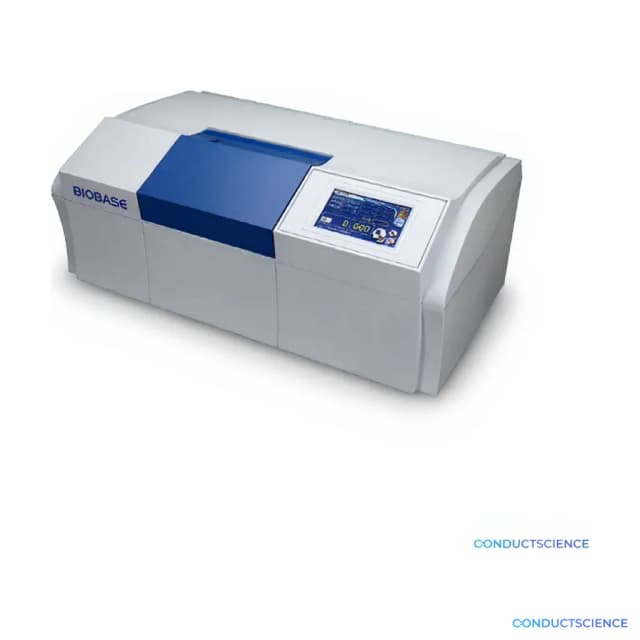
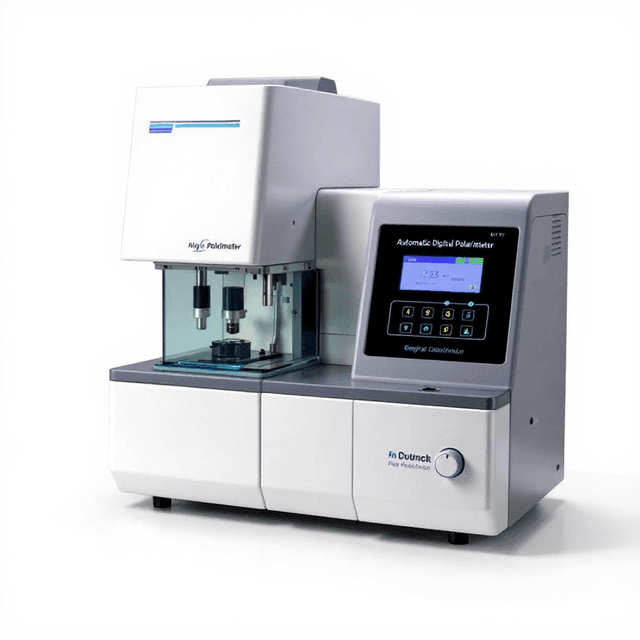
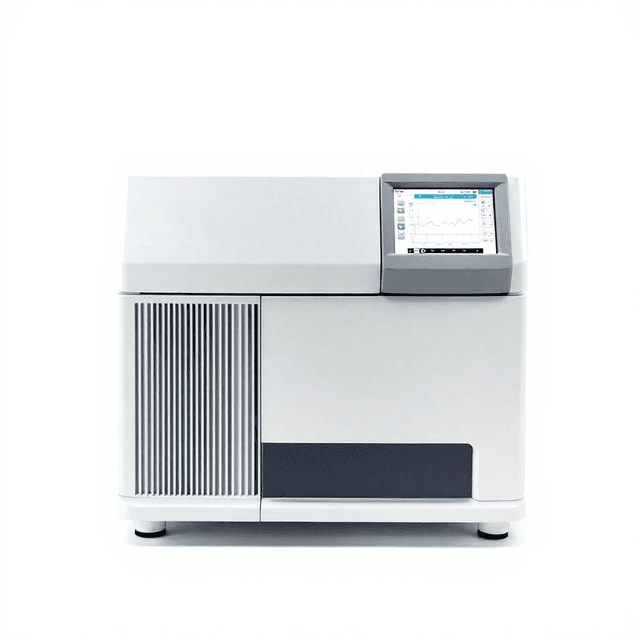
The Disc Polarimeter is a precision optical instrument designed for measuring the optical rotation of optically active substances in solution. Utilizing a sodium lamp light source at 589nm wavelength, this polarimeter provides accurate determination of specific rotation angles across a full ±180° range with 1° divisions and 0.05° vernier reading accuracy. The instrument features a 4X magnifying glass for enhanced readability and accommodates standard test tubes of 200mm and 100mm lengths.
This benchtop polarimeter serves as an essential analytical tool for researchers requiring quantitative chirality measurements in pharmaceutical, chemical, and biochemical applications. The instrument's robust construction and precise optical system enable reliable determination of enantiomeric purity, concentration measurements of optically active compounds, and structural characterization of chiral molecules in research and quality control environments.
How It Works
Polarimetry operates on the principle that plane-polarized light rotates when passing through optically active substances. The Disc Polarimeter generates monochromatic light at 589nm using a sodium lamp, which passes through a polarizer to create plane-polarized light. This polarized beam traverses the sample solution contained in a precision test tube, where chiral molecules interact with the light's electromagnetic field.
Optically active compounds rotate the plane of polarization by an amount proportional to their concentration, path length, and specific rotation constant. The analyzer disc, equipped with graduated markings and viewed through a 4X magnifying glass, measures this rotation angle. The instrument's vernier scale system provides readings accurate to 0.05°, enabling precise determination of optical rotation values essential for stereochemical analysis and concentration measurements.
Features & Benefits
Automation Level
- manual
Light Source
- Sodium lamp
Wavelength
- 589nm
Measuring Range
- -180°~+180°
Division Value
- 1°
Venire Reading Accuracy
- 0.05°
Magnifying Factor of the Magnifying Glass
- 4X
Test Tube
- 200mm, 100mm
External Size(W*D*H)
- 440*110*230mm
Package Size(W*D*H)
- 600*220*400mm
Brand
- ConductScience
Research Domain
- Analytical Chemistry
- Food Science
- Materials Science
- Microbiology
- Pharmaceutical QC
Power/Voltage
- AC110/220V, 50/60Hz
Weight
- 7kg
Shipping weight
- 7.0 lb
Shipping box
- L: 23.0 cm
- W: 44.0 cm
- H: 11.0 cm
| Feature | This Product | Typical Alternative | Advantage |
|---|---|---|---|
| Wavelength Selection | Fixed 589nm sodium D-line | Entry-level models often use LED sources with broader spectral output | Standardized wavelength ensures reproducibility and direct comparison with literature values |
| Reading Accuracy | 0.05° vernier accuracy | Basic polarimeters typically offer 0.1-0.5° accuracy | Higher precision enables detection of small optical rotation changes in pharmaceutical purity analysis |
| Measuring Range | Full ±180° range | Some models offer limited ranges around ±45° or ±90° | Complete range accommodates highly active samples and concentrated solutions without dilution |
| Visual Enhancement | 4X magnifying glass system | Basic models rely on direct visual reading | Magnification reduces reading errors and improves measurement reproducibility |
| Sample Tube Options | 200mm and 100mm tubes included | Many instruments include only single length tubes | Multiple path lengths optimize sensitivity for different sample concentrations |
This polarimeter combines standardized 589nm illumination with high-precision vernier reading capability and dual tube compatibility. The instrument provides reliable manual operation with enhanced visual readability for accurate optical rotation measurements in analytical and quality control applications.
Practical Tips
Perform zero calibration with the same solvent used for sample preparation, not just distilled water.
Why: Solvent-matched blanking eliminates baseline rotation effects and improves measurement accuracy.
Clean test tubes with chromic acid cleaning solution followed by distilled water rinse to remove optical residues.
Why: Residual films on tube walls can introduce measurement errors through light scattering or additional optical activity.
Allow the sodium lamp to warm up for at least 15 minutes before critical measurements.
Why: Lamp intensity and wavelength output stabilize with thermal equilibrium, ensuring consistent illumination.
If readings appear unstable, check for air bubbles in the sample tube and verify tube cleanliness.
Why: Air bubbles and surface contamination cause light scattering that interferes with polarization measurements.
Take multiple readings and rotate the sample tube 180° between measurements to average out tube imperfections.
Why: Systematic errors from tube stress birefringence are cancelled by rotation, improving measurement precision.
Handle test tubes by the ends only and use appropriate chemical-resistant gloves when working with organic solvents.
Why: Fingerprints introduce optical artifacts, and many polarimetry solvents pose dermal absorption risks.
Setup Guide
What’s in the Box
- Disc Polarimeter main unit
- 200mm polarimeter test tube
- 100mm polarimeter test tube
- Power cord (AC110/220V compatible)
- User manual and operation guide
- Calibration reference materials (typical)
Warranty
ConductScience provides a standard one-year manufacturer warranty covering defects in materials and workmanship, with technical support for installation, calibration, and operational guidance.
Compliance
What wavelength does this polarimeter use and why is this important?
The instrument uses a 589nm sodium D-line lamp, which is the international standard for polarimetric measurements. This wavelength ensures reproducibility and allows direct comparison with published specific rotation values in the literature.
How do I choose between the 200mm and 100mm test tubes?
Use 200mm tubes for dilute samples requiring maximum sensitivity, and 100mm tubes for concentrated solutions or when sample volume is limited. The longer path length increases measurement sensitivity but requires more sample volume.
What is the practical detection limit for optical rotation measurements?
With 0.05° accuracy, the practical limit depends on sample concentration and specific rotation. For most pharmaceutical compounds, this translates to detection of approximately 0.1-1% enantiomeric excess, depending on the compound's specific rotation value.
How often does the instrument require calibration?
Daily zero calibration with distilled water or appropriate solvent blank is recommended. Comprehensive calibration verification using certified reference materials should be performed monthly or according to laboratory QC procedures.
Can this polarimeter measure samples at different temperatures?
The instrument measures at ambient temperature. For temperature-controlled measurements, external temperature regulation of the sample solution is required, as optical rotation is temperature-dependent.
What sample preparation considerations are critical for accurate measurements?
Ensure samples are free of particulates through filtration, eliminate air bubbles, maintain consistent temperature, and use appropriate solvent blanks. Sample clarity is essential as turbidity affects light transmission and measurement accuracy.
Have a question about this product?
Have a question? Just ask.
Send it over and we'll email you a personalized answer — no call, no scheduling.
Prefer to talk it through?
Upgrade Options