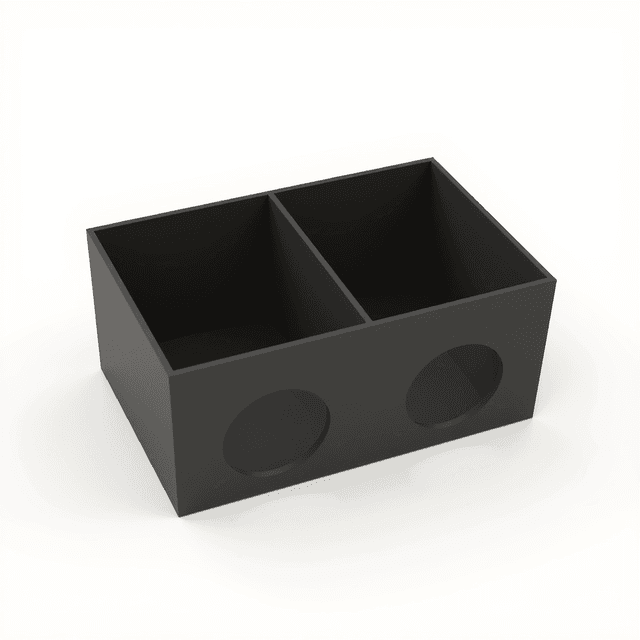
Drosophila Gravitaxis Maze
Specialized choice maze for quantifying positive and negative gravitaxis responses in Drosophila species through controlled upward and downward movement pathways.
| entrance_tube_length | 11 cm |
| tube_diameter | 4.76 mm |
| number_of_exits | 9 |
| collection_tube_volume | 15 ml |
| base_thickness | 0.79 mm |
| light_source_distance | 7 inches from collection tubes |

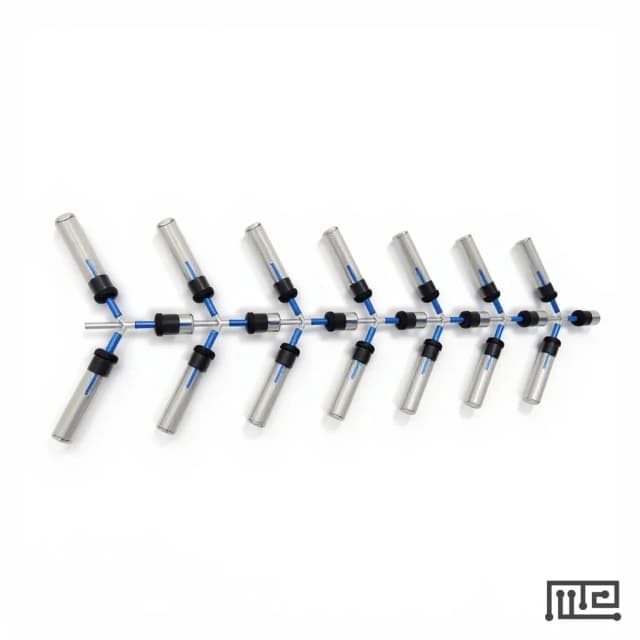
The Drosophila Gravitaxis Maze is a specialized behavioral apparatus designed to assess gravitactic responses in Drosophila species. This choice maze allows researchers to quantify positive or negative geotaxis by providing subjects with upward and downward movement options through a network of polypropylene tubes and connectors. The apparatus features a single entrance tube leading to nine collection exits, enabling systematic analysis of directional preferences in response to gravitational cues.
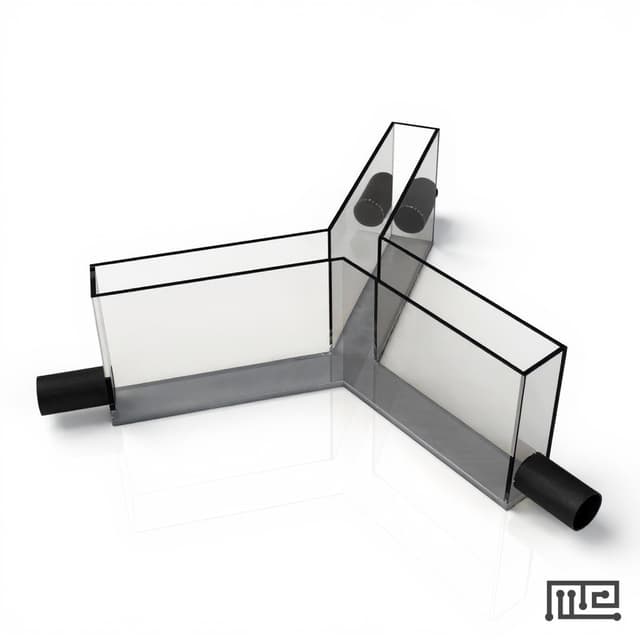
Constructed with transparent plastic Y and T-shaped connectors and 15 ml acrylic collection tubes, the maze incorporates controlled lighting positioned 7 inches from collection areas to minimize phototactic interference. The entrance tube is covered with opaque black tape to eliminate visual bias, ensuring that movement patterns reflect gravitactic rather than phototactic responses. This design enables researchers to investigate the molecular and genetic mechanisms underlying gravitaxis behavior in Drosophila melanogaster and related species.
How It Works
Gravitaxis relies on specialized mechanosensory organs in Drosophila that detect gravitational orientation through statocyst-like structures and proprioceptive feedback from leg and wing positions. When placed in the maze entrance, flies must choose between upward and downward pathways based on their innate or conditioned responses to gravity. The maze design eliminates confounding factors by using uniform tube dimensions (4.76 mm diameter) and controlled lighting to minimize phototactic influence on movement decisions.
The branching tube network creates multiple decision points where flies encounter Y and T-shaped connectors, allowing researchers to track the consistency of gravitactic preferences across repeated choice opportunities. Collection tubes positioned at terminal exits capture flies that complete their traversal, enabling quantification of positive geotaxis (downward movement) versus negative geotaxis (upward movement) based on final distribution patterns.
Features & Benefits
entrance_tube_length
- 11 cm
tube_diameter
- 4.76 mm
number_of_exits
- 9
collection_tube_volume
- 15 ml
base_thickness
- 0.79 mm
light_source_distance
- 7 inches from collection tubes
tube_material
- Polypropylene tubing
collection_tube_material
- Acrylic
connector_types
- Y and T shaped connectors
connector_material
- Transparent plastic
entrance_tube_covering
- Opaque black tape
Behavioral Construct
- Gravitaxis
- Geotaxis
- Spatial orientation
- Motor coordination
- Choice behavior
- Directional preference
Automation Level
- manual
Material
- Acrylic
- Plastic
- Polypropylene
Species
- Drosophila
Display Type
- None
Research Domain
- Aging Research
- Behavioral Pharmacology
- Developmental Biology
- Learning and Memory
- Motor Function
- Neuroscience
Weight
- 21.0 kg
Dimensions
- L: 43.2 mm
- W: 38.0 mm
- H: 27.9 mm
Comparison Guide
| Feature | This Product | Typical Alternative | Advantage |
|---|---|---|---|
| Number of collection points | 9 collection exits | Simple vertical tubes offer 2-4 collection points | More collection points enable statistical analysis of directional preferences and assessment of behavioral consistency |
| Entrance design | 11 cm entrance tube with opaque covering | Basic entry ports often lack light shielding | Eliminates phototactic bias to ensure responses reflect gravitational rather than visual orientation cues |
| Tube diameter | 4.76 mm polypropylene tubing | Varies by model, often wider or narrower | Optimized diameter accommodates natural Drosophila locomotion without constraining movement patterns |
| Decision complexity | Y and T-shaped connectors create multiple choice points | Linear vertical columns offer limited decision opportunities | Multiple decision points provide robust assessment of gravitactic consistency across repeated choices |
| Collection volume | 15 ml acrylic collection tubes | Smaller collection areas in basic designs | Larger collection volume accommodates multiple subjects and facilitates easy subject retrieval for analysis |
This maze offers comprehensive gravitaxis assessment through nine collection points connected by Y and T-shaped pathways, with controlled lighting and opaque entrance design to minimize confounding variables. The 4.76 mm tube diameter and 15 ml collection tubes optimize both fly locomotion and experimental convenience.
Practical Tips
Verify maze orientation using a bubble level before each experiment to ensure consistent gravitational reference.
Why: Even small deviations from vertical alignment can introduce directional bias that confounds gravitaxis measurements.
Inspect tube connections weekly and replace any cracked or damaged connectors immediately.
Why: Damaged pathways can create dead ends or escape routes that invalidate behavioral data.
Allow flies to acclimate in the entrance tube for 30-60 seconds before beginning trials.
Why: Acclimation reduces stress-induced movement artifacts and allows subjects to respond to gravitational rather than handling cues.
If flies congregate at connectors without proceeding, reduce ambient vibrations and air currents in the testing area.
Why: Environmental disturbances can override gravitactic responses and cause hesitation at decision points.
Record temperature and humidity conditions for each experimental session.
Why: Environmental conditions affect Drosophila activity levels and may influence gravitactic response magnitude.
Use CO2 anesthesia sparingly and allow complete recovery before testing to avoid motor impairment.
Why: Residual anesthesia effects can compromise gravitactic responses and lead to false behavioral deficits.
Test age-matched cohorts within 2-4 hour time windows to control for circadian influences on activity.
Why: Drosophila motor activity varies throughout the day, which can affect gravitaxis performance independent of experimental treatments.
Setup Guide
What’s in the Box
- Polypropylene entrance tube (11 cm length)
- Y and T-shaped transparent plastic connectors
- Nine acrylic collection tubes (15 ml capacity each)
- Supporting base (0.79 mm thickness)
- Opaque black tape for entrance covering
- Assembly instructions
- User manual with protocol guidelines (typical)
Warranty
ConductScience provides a standard one-year manufacturer warranty covering defects in materials and workmanship, with technical support for setup and protocol optimization.
Compliance
What is the optimal fly density per test session to avoid crowding effects?
Consult product datasheet for recommended subject numbers. Generally, individual flies or small groups of 5-10 subjects prevent overcrowding in the 4.76 mm diameter tubing while allowing statistical analysis of group behavior.
How do I minimize phototactic interference with gravitaxis measurements?
The maze includes opaque black tape for entrance tube covering and controlled light positioning 7 inches from collection tubes. Additional environmental lighting should be diffuse and uniform to avoid creating directional visual cues.
What collection methods work best with the 15 ml acrylic tubes?
The transparent acrylic tubes allow visual confirmation of fly distribution. Gentle aspiration or brief cooling can facilitate subject transfer for counting and further analysis without injury.
Can the maze accommodate different Drosophila strains and mutants?
Yes, the 4.76 mm tube diameter accommodates standard laboratory Drosophila strains. Researchers should validate that specific mutant lines with altered body size or mobility can navigate the maze pathways effectively.
How do I clean and sterilize the apparatus between experiments?
Disassemble components and clean with mild detergent solution, then rinse thoroughly. Ethanol sterilization is compatible with polypropylene and acrylic materials. Ensure complete drying before reassembly.
What environmental conditions optimize gravitaxis testing?
Maintain consistent temperature (typically 22-25°C) and humidity levels. Minimize vibrations and air currents that could influence movement patterns independent of gravitational cues.
How does this maze compare to vertical column assays?
The branched design with multiple decision points provides more comprehensive assessment of gravitactic consistency compared to simple vertical tubes. The nine collection points enable statistical analysis of directional preferences across repeated choices.
Have a question about this product?
Frequently Bought Together

Upgrade Options