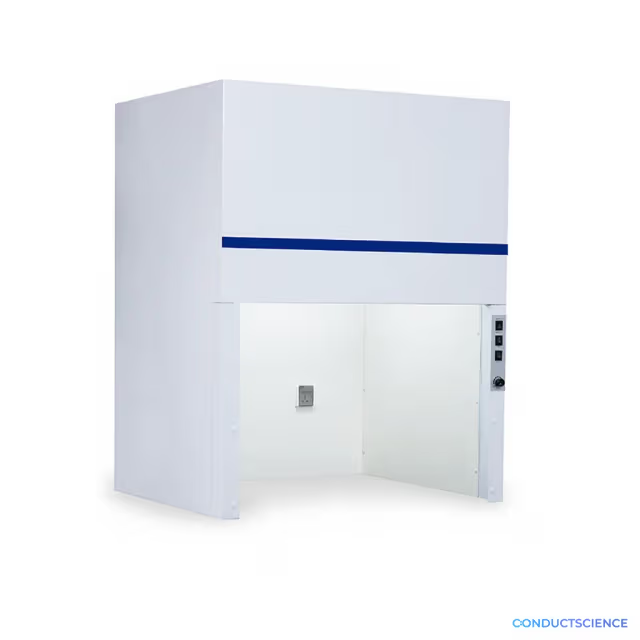
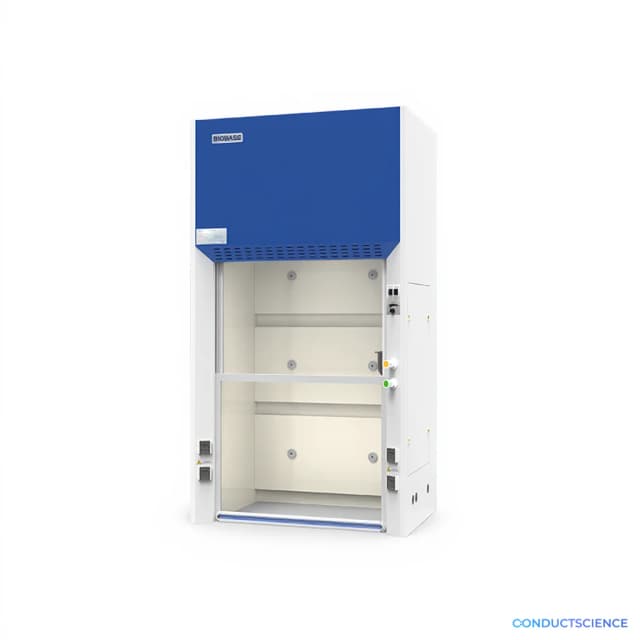
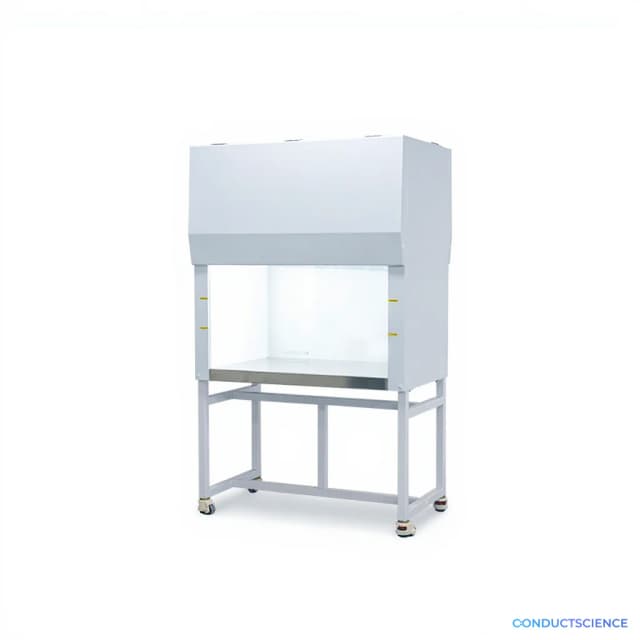
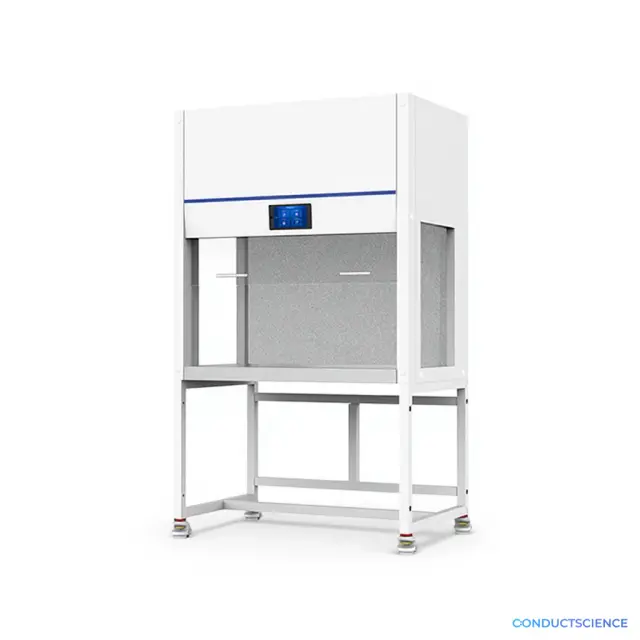
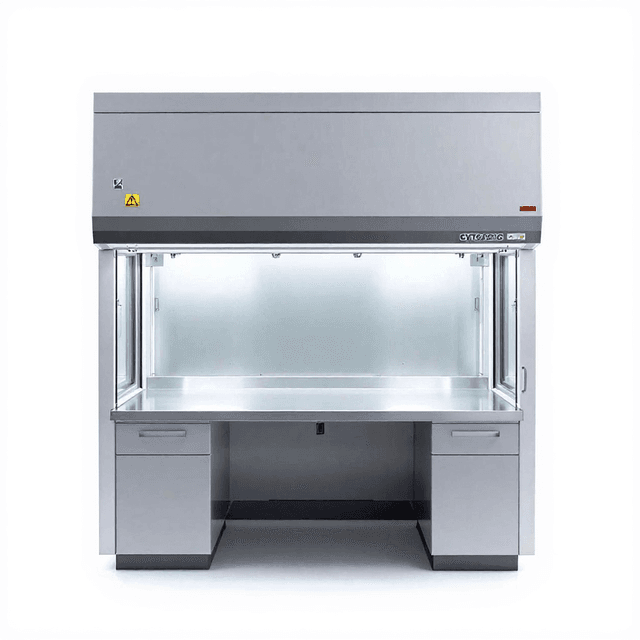
Ducted PP Fume Hood FH(P)
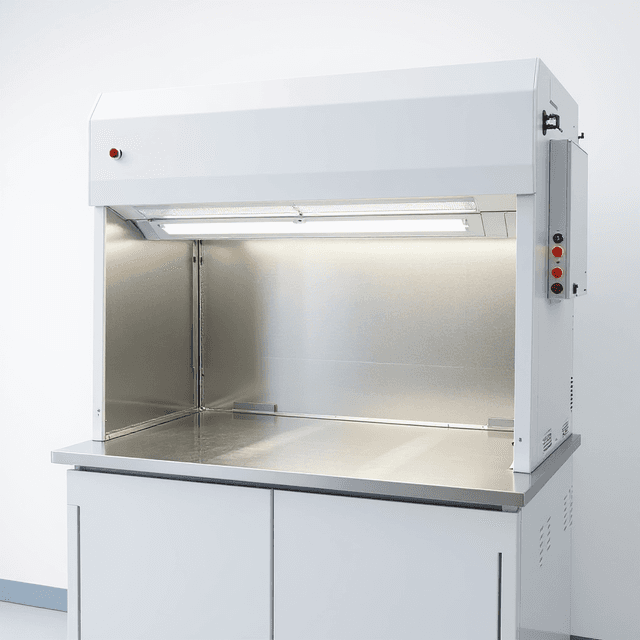
Polypropylene ducted fume hood with built-in PP centrifugal blower, microprocessor speed control, and 5 mm toughened glass front window. Resists strong acids and alkalis throughout. Available in four widths: FH1000(P), FH1200(P), FH1500(P), FH1800(P).
| Automation Level | Manual |
| Material | Porcelain white PP, 8 mm thick, resistant to strong acid and alkali |
| Front Window | 5 mm toughened glass, manual height adjustment |
| Work Surface Height | 820 mm |
| Maximum Sash Opening | 740 mm |
| Air Velocity | 0.3–0.8 m/s (adjustable) |

Engineered for chemical laboratories that handle corrosive reagents, the FH-P series is constructed throughout from polypropylene — body, liner, work surface support, and built-in centrifugal blower. The 8 mm porcelain white PP shell resists strong acids and alkalis, preventing the corrosion that limits steel hood service life in demanding environments.
Airflow is controlled by the built-in PP centrifugal blower with microprocessor speed control and LED display, maintaining face velocity across the 0.3–0.8 m/s working range. A power-failure memory function restores the last fan setting on restart. The 5 mm toughened glass front window slides vertically to a maximum opening of 740 mm; operating noise does not exceed 68 dB.
Every unit ships with LED lighting, a chemical-resistant phenolic resin work surface, an anti-corrosive water tap, water sink, 4.3 m PVC exhaust duct (φ250 mm), and all installation hardware. The FH1800(P) uses dual blowers and dual exhaust ducts to match its wider internal volume.
Key Features
- Full PP construction (body, liner, blower) — resistant to strong acids and alkalis
- Built-in PP centrifugal blower with microprocessor control and LED display
- Power-failure memory — fan restores last speed setting after power interruption
- 5 mm toughened glass front window with manual height adjustment
- Anti-corrosive PP water tap and sink included as standard
- Noise level ≤68 dB at rated airflow
Model Specifications
| Parameter | FH1000(P) | FH1200(P) | FH1500(P) | FH1800(P) |
|---|---|---|---|---|
| External Size (W×D×H) | 1047×800×2450 mm | 1247×800×2450 mm | 1547×800×2450 mm | 1847×800×2450 mm |
| Internal Size (W×D×H) | 787×560×700 mm | 987×560×700 mm | 1287×560×700 mm | 1587×560×700 mm |
| Work Surface Height | 820 mm | |||
| Max Sash Opening | 740 mm | |||
| Air Velocity | 0.3–0.8 m/s | |||
| Noise Level | ≤68 dB | |||
| LED Lamps | 9 W × 2 | 12 W × 2 | 15 W × 2 | 20 W × 2 |
| Blower | 1 × PP centrifugal (adjustable) | 2 × PP centrifugal (adjustable) | ||
| Exhaust Duct | 4.3 m, φ250 mm | 2 × 4.3 m, φ250 mm | ||
| Power Consumption | 400 W | 500 W | 700 W | |
| Main Body Weight | 137 kg | 155 kg | 180 kg | 206 kg |
| Power Supply | AC 220V±10%, 50/60 Hz (110V±10%, 60 Hz optional) | |||
Standard Package Includes
- Main hood assembly with built-in PP centrifugal blower(s)
- 5 mm toughened glass front window
- 4.3 m PVC exhaust duct, φ250 mm (FH1800P: × 2)
- LED lighting fixtures
- Chemical-resistant phenolic resin work surface
- Anti-corrosive PP water tap and water sink
- Installation hardware and brackets
Optional Accessories
- Alternative work surfaces (PP, epoxy resin, ceramic)
- Active carbon filters
- External centrifugal blower
- Splicable base cabinet
How It Works
The ducted fume hood operates on the principle of containment ventilation, creating a controlled airflow pattern that captures and exhausts chemical vapors away from the operator. The built-in PP centrifugal blower generates negative pressure within the hood chamber, drawing air from the laboratory space through the front opening and directing it through the exhaust duct system.
Air velocity across the work surface is maintained between 0.3-0.8 m/s, providing sufficient capture velocity for most laboratory chemicals while minimizing turbulence that could compromise containment. The adjustable speed blower allows operators to optimize airflow based on the specific chemicals being handled and experimental requirements. The front window opening can be adjusted to balance containment effectiveness with operator access.
The polypropylene construction provides chemical inertness across a broad pH range, preventing material degradation that could compromise hood integrity or contaminate samples. The ducted design removes captured contaminants from the laboratory environment through connection to the building's exhaust ventilation system.
Features & Benefits
Model
- FH1000(P)
- FH1200(P)
- FH1500(P)
- FH1800(P)
Automation Level
- Manual
Material
- Porcelain white PP, 8 mm thick, resistant to strong acid and alkali
Front Window
- 5 mm toughened glass, manual height adjustment
Work Surface Height
- 820 mm
Maximum Sash Opening
- 740 mm
Air Velocity
- 0.3–0.8 m/s (adjustable)
Noise Level
- ≤68 dB
Power Supply
- AC 220V±10%, 50/60 Hz (110V±10%, 60 Hz optional)
Work Surface Material
- Chemical-resistant phenolic resin
External Dimensions (W×D×H)
- FH1000(P): 1047×800×2450 mm
- FH1200(P): 1247×800×2450 mm
- FH1500(P): 1547×800×2450 mm
- FH1800(P): 1847×800×2450 mm
Internal Dimensions (W×D×H)
- FH1000(P): 787×560×700 mm
- FH1200(P): 987×560×700 mm
- FH1500(P): 1287×560×700 mm
- FH1800(P): 1587×560×700 mm
LED Lamp
- FH1000(P): 9 W × 2
- FH1200(P): 12 W × 2
- FH1500(P): 15 W × 2
- FH1800(P): 20 W × 2
Power Consumption
- FH1000(P) / FH1200(P): 400 W
- FH1500(P): 500 W
- FH1800(P): 700 W
Blower
- FH1000(P) / FH1200(P) / FH1500(P): Built-in PP centrifugal, speed adjustable
- FH1800(P): 2 × built-in PP centrifugal, speed adjustable
Exhaust Duct
- FH1000(P) / FH1200(P) / FH1500(P): 4.3 m, φ250 mm
- FH1800(P): 2 × 4.3 m, φ250 mm
Gross Weight — Main Body
- FH1000(P): 137 kg
- FH1200(P): 155 kg
- FH1500(P): 180 kg
- FH1800(P): 206 kg
Weight
- 652.3 kg
Dimensions
- L: 245.0 mm
- W: 104.7 mm
- H: 80.0 mm
| Feature | This Product | Typical Alternative | Advantage |
|---|---|---|---|
| Construction Material | Polypropylene body and work surface | Powder-coated steel or fiberglass construction | Superior resistance to hydrofluoric acid and other chemicals that corrode metal surfaces. |
| Blower Integration | Built-in PP centrifugal blower with speed control | External exhaust fans or no integrated blower | Eliminates need for separate exhaust equipment and allows precise airflow adjustment at the hood. |
| Face Velocity Range | 0.3-0.8 m/s adjustable | Fixed velocity or limited adjustment range | Allows optimization for different chemical handling procedures and energy efficiency. |
| Window Design | 5mm toughened glass, manual height adjustment | Standard glass with counterweight systems | Enhanced impact resistance and simplified adjustment mechanism for reliable operation. |
| Lighting System | Dual LED fixtures (9W-15W per fixture) | Single fluorescent or LED fixture | Provides more uniform illumination across larger work surfaces for improved visibility. |
| Size Options | Three widths (1200, 1500, 1800mm) with consistent depth | Limited size configurations | Accommodates different laboratory space requirements while maintaining performance consistency. |
The FH(P) series combines polypropylene chemical resistance with integrated blower technology and adjustable airflow control. The modular sizing approach and toughened glass windows provide flexibility for diverse laboratory applications requiring corrosive chemical handling.
Practical Tips
Maintain face velocity between 0.4-0.6 m/s for most applications to balance containment effectiveness with energy efficiency.
Why: Higher velocities waste energy while lower velocities may compromise containment performance.
Clean PP surfaces with mild detergent solutions rather than abrasive cleaners to preserve chemical resistance.
Why: Scratches in the polypropylene surface can create sites for chemical attack and contamination buildup.
Keep the window opening at minimum height necessary for the procedure to maximize containment effectiveness.
Why: Larger openings allow more room air to enter and may create turbulence that compromises vapor capture.
If airflow seems reduced, check for chemical buildup on the blower impeller that may affect performance.
Why: Chemical deposits can unbalance the impeller and reduce airflow efficiency over time.
Verify face velocity monthly using a calibrated anemometer at multiple points across the window opening.
Why: Airflow patterns can change due to filter loading or mechanical wear affecting containment performance.
Allow the hood to run for several minutes before beginning work to establish stable airflow patterns.
Why: Initial startup conditions may create temporary turbulence that affects containment until steady-state flow develops.
Position equipment at least 150mm back from the window opening to avoid disrupting airflow patterns.
Why: Equipment placed too close to the window can create turbulence and reduce capture efficiency.
Inspect exhaust ductwork annually for chemical corrosion or buildup that could restrict airflow.
Why: Duct deterioration or blockages increase system resistance and reduce hood performance over time.
Setup Guide
What’s in the Box
- Main hood assembly with integrated blower
- Toughened glass front window
- 4.3-meter exhaust duct (250mm diameter)
- LED lighting fixtures (quantity varies by model)
- Installation hardware and brackets (typical)
- User manual and safety guidelines (typical)
- Airflow verification kit (typical)
Warranty
ConductScience provides a standard one-year manufacturer warranty covering defects in materials and workmanship, with technical support available for installation guidance and troubleshooting assistance.
Compliance
References
Background reading relevant to this product:
What chemical compatibility does the polypropylene construction provide?
PP construction offers excellent resistance to acids, bases, and most organic solvents, making it suitable for hydrofluoric acid work and other aggressive chemicals that would corrode steel hoods.
How do I determine the appropriate face velocity for my application?
Face velocities of 0.3-0.5 m/s are typical for low-volatility chemicals, while 0.6-0.8 m/s may be needed for highly volatile or toxic compounds. Consult chemical safety data sheets for specific recommendations.
Can the hood be connected to existing building ventilation?
Yes, the 250mm diameter exhaust connection is designed for integration with standard laboratory exhaust systems. Ensure adequate makeup air and proper exhaust fan sizing.
What maintenance is required for the built-in blower system?
Regular inspection of blower impeller and housing for chemical buildup, periodic lubrication of motor bearings, and annual performance verification testing are recommended.
How does performance compare between the different size models?
All models maintain the same airflow characteristics and face velocity range. The FH1800(P) uses dual blowers for enhanced capacity, while smaller models use single blower systems.
What exhaust fan requirements are needed for proper operation?
Consult product datasheet for specific airflow requirements. External exhaust fans must provide sufficient static pressure to overcome duct resistance while maintaining design face velocities.
Can the window opening be automated for improved safety?
The standard configuration features manual window adjustment. Automated sash controls would require custom modification and should be evaluated with manufacturer engineering support.
Have a question about this product?
Upgrade Options