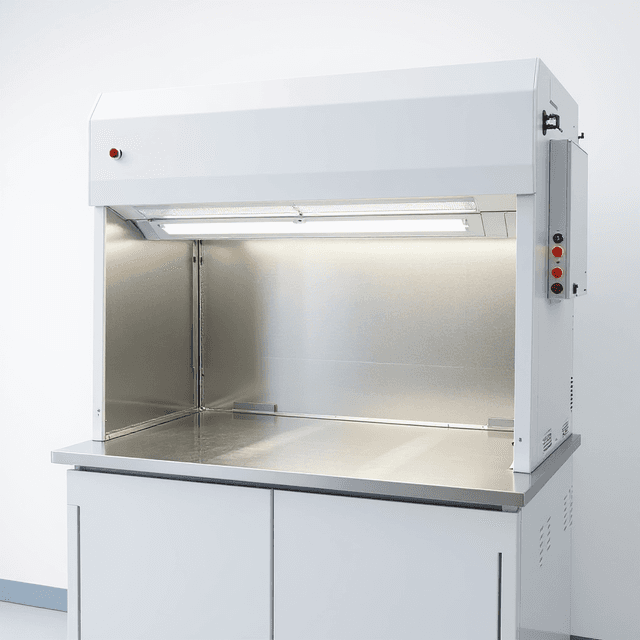
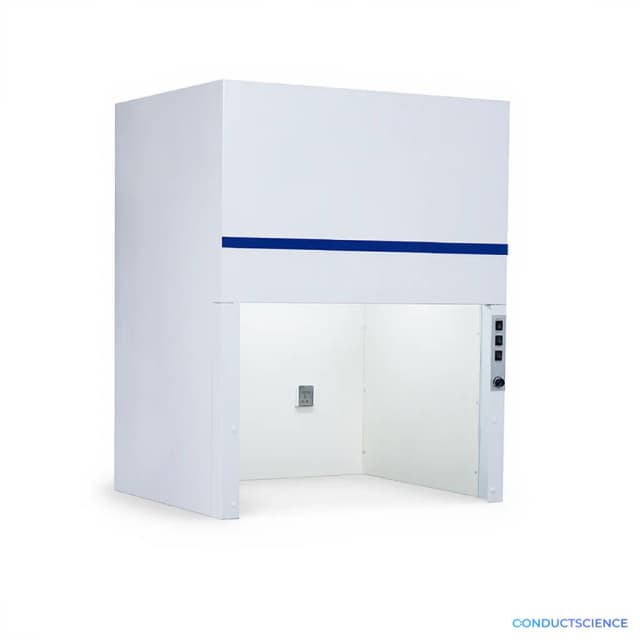
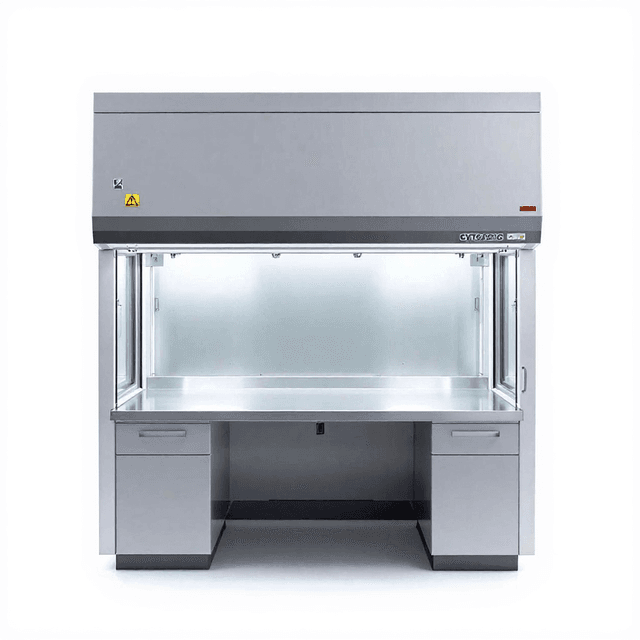
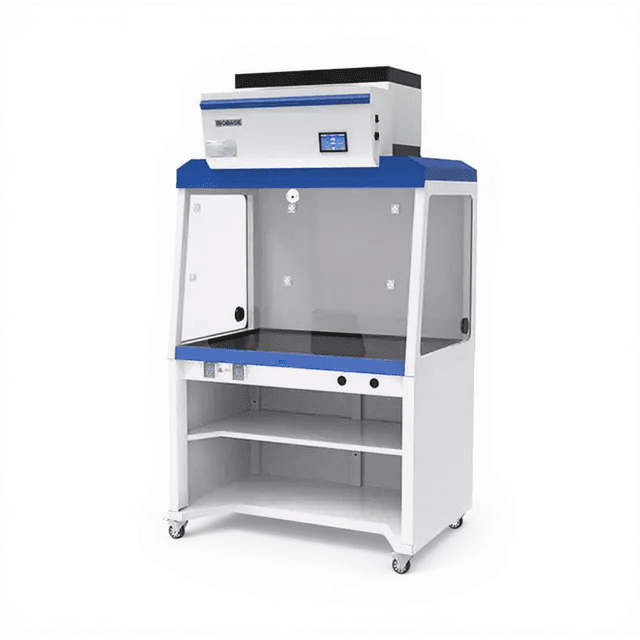
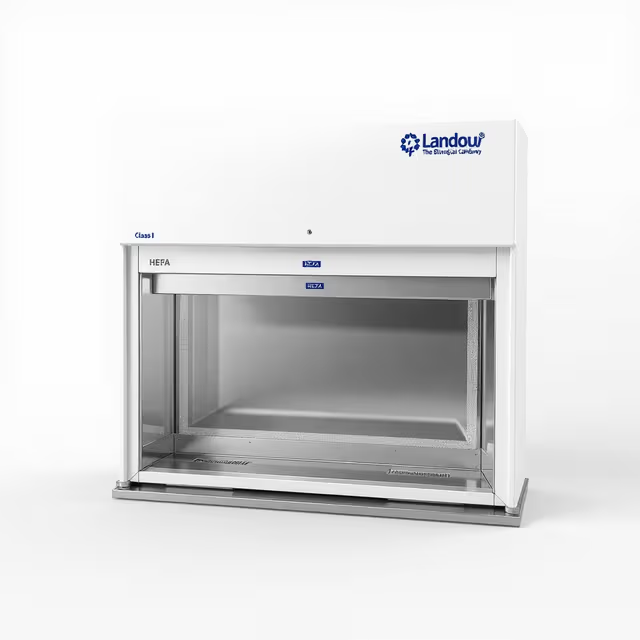
Ducted Fume Hood FH(X) series
Ducted fume hood series with built-in centrifugal blowers, variable speed control, and face velocities of 0.3-0.8 m/s for chemical vapor containment in laboratory environments.

Louise Corscadden, PhD
Director of Science · ConductScience
Ask Louise about Ducted Fume Hood FH(X) series fit, setup, configuration, or quote prep.
Already working with us? Sign in to connect this with My Scientist.
Key Specifications
Full details →- Model fit
- Configured during quote
- SKU family
- BIO-0059
- Shipping box
- 215.0 x 100.0 x 84.0 cm
- Ordering
- Online checkout and quote request available
- Category
- Clean Benches & Fume Hoods
- Build notes
- Confirm accessories, station layout, and support needs before purchase
Ducted Fume Hood FH-X Series
Professional laboratory fume hood designed for safe work with hazardous chemicals and vapors. Features vertical laminar airflow with HEPA filtration and comprehensive operator protection in compliance with laboratory safety standards.
Key Features:
- Vertical laminar airflow design
- HEPA filtration system
- Multiple size configurations
- Durable construction materials
- Safety monitoring systems
- Operator-friendly controls
How It Works
The ducted fume hood operates on the principle of controlled airflow to capture and remove chemical vapors at the source. The built-in centrifugal blower creates negative pressure within the work chamber, drawing air from the laboratory through the sash opening and across the work surface. This airflow pattern prevents chemical vapors from escaping into the laboratory environment by maintaining directional flow from the room into the hood.
The 9-level speed control system allows adjustment of face velocity from 0.3 to 0.8 m/s to accommodate different chemical handling requirements. Higher face velocities provide greater containment for volatile compounds, while lower velocities reduce turbulence for precision work. The ducted exhaust system connects to external ventilation infrastructure to transport captured vapors away from the building.
Proper containment requires maintaining adequate face velocity across the sash opening while minimizing cross-drafts that could disrupt airflow patterns. The 520mm maximum sash opening provides access for equipment placement while maintaining effective capture velocity at the work surface level.
Features & Benefits
Shipping weight
- 230.0 lb
Shipping box
- L: 215.0 cm
- W: 100.0 cm
- H: 84.0 cm
| Feature | This Product | Typical Alternative | Advantage |
|---|---|---|---|
| Blower System | Built-in centrifugal blowers with 9-level speed adjustment | Many models rely on central building exhaust or offer fewer speed settings | Provides independent airflow control and precise face velocity adjustment for different chemical handling requirements. |
| Face Velocity Range | 0.3-0.8 m/s adjustable range | Fixed velocity systems often provide limited adjustment capability | Allows optimization for specific chemical volatility and containment needs while maintaining energy efficiency. |
| Size Options | Three working widths: 1000mm, 1200mm, 1500mm | Many manufacturers offer fewer size variations | Accommodates different laboratory layouts and workflow requirements from individual to collaborative workstations. |
| Exhaust Volume | 630-990 m³/h depending on model size | Entry-level models often provide lower air change rates | Ensures adequate air change rates for effective chemical vapor removal across all hood sizes. |
| Noise Level | ≤68dB operational noise | Higher-powered systems may generate more noise | Maintains acceptable laboratory acoustics for communication and reduces operator stress during extended procedures. |
| Work Surface Height | 750mm ergonomic height | Standard heights may not accommodate all users comfortably | Provides optimal working position for extended chemical handling procedures and equipment manipulation. |
The FH(X) series combines independent blower systems with variable speed control and multiple size options to provide flexible chemical containment solutions. The 9-level speed adjustment and noise control features support precise airflow management for different laboratory applications.
Practical Tips
Verify face velocity measurements quarterly using a calibrated anemometer at multiple points across the sash opening.
Why: Ensures consistent containment performance and identifies changes in system performance before they affect safety.
Clean work surfaces with appropriate solvents after each use and inspect ductwork connections monthly for leaks or blockages.
Why: Prevents chemical buildup that could affect airflow patterns and maintains optimal system performance.
Keep the sash at the lowest practical height during procedures and avoid placing equipment that blocks airflow patterns.
Why: Maintains effective capture velocity and prevents vapor escape while allowing necessary access for manipulations.
Perform smoke tube containment testing after any maintenance or ductwork modifications to verify proper vapor capture.
Why: Confirms that maintenance activities have not compromised the hood's ability to contain chemical vapors effectively.
If face velocity drops below 0.3 m/s, check for ductwork obstructions before adjusting blower speed settings.
Why: Mechanical blockages are common causes of reduced airflow and should be addressed before increasing fan speed unnecessarily.
Document all airflow measurements and maintenance activities in a logbook to track performance trends over time.
Why: Provides historical data for identifying gradual performance changes and supports regulatory compliance documentation.
Allow the blower system to run for several minutes before beginning chemical work to establish stable airflow patterns.
Why: Ensures consistent containment performance from the start of procedures and prevents vapor escape during initial chemical handling.
If excessive noise develops, inspect the centrifugal blower for debris accumulation or bearing wear before continued operation.
Why: Early detection of mechanical issues prevents system failure and maintains the acceptable acoustic environment for laboratory work.
Setup Guide
What’s in the Box
- Fume hood main unit (typical)
- Built-in centrifugal blower system (typical)
- LED lighting fixture (typical)
- Speed control panel (typical)
- Installation hardware (typical)
- User manual and documentation (typical)
- Electrical connection components (typical)
Warranty
ConductScience provides standard 1-year manufacturer warranty covering defects in materials and workmanship, with technical support for installation guidance and performance optimization.
Compliance
References
Background reading relevant to this product:
What face velocity range can this fume hood maintain?
The built-in centrifugal blower with 9-level speed control maintains face velocities between 0.3-0.8 m/s, allowing adjustment for different chemical handling requirements.
How does exhaust volume vary between different hood sizes?
System exhaust volume increases with hood width: 630 m³/h for 1000mm, 780 m³/h for 1200mm, and 990 m³/h for 1500mm models to maintain proper air change rates.
What are the internal working dimensions for each model?
Internal dimensions are 880×730×745mm (1000mm model), 1080×730×745mm (1200mm model), and 1380×730×745mm (1500mm model), all with 750mm work surface height.
What type of ductwork connection is required?
This is a ducted design requiring connection to external building ventilation systems sized appropriately for the exhaust volume of each model.
How much noise does the blower system generate?
Noise levels are maintained at or below 68dB across all speed settings, providing acceptable acoustics for laboratory communication.
What lighting is provided for work surface visibility?
Each unit includes integrated LED lighting: 8W for 1000mm, 12W for 1200mm, and 16W for 1500mm models to ensure adequate illumination.
Can the sash opening height be adjusted?
Yes, the sash can be adjusted up to a maximum opening of 520mm to accommodate different equipment while maintaining effective containment.
What routine maintenance is required?
Regular airflow verification, cleaning of work surfaces, inspection of ductwork connections, and periodic performance testing according to facility protocols.
Have a question about this product?
Have a question? Just ask.
Send it over and we'll email you a personalized answer — no call, no scheduling.
Prefer to talk it through?