General Surgery Kit
Comprehensive microsurgical instrument kit containing precision forceps, scissors, needle holders, and sutures for small animal research procedures.
| kit_variants | Mouse Kit and Rat Kit available |
| scalpel_blade_quantity | 100 pieces per box |
| suture_quantity_mouse | 50 per box |
| suture_quantity_rat | 50 per box (two types) |
| storage_portfolio_size | 32x22cm |
| forceps_tip_precision | 0.05mm x 0.01mm (micro) |

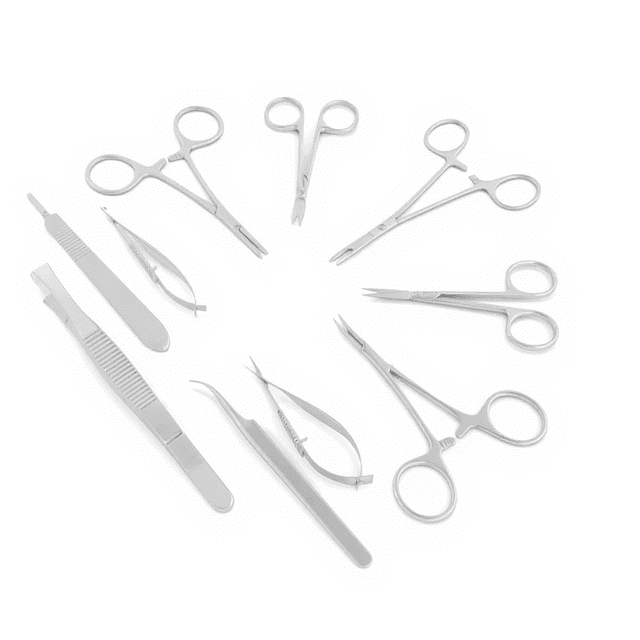
The General Surgery Kit provides comprehensive instrumentation for microsurgical procedures on small laboratory animals. Available in mouse and rat configurations, each kit contains precision instruments manufactured from stainless steel, designed for the fine manipulation required in research surgery protocols. The kit includes micro forceps with tip dimensions as small as 0.05mm x 0.01mm, VANNAS spring scissors with 0.1mm precision, and specialized needle holders for suture placement.
Each kit provides sterile instruments organized in a storage portfolio, eliminating the need for individual instrument procurement while ensuring consistent quality across surgical procedures. The inclusion of disposable scalpel blades (100 per box) and terylene sutures (50 per box) supports multiple procedures from a single kit purchase. Instruments are sized appropriately for the target species, with mouse kits featuring smaller dimensions than rat kits for optimal handling during procedures.
How It Works
The surgical instruments utilize mechanical principles of leverage and precision engineering to enable fine tissue manipulation. Micro forceps employ opposed surfaces with controlled tip geometry to grasp tissues without crushing, while the spring-loaded scissors mechanism provides consistent cutting force through elastic energy storage. The OLSEN-HEGAR needle holders combine gripping surfaces with integrated scissors, reducing instrument exchanges during suturing procedures.
Scalpel handles provide a stable platform for disposable blades, allowing controlled incision depth through ergonomic design. The terylene sutures utilize non-absorbable synthetic polymer construction for consistent tensile strength and minimal tissue reaction. Instrument tips are manufactured to precise tolerances, enabling manipulation of structures at the cellular level while maintaining sterile conditions throughout the procedure.
Features & Benefits
kit_variants
- Mouse Kit and Rat Kit available
scalpel_blade_quantity
- 100 pieces per box
suture_quantity_mouse
- 50 per box
suture_quantity_rat
- 50 per box (two types)
storage_portfolio_size
- 32x22cm
forceps_tip_precision
- 0.05mm x 0.01mm (micro)
scissor_precision
- 5x0.1mm
needle_specifications
- Various sizes including 3/8 circle, different gauges (5-0, 6-0)
Automation Level
- manual
Material
- Terylene
- Stainless Steel
Display Type
- None
Research Domain
- Cancer Research
- Cardiovascular Research
- Developmental Biology
- Metabolic Research
- Neuroscience
- Toxicology
Species
- Mouse
- Rat
Weight
- 4.41 kg
Dimensions
- L: 65.0 mm
- W: 36.0 mm
- H: 27.0 mm
Comparison Guide
| Feature | This Product | Typical Alternative | Advantage |
|---|---|---|---|
| Forceps Tip Precision | 0.05mm x 0.01mm micro forceps tips | Standard dissection forceps typically offer 0.5-1.0mm tip precision | Enables manipulation of individual tissue layers and fine structures without damage |
| Scissor Precision | 5 x 0.1mm VANNAS spring scissors | Basic scissors often lack spring-loading and precise cutting geometry | Provides consistent cutting force and precision for delicate tissue sectioning |
| Kit Organization | Complete species-specific kit with storage portfolio | Individual instruments require separate sourcing and organization | Reduces procurement time and ensures instrument compatibility across procedures |
| Disposable Components | 100 scalpel blades and 50 sutures included per kit | Consumables often sold separately in smaller quantities | Provides sufficient materials for multiple procedures while maintaining sterile conditions |
| Multi-function Design | OLSEN-HEGAR combined needle holder and scissors | Standard kits require separate needle holders and scissors | Reduces instrument exchanges and maintains sterile field during suturing procedures |
This kit provides microsurgical-grade precision instruments in a comprehensive package designed for small animal research. The inclusion of both disposable and reusable components, combined with species-specific sizing, offers advantages over individually sourced instruments for research applications requiring fine tissue manipulation.
Practical Tips
Inspect forceps tips under magnification before each use to ensure proper alignment and smooth closure.
Why: Misaligned tips can cause tissue crushing rather than precise grasping.
Arrange instruments in order of anticipated use on the sterile field to minimize handling during procedures.
Why: Reduced instrument manipulation maintains sterile conditions and improves procedure efficiency.
Use forceps rather than fingers when mounting or removing scalpel blades from handles.
Why: Prevents accidental cuts and maintains sterile technique during blade changes.
Test scissor cutting action on practice materials before beginning procedures to verify smooth operation.
Why: Spring mechanisms may require adjustment after sterilization or storage periods.
If forceps develop excessive play at the joint, apply instrument lubricant to the pivot point.
Why: Joint wear from repeated sterilization can affect precision but is easily corrected.
Document instrument lot numbers and sterilization dates for each procedure to track performance consistency.
Why: Enables correlation of surgical outcomes with instrument condition and maintenance history.
Store instruments in the provided portfolio with tips protected to prevent damage during transport.
Why: Tip damage from contact with other instruments can compromise precision in subsequent procedures.
Setup Guide
What’s in the Box
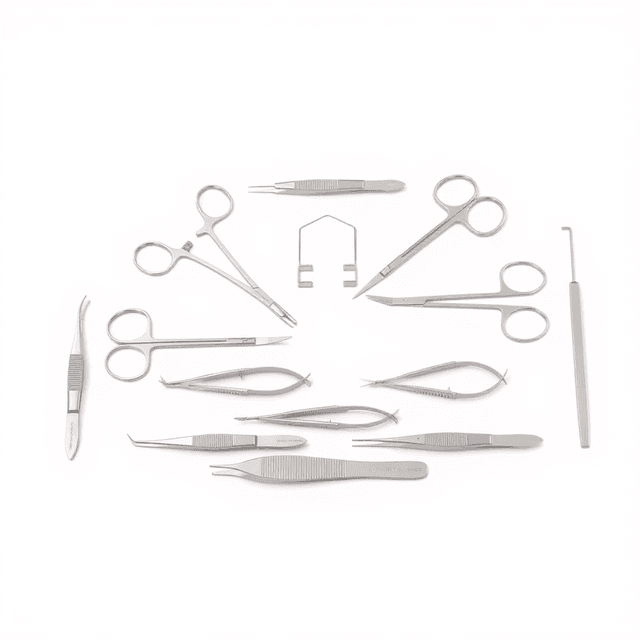
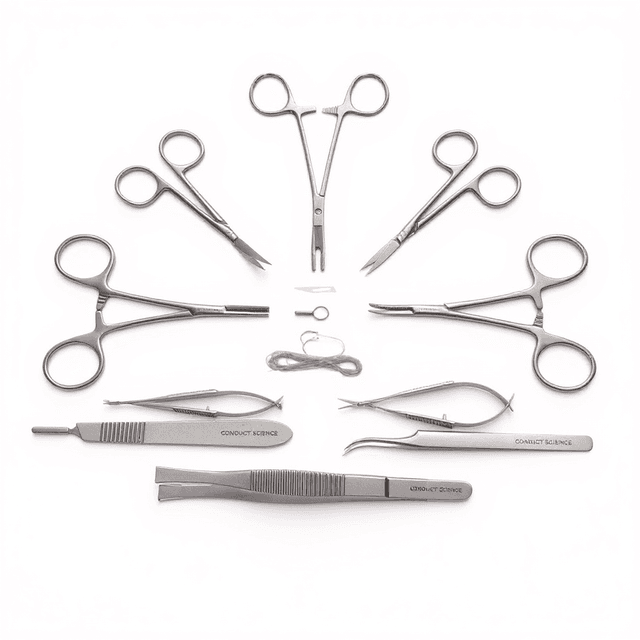
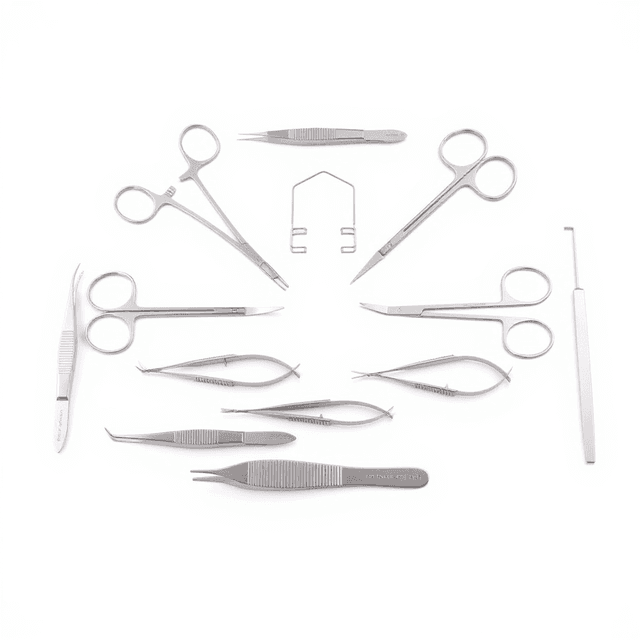
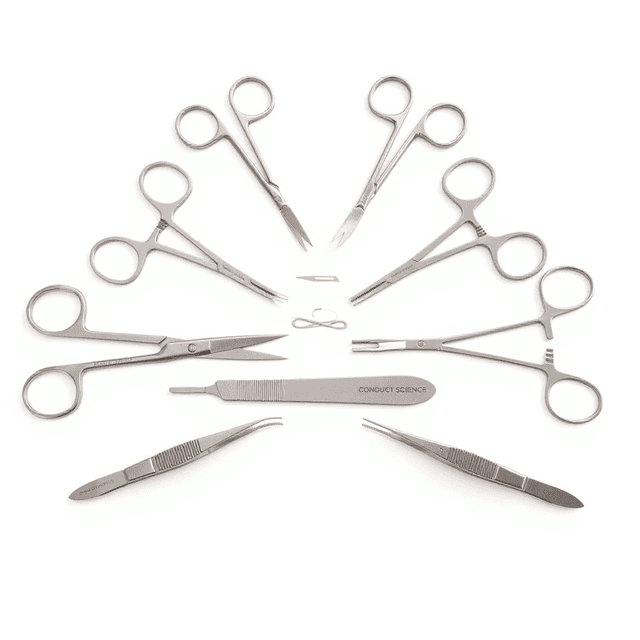
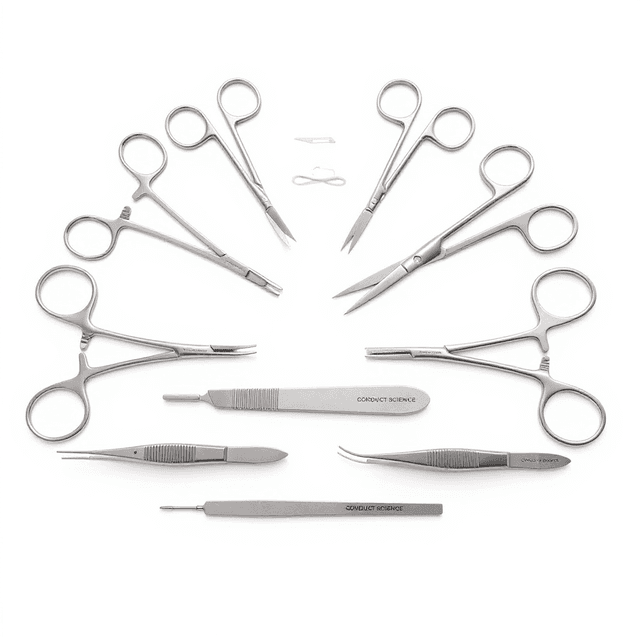
- Micro forceps - straight (0.05mm x 0.01mm tips, 11cm)
- Micro forceps - 45° angled (0.10 x 0.06mm tips, 11cm)
- Scalpel handle #3 solid (12cm)
- #11 scalpel blades (100 pieces)
- Terylene sutures with needle 5-0 (50 pieces for mouse kit)
- OLSEN-HEGAR needle holders with scissors - straight (12cm)
- VANNAS spring scissors - straight and curved (8.5cm)
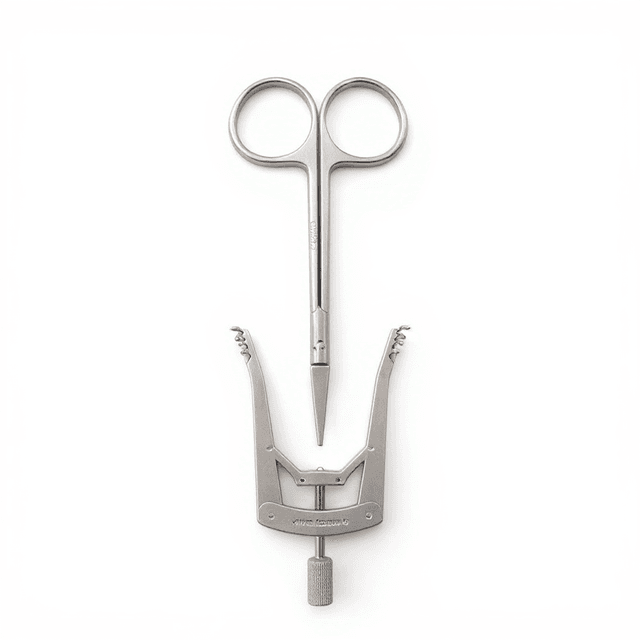
- Colibri eye specula (1.5cm spread, 4cm)
- IRIS dissecting forceps - multiple configurations (10cm)
- IRIS tissue forceps with 1x2 teeth (10cm)
- IRIS fine scissors - straight and curved (9.5cm)
- HARTMAN mosquito forceps - straight and curved (10cm)
- Instrument storage portfolio (32 x 22cm)
Warranty
ConductScience provides a one-year manufacturer warranty covering defects in materials and workmanship for all reusable instruments. Technical support is available for proper use and maintenance guidance.
Compliance
References
Background reading relevant to this product:
What sterilization methods are compatible with these instruments?
All stainless steel instruments can be autoclaved at standard parameters (121°C, 15-20 minutes). Chemical sterilization with glutaraldehyde or ethylene oxide is also compatible, though heat sterilization is preferred for routine use.
How do I select between mouse and rat kit configurations?
Mouse kits contain smaller instruments optimized for 20-30g animals, while rat kits are sized for 200-500g animals. Consider your primary species and procedure complexity when selecting.
What is the expected lifespan of the cutting instruments?
With proper use and sterilization, scissors and forceps typically maintain precision for 100-200 procedures. Inspect tips regularly for alignment and replace when precision is compromised.
Are additional sutures compatible with the needle holders?
The OLSEN-HEGAR holders accommodate standard 5-0 to 6-0 sutures with 3/8 circle needles. Consult product datasheet for complete needle size compatibility.
How should instruments be maintained between procedures?
Clean instruments immediately after use with enzymatic cleaners, followed by ultrasonic cleaning if available. Lubricate joints monthly with instrument lubricant to maintain smooth operation.
Can individual instruments be replaced if damaged?
Yes, all instruments are available individually using the catalog numbers provided. This allows targeted replacement without purchasing complete kits.
What blade types are recommended for different tissue types?
The included #11 blades provide fine cutting for most small animal procedures. For tougher tissues or larger incisions, consult product datasheet for alternative blade configurations.
Have a question about this product?
Accessories
Enhance your setup with compatible accessories
Frequently Bought Together