Hen T Maze
Behavioral apparatus for assessing spatial learning, memory, and decision-making in avian species through T-shaped choice paradigms.

Louise Corscadden, PhD
Director of Science · ConductScience
Ask Louise about Hen T Maze fit, setup, configuration, or quote prep.
Already working with us? Sign in to connect this with My Scientist.
Key Specifications
Full details →- Model fit
- Bird
- SKU family
- CS-958182
- Sizing
- Hens T maze: Height of maze 1 m
- Ordering
- Online checkout and quote request available
- Category
- Behavioral Mazes
- Build notes
- Confirm accessories, station layout, and support needs before purchase
The Hen T Maze is a specialized behavioral apparatus designed for assessing spatial learning, memory, and decision-making in avian species. This apparatus presents subjects with a T-shaped choice paradigm where animals must navigate from a start arm to one of two goal arms based on spatial cues, reward contingencies, or discrimination tasks. The maze structure allows researchers to systematically evaluate cognitive processes including spatial working memory, reference memory, and behavioral flexibility in controlled laboratory conditions.
Constructed for durability and experimental precision, the Hen T Maze enables standardized protocols for studying learning acquisition, memory retention, and cognitive performance across various experimental paradigms. The apparatus supports both spatial and non-spatial learning tasks, making it suitable for investigating how environmental factors, genetic variations, or pharmacological interventions affect cognitive function in avian models.
How It Works
The T Maze operates on the principle of spatial choice behavior, where subjects must select between two alternative pathways based on learned associations or environmental cues. Animals are typically placed at the base of the T-shaped apparatus and must navigate to one of two goal arms, with choices recorded based on first entry or time spent in each arm. The apparatus allows for systematic manipulation of reward contingencies, spatial cues, or stimulus presentations to assess different aspects of learning and memory.
Experimental protocols commonly involve training phases where subjects learn specific spatial rules or associations, followed by test phases that evaluate memory retention, transfer, or behavioral flexibility. The maze can be configured for various paradigms including spontaneous alternation (assessing working memory), forced alternation protocols, or discrimination learning tasks where subjects must learn to associate specific cues with reward locations.
Performance measures typically include choice accuracy, response latency, path efficiency, and error patterns across trials. These behavioral metrics provide quantitative assessments of cognitive function, allowing researchers to detect subtle changes in learning capacity, memory retention, or decision-making processes under different experimental conditions.
Features & Benefits
Sizes by model
| Measurement | Hens T maze |
|---|---|
| Height of maze | 1 m |
- Length of maze arms: 1.20m
- Width of maze arms: 0.40m
Behavioral Construct
- spatial learning
- working memory
- reference memory
- decision making
- cognitive flexibility
- discrimination learning
Automation Level
- manual
Research Domain
- Animal Behavior
- Behavioral Pharmacology
- Developmental Biology
- Learning and Memory
- Neuroscience
Species
- Bird
Compatible Tracking Software
- ConductVision
Shipping weight
- 6.06 lb
Shipping box
- L: 65.0 cm
- W: 36.0 cm
- H: 27.0 cm
| Feature | This Product | Typical Alternative | Advantage |
|---|---|---|---|
| Maze Complexity | Simple T-shaped design with two choice arms | More complex mazes may offer multiple choice points or radial configurations | Reduces confounding variables and simplifies data interpretation for focused cognitive assessments |
| Species Compatibility | Specifically designed for hen/avian testing | Many behavioral apparatus are designed primarily for rodent species | Provides appropriate scale and configuration for avian behavioral research applications |
| Protocol Flexibility | Supports multiple learning paradigms including spatial and non-spatial tasks | Some apparatus are limited to specific behavioral protocols | Enables diverse experimental approaches within a single testing framework |
| Setup Requirements | Manual operation with straightforward assembly | Automated systems may offer computerized control but require complex setup | Provides immediate usability without extensive technical configuration or software requirements |
The Hen T Maze provides a specialized solution for avian cognitive research with species-appropriate dimensions and straightforward operation. The apparatus offers experimental flexibility while maintaining the simplicity needed for reliable behavioral data collection across diverse research applications.
Practical Tips
Verify maze arm dimensions and choice criteria before each experimental session to ensure consistent spatial parameters.
Why: Dimensional consistency is critical for reliable behavioral data and comparison across testing sessions.
Inspect structural connections and surface integrity weekly during active use periods.
Why: Regular maintenance prevents apparatus deterioration that could introduce confounding variables into behavioral assessments.
Randomize start arm orientation across trials to prevent development of position biases.
Why: Randomization ensures that choice behavior reflects learning rather than procedural habits or spatial preferences.
Record environmental conditions including temperature, lighting, and noise levels for each testing session.
Why: Environmental documentation enables identification of potential confounding factors that might influence behavioral performance.
If subjects show reluctance to enter goal arms, verify that the apparatus is properly cleaned and check for physical barriers.
Why: Behavioral artifacts often result from olfactory contamination or structural impediments rather than cognitive deficits.
Ensure all edges and surfaces are smooth to prevent injury during subject movement and exploration.
Why: Subject safety maintains ethical standards and prevents stress responses that could confound cognitive performance measures.
Setup Guide
What’s in the Box
- T-maze main structure (typical)
- Assembly hardware and connectors (typical)
- User manual with protocol guidelines (typical)
- Cleaning and maintenance instructions (typical)
Warranty
ConductScience provides standard manufacturer warranty coverage with technical support for proper apparatus function and structural integrity. Extended support available for protocol development and experimental design consultation.
Compliance
References
Background reading relevant to this product:
Protocol and background
Introduction
The hen T-maze is used to study spatial learning and memory in hens. It has a center arm that leads to two choice arms which are joined together, forming a capital ‘T' shaped apparatus. It is an adaptation of the conventional T-maze which is used in the assessment of learning and memory in rodents.
The behavior and behavioral needs of domestic hens are influenced by several factors, including internal factors, environmental factors, and social interactions (Duncan, 1998). The two-goal arms of the hen T-maze can be set-up to provide different contexts or rewards in order to observe behaviors of hens in response to manipulation of different factors such as handling methods. These observations can then be applied to improving welfare practices in poultry. The hen T-maze can further be extended to assess learning and memory and the effects of diseases and disorders, brain lesions, and pharmacological manipulations on these capabilities. Protocols such as spontaneous alteration, wherein the arm floor color is alternated between trials, can provide insights into the cognitive capabilities of hens. Further applications of the hen T-maze can include assessment of responses to novelty, predators, and social rewards.
The hen T-maze incorporates a raiseable guillotine door near the starting end of the center arm which creates a holding area for the subject. The hen T-maze can easily be modified according to different investigatory needs by including additional guillotines doors at the entrance of the choice arms or utilizing different experimental protocols. Other T-mazes used in the evaluation of learning and memory behaviors across different species of animals include the pig T-maze, the piglet T-maze, the zebrafish bifurcating T-maze, and the ant double bifurcation T-maze.
Apparatus and Equipment
The hen T-maze consists of a center arm that leads to two choice arms that create a ‘T’ shaped maze. All the arms of the maze are equal in size and measure 1.20 m in length, 0.40 m in width, and 0.80 m in height and are covered with hinged mesh covers to prevent the subject from escaping. The center arm which also serves as the start arm has a guillotine door near the starting end which forms a holding area for the subjects. At the end of the choice arms, food rewards can be placed.
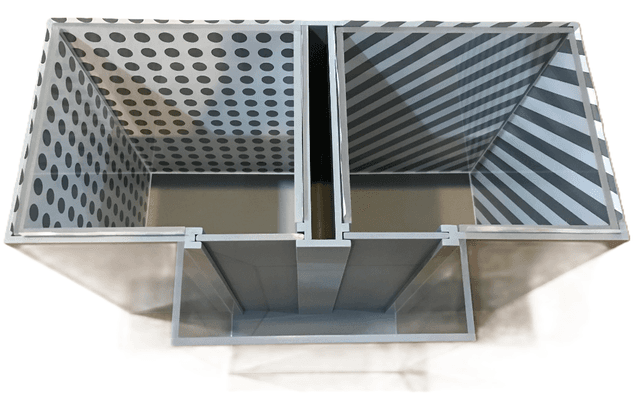
The hen T-maze can be modified by lining the choice arms with different contrasting wallpapers to make them appear visually different from each other. Additionally, guillotine doors and goal rooms can also be added in the choice arms to meet the requirements of different experimental protocols.
Training Protocol
Clean the apparatus before starting the trial and in between trials. Appropriately light the apparatus. A tracking and recording system such as the Noldus Ethovision XT can be used to assist with observations.
Habituation and Pre-training
Place the subject in the holding area. Raise the guillotine door after 30 seconds. Allow the subject to explore the maze. Let the subject visit both arms of the maze. Conduct habituation trials over the course of 4 days with each session lasting 5 minutes.
Hen T-maze task
Place the food reward in one of the choice arms. Place the subject in the holding area. Raise the guillotine door after 10 seconds. Allow the subject to explore the maze and find the reward. If the subject is immobile for 20 seconds gently encourage forward movement into the correct direction. If the subject does not enter the correct arm within 2 minutes, direct it to the correct arm using a board. Carry the subject back to the starting box after the trial ends. Conduct 1 session per subject with 5 trials per session each day. Alternate the correct choice arm in succeeding trials.
Evaluation of spatial cognition and range use in free-range hens
Campbell, Talk, Loh, Dyall, and Lee (2018) evaluated spatial cognition and range use in free-range hens. In their first experiment, thirty-one ISA Brown hens were tested to evaluate if range use patterns correlated with performance on the hen T-maze. Seventeen were outdoor-preferring hens, 8 were indoor-preferring hens, and 7 were exclusively-indoor hens. It was observed that exclusively-indoor hens showed the longest latency to reach the learning success criterion. However, no differences were observed between range access groups in the summed error rate during learning. In the second experiment, the effects of early rearing environment on the cognitive performance of 117 Hy-line Brown pullets was tested on the hen T-maze. The hens were divided into enriched and non-enriched birds of two age groups (Age group 1: 15 to 16 weeks of age; Age group 2: 17 to 18). It was observed that the non-enriched birds of age group 1 showed the longest latency to success and displayed the most errors. However, no differences were observed between treatments in age group 2. The enriched birds showed more visits to the range across the first 4 weeks, and the birds that made more errors in the task among the enriched birds tended to show fewer visits to the range. Results obtained from the two experiments showed that task performance had a relationship with the use of the outdoor range as hens that stayed indoors were slower to learn the task. For the enriched birds, maze learning rate also predicted future ranging behavior in terms of a number of daily range visits. There were no relationships between the number of errors made and the hours spent outside for either enriched or non-enriched birds. Task performance was also affected by early enrichment during rearing, but not at all tested ages.
Evaluation of the occurrence of spontaneous alternation behavior in the domestic hen
Haskell, Forkman, and Waddington (1997) investigated the occurrence of spontaneous alternation behavior in the domestic hen. Twelve adult Brown Leghorn hens (Gallus gallus domesticus) were divided into two treatment groups (handled and unhandled) and were tested on the hen T-maze for six trials per day for 9 days. Three birds from each treatment group were tested with red liners in the right arm and green in the left arm, and the other three birds received the opposite color placement. It was observed that the mean number of alternations made each day, calculated over the 9-day test period was 32%. There was no effect of treatment on the mean number of alternations over the 9-day period. The daily alternation rate did not change over the course of the experiment. The handled birds needed fewer pushes in the first days of the trial and more pushes later on. In order to gain a general measure of fear prior to maze running, the hens were subjected to a modified novel rod test. A novel rod was placed on top of the center arm on the fifth day of habituation, and the behavior of hens was analyzed. It was observed that the longer the birds took to approach the novel rod, the more alteration behavior they performed.
Evaluation of size and cage floor preferences in domestic hens
Dawkins (1978) investigated the importance of cage size and grass floors to domestic hens. Sixteen Sykes Tinted hens were evaluated in the hen T-maze with the goal arms presented with different combinations of cage set-ups. Four different types of cages were used (small and large cages with either wire or grass flooring) and the hens were tested for a combination of three choices (size test: small wire cage vs. large wire cage; floor test: small grass cage vs. large grass cage; and opposition of size and floor test: small grass cage vs. large wire cage). For each test, a bird was given a choice between the two environments presented as the alternatives on the hen T-maze. It was observed that in the floor test, the hens preferred the grass floor over the wire floor. For the size test, the hens had a preference for the larger cage than the smaller cage. Lastly, for the opposition test, the hens chose the small grass cage over the large wire one. For all tests, it was observed that the hens took a longer time to enter the cage they did not prefer.
Data Analysis
The following can be observed on the hen T-maze:
- Number of entries into the right arm
- Number of entries into the left arm
- Number of correct arm choices
- Number of incorrect arm choices
- Time spent in the right arm
- Time spent in the left arm
- Time taken to complete a trial
- Number of errors
Strengths and Limitations
Strengths
The hen T-maze is used to study spatial learning and memory in hens. It has two choice arms which can easily be modified according to different investigatory needs. Modifications can include lining the choice arms with different contrasting wallpapers (intra-maze cues) or attaching goal rooms to the choice arms ends. The maze start arm comes equipped with a guillotine door that can be used to create a start area that can help reduce stress resulting from novelty and also in the introduction of delays. The hen T-maze can also be modified through the insertion of guillotine doors. The hen T-maze can also be used to test the effects of different treatments such as brain lesions, diseases, and disorders of the nervous system, or pharmacological manipulations on learning, and memory.
Limitations
The explorative drive of subjects is highly important in the completion of the task. The behavior of subjects to perform the task may be influenced by hunger and motivation to find food. Unnecessary stimuli may affect task performance. Stress may interfere with task performance. Factors such as age, gender, and strain of the subjects may affect task behavior.
Summary
- The hen T-maze is used to study spatial learning and memory in hens.
- The hen T-maze has a center arm that leads to two choice arms which form a capital ‘T’ shaped apparatus.
- The choice arms of the maze can be modified by lining them with different contrasting wallpapers or adding goal rooms to the ends.
- The hen T-maze has a guillotine door near the starting end of the center arm which forms a holding area for the subjects before starting trials.
- The hen T-maze can be used in the observation of hens behaviors in response to exposure to different treatments such as environmental conditions and handling methods.
References
- Campbell, D., Talk, A., Loh, Z., Dyall, T., & Lee, C. (2018). Spatial cognition and range use in free-range laying hens. Animals, 8(2), 26. doi: 10.3390/ani8020026
- Dawkins, M. (1978). Welfare and the Structure of a Battery Cage : Size and Cage Floor Preferences in Domestic Hens. British Veterinary Journal, 134(5), 469–475. doi:10.1016/s0007-1935(17)33389-4
- Duncan, I. (1998). Behavior and behavioral needs. Poultry Science, 77(12), 1766–1772. doi:10.1093/ps/77.12.1766
- Haskell, M., Forkman, B., & Waddington, D. (1998). An investigation into the occurrence of spontaneous alternation behaviour in the domestic hen. Behavioural Processes, 43(1), 43–51. doi:10.1016/s0376-6357(97)00085-5
From the Maze Engineers documentation for this apparatus.
What are the optimal trial parameters for spatial learning assessment?
Typical protocols involve 8-12 trials per session with inter-trial intervals of 30-60 seconds. Training sessions should continue until subjects reach criterion performance (typically 75-80% correct choices) before proceeding to test phases.
How should the apparatus be cleaned between subjects?
Clean all surfaces with 70% ethanol solution between subjects to eliminate olfactory cues that could influence choice behavior. Allow complete drying before introducing the next subject to prevent chemical artifacts.
What behavioral measures should be recorded during testing?
Standard measures include choice accuracy, response latency, path taken, and any hesitation behaviors at the choice point. Video recording enables post-hoc analysis of movement patterns and behavioral strategies.
How do results compare with other cognitive assessment methods?
T-maze performance provides complementary data to other spatial learning tasks, with advantages in simplicity and standardization, though it may be less sensitive than complex navigation tasks for detecting subtle cognitive differences.
What factors can influence performance outcomes?
Key variables include lighting conditions, external noise, time of day, food motivation levels, and previous testing experience. Standardization of these factors is critical for reliable data collection.
What is the recommended sample size for statistical power?
Sample sizes of 8-12 subjects per group typically provide adequate power for detecting medium to large effect sizes, though specific requirements depend on the experimental design and expected effect magnitude.
Have a question about this product?
Have a question? Just ask.
Send it over and we'll email you a personalized answer — no call, no scheduling.
Prefer to talk it through?