Infusion Pump
Precision benchtop infusion pump for controlled fluid delivery in research applications, supporting programmable flow rates and dosing protocols.

Louise Corscadden, PhD
Neuroscience · ConductScience
Ask Louise about Infusion Pump fit, setup, configuration, or quote prep.
Already working with us? Sign in to connect this with My Scientist.
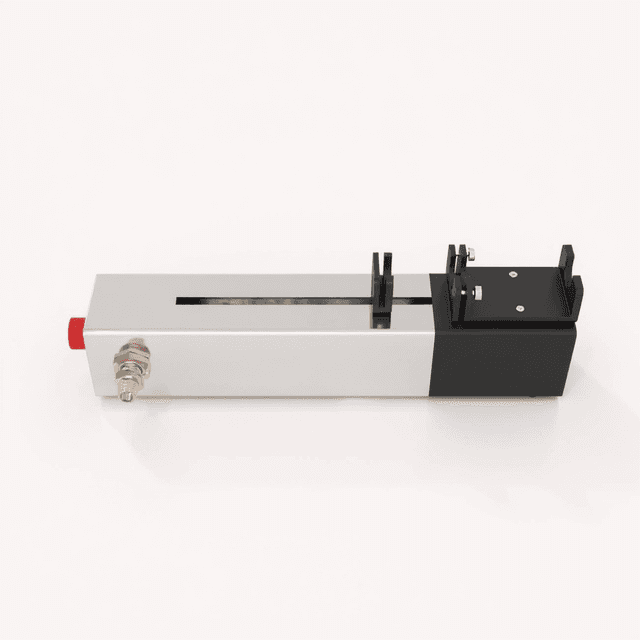
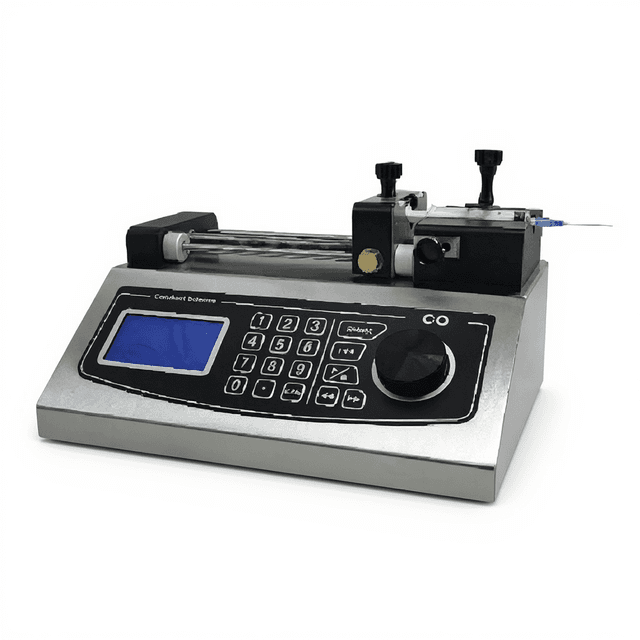
The Infusion Pump (BIO-0863) is a precision fluid delivery system designed for controlled administration of solutions in research and clinical applications. This benchtop instrument provides accurate, programmable flow rates for delivering drugs, nutrients, or other fluids to experimental systems or subjects over extended periods.
The system enables researchers to maintain consistent dosing protocols in pharmacokinetic studies, toxicology research, and behavioral experiments requiring continuous or intermittent compound administration. The programmable interface allows for complex infusion patterns including bolus doses, continuous infusion, and stepped protocols to support diverse experimental designs.
How It Works
The infusion pump operates using a precision mechanical drive system that controls fluid flow through calibrated tubing. A motorized mechanism advances a plunger or rotates a peristaltic chamber at programmed rates, creating positive displacement that drives fluid through the delivery line at controlled volumetric flow rates.
Flow accuracy is maintained through feedback control systems that monitor motor position and adjust drive speed to compensate for pressure variations and tubing compliance. The programmable control system allows users to set infusion rates, total volumes, and time-based protocols, with safety features to detect occlusions, air bubbles, or empty reservoirs.
The system calculates delivery volumes based on tubing internal diameter and linear advancement rates, providing precise control over fluid administration from microliters per hour to milliliters per minute depending on configuration.
Features & Benefits
Automation Level
- semi-automated
Brand
- ConductScience
Research Domain
- Addiction Research
- Behavioral Pharmacology
- Cardiovascular Research
- Pain Research
- Pharmaceutical QC
- Toxicology
Species
- Non-human Primate
- Rabbit
- Mouse
- Rat
- Guinea pig
Weight
- 29.98 kg
Dimensions
- L: 42.0 mm
- W: 43.6 mm
- H: 38.0 mm
| Feature | This Product | Typical Alternative | Advantage |
|---|---|---|---|
| Flow Rate Range | Consult product datasheet for specific flow rate capabilities | Entry-level pumps often offer limited flow rate ranges | Broader flow rate ranges accommodate diverse experimental protocols from microinfusions to rapid loading doses |
| Programming Flexibility | Programmable control with customizable infusion patterns | Basic models may offer only constant rate infusion | Complex dosing protocols enable sophisticated pharmacokinetic modeling and behavioral studies |
| Safety Features | Comprehensive alarm system with occlusion detection | Lower-cost units may have minimal safety monitoring | Enhanced safety features prevent experimental failures and ensure subject welfare during long-term studies |
| Data Documentation | Digital logging and monitoring capabilities | Manual pumps require operator recording | Automated data logging supports regulatory compliance and protocol verification requirements |
This infusion pump provides programmable control with comprehensive safety monitoring for precise fluid delivery in research applications. The digital interface and data logging capabilities support complex experimental protocols requiring accurate dosing documentation.
Practical Tips
Verify flow accuracy monthly using gravimetric measurement over extended time periods rather than short-term volume checks.
Why: Long-term measurements reveal systematic errors that brief tests may miss due to measurement uncertainty.
Replace tubing sets regularly and inspect for micro-cracks or stress points that could affect flow accuracy.
Why: Tubing degradation can introduce flow variations and potential failure points during critical experiments.
Pre-warm solutions to room temperature before infusion to minimize viscosity-related flow variations.
Why: Temperature-dependent viscosity changes can affect flow accuracy, particularly with protein solutions or viscous compounds.
Check for air bubbles in tubing if flow rates become erratic or occlusion alarms activate incorrectly.
Why: Air bubbles compress under pressure and create flow irregularities that can trigger false alarms.
Record ambient temperature and pressure conditions when documenting infusion parameters for environmental control.
Why: Environmental factors can affect fluid viscosity and pump performance, impacting experimental reproducibility.
Set appropriate pressure limits based on tubing specifications and experimental requirements to prevent line rupture.
Why: Excessive pressure can cause tubing failure and potential contamination or safety hazards in the experimental setup.
Use dedicated tubing sets for different compound classes to prevent cross-contamination between experiments.
Why: Residual compounds in tubing can interfere with subsequent experiments, particularly in sensitive pharmacological studies.
Setup Guide
What’s in the Box
- Infusion pump main unit (typical)
- Power adapter and cord (typical)
- Tubing set assortment (typical)
- Syringe mounting hardware (typical)
- User manual and quick start guide (typical)
- Calibration verification accessories (typical)
Warranty
ConductScience provides a standard one-year manufacturer warranty covering defects in materials and workmanship, with technical support for setup and operational guidance.
Compliance
References
Background reading relevant to this product:
What flow rate accuracy can be achieved with this infusion pump?
Flow rate accuracy specifications vary by tubing type and flow rate range. Consult the product datasheet for specific accuracy values at your intended operating parameters.
Can the pump handle viscous solutions or suspensions?
Pump performance with viscous fluids depends on viscosity levels and tubing selection. Higher viscosity solutions may require larger tubing diameters and reduced flow rates.
How is the pump calibrated for different syringe sizes?
Calibration involves entering syringe diameter and plunger travel distance into the control system. Most pumps include preset calibrations for common syringe sizes.
What data recording capabilities are available?
Data logging features typically include infusion rate, volume delivered, pressure readings, and alarm events. Consult product specifications for available data output formats.
How does occlusion detection work?
Occlusion detection monitors pressure buildup or motor load increases that indicate blockages. Sensitivity settings can typically be adjusted based on tubing type and expected pressures.
Can multiple pumps be synchronized for multi-channel delivery?
Synchronization capabilities depend on the specific model and control interface. Some systems support master-slave configurations or computer control of multiple units.
What maintenance is required for reliable operation?
Regular maintenance includes tubing replacement, calibration verification, cleaning of contact surfaces, and periodic flow accuracy checks according to usage frequency.
Have a question about this product?
Accessories
Enhance your setup with compatible accessories
Upgrade Options