Jar Tester
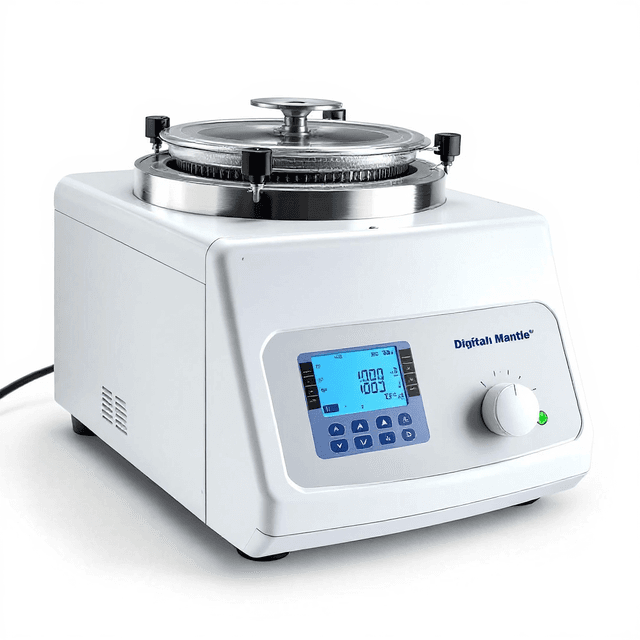
Programmable jar tester with stepless speed control (20–1000 rpm) and 10-step timing sequences for flocculation and coagulation optimization studies.
Available in 4-paddle and 6-paddle configurations.

Louise Corscadden, PhD
Director of Science · ConductScience
Ask Louise about Jar Tester fit, setup, configuration, or quote prep.
Already working with us? Sign in to connect this with My Scientist.
Key Specifications
Full details →- Model fit
- 2 selectable configurations
- SKU family
- Assigned during quote
- Shipping box
- 21.0 x 55.0 x 39.0 cm
- Ordering
- Online checkout and quote request available
- Category
- Benchtop Instruments
- Build notes
- Confirm accessories, station layout, and support needs before purchase
The ConductScience Jar Tester is a programmable flocculation testing instrument designed for water treatment optimization and coagulation studies. Available in 4-paddle and 6-paddle configurations, this benchtop system accommodates multiple simultaneous test samples with independent stirring control, enabling parallel evaluation of coagulant dosing, pH adjustment, and mixing parameters. The instrument provides stepless speed regulation from 20 to 1000 rpm with programmable timing sequences, supporting standardized jar testing protocols for municipal water treatment, industrial wastewater processing, and research applications.
The system features a 10-step programmable controller with individual timing control for each phase (0–99 minutes 59 seconds per step), allowing precise replication of full-scale treatment processes. Speed gradient control (10–1000/s for round beakers) enables optimization of floc formation kinetics and settling characteristics across different water matrices. Both configurations support 12 storable program groups with synchronous or independent paddle operation modes.
How It Works
Jar testing simulates full-scale water treatment processes through controlled mixing and settling phases. The instrument provides independent paddle stirrers for each beaker, generating uniform velocity gradients that promote particle collision and floc formation. During rapid mixing (typically 100-300 rpm), coagulant chemicals are dispersed and destabilize suspended particles through charge neutralization. The subsequent slow mixing phase (20-50 rpm) allows gentle agitation that promotes floc growth without breakage.
Speed gradient (G-value) calculation relates mixing intensity to floc formation kinetics, with the instrument providing gradients from 10-1000/s for round beakers. The programmable controller enables precise replication of treatment plant hydraulic conditions, with each of the 10 steps allowing independent speed and time settings. This systematic approach permits direct comparison of treatment alternatives under identical mixing conditions, supporting optimization of coagulant type, dosage, pH adjustment, and mixing energy input.
Features & Benefits
Automation Level
- semi-automated
Speed Range
- 20~1000rpm, in 1-rpm increments
Speed Gradient(G value)
- 10~1000/s (round beaker)
Running Time
- Each step: 0~99min59s, 10 steps each program, 12 program groups
Temperature Range
- 0~50℃, accuracy ±1℃
Brand
- ConductScience
Research Domain
- Analytical Chemistry
- Environmental Monitoring
- Food Science
- Industrial Hygiene
- Materials Science
- Pharmaceutical QC
Power/Voltage
- AC110V, 50/60Hz
Shipping weight
- 11.0 lb
Shipping box
- L: 21.0 cm
- W: 55.0 cm
- H: 39.0 cm
| Feature | This Product | Typical Alternative | Advantage |
|---|---|---|---|
| Number of Test Positions | 4 simultaneous testing positions | Entry-level models often offer 1-2 positions | Enables parallel testing of multiple treatment conditions, reducing analysis time and ensuring identical environmental conditions. |
| Speed Range | 10-1000 rpm with stepless regulation | Basic models may offer fixed speed increments or limited range | Provides precise mixing intensity control for optimization of both rapid and slow mixing phases. |
| Programming Capability | 10-step programmable controller with individual timing (0-99min59s per step) | Manual models require operator attention throughout testing | Enables complex automated sequences that replicate full-scale treatment processes without operator intervention. |
| Speed Gradient Control | Calculated G-values from 10-1000/s for round beakers | Basic units may not provide G-value calculation | Allows standardized comparison with treatment plant hydraulic conditions and optimization based on mixing energy. |
| Power Requirements | 80W consumption, AC220V±10% | Higher power units may require specialized electrical connections | Energy-efficient operation suitable for standard laboratory electrical systems without additional infrastructure. |
| Benchtop Footprint | 550×390×210mm compact design | Larger units may require dedicated bench space | Fits standard laboratory benchtops while providing full 4-position jar testing capability. |
This jar tester combines automated programming capability with precise speed control across four testing positions. The stepless speed regulation and 10-step controller provide sophisticated mixing sequence capabilities typically found in higher-end laboratory instruments while maintaining a compact benchtop design suitable for routine water quality testing.
| Model | SKU | Listed price | Status | Shipping box |
|---|---|---|---|---|
| 4-Paddle | BIO-0811-4P | $4,364.99 | Available | 55.0 x 39.0 x 21.0 cm |
| 6-Paddle | BIO-0811-6P | $5,749.99 | Available | 108.0 x 35.0 x 40.0 cm |
Practical Tips
Verify speed accuracy using a non-contact tachometer at key operating points (50, 200, and 500 rpm) monthly.
Why: Speed accuracy directly affects G-value calculations and reproducibility of flocculation kinetics.
Clean paddle assemblies immediately after testing with acidic or high-mineral content samples to prevent buildup.
Why: Chemical deposits can alter paddle geometry and affect mixing patterns in subsequent tests.
Allow the instrument to reach room temperature before testing when moved from different storage conditions.
Why: Temperature variations can affect motor performance and timing accuracy during programmed sequences.
Use consistent beaker positioning and sample volumes across all four positions for comparable results.
Why: Variations in paddle immersion depth or sample volume can create different mixing conditions and affect flocculation performance.
If mixing appears uneven, check paddle alignment and ensure all drive couplings are properly seated.
Why: Misaligned paddles create inconsistent velocity gradients and can cause sample cross-contamination.
Document water temperature and sample pH at the start of each jar test series, as these affect coagulation chemistry.
Why: Temperature and pH significantly influence coagulant performance and floc formation kinetics independent of mixing parameters.
Ensure the unit is powered off before installing or removing paddle assemblies to prevent accidental startup.
Why: Rotating paddles can cause injury and damage to equipment if the unit starts unexpectedly during maintenance.
Setup Guide
What’s in the Box
- Main unit with 4 mixer heads
- 4 connection cables
- Power cable (AC110V)
- 4 acrylic beakers with sampling valves
- Temperature sensor with cable
- 4 glass funnels
- 4 test tubes (16x100mm)
- 4 stainless steel paddles
- Carrying case
- Screwdriver
- Operation manual
- Quality certificate
Warranty
ConductScience provides a standard one-year manufacturer warranty covering defects in materials and workmanship. Technical support includes programming assistance and method development guidance for jar testing applications.
Compliance
What beaker sizes are compatible with the paddle assemblies?
The system is designed for standard jar testing beakers. Consult the product datasheet for specific beaker diameter and volume specifications compatible with the paddle assemblies and mixing chamber dimensions.
Can different mixing speeds be programmed for each of the four positions simultaneously?
The speed control appears to be synchronized across all four positions. For independent speed control per position, consult the product datasheet to confirm whether individual position programming is available.
How is the speed gradient (G-value) calculated and displayed?
The system provides G-values from 10-1000/s for round beakers. The calculation method and display format should be confirmed in the user manual, as G-value depends on paddle geometry and beaker configuration.
What is the minimum sample volume required for effective mixing?
Sample volume requirements depend on paddle immersion depth and beaker geometry. Consult the product datasheet for minimum and maximum volume specifications to ensure proper mixing performance.
Can the programmed mixing sequences be saved and recalled for repeated testing?
The 10-step programmable controller allows complex sequence development. Check the user manual to determine if programs can be stored in memory for repeated use or if manual reprogramming is required.
What maintenance is required for the paddle assemblies and drive mechanisms?
Regular cleaning of paddle assemblies and periodic lubrication of drive components are typically required. Consult the maintenance manual for specific service intervals and recommended procedures.
Is the unit suitable for testing corrosive samples or extreme pH conditions?
Material compatibility depends on the paddle and wetted component construction. Review the product specifications for chemical resistance information when testing acidic, basic, or corrosive samples.
How does this compare to manual jar testing procedures?
The automated timing and programmable speed control provide better reproducibility than manual jar testing, while the four-position design enables parallel testing that would require multiple operators with manual equipment.
Have a question about this product?
Have a question? Just ask.
Send it over and we'll email you a personalized answer — no call, no scheduling.
Prefer to talk it through?