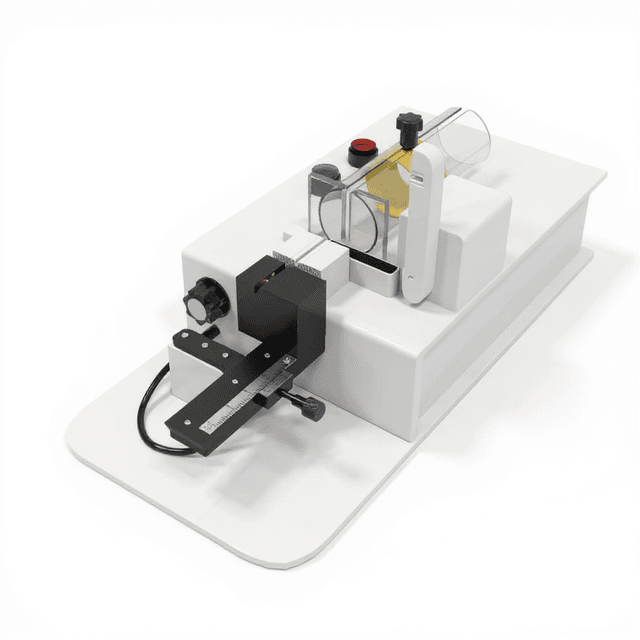
LCD Screen Laboratory Constant Syringe Pump
Precision syringe pump with LCD display offering 5μm/min to 130mm/min flow rates, ±0.5% accuracy, and RS485 communication for microinjection and infusion applications.
| linear_velocity_range | 5μm/min to 130mm/min |
| syringe_volume_range | 10μl to 60ml |
| operation_modes | push-pull mode for filling and extraction |
| communication_interface | RS485 |
| stroke_resolution | 0.156μm |
| interface_features | large-screen LCD display, digital knob, membrane button |
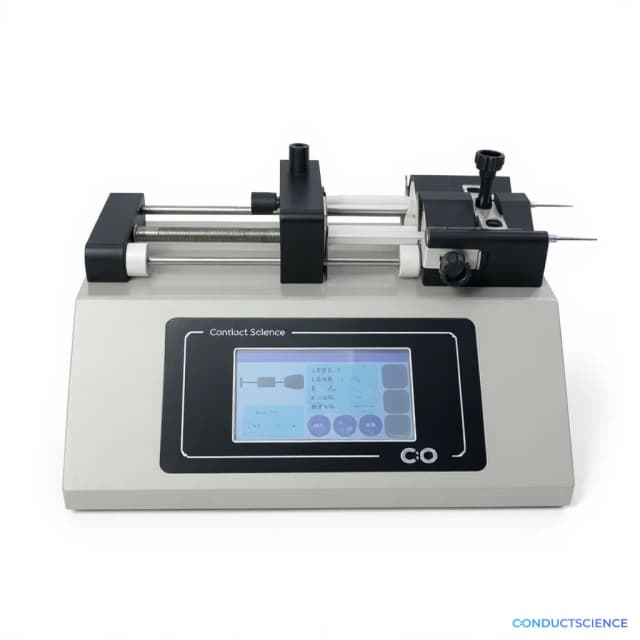
The LCD Screen Laboratory Constant Syringe Pump delivers precise liquid handling for microinjection and infusion applications in biological research. Available in single-channel (CS-LSP01-1Y) and dual-channel (CS-LSP02-1Y) configurations, this pump operates across a wide linear velocity range from 5μm/min to 130mm/min with an accuracy of ≤±0.5% and stroke resolution of 0.156μm. The system accommodates syringes from 10μL to 60mL capacity and features built-in compatibility with major syringe manufacturers.
The pump operates in push-pull mode for both filling and extraction operations, controlled through an intuitive interface featuring a large LCD display, digital knob, and membrane buttons. RS485 communication enables computer control and background software integration. Safety features include traffic jam protection, syringe protection, and liquid volume calibration functions, while the external control interface provides input/output control capabilities for laboratory automation integration.
How It Works
The syringe pump operates through precision stepper motor control to drive a lead screw mechanism that advances or retracts the syringe plunger at programmable rates. The motor's rotational motion is converted to linear displacement through the lead screw assembly, achieving stroke resolution of 0.156μm. The microprocessor-controlled system maintains constant flow rates by calculating the required plunger advancement based on syringe diameter and target velocity.
Push-pull operation enables both infusion and withdrawal modes through bidirectional motor control. The system continuously monitors syringe position and flow resistance, implementing traffic jam protection that detects blockages or excessive back-pressure. Liquid volume calibration compensates for syringe manufacturing tolerances and thermal expansion effects that could affect delivery accuracy.
The RS485 communication interface allows computer control through standard serial protocols, enabling integration with laboratory automation systems and data acquisition software. The external control interface provides TTL-compatible input/output signals for triggering pump operations or synchronizing with other experimental equipment.
Features & Benefits
linear_velocity_range
- 5μm/min to 130mm/min
syringe_volume_range
- 10μl to 60ml
operation_modes
- push-pull mode for filling and extraction
communication_interface
- RS485
stroke_resolution
- 0.156μm
interface_features
- large-screen LCD display, digital knob, membrane button
protection_functions
- traffic jam protection, syringe protection, liquid volume calibration
control_interface
- external control interface with input/output control function
compatible_syringes
- built-in selection of main syringe manufacturers and models
Channels
- Single Channel
- Dual Channel
Automation Level
- semi-automated
Accuracy
- ≤ ± 0.5%
- 0.156μm
Species
- Mouse
- Rat
Display Type
- LCD
Research Domain
- Analytical Chemistry
- Cell Biology
- Developmental Biology
- Microbiology
- Neuroscience
- Pharmaceutical QC
- Toxicology
Weight
- 14.0 lbs
Dimensions
- L: 38.1 in
- W: 33.02 in
- H: 22.86 in
Comparison Guide
| Feature | This Product | Typical Alternative | Advantage |
|---|---|---|---|
| Flow Rate Range | 5μm/min to 130mm/min (five orders of magnitude) | Entry-level models often limited to narrower ranges | Covers both ultra-slow microinjections and moderate perfusion rates in a single instrument |
| Stroke Resolution | 0.156μm precision | Basic pumps typically offer 1-10μm resolution | Enables nanoliter-level precision for critical microinjection applications |
| Channel Configuration | Single or dual-channel options | Many models offer only single-channel operation | Dual-channel capability doubles experimental throughput and enables parallel studies |
| Communication Interface | RS485 with external I/O control | Basic models often lack computer interface | Supports laboratory automation and equipment synchronization for complex protocols |
| Display and Controls | Large LCD screen with digital knob and membrane buttons | Simple LED displays or basic interfaces common | Intuitive operation with clear parameter visualization reduces setup time and errors |
| Syringe Compatibility | Built-in database of major manufacturer syringe profiles | Manual calibration required for different syringes | Automatic syringe recognition eliminates calibration steps and reduces setup complexity |
This pump combines ultra-high precision with broad flow rate capability and advanced connectivity features. The built-in syringe database and dual-channel option provide operational efficiency advantages for high-throughput laboratories.
Practical Tips
Perform liquid volume calibration monthly or when changing syringe types to maintain accuracy specifications.
Why: Compensates for syringe manufacturing tolerances and thermal expansion effects that can affect delivery precision.
Clean the syringe mechanism with appropriate solvents after each use and inspect O-rings quarterly.
Why: Prevents cross-contamination and maintains seal integrity for consistent flow performance.
Prime the system and tubing completely before starting critical experiments to eliminate air bubbles.
Why: Air bubbles can cause flow irregularities and compromise delivery accuracy, especially at low flow rates.
If traffic jam protection activates, check for kinked tubing or blocked needles before restarting.
Why: Addressing the root cause prevents repeated alarms and potential damage to experimental preparations.
Record syringe serial numbers and calibration dates in experimental logs for traceability.
Why: Enables accurate volume calculations and supports data integrity requirements in regulated environments.
Use appropriate personal protective equipment when handling syringes and ensure proper disposal of contaminated components.
Why: Protects operators from exposure to potentially hazardous experimental materials and maintains laboratory safety standards.
Start with conservative flow rates and gradually increase to optimize for your specific application requirements.
Why: Prevents damage to delicate experimental preparations and allows optimization of delivery parameters.
Verify flow rate accuracy using gravimetric methods with water at room temperature for critical applications.
Why: Provides independent verification of pump performance and ensures delivery accuracy meets experimental requirements.
Setup Guide
What’s in the Box
- LCD Screen Laboratory Constant Syringe Pump main unit
- Power adapter and cord
- RS485 communication cable (typical)
- Syringe mounting hardware (typical)
- User manual and quick start guide
- Calibration certificate (typical)
- Software CD for computer control (typical)
Warranty
ConductScience provides a standard one-year manufacturer warranty covering defects in materials and workmanship. Technical support includes application assistance and troubleshooting guidance throughout the warranty period.
Compliance
What is the minimum achievable flow rate for microinjection applications?
The pump operates down to 5μm/min, suitable for ultra-slow microinjections. At this rate with a 10μL syringe, delivery time would be approximately 2000 minutes per microliter.
How does the syringe protection function work?
The system monitors back-pressure and plunger force to detect blockages or excessive resistance. When detected, the pump automatically stops operation and displays an alert to prevent syringe damage.
Can the pump be controlled remotely during experiments?
Yes, RS485 communication enables full remote control including start/stop commands, flow rate changes, and status monitoring through compatible laboratory software.
What syringe sizes are supported by the built-in database?
The system includes profiles for major syringe manufacturers covering volumes from 10μL to 60mL. Custom syringe parameters can be manually programmed if needed.
How accurate is the volume delivery over extended infusion periods?
The system maintains ≤±0.5% accuracy with 0.156μm stroke resolution. Long-term drift is minimized through temperature compensation and periodic calibration.
What maintenance is required for optimal performance?
Regular cleaning of the syringe mechanism, periodic calibration verification, and replacement of worn tubing connections. No internal maintenance is required under normal use.
Can multiple pumps be synchronized for complex protocols?
Yes, the external control interface provides trigger inputs and outputs for synchronizing multiple pumps or coordinating with other laboratory equipment.
What is the maximum back-pressure the pump can overcome?
Consult product datasheet for specific pressure ratings, which vary based on syringe size and flow rate requirements.
Have a question about this product?
Accessories
Enhance your setup with compatible accessories
Frequently Bought Together