Light Dark Box
Behavioral testing apparatus for assessing anxiety-like behavior and exploratory tendencies in rodents through light-dark preference paradigm.
| Automation Level | semi-automated |

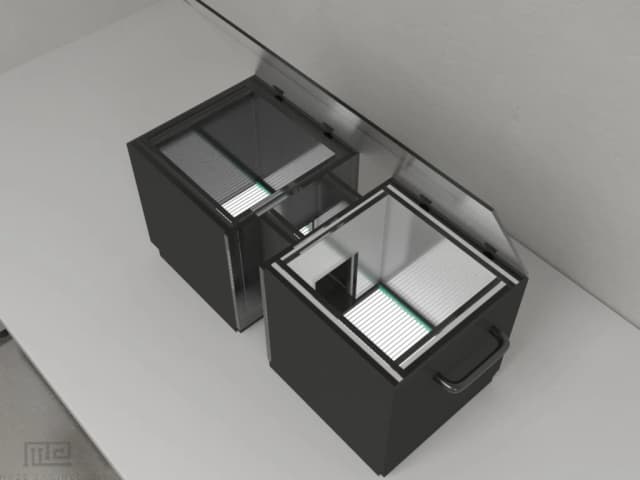
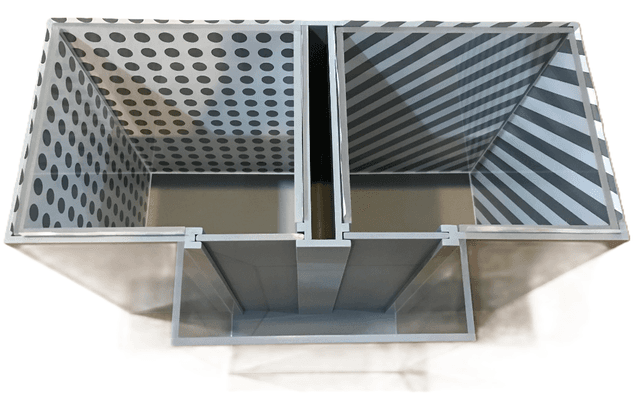
The Light Dark Box is a behavioral testing apparatus designed to assess anxiety-like behavior and exploratory tendencies in rodents. This standardized paradigm exploits the natural conflict between a rodent's innate drive to explore novel environments and its aversion to brightly illuminated open spaces. The apparatus consists of two connected chambers with contrasting lighting conditions, allowing researchers to quantify approach-avoidance behaviors, thigmotaxis, and locomotor activity patterns.
Available in species-specific configurations for mice and rats, the system features an IR-permeable dark chamber that enables video tracking and behavioral analysis while maintaining the chamber's perceived darkness to the test subject. The acrylic construction provides durability and ease of decontamination between test sessions, making it suitable for high-throughput behavioral phenotyping studies. The apparatus supports both acute pharmacological interventions and chronic behavioral assessments in neuroscience and behavioral pharmacology research.
How It Works
The Light Dark Box test exploits the natural behavioral conflict in rodents between exploratory drive and aversion to open, brightly illuminated spaces. Rodents exhibit an innate preference for dark, enclosed environments while simultaneously displaying exploratory behavior toward novel areas. This paradigm creates an approach-avoidance conflict that manifests as measurable behavioral parameters including time spent in each chamber, transition frequency, and locomotor activity patterns.
The apparatus features an IR-permeable dark chamber that appears dark to the rodent while allowing infrared video tracking systems to record behavior. Test subjects are typically placed in the dark chamber initially and allowed free access to both compartments. Anxiety-like behavior is characterized by reduced time in the light chamber, fewer transitions between chambers, and increased thigmotactic behavior (wall-following) in the light compartment. The standardized chamber dimensions and door size ensure consistent testing conditions across studies.
Behavioral endpoints are quantified through automated video tracking or manual scoring, with typical measures including latency to first light chamber entry, total time spent in each chamber, number of transitions, rearing behavior, and locomotor activity. The test duration is typically 5-10 minutes, with data analysis focusing on the proportion of time and activity in each chamber relative to baseline exploratory behavior.
Features & Benefits
Behavioral Construct
- Anxiety-like behavior
- Exploratory behavior
- Approach-avoidance behavior
- Thigmotaxis
- Locomotor activity
Automation Level
- semi-automated
Research Domain
- Addiction Research
- Anxiety and Depression
- Behavioral Pharmacology
- Learning and Memory
- Neuroscience
- Toxicology
Species
- Mouse
- Rat
Weight
- 21.0 kg
Dimensions
- L: 43.2 mm
- W: 38.0 mm
- H: 27.9 mm
Comparison Guide
| Feature | This Product | Typical Alternative | Advantage |
|---|---|---|---|
| Chamber Configuration | Species-specific optimized dimensions with 17.5x40cm dark and 25x40cm light chambers for mice, 20x40cm dark and 30x40cm light for rats | Standard models often use fixed dimensions regardless of species | Ensures appropriate spatial relationships for natural behavioral expression in each species |
| Dark Chamber Design | IR-permeable dark chamber allowing complete video tracking while maintaining perceived darkness | Basic dark chambers may compromise either tracking capability or light-dark contrast | Enables automated behavioral analysis without sacrificing paradigm validity |
| Surface Treatment | Matte finish to eliminate reflective glare | Standard acrylic often has glossy surfaces that can interfere with tracking | Improves video tracking accuracy and reduces visual artifacts during recording |
| Construction Material | Odor-resistant acrylic with easy ethanol cleaning compatibility | Some models use materials that retain odors or require specialized cleaning | Prevents olfactory contamination between test sessions that could confound results |
This Light Dark Box offers species-optimized chamber dimensions, IR-permeable dark chamber design for complete behavioral tracking, and odor-resistant construction with standardized cleaning protocols. The matte surface treatment and durable acrylic construction support high-throughput behavioral studies with consistent reproducibility.
Practical Tips
Verify light chamber illumination levels regularly using a calibrated lux meter to maintain consistent 400-1000 lux lighting conditions.
Why: Consistent lighting conditions are critical for reproducible anxiety-related behavioral responses across test sessions.
Inspect the connecting door mechanism weekly to ensure smooth operation and proper alignment between chambers.
Why: Door functionality affects natural transition behavior and can introduce artifacts if animals hesitate due to mechanical issues.
Place test subjects initially in the dark chamber and allow a 30-second acclimation period before beginning behavioral recording.
Why: Initial dark chamber placement provides a standardized starting condition and reduces variability in first light chamber exploration latency.
If animals show excessive freezing behavior, reduce ambient noise levels and ensure the testing room is isolated from laboratory traffic.
Why: External disturbances can overwhelm the light-dark behavioral paradigm and lead to non-specific anxiety responses.
Record baseline locomotor activity in the dark chamber during the first minute to normalize subsequent behavioral measures.
Why: Individual differences in general activity levels can be factored out to better isolate anxiety-specific behavioral changes.
Ensure all acrylic edges are smooth and free of sharp corners that could potentially injure test subjects.
Why: Animal welfare requirements and potential injury artifacts that could confound behavioral measurements.
Standardize the time of day for testing sessions to account for circadian influences on anxiety-related behaviors.
Why: Rodent activity patterns and stress hormone levels vary throughout the light-dark cycle, affecting behavioral responses.
Monitor for habituation effects by tracking behavior changes across repeated testing sessions in longitudinal studies.
Why: Repeated exposure to the apparatus can reduce anxiety responses and affect the validity of chronic treatment assessments.
Setup Guide
What’s in the Box
- Light Dark Box apparatus (species-specific configuration)
- Acrylic chamber components
- Assembly hardware and connectors
- User manual and setup instructions (typical)
- Cleaning and maintenance guidelines (typical)
Warranty
ConductScience provides a standard one-year manufacturer warranty covering defects in materials and workmanship, with technical support available for setup and operational guidance.
Compliance
References
Background reading relevant to this product:
What is the Light Dark Box?
The Light Dark Box is a two-compartment behavioral apparatus used to measure anxiety-like behavior based on the innate aversion of rodents to brightly illuminated areas and their exploratory drive.
How does the Light Dark Box work?
The apparatus has a brightly lit compartment connected to a dark enclosed compartment. Rodents freely move between them. Latency to enter the light side, time spent in light, and number of transitions quantify anxiety levels.
What research applications use the Light Dark Box?
The Light Dark Box is used for rapid anxiolytic drug screening, phenotyping of transgenic mouse lines, and studies of light-aversion in migraine models. Its simplicity makes it ideal for high-throughput behavioral testing.
Have a question about this product?
Accessories
Enhance your setup with compatible accessories
Frequently Bought Together
Upgrade Options