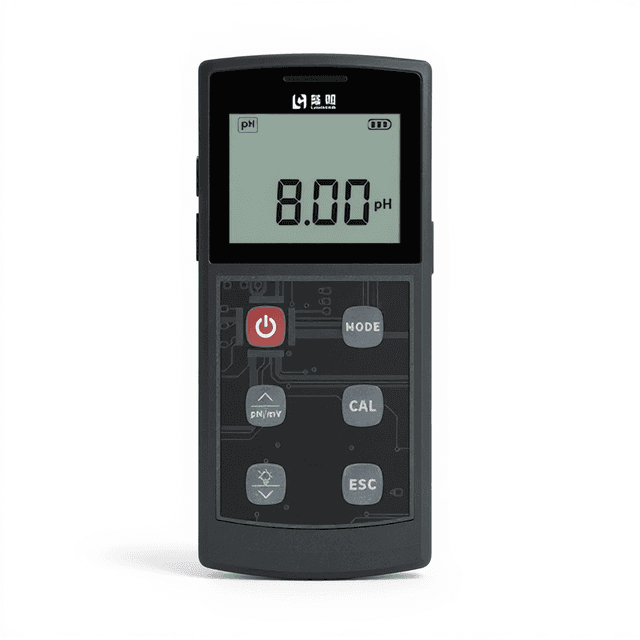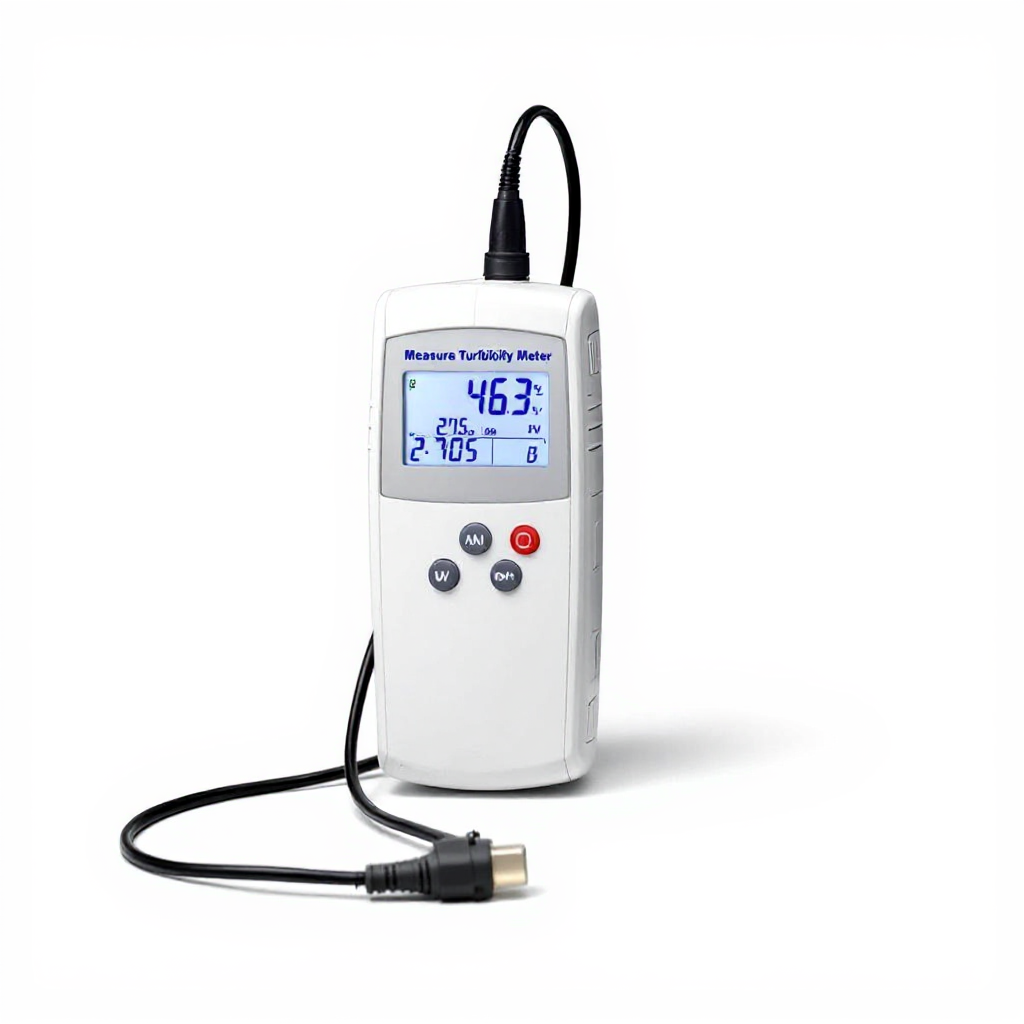
Measure Turbidity Water Meter
Portable dual-detector turbidity meter combining nephelometric and transmitted light methods with near-infrared light source for accurate suspended solids measurement in the 0-200 NTU range.

Louise Corscadden, PhD
Director of Science · ConductScience
Ask Louise about Measure Turbidity Water Meter fit, setup, configuration, or quote prep.
Already working with us? Sign in to connect this with My Scientist.
Key Specifications
Full details →- Model fit
- Configured during quote
- SKU family
- CS-LH-Z2A
- Shipping box
- 17 x 7.2 x 4.4 cm
- Ordering
- Online checkout and quote request available
- Category
- Portable Analyzers
- Build notes
- Confirm accessories, station layout, and support needs before purchase
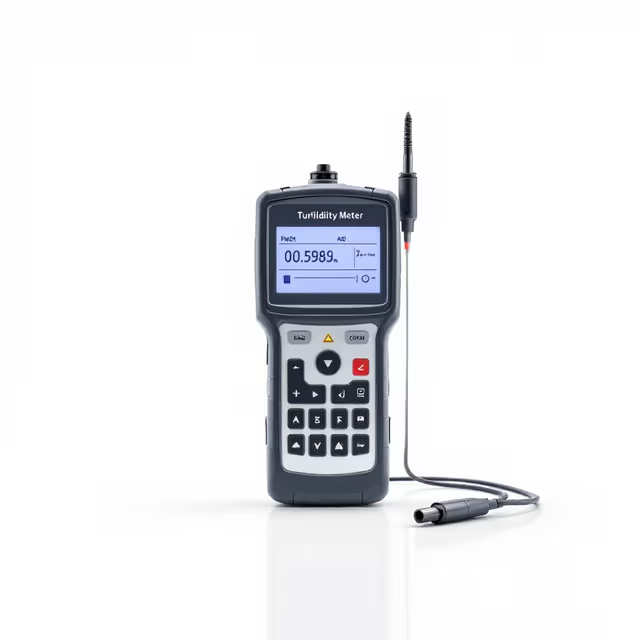
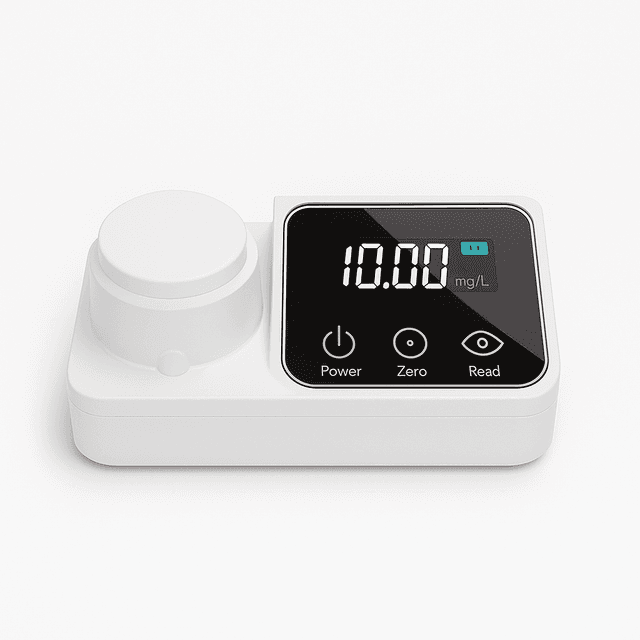
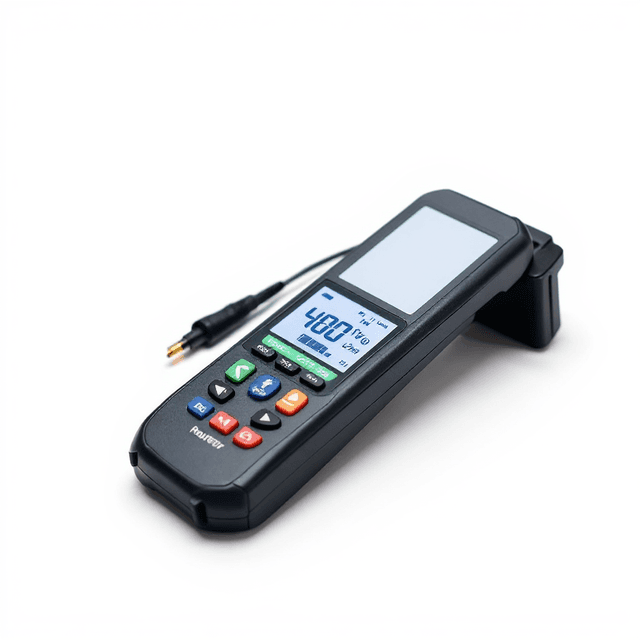
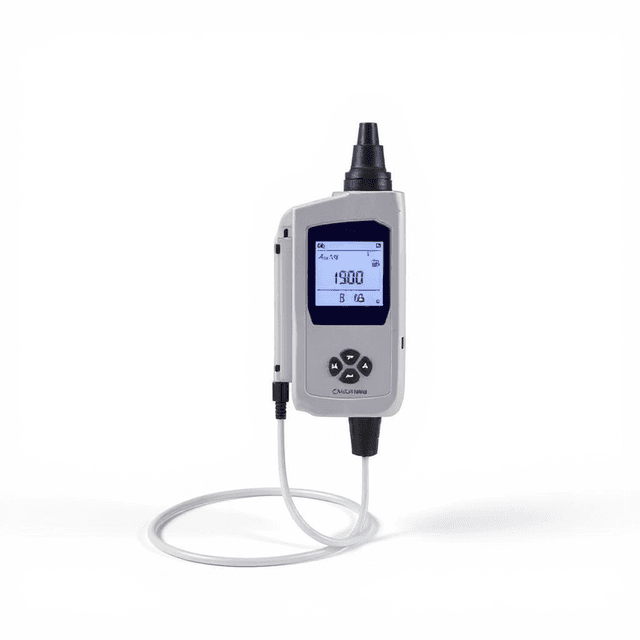
The Measure Turbidity Water Meter (Model LH-Z2A) is a portable nephelometric turbidity analyzer utilizing dual-detector optical technology to quantify suspended particle concentrations in aqueous samples. The instrument employs a near-infrared light source to minimize chromatic interference, with 90° and 180° positioned detectors measuring scattered and transmitted light respectively. This ratio-based measurement approach provides accurate turbidity determination across the 0-200 NTU range with high precision specifications.
The system incorporates both nephelometric (90° scattered light) and transmitted light detection principles in a single portable unit, enabling comprehensive turbidity analysis in field and laboratory environments. The instrument achieves ±0.2 NTU accuracy below 5 NTU and ±5% accuracy above 5 NTU, with 4-point calibration using included standard solutions ensuring measurement traceability.
How It Works
The turbidity meter operates on the principle of nephelometric light scattering combined with transmitted light attenuation measurement. A near-infrared LED light source emits collimated light through the sample, while two photodetectors positioned at 90° and 180° angles capture scattered and transmitted light intensities respectively. Suspended particles in the sample scatter incident light in multiple directions, with the 90° detector measuring nephelometric scattering intensity proportional to particle concentration.
The instrument calculates turbidity by analyzing the ratio between scattered light intensity (90° detector) and transmitted light intensity (180° detector). This dual-detector approach compensates for sample color interference and provides enhanced measurement stability. The near-infrared wavelength minimizes absorption by dissolved chromophores, ensuring accurate readings in colored samples where traditional white-light nephelometers may exhibit interference.
Internal algorithms process the optical signals and convert the light intensity ratios to standardized turbidity units (NTU) through calibration curves established with formazin or polymer bead standards. The system maintains measurement accuracy through temperature compensation and drift correction algorithms that account for LED output variations and detector sensitivity changes.
Features & Benefits
Model
- LH-Z2A
Name
- LH-Z2A
Range
- 0-200NTU
Indication error
- â¤Â±0.2NTU<5NTUï¼â¤Â±5%â¥5NTU
Calibration
- 4-point calibration (standard with calibration solution)
Repetitiveness
- â¤Â±0.1NTU@<10NTUï¼â¤Â±1%@â¥10NTU
Zero drift
- â¤Â±0.1NTU
Working temperature
- 5 - 40â
Storage temperature
- -10 - 55â
Humidity
- 0-80%RH
Automation Level
- manual
Brand
- ConductScience
Accuracy
- 0.01/0.1/1.0NTU
Power/Voltage
- lithium battery(Optional dry battery)
Size
- 170X72X44mm
Research Domain
- Analytical Chemistry
- Environmental Monitoring
- Food Science
- Industrial Hygiene
- Microbiology
- Pharmaceutical QC
Shipping weight
- 0.24 lb
Shipping box
- L: 17 cm
- W: 7.2 cm
- H: 4.4 cm
| Feature | This Product | Typical Alternative | Advantage |
|---|---|---|---|
| Optical Detection Method | Dual-detector system with 90° nephelometric and 180° transmitted light measurement | Single-detector nephelometric measurement at 90° only | Compensates for sample color interference and provides enhanced measurement stability across diverse water matrices |
| Light Source Technology | Near-infrared LED to minimize chromatic interference | White light LED or tungsten sources | Reduces measurement errors in samples with dissolved organic matter or natural color |
| Measurement Range | 0-200 NTU with three resolution settings (0.01/0.1/1.0 NTU) | Limited range or single resolution option | Accommodates both low-turbidity precision applications and higher-range environmental monitoring in one instrument |
| Accuracy Specification | ±0.2 NTU below 5 NTU, ±5% above 5 NTU | Varies by model, often ±2% or ±0.5 NTU across range | Provides research-grade accuracy for critical low-turbidity measurements while maintaining performance at higher concentrations |
| Calibration System | 4-point calibration with included standard solutions | 2-point or 3-point calibration systems | Enhanced linearity and accuracy verification across the full measurement range with comprehensive calibration points |
| Environmental Operating Range | 5-40°C operating temperature, 0-80% humidity tolerance | More limited temperature or humidity specifications | Supports field deployment in diverse environmental conditions without performance degradation |
The LH-Z2A turbidity meter distinguishes itself through dual-detector optical technology combining nephelometric and transmitted light measurements with near-infrared illumination for superior color interference compensation. The instrument provides research-grade accuracy specifications with comprehensive 4-point calibration and environmental robustness suitable for both laboratory and field applications.
Practical Tips
Perform daily zero verification with distilled water and span check with mid-range standard before critical measurements.
Why: Ensures measurement accuracy and identifies potential drift or contamination issues early.
Clean sample cuvette optical surfaces with lint-free tissue and appropriate solvent after each sample set.
Why: Prevents cross-contamination and maintains optical clarity for consistent light transmission and scattering measurements.
Allow samples to reach ambient temperature and eliminate air bubbles before measurement.
Why: Temperature differences and entrained air affect light scattering patterns and can introduce measurement variability.
If readings appear erratic, check for condensation on optical surfaces and verify sample cuvette positioning.
Why: Moisture and misalignment disrupt the optical path and cause inconsistent light detection by the photodetectors.
Take multiple readings and calculate average values for critical measurements, noting any outliers.
Why: Statistical analysis improves measurement confidence and identifies potential sampling or instrumental issues.
Handle samples according to appropriate biosafety protocols and avoid direct contact with calibration standards.
Why: Protects operator health and prevents contamination of reference materials that could affect calibration accuracy.
Store instrument within specified temperature and humidity ranges when not in use.
Why: Prevents condensation damage to optical components and maintains electronic stability for consistent performance.
Use fresh calibration standards and replace solutions according to manufacturer expiration guidelines.
Why: Aged standards may undergo particle aggregation or dissolution affecting their turbidity values and calibration accuracy.
Setup Guide
What’s in the Box
- LH-Z2A turbidity meter main unit
- Sample cuvettes (typical)
- 4-point calibration standard solutions
- Lithium battery power supply
- User manual and calibration certificate (typical)
- Carrying case (typical)
- Cleaning accessories and lint-free tissues (typical)
Warranty
ConductScience provides standard 1-year manufacturer warranty covering defects in materials and workmanship, with technical support for calibration procedures and troubleshooting assistance.
Compliance
References
Background reading relevant to this product:
What is the detection limit and linear range for suspended particle quantification?
The instrument measures 0-200 NTU with 0.01 NTU resolution at the lowest setting. Detection limit and linearity specifications should be consulted in the product datasheet for specific particle types and size distributions.
How does the dual-detector system compensate for sample color interference?
The 90° nephelometric detector measures scattered light while the 180° detector measures transmitted light, allowing ratio calculations that compensate for sample absorption. The near-infrared light source further reduces chromophore interference compared to white-light systems.
What calibration standards are required and how often should calibration be performed?
The system uses 4-point calibration with provided standards. Calibration frequency depends on measurement accuracy requirements and sample types, but daily verification with zero and span standards is recommended for critical applications.
Can the instrument measure samples with high dissolved organic carbon content?
The near-infrared light source minimizes interference from dissolved organics compared to white-light nephelometers, but performance with specific DOC concentrations should be validated against sample matrices of interest.
What is the measurement time and sampling volume required?
Measurement time and minimum sample volume specifications are not provided in the basic specifications - consult the detailed technical manual for these operational parameters.
How does temperature affect measurement accuracy?
The instrument operates across 5-40°C with specified accuracy maintained throughout this range. Internal temperature compensation algorithms account for thermal effects on optical components.
What maintenance procedures are required for optimal performance?
Regular cleaning of optical surfaces, periodic calibration verification, and proper storage within specified temperature and humidity ranges maintain measurement accuracy. Detailed maintenance schedules should be followed per manufacturer guidelines.
Is the instrument suitable for continuous monitoring applications?
While designed as a portable handheld meter, continuous monitoring capability depends on power supply arrangements and sampling system integration - consult technical specifications for extended operation parameters.
Have a question about this product?
Have a question? Just ask.
Send it over and we'll email you a personalized answer — no call, no scheduling.
Prefer to talk it through?
Accessories
Enhance your setup with compatible accessories