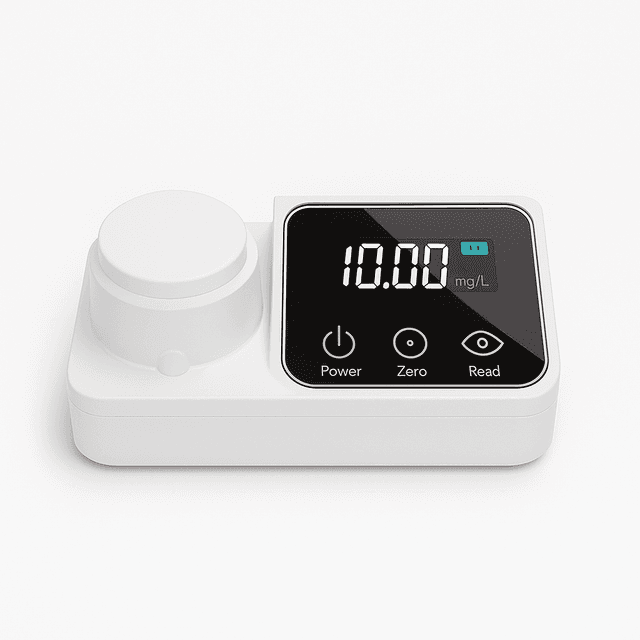
Industrial Turbidity Meter
Benchtop nephelometric turbidity meter measuring suspended particles in water from 0-200 NTU with 0.1 NTU resolution and ±2.5% accuracy for industrial water quality monitoring.

Louise Corscadden, PhD
Director of Science · ConductScience
Ask Louise about Industrial Turbidity Meter fit, setup, configuration, or quote prep.
Already working with us? Sign in to connect this with My Scientist.
Key Specifications
Full details →- Model fit
- Configured during quote
- SKU family
- CS-LH-Z10A
- Shipping box
- 20.0 x 10.0 x 5.0 cm
- Ordering
- Online checkout and quote request available
- Category
- Portable Analyzers
- Build notes
- Confirm accessories, station layout, and support needs before purchase
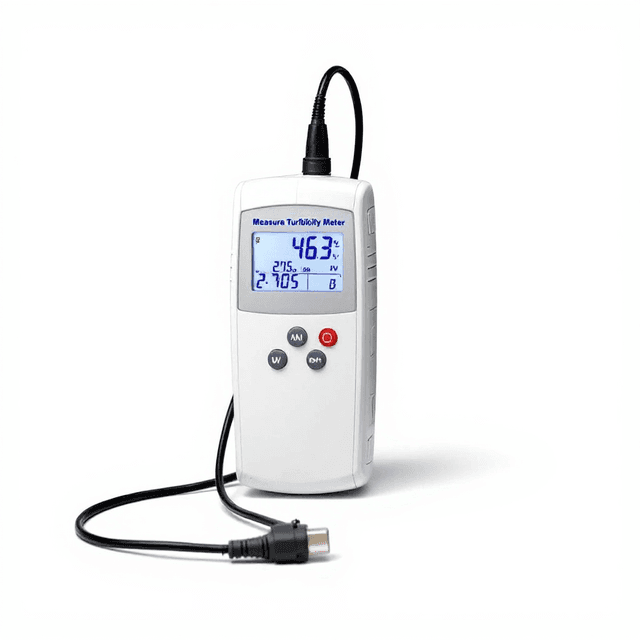
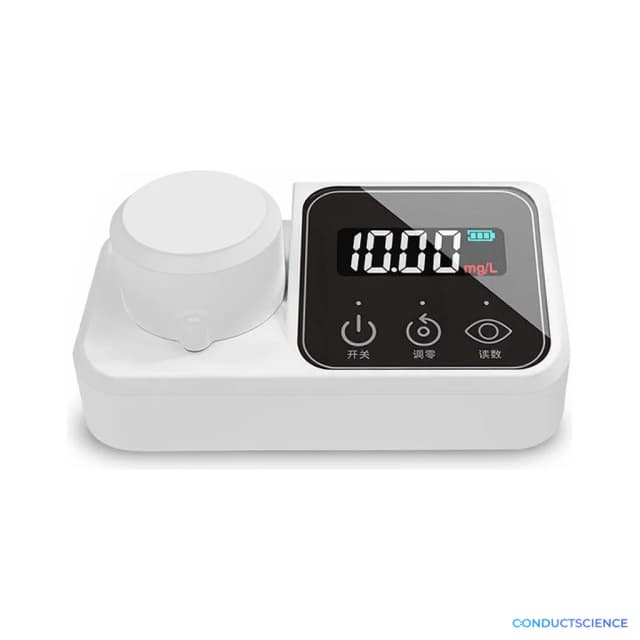
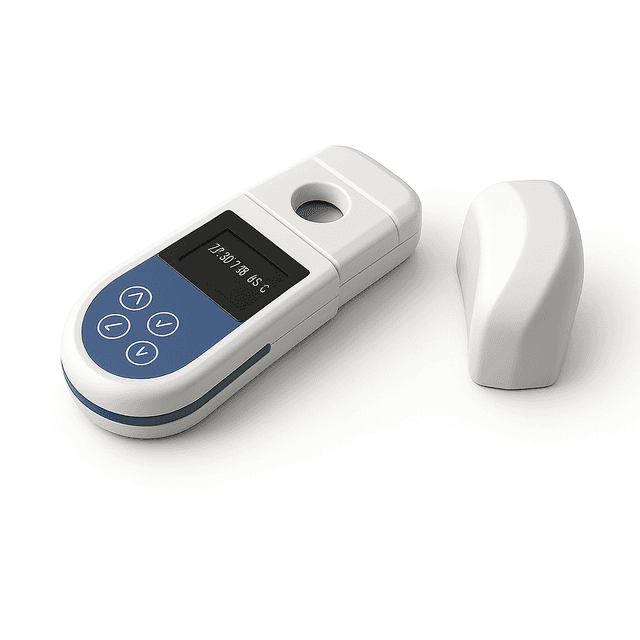
The Industrial Turbidity Meter (Model LH-Z10A) is a benchtop nephelometric instrument designed for quantitative measurement of suspended particulate matter in water and transparent liquids. This scattered light turbidimeter operates on the principle of 90-degree light scattering detection, providing turbidity measurements from 0-200 NTU with 0.1 NTU resolution. The instrument features ±2.5% basic error and ≤1.5% repeatability, making it suitable for routine water quality monitoring in industrial, environmental, and laboratory applications.
The system utilizes precision optics and standardized measurement protocols to quantify insoluble particles that scatter incident light at the nephelometric angle. With AC220V/50Hz power requirements and benchtop configuration, this instrument supports continuous monitoring workflows in water treatment facilities, beverage production, pharmaceutical manufacturing, and environmental laboratories where turbidity assessment is critical for process control and regulatory compliance.
How It Works
The instrument employs nephelometric detection, measuring light scattered at 90 degrees from the incident beam path. When light passes through a water sample containing suspended particles, these particles scatter light in multiple directions according to their size, shape, and refractive index. The nephelometric method specifically measures forward-scattered light at a 90-degree angle, which provides optimal sensitivity across a wide range of particle sizes and concentrations.
A stable light source illuminates the sample cell containing the water sample. Suspended particles in the sample scatter the incident light, with scattered photons detected by a photodetector positioned at 90 degrees to the light path. The intensity of scattered light correlates directly with the concentration and optical properties of suspended particles, following Rayleigh and Mie scattering principles.
The system converts detected light intensity to turbidity units through calibration with formazin standards, providing quantitative measurements in NTU (Nephelometric Turbidity Units). Temperature compensation and optical system stability ensure measurement reproducibility within ±1.5% across the 0-200 NTU range.
Features & Benefits
Model
- LH-Z10A
Product name
- turbidity measurement device
Minimum Readout ( NTU)
- 0.1
Measuring Range(NTU)
- 0--200
Basic Error(F.S)
- ±2.5%
Repeatability
- â¤1.5%
Zero Draft(F.S)
- ±0.2%
Power Supply
- AC220V/50Hz
Characters
- Bench top type
Failure phenomenon
- Possible causes
1,after starting up, display
- Aãpower line and socket connection is bad or loose
2,measuring reaction
- A, light damageB, internal connector looseC, electrical system fault
3,measurement instability or drift
- A, solution with bubbles or particles in does not stop movingB, circuitry within the apparatus of dampC, the outer surface of the bottle water sampleD, external interferenceE, the supply voltage instability of
4.zero, less than zero
- A, adjustable zero without the use of zero turbidity waterB, zero potentiometer damageC, zero range migrationD, light path offset
5,not to the correction value
- A, standard solution standard value is not accurateB, correction potentiometer is damagedC, range migration correctionD, light path offset
Automation Level
- manual
Brand
- ConductScience
Research Domain
- Analytical Chemistry
- Environmental Monitoring
- Food Science
- Industrial Hygiene
- Pharmaceutical QC
Shipping weight
- 0.26 lb
Shipping box
- L: 20.0 cm
- W: 10.0 cm
- H: 5.0 cm
| Feature | This Product | Typical Alternative | Advantage |
|---|---|---|---|
| Measurement Range | 0-200 NTU with 0.1 NTU resolution | Basic models often limited to 0-100 NTU or require range switching | Single range covers both drinking water monitoring (<1 NTU) and industrial process applications without range changes |
| Measurement Accuracy | ±2.5% basic error with ≤1.5% repeatability | Entry-level instruments may offer ±5% accuracy with higher variability | Precision suitable for regulatory compliance and quality control applications requiring documented accuracy |
| Zero Drift Stability | ±0.2% zero drift specification | Basic meters may lack specified drift performance | Maintains baseline stability during extended measurement sessions without frequent recalibration |
| Detection Method | 90-degree nephelometric scattered light detection | Some instruments use transmission or forward-scatter methods | Nephelometric detection optimizes sensitivity while minimizing color interference for accurate particle quantification |
This benchtop nephelometric turbidimeter provides laboratory-grade measurement precision with ±2.5% accuracy across a 0-200 NTU range. The instrument combines regulatory-compliant 90-degree detection with specified stability performance suitable for routine water quality monitoring applications.
Practical Tips
Prepare fresh formazin standards monthly and store in amber glass bottles to prevent photodegradation and maintain calibration accuracy.
Why: Formazin polymer standards degrade over time when exposed to light, causing calibration drift and measurement errors.
Clean sample cells with dilute acid solution followed by distilled water rinse to remove mineral deposits that scatter light.
Why: Accumulated deposits on optical surfaces cause falsely elevated turbidity readings and poor measurement reproducibility.
Allow samples to reach measurement temperature and settle for 2-3 minutes before reading to minimize thermal effects and particle movement.
Why: Temperature gradients and settling particles create measurement instability that affects reading precision.
If readings become unstable, check for air bubbles in sample, external light sources, and vibration affecting the optical system.
Why: These factors directly impact scattered light detection and cause measurement drift as described in failure mode diagnostics.
Record sample temperature and measurement conditions with turbidity values to enable trend analysis and data validation.
Why: Environmental conditions affect particle behavior and measurement comparability across different sampling events.
Handle sample cells by the sides only and use lint-free tissue for cleaning to avoid contaminating optical surfaces.
Why: Fingerprints and particles on cell surfaces scatter light independently of sample turbidity, causing measurement artifacts.
Verify zero reading with freshly prepared turbidity-free water before each measurement session, adjusting if drift exceeds ±0.2%.
Why: Zero drift affects all subsequent measurements and can accumulate over time, compromising measurement accuracy.
If zero reading falls below zero, check for damaged zero potentiometer, range migration, or optical path misalignment.
Why: Negative zero readings indicate systematic instrument problems requiring technical service as identified in failure diagnostics.
Setup Guide
What’s in the Box
- Industrial Turbidity Meter main unit (typical)
- Sample measurement cells (typical)
- Power cord (AC220V/50Hz) (typical)
- Formazin turbidity standards (typical)
- User manual and operation guide (typical)
- Calibration certificate (typical)
Warranty
ConductScience provides standard 1-year manufacturer warranty covering defects in materials and workmanship, with technical support for calibration procedures and troubleshooting guidance.
Compliance
References
Background reading relevant to this product:
What is the optimal sample volume required for measurement and how should samples be prepared?
Sample cells typically require 10-25 mL volume depending on cell design. Samples should be well-mixed, free of air bubbles, and measured at consistent temperature. Allow samples to settle briefly if large particles are present that may cause reading instability.
How frequently should the instrument be calibrated and what standards are recommended?
Daily zero calibration with turbidity-free water is recommended, with full multi-point calibration using certified formazin standards (4000, 100, 20, 2 NTU) performed weekly or when readings drift beyond specifications.
What factors can cause measurement interference and how are they minimized?
Colored samples, dissolved organics, and air bubbles can interfere with nephelometric readings. Use appropriate blanks for colored samples, ensure bubble-free sample preparation, and maintain consistent measurement temperature.
How does this nephelometric method compare to other turbidity measurement techniques?
Nephelometric detection at 90 degrees provides superior sensitivity for low turbidity measurements compared to transmission methods, with better linearity across particle size ranges than forward-scatter or attenuation techniques.
What is the typical measurement time and throughput capacity for routine analysis?
Individual measurements are completed within 30-60 seconds after sample cell placement. Throughput depends on sample preparation time, typically allowing 20-40 samples per hour in routine operation.
Can the instrument measure samples with high dissolved solids or extreme pH values?
High dissolved solids generally do not interfere with nephelometric measurement as they do not scatter light significantly. Extreme pH may affect sample cell materials over time but should not impact immediate turbidity readings.
Have a question about this product?
Have a question? Just ask.
Send it over and we'll email you a personalized answer — no call, no scheduling.
Prefer to talk it through?