Single Channel Micropipettes
Precision single-channel micropipettes offering 11 volume ranges from 0.1 μL to 10 mL with digital display and adjustable volume control for accurate liquid handling in analytical applications.
| volume_ranges | Multiple ranges available |
| single_channel_sizes | 10 sizes optional |
| multi_channel_sizes | 6 sizes optional |
| tip_depth_recommendation | 2-3mm under liquid surface |
| ergonomic_features | Lightweight spring for easy operation |
| sterilization_compatibility | ['alcohol disinfection', 'UV sterilization'] |

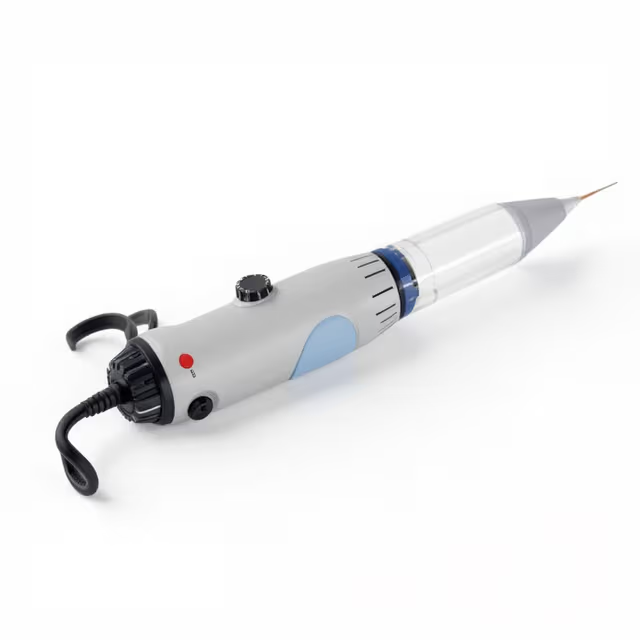
Single Channel Micropipettes are precision liquid handling instruments designed for accurate transfer of small volumes in analytical and research applications. This comprehensive range offers 11 volume models from 0.1 μL to 10 mL, providing researchers with the appropriate tool for specific experimental requirements. Each pipette features digital volume display and adjustable settings with precise incremental control, enabling reproducible liquid transfers essential for quantitative analytical work.
The pipettes incorporate lightweight spring mechanisms for reduced operator fatigue during extended use, while maintaining the mechanical precision required for accurate volumetric transfers. Compatible with most commercial pipette tips and including Servicebio tips for optimal air-tight sealing, these instruments support both forward and reverse pipetting techniques across diverse laboratory protocols.
How It Works
Single channel micropipettes operate through a precision air displacement mechanism that creates controlled vacuum and pressure cycles. When the plunger is depressed to the first stop, a specific volume of air is expelled from the tip. Upon immersion in liquid and slow release of the plunger, the resulting vacuum draws liquid into the tip to fill the predetermined volume. The second stop position provides additional air displacement for complete sample delivery and tip washing.
Volume selection is achieved through mechanical adjustment of the piston travel distance, with digital display providing real-time feedback of the set volume. The lightweight spring system reduces the force required for plunger operation while maintaining consistent piston movement for reproducible volume transfers. Proper tip immersion depth of 2-3mm below the liquid surface ensures optimal sample uptake without introducing air bubbles that could compromise accuracy.
Features & Benefits
Volume range
- 0.1-2.5 μL
- 1-10 μL
- 2-20 μL
- 2-20 μL [LTips]
- 5-50 μL
- 5-50 μL [LTips]
- 10-100 μL
- 20-200 μL
- 100-1000 μL
- 1000-5000 μL
- 1-10 mL
volume_ranges
- Multiple ranges available
single_channel_sizes
- 10 sizes optional
multi_channel_sizes
- 6 sizes optional
tip_depth_recommendation
- 2-3mm under liquid surface
ergonomic_features
- Lightweight spring for easy operation
sterilization_compatibility
- ['alcohol disinfection', 'UV sterilization']
tip_compatibility
- Compatible with most pipette tips on market
included_tips
- Servicebio tips
operating_techniques
- ['Forward technique', 'Reverse technique']
storage_temperature
- room temperature
Automation Level
- manual
Material
- high strength material
Certifications
- CE
- EN/ISO8655
- ISO 8655-2:2022
Display Type
- Digital
Research Domain
- Analytical Chemistry
- Biochemistry
- Cell Biology
- Clinical Diagnostics
- Microbiology
- Molecular Biology
- Pharmaceutical QC
Weight
- 0.66 kg
Dimensions
- L: 25.4 mm
- W: 24.0 mm
- H: 18.7 mm
Comparison Guide
| Feature | This Product | Typical Alternative | Advantage |
|---|---|---|---|
| Volume Range Coverage | 11 distinct volume ranges from 0.1-2.5 μL to 1-10 mL | Most manufacturers offer 6-8 volume ranges with limited ultra-low volume options | Reduces instrument inventory needs and provides consistent operation across all volume scales required in analytical work |
| Volume Increment Resolution | 0.05 μL increments on SPIP-2.5 model with digital display | Entry-level models often provide 0.1 μL minimum increments | Enables more precise volume adjustments for critical micro-scale applications requiring sub-0.1 μL control |
| Tip Compatibility | Compatible with most commercial tips plus included Servicebio tips | Some models are restricted to proprietary tip systems | Provides flexibility in consumable sourcing and reduces operating costs through competitive tip procurement |
| Certification Standards | CE certified with ISO 8655-2:2022 and EN/ISO8655 compliance | Basic models may lack formal certification documentation | Ensures documented accuracy performance for regulated laboratory environments requiring certified measuring equipment |
| Sterilization Options | Supports alcohol disinfection and UV sterilization | Varies by manufacturer and model construction materials | Multiple sterilization methods accommodate different laboratory contamination control protocols |
This micropipette series offers comprehensive volume range coverage with fine increment control and broad tip compatibility. The ISO certification and multiple sterilization options provide quality assurance and operational flexibility for diverse laboratory applications.
Practical Tips
Perform gravimetric calibration using distilled water at room temperature, weighing multiple aliquots to calculate mean volume and precision.
Why: Water density is well-characterized and provides accurate volume-to-mass conversion for calibration verification.
Clean pipette exterior with alcohol wipes and inspect tip ejector mechanism monthly for smooth operation.
Why: Regular cleaning prevents contamination transfer and ensures reliable tip ejection during extended use.
Pre-wet tips 2-3 times with working solution before critical measurements to equilibrate the system.
Why: Pre-wetting eliminates surface tension effects and liquid film retention that can affect volume accuracy.
Hold pipette vertically during aspiration and maintain consistent immersion depth of 2-3mm below liquid surface.
Why: Vertical position prevents liquid backflow while consistent depth ensures reproducible sample uptake volumes.
If volume delivery appears inconsistent, check tip seal by aspirating air and submerging tip in water to observe bubble formation.
Why: Air leaks around the tip connection are a common cause of volume inaccuracy and can be easily identified with this test.
Allow liquids and pipette to equilibrate to the same temperature before critical volume measurements.
Why: Temperature differences cause thermal expansion effects that can introduce systematic volume errors in precision work.
Use appropriate tips rated for the chemical compatibility of your solutions and avoid pipetting directly from stock reagent bottles.
Why: Chemical compatibility prevents tip degradation while indirect pipetting reduces contamination risk to stock solutions.
Setup Guide
What’s in the Box
- Single channel micropipette (selected volume range)
- Servicebio pipette tips (typical)
- User manual and operating instructions (typical)
- Calibration certificate (typical)
- Tip ejector tool (typical)
Warranty
ConductScience provides a standard one-year manufacturer warranty covering defects in materials and workmanship. Technical support is available for calibration guidance, maintenance procedures, and troubleshooting assistance.
Compliance
What is the accuracy specification for these micropipettes?
The pipettes are certified to ISO 8655-2:2022 international standard for accuracy and precision. Specific accuracy values should be consulted in the product datasheet as they vary by volume range and are defined by the ISO standard requirements.
Can these pipettes be autoclaved for sterilization?
The pipettes support alcohol disinfection and UV sterilization methods. Autoclave compatibility is not specified in the product documentation, so consult the manufacturer's sterilization guidelines for heat sterilization procedures.
What tip types are compatible with each volume range?
Tip compatibility varies by model: SPIP-20L and SPIP-50 use 10 μL and 10 μL-long tips, SPIP-20 and SPIP-50H use 200 μL tips, while other models use standard tips appropriate for their volume ranges. The pipettes are compatible with most commercial tips on the market.
How often should these pipettes be calibrated?
Calibration frequency depends on usage intensity and accuracy requirements. ISO 8655 recommends periodic verification, typically annually or after a specified number of uses. High-precision applications may require more frequent calibration verification.
What is the difference between forward and reverse pipetting techniques?
Forward technique uses the first stop for aspiration and delivery, suitable for aqueous solutions. Reverse technique aspirates slightly more than the set volume and uses the second stop, recommended for viscous solutions, volatile liquids, or when maximum accuracy is required.
Can the volume setting mechanism be locked to prevent accidental changes?
The product documentation does not specify a volume lock mechanism. Consult the user manual for details on volume setting security features and procedures to prevent inadvertent volume changes during operation.
Have a question about this product?