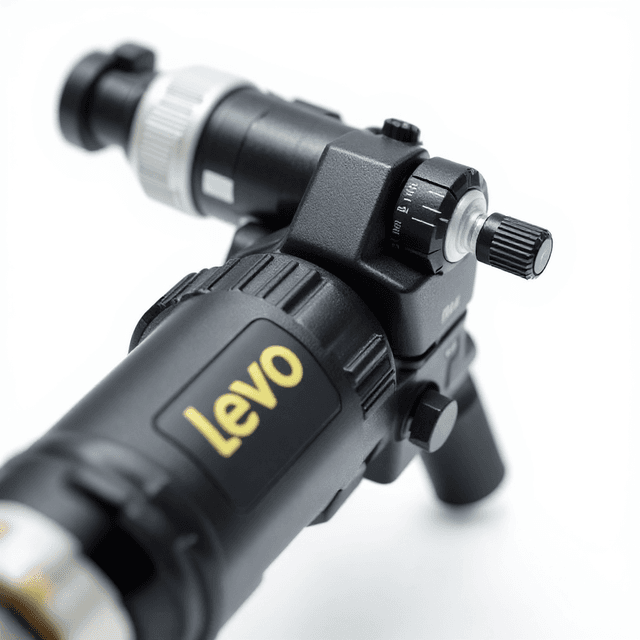
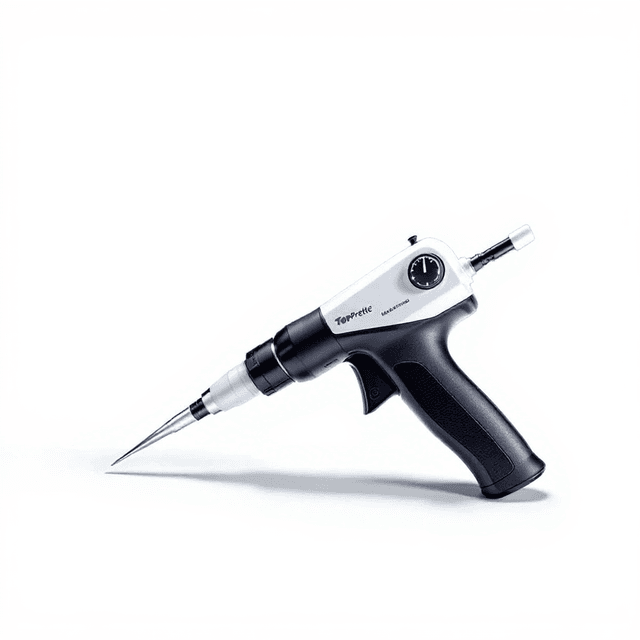
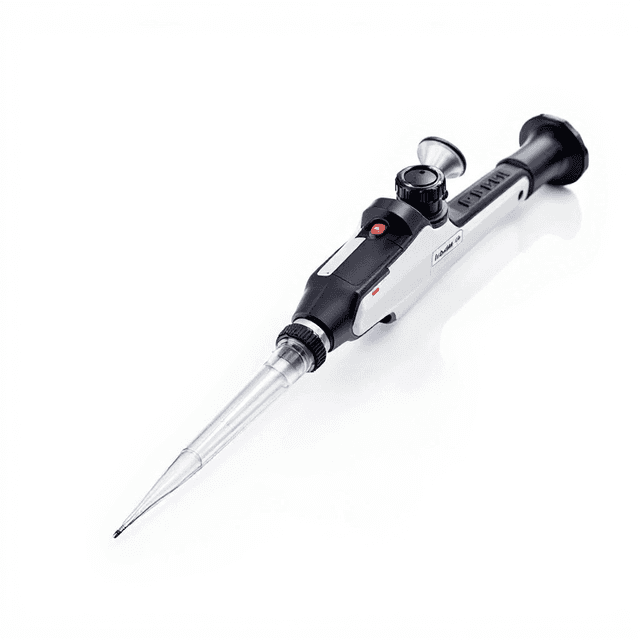
MicroPette Plus Autoclavable Pipettes
Autoclavable variable volume micropipettes offering precise liquid handling in 0.5-10 μl and 5-50 μl ranges with full sterilization compatibility for contamination-critical applications.

Louise Corscadden, PhD
Director of Science · ConductScience
Ask Louise about MicroPette Plus Autoclavable Pipettes fit, setup, configuration, or quote prep.
Already working with us? Sign in to connect this with My Scientist.
Key Specifications
Full details →- Model fit
- Configured during quote
- SKU family
- BIO-0630
- Shipping box
- 42.0 x 43.6 x 38.0 cm
- Ordering
- Online checkout and quote request available
- Category
- Liquid Handling
- Build notes
- Confirm accessories, station layout, and support needs before purchase
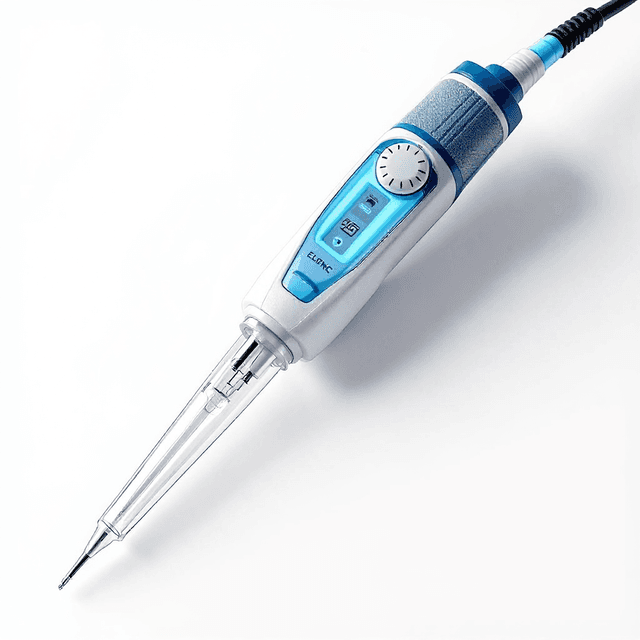
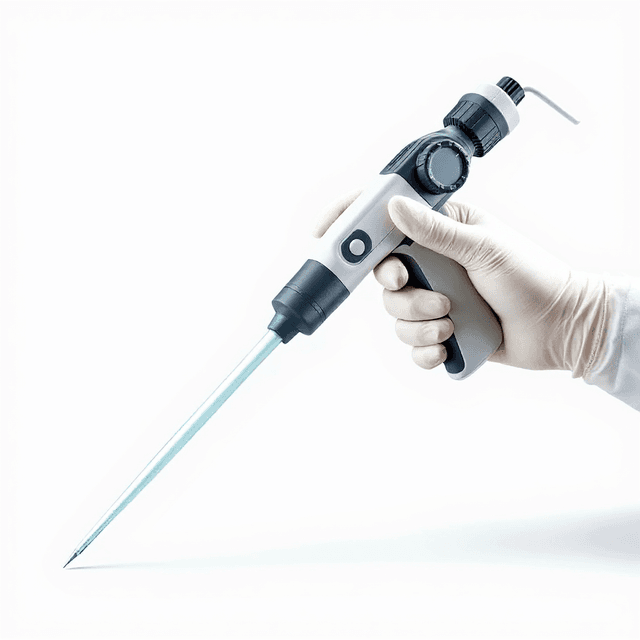
The MicroPette Plus Autoclavable Pipettes represent a precision liquid handling solution designed for demanding laboratory applications requiring sterile conditions. These variable volume micropipettes provide accurate and repeatable dispensing across multiple volume ranges, with the critical advantage of full autoclave compatibility for sterilization protocols.
The series offers two primary volume configurations: 0.5-10 μl and 5-50 μl ranges, each engineered with specific accuracy and precision specifications. The autoclavable design enables complete sterilization between uses, making these pipettes particularly suitable for cell culture, molecular biology, and other applications where contamination control is paramount. Volume adjustment mechanisms and ergonomic design facilitate extended use while maintaining measurement precision across the specified ranges.
How It Works
The MicroPette Plus pipettes operate on the positive displacement principle, utilizing a precisely machined piston-cylinder assembly to create controlled vacuum and positive pressure for liquid aspiration and dispensing. Volume selection is achieved through a micrometer-style adjustment mechanism that controls piston displacement distance, providing graduated volume settings across the specified range.
The autoclave-compatible construction utilizes materials and sealing systems that maintain dimensional stability and sealing integrity through repeated steam sterilization cycles at 121°C. Internal components are designed to withstand thermal expansion and contraction without compromising volumetric accuracy or precision specifications.
Ergonomic design features include a contoured grip and optimized plunger force requirements to minimize operator fatigue during extended pipetting sessions. The tip ejection system provides reliable tip removal without cross-contamination risk, supporting sterile technique protocols in critical applications.
Features & Benefits
Automation Level
- manual
MicroPette Plus Series Cat.No.
- Volume Range
7042303004
- 0.5-10μl
0.1μl
- 10μl
1.50%
- 0.15μl
5μl
- 3.00%
0.125μl
- 2.50%
1μl
- 4.00%
0.04μl
- 4.00%
7042303006
- 5-50μl
0.5μl
- 0.8%
1.00%
- 0.5μl
0.50%
- 0.25μl
25μl
- 1.50%
0.375μl
- 1.00%
Brand
- ConductScience
Research Domain
- Analytical Chemistry
- Cell Biology
- Clinical Diagnostics
- Microbiology
- Pharmaceutical QC
Shipping weight
- 4.41 lb
Shipping box
- L: 42.0 cm
- W: 43.6 cm
- H: 38.0 cm
| Feature | This Product | Typical Alternative | Advantage |
|---|---|---|---|
| Autoclave Compatibility | Full autoclave sterilization at 121°C | Many micropipettes require chemical disinfection only | Enables complete sterile processing for cell culture and microbiology applications requiring absolute contamination control. |
| Volume Range Coverage | 0.5-10 μl and 5-50 μl configurations | Single volume ranges or fewer configuration options | Provides optimized precision across both micro and low-volume ranges for diverse liquid handling requirements. |
| Precision at Maximum Volume | 0.15 μl precision (0.5-10 μl model) and 0.25 μl precision (5-50 μl model) | Precision varies significantly by model and price point | Supports quantitative applications requiring tight precision control for reproducible experimental results. |
| Volume-Dependent Accuracy | 1.50% accuracy at 10 μl, 0.50% accuracy at 50 μl | Accuracy specifications vary widely across manufacturers | Provides defined accuracy specifications for method validation and quality control documentation requirements. |
The MicroPette Plus series combines autoclave sterilization capability with precision volumetric performance across two optimized volume ranges. The dual-configuration approach provides specialized accuracy and precision specifications for both micro and low-volume applications requiring sterile liquid handling.
Practical Tips
Perform gravimetric calibration verification after every 10-15 autoclave cycles to monitor accuracy drift.
Why: Thermal cycling can affect seal integrity and dimensional stability over time.
Allow pipette components to cool completely to room temperature before reassembly after autoclaving.
Why: Hot assembly can cause thermal stress and improper seal alignment affecting accuracy.
Pre-wet the tip by aspirating and dispensing the target volume 2-3 times before actual sample transfer.
Why: This establishes equilibrium between liquid and tip surface for more accurate volume delivery.
Disassemble pipettes according to manufacturer instructions before autoclave sterilization to ensure complete steam penetration.
Why: Assembled pipettes may trap air pockets that prevent effective sterilization of internal components.
Record volume settings and accuracy verification results for each pipette to track long-term performance trends.
Why: Documentation enables predictive maintenance and supports analytical method validation requirements.
Check tip sealing and volume dial position if delivered volumes become inconsistent after sterilization.
Why: Thermal expansion can affect component alignment and seal compression affecting volumetric accuracy.
Setup Guide
What’s in the Box
- MicroPette Plus pipette body (typical)
- Volume adjustment tool (typical)
- User manual and calibration procedures (typical)
- Performance specification documentation (typical)
- Autoclave sterilization guidelines (typical)
Warranty
ConductScience provides a standard one-year manufacturer warranty covering defects in materials and workmanship, with technical support for calibration procedures and maintenance protocols.
Compliance
References
Background reading relevant to this product:
What are the accuracy and precision specifications across the volume ranges?
The 0.5-10 μl model provides 1.50% accuracy at 10 μl with 0.15 μl precision, while the 5-50 μl model offers 0.50% accuracy at 50 μl with 0.25 μl precision. Lower volume settings show higher relative error percentages as typical for micropipettes.
Can these pipettes withstand repeated autoclave cycles without performance degradation?
Yes, the autoclave-compatible design uses materials and sealing systems engineered to maintain dimensional stability through repeated steam sterilization at 121°C without compromising volumetric accuracy.
What tip types are compatible with these pipettes?
Consult product datasheet for specific tip compatibility specifications, as proper sealing and volume accuracy depend on manufacturer-recommended tip designs for each volume range.
How should calibration verification be performed after sterilization cycles?
Perform gravimetric calibration using distilled water at controlled temperature, measuring delivered volumes across the range to verify accuracy remains within specified tolerances post-sterilization.
What is the recommended maintenance schedule for these pipettes?
Regular calibration verification is recommended, with frequency depending on usage intensity and criticality of applications. Internal seals may require periodic replacement based on autoclave cycle frequency.
Are these pipettes suitable for viscous or volatile liquids?
The positive displacement mechanism provides good performance across varying liquid properties, though specific compatibility should be verified for highly viscous or volatile substances that may affect accuracy.
Can the volume adjustment mechanism be locked to prevent accidental changes?
Consult product specifications for volume lock features, as this capability varies among micropipette designs and may affect workflow in protocols requiring fixed volumes.
Have a question about this product?
Have a question? Just ask.
Send it over and we'll email you a personalized answer — no call, no scheduling.
Prefer to talk it through?
Accessories
Enhance your setup with compatible accessories
Replacement Parts & Consumables