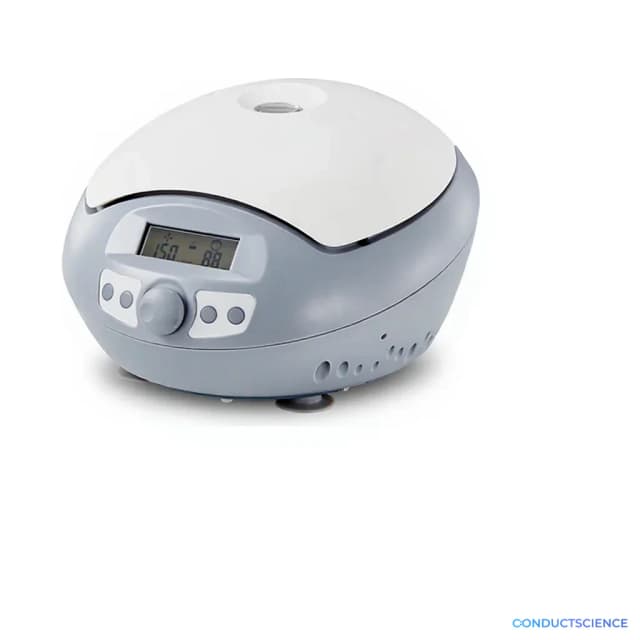
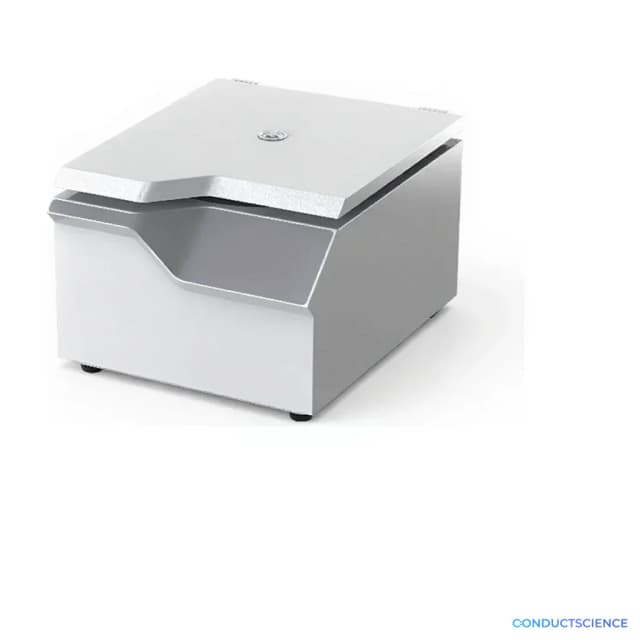
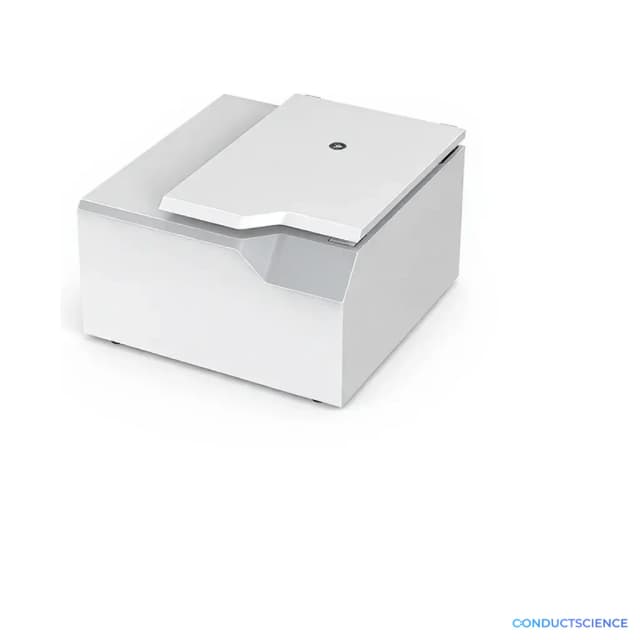
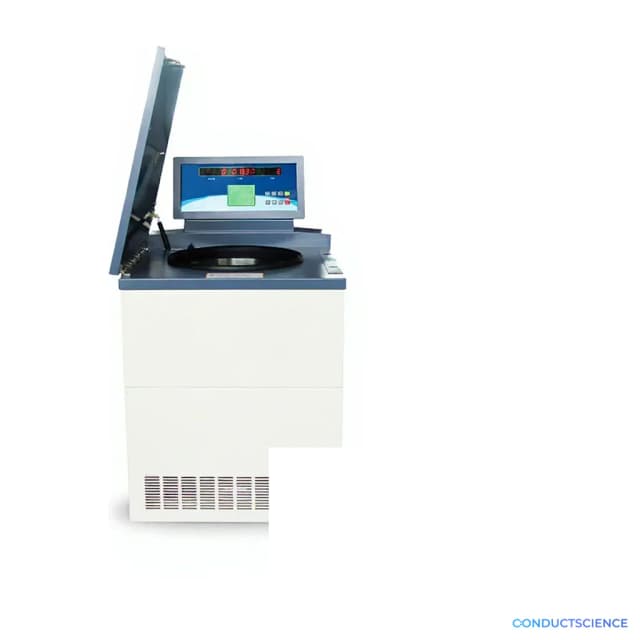
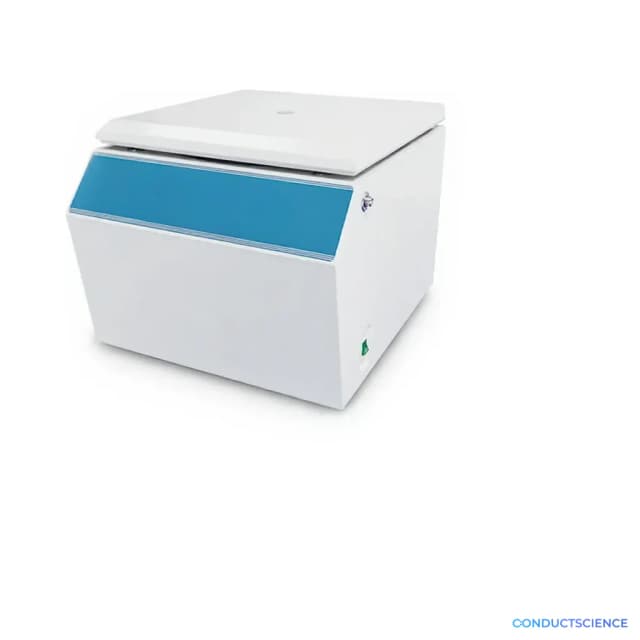
Mini Centrifuge Mini-5/7/10(with display)
Compact benchtop centrifuge with digital display offering speeds up to 10,000 rpm and maximum RCF of 7,267×g for routine sample processing.
| Automation Level | manual |
| Mini-7(with display) | Mini-10(with display) |
| Max. Speed | 5000r/min |
| 7000r/min | 10000r/min |
| Max. RCF | 1816×g |
| 3560×g | 7267×g |

The Mini Centrifuge Mini-5/7/10 with display is a compact laboratory centrifuge designed for small-scale sample processing in research and clinical applications. Available in three speed configurations (5,000, 7,000, or 10,000 rpm), this benchtop instrument provides centrifugal forces up to 7,267×g for routine separation procedures including cell pelleting, protein precipitation, and nucleic acid isolation.
The integrated digital display provides precise timer control from 1 second to 99 minutes, enabling standardized protocols across various sample types. With noise levels maintained below 65 dB(A) and a compact footprint of 230×185×135mm, the unit supports laboratory workflows requiring frequent centrifugation steps without disrupting adjacent workstations.
How It Works
Centrifugal separation operates on the principle that particles of different densities migrate at different rates when subjected to centrifugal force. When the rotor spins, samples experience an outward force proportional to the square of the angular velocity and the radius of rotation. Denser particles sediment toward the bottom of the tube while lighter components remain in the supernatant.
The centrifugal force is calculated as RCF = 1.118 × 10^-5 × r × N², where r is the radius in centimeters and N is the speed in rpm. The Mini Centrifuge generates forces ranging from 1,816×g to 7,267×g depending on the model and rotor radius, providing sufficient force for most routine separations including cell pelleting, protein precipitation, and phase separation.
The digital timer system ensures reproducible processing times, critical for standardized protocols. The variable speed control allows optimization of separation parameters for different sample types and volumes.
Features & Benefits
Automation Level
- manual
Mini-7(with display)
- Mini-10(with display)
Max. Speed
- 5000r/min
7000r/min
- 10000r/min
Max. RCF
- 1816×g
3560×g
- 7267×g
Timer Range
- 1s~99min
Noise
- ≤65dB(A)
Weight
- 2.8kg
External Size(L*W*H)
- 230*185*135mm
Package Size(L*W*H)
- 330*260*210mm
Brand
- ConductScience
Research Domain
- Analytical Chemistry
- Cell Biology
- Clinical Diagnostics
- Materials Science
- Microbiology
- Pharmaceutical QC
Power/Voltage
- AC110V~220V, 50/60Hz
Weight
- 1.8 kg
Dimensions
- L: 13.5 mm
- W: 23.0 mm
- H: 18.5 mm
Comparison Guide
| Feature | This Product | Typical Alternative | Advantage |
|---|---|---|---|
| Maximum Speed | Up to 10,000 rpm depending on model | Entry-level models often limited to 6,000-8,000 rpm | Higher maximum speed enables more efficient separations and shorter processing times for dense samples. |
| Timer Control | Digital display with 1 second to 99 minute range | Basic models may have limited timer increments or shorter maximum times | Precise timing control ensures reproducible results across different protocols and sample types. |
| Power Supply | Universal 110V-220V compatibility | Many units require specific voltage configurations | Eliminates need for voltage converters in international laboratory settings. |
| Noise Level | ≤65 dB(A) operation | Varies by model, some exceeding 70 dB(A) | Quieter operation reduces laboratory noise pollution and user fatigue during extended use. |
| Display Interface | Integrated digital display | Basic models may have analog controls or simple LED indicators | Clear parameter visibility improves protocol accuracy and reduces user error. |
The Mini Centrifuge series provides comprehensive speed options up to 10,000 rpm with precise digital control in a compact benchtop design. The universal power compatibility and low noise operation make it suitable for diverse laboratory environments requiring reliable sample processing.
Practical Tips
Always balance tubes in opposing positions to prevent rotor damage and ensure consistent separation results.
Why: Unbalanced loads create excessive vibration that can damage the motor and produce uneven separations.
Clean the rotor and chamber weekly with mild detergent and inspect for cracks or wear signs.
Why: Regular cleaning prevents sample contamination and early detection of rotor damage prevents catastrophic failure.
Verify speed accuracy annually using a calibrated tachometer or contact manufacturer for service calibration.
Why: Speed accuracy directly affects centrifugal force calculations and protocol reproducibility.
Allow the rotor to come to complete stop before opening the lid and never force the lid open.
Why: The lid interlock prevents access during operation, and forcing can damage safety mechanisms.
If excessive vibration occurs, immediately stop operation and check tube balance and rotor installation.
Why: Vibration indicates imbalance that can damage the motor and compromise separation quality.
Record centrifugation parameters including speed, time, and temperature in laboratory notebooks for protocol validation.
Why: Documentation ensures reproducibility and supports regulatory compliance in quality-controlled environments.
Pre-cool samples and tubes when working with temperature-sensitive materials or extended run times.
Why: Heat generated during centrifugation can degrade sensitive samples and affect separation efficiency.
Setup Guide
What’s in the Box
- Mini centrifuge main unit with digital display
- Power cord
- Standard rotor (typical)
- Tube adapters (typical)
- User manual
- Warranty documentation
Warranty
ConductScience provides a standard one-year manufacturer warranty covering defects in materials and workmanship. Technical support is available for troubleshooting and protocol optimization throughout the warranty period.
Compliance
What tube sizes and volumes can this centrifuge accommodate?
Consult product datasheet for specific rotor configurations and tube compatibility. Standard rotors typically accommodate microcentrifuge tubes from 0.2 ml to 2.0 ml with appropriate adapters.
How do I determine the appropriate speed and time for my application?
Speed selection depends on sample density and desired separation efficiency. Cell pelleting typically requires 1,000-3,000×g for 5-10 minutes, while protein precipitation may need higher forces. Consult established protocols for your specific application.
What maintenance is required for optimal performance?
Regular cleaning of the rotor and chamber, periodic inspection of rotor condition, and verification of speed accuracy. Replace worn rotors and ensure proper balancing to prevent damage and maintain separation quality.
Can this centrifuge handle temperature-sensitive samples?
The unit operates at ambient temperature and generates minimal heat during short runs. For temperature-sensitive applications, consider pre-cooling samples or using a refrigerated centrifuge for extended runs.
How accurate is the timer and speed control?
The digital display provides precise timer control to the second. Speed accuracy specifications should be verified in the product datasheet for specific performance tolerances.
What safety features are included?
Standard safety features typically include lid interlock to prevent operation with open lid and imbalance detection. Consult user manual for complete safety specifications and operating procedures.
Have a question about this product?
Accessories
Enhance your setup with compatible accessories
Replacement Parts & Consumables
Frequently Bought Together
Upgrade Options