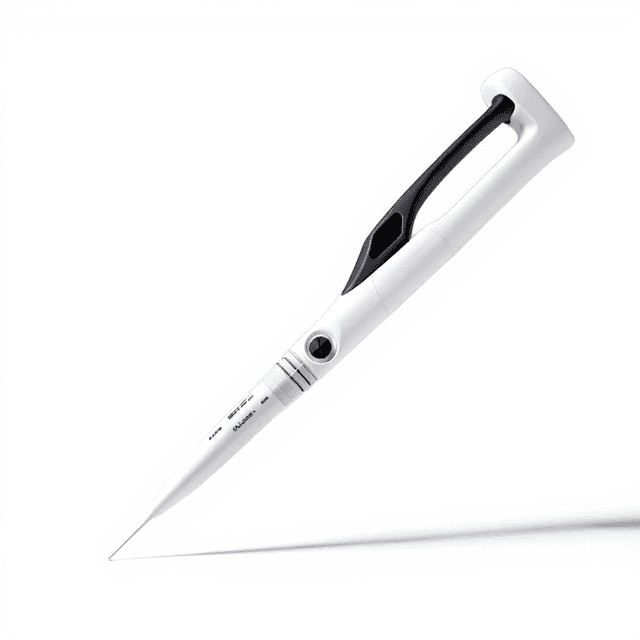
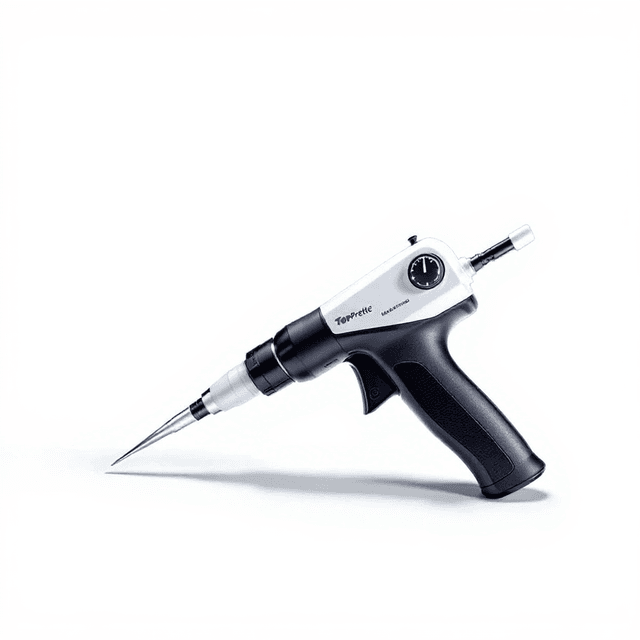
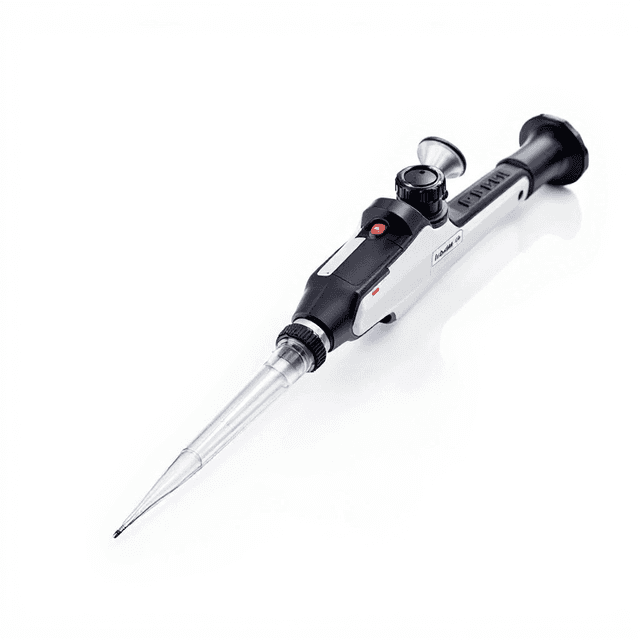
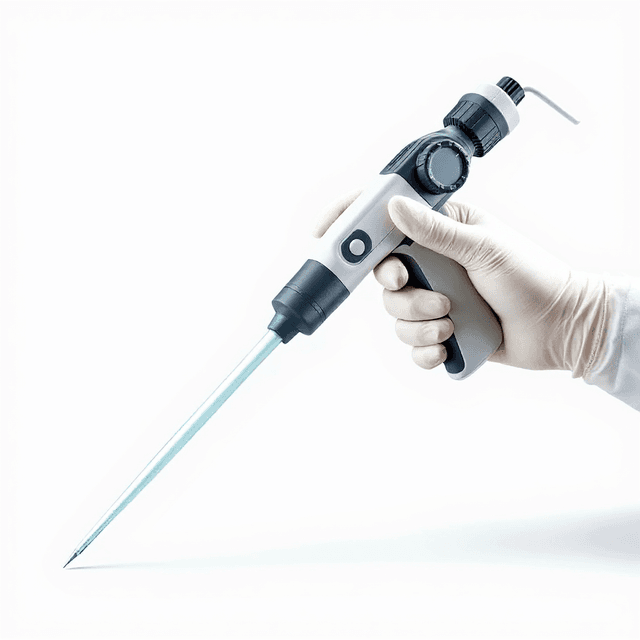
Multi-channel Pipette
Precision 8-channel pipette for high-throughput liquid handling with volume ranges from 30-300μL and accuracy specifications from 0.15% to 4.00% depending on model.
| Automation Level | manual |
| Cat. No. | Model |
| Channel | Volume Range |
| Increment | Test Volume |
| Gross Weight(kg) | Package Size(mm) |
| 20001110 | BK-8P10 |

The ConductScience Multi-channel Pipette is a precision liquid handling instrument designed for high-throughput laboratory applications requiring accurate dispensing of small volumes across multiple samples simultaneously. Available in 8-channel configurations with volume ranges from 30-300μL, this pipette enables researchers to perform parallel liquid transfers with consistent precision across all channels.
The instrument features variable volume settings with precision specifications ranging from 0.15% to 4.00% depending on the model and volume dispensed. Each pipette incorporates ergonomic design principles to reduce operator fatigue during extended pipetting sessions while maintaining accuracy across all channels. The system is particularly suited for applications in analytical chemistry, pharmaceutical quality control, and biological assays where sample throughput and volumetric precision are critical.
How It Works
Multi-channel pipettes operate on the air displacement principle, utilizing a series of parallel piston mechanisms to create controlled vacuum pressure for liquid aspiration and positive pressure for dispensing. Each channel contains an independent piston system connected to a common volume adjustment mechanism, ensuring uniform volume settings across all channels while maintaining individual channel precision.
The volume adjustment system employs a micrometer-style mechanism that precisely controls the piston displacement distance, directly correlating to the volume aspirated and dispensed. The precision specifications (0.15% to 4.00%) reflect the instrument's ability to maintain consistent volume delivery across the specified range, with tighter tolerances at higher volumes where piston displacement is greater relative to mechanical tolerances.
Tip ejection mechanisms enable rapid changeover between samples without cross-contamination, while the ergonomic design distributes the force required for aspiration and dispensing across the operator's hand to reduce fatigue during repetitive operations.
Features & Benefits
Automation Level
- manual
Cat. No.
- Model
Channel
- Volume Range
Increment
- Test Volume
Gross Weight(kg)
- Package Size(mm)
20001110
- BK-8P10
8
- 30-300μl
1.50% 2.50% 4.00%
- 50pcs/carton
15
- 560*360*280
20001115
- BK-8P20
0.40% 1.00% 2.00%
- 50pcs/carton
16
- 560*360*280
20001120
- BK-8P50
0.15% 0.40% 1.50%
- 50pcs/carton
Brand
- ConductScience
Research Domain
- Analytical Chemistry
- Cell Biology
- Clinical Diagnostics
- Environmental Monitoring
- Microbiology
- Pharmaceutical QC
Accuracy
- Package
Weight
- 35.27 kg
Dimensions
- L: 22.05 mm
- W: 14.17 mm
- H: 11.02 mm
Comparison Guide
| Feature | This Product | Typical Alternative | Advantage |
|---|---|---|---|
| Channel Count | 8 parallel channels | Entry-level models often offer fewer channels or single-channel operation | Enables simultaneous processing of standard microplate column formats, reducing total pipetting time |
| Volume Range | 30-300μL range coverage | Limited volume ranges require multiple pipettes for different applications | Covers common analytical and biological assay volume requirements within a single instrument |
| Precision Specification | 0.15% to 4.00% across models | Basic models typically offer lower precision specifications | Provides accuracy suitable for quantitative analysis and quality control applications |
| Operating Mechanism | Mechanical volume adjustment | Electronic models require battery maintenance and calibration | Eliminates electronic failure modes and provides consistent performance without power requirements |
The ConductScience Multi-channel Pipette series provides mechanical reliability and precision specifications suitable for analytical applications across three volume-optimized models. The 8-channel configuration supports standard microplate formats while maintaining individual channel accuracy specifications ranging from 0.15% to 4.00% depending on model selection.
Practical Tips
Perform gravimetric verification using distilled water at 20°C and document results according to ISO 8655 protocols.
Why: Temperature affects liquid density and ensures traceable accuracy verification for quantitative applications.
Clean tip cones weekly with laboratory detergent and inspect O-rings for wear or chemical damage.
Why: Contaminated tip interfaces and damaged seals are primary sources of volume inaccuracy and cross-contamination.
Pre-wet tips with working solution 2-3 times before critical measurements to equilibrate air space.
Why: Eliminates evaporation artifacts and surface tension effects that can cause systematic volume errors.
If individual channels show volume discrepancies, check for partial tip engagement or damaged piston seals.
Why: Channel-to-channel variation typically indicates mechanical issues rather than calibration drift.
Use consistent aspiration and dispensing rates, allowing 1-2 seconds at each step for pressure equilibration.
Why: Rapid pipetting introduces air bubbles and pressure artifacts that compromise volumetric precision.
Never exceed the maximum volume range and avoid aspirating air which can damage internal seals.
Why: Overpressure conditions can cause permanent damage to precision components and void calibration.
Store pipette in vertical position with volume set to maximum to reduce spring compression stress.
Why: Minimizes mechanical wear on internal springs and maintains long-term accuracy stability.
Setup Guide
What’s in the Box
- Multi-channel pipette (8-channel)
- User manual and calibration certificate
- Tip compatibility guide (typical)
- Performance verification documentation (typical)
Warranty
ConductScience provides a standard 1-year manufacturer warranty covering defects in materials and workmanship, with technical support available for calibration and maintenance procedures.
Compliance
References
Background reading relevant to this product:
What is the recommended calibration frequency for maintaining stated precision specifications?
Consult product datasheet for manufacturer recommendations, typically ranging from quarterly to annually depending on usage frequency and regulatory requirements of your laboratory.
Are the channels independently adjustable or do they operate with a common volume setting?
The pipette features a common volume adjustment mechanism ensuring uniform volume settings across all 8 channels, which is standard for multi-channel instruments to maintain parallel accuracy.
What tip volume compatibility range should be used with each model?
Use tips rated for the specific volume range of your model (30-300μL), ensuring the tip capacity exceeds your maximum dispensing volume by at least 20% for optimal accuracy.
How does the precision specification vary across the volume range?
Precision improves at higher volumes within each model's range, with specifications ranging from 0.15-4.00% depending on the specific model and dispensing volume selected.
Can this pipette handle viscous solutions or organic solvents?
Consult product datasheet for chemical compatibility specifications, as performance may vary with solution viscosity and solvent properties affecting tip sealing and volume accuracy.
What maintenance procedures are required to maintain accuracy over time?
Regular cleaning of external surfaces, periodic lubrication of moving parts, and annual calibration verification are typically required, with specific procedures detailed in the user manual.
Have a question about this product?
Accessories
Enhance your setup with compatible accessories
Replacement Parts & Consumables
Upgrade Options