Pass Box
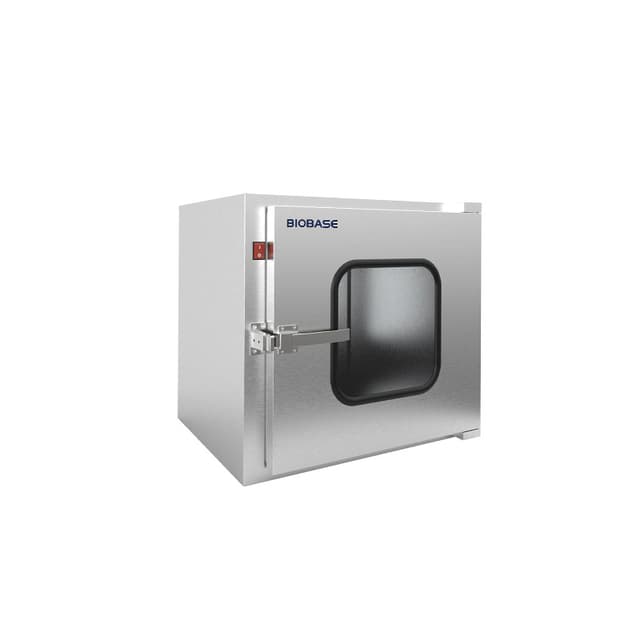
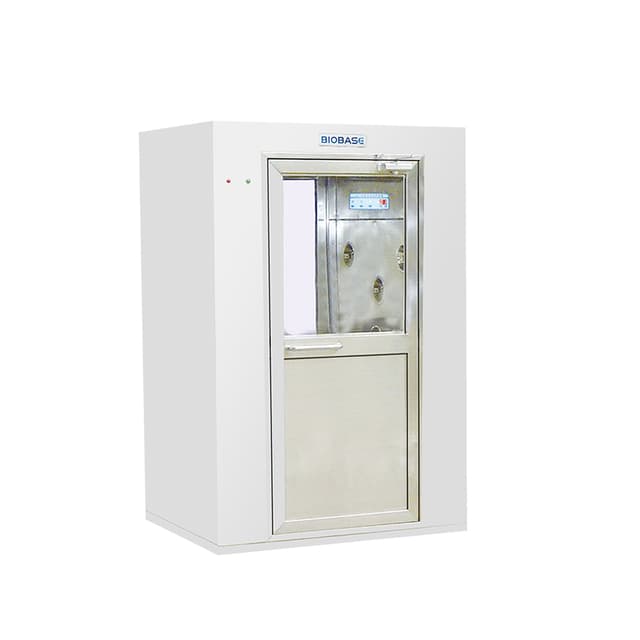
Air shower pass box with HEPA filtration and UV sterilization for sterile material transfer between cleanroom environments, featuring 304 stainless steel construction and electronic interlock system.
| Automation Level | semi-automated |
| Type | Air Shower Pass Box |
| ASPB-02 | ASPB-03 |
| PB-01 | PB-02 |
| External Size(W*D*H)mm | 660*570*1000 |
| 760*670*1100 | 860*770*1200 |

The ConductScience Pass Box is an air shower pass box system designed for sterile material transfer between cleanroom environments and external areas. This unit combines HEPA filtration, UV sterilization, and electronic interlock systems to maintain contamination control during material passage. The system features 304 stainless steel construction throughout, providing durability and easy decontamination in controlled environments.
Available in multiple size configurations with internal chambers ranging from 500×500×500mm to 700×700×700mm, the pass box accommodates various material transfer requirements. The integrated HEPA filter system achieves ≥99.995% efficiency at 0.3μm particles, while clean air speeds of 0.36-0.54m/s ensure consistent airflow patterns. Electronic interlocks prevent simultaneous opening of both doors, maintaining environmental separation during transfer operations.
How It Works
The pass box operates on the principle of laminar airflow containment combined with UV sterilization to create a sterile transfer chamber. HEPA filtration removes particles ≥0.3μm with 99.995% efficiency, while controlled airflow at 0.36-0.54m/s maintains unidirectional air movement to prevent contamination ingress. The 8W UV lamp provides surface sterilization of materials during the transfer cycle.
Electronic interlock systems ensure only one door can be opened at any time, preventing air exchange between the controlled environment and external areas. When materials are placed in the chamber, the UV cycle activates for a predetermined time to reduce surface bioburden. The stainless steel interior provides easy cleaning and prevents particle shedding that could compromise the sterile environment.
Features & Benefits
Automation Level
- semi-automated
Type
- Air Shower Pass Box
ASPB-02
- ASPB-03
PB-01
- PB-02
External Size(W*D*H)mm
- 660*570*1000
760*670*1100
- 860*770*1200
660*570*580
- 760*670*680
Internal Size(W*D*H)mm
- 500*500*500
600*600*600
- 700*700*700
500*500*500
- 600*600*600
Interlock
- Electronical
UV Lamp
- 8W*1
HEPA Filter
- Efficiency≥99.995% at 0.3μm
Clean Air Speed
- 0.36~0.54m/s
Brand
- ConductScience
Research Domain
- Cell Biology
- Clinical Diagnostics
- Environmental Monitoring
- Food Science
- Microbiology
- Pharmaceutical QC
Material
- 304 stainless steel
Weight
- 389.38 kg
Dimensions
- L: 19.69 mm
- W: 19.69 mm
- H: 19.69 mm
Comparison Guide
| Feature | This Product | Typical Alternative | Advantage |
|---|---|---|---|
| Filtration Efficiency | ≥99.995% at 0.3μm HEPA filtration | Basic models often provide 99.97% efficiency or lack particle size specification | Higher filtration efficiency removes smaller particles that could compromise sterile processes |
| Construction Material | 304 stainless steel throughout | Entry-level units may use powder-coated steel or mixed materials | Stainless steel construction resists corrosion and allows aggressive cleaning protocols required in sterile environments |
| UV Sterilization | Integrated 8W UV lamp system | Many pass boxes lack UV sterilization capability | UV treatment provides additional bioburden reduction on transferred material surfaces |
| Interlock System | Electronic interlock with door status monitoring | Basic models often use mechanical latches without monitoring | Electronic control prevents operator error and provides system status feedback for validation documentation |
| Airflow Control | Specified clean air speed range of 0.36-0.54m/s | Lower-cost units may lack airflow specification or control | Controlled airflow ensures consistent environmental conditions and prevents contamination ingress during transfers |
This pass box system combines HEPA filtration, UV sterilization, and electronic controls in a fully stainless steel construction. The specified airflow range and high-efficiency filtration support stringent contamination control requirements in sterile manufacturing and research environments.
Practical Tips
Verify airflow velocity at multiple points across the chamber opening using a certified anemometer during initial qualification and after filter changes.
Why: Uniform airflow distribution ensures consistent contamination control and prevents dead zones where particles could accumulate.
Monitor UV lamp hours and replace annually or when intensity drops below 70% of initial output as measured by UV meter.
Why: UV lamp degradation reduces sterilization effectiveness and could compromise material decontamination protocols.
Allow UV cycle to complete fully before opening the receiving door, and avoid placing light-sensitive materials in direct UV exposure.
Why: Complete UV exposure ensures adequate surface sterilization while protecting materials that could degrade under UV radiation.
Clean stainless steel surfaces with appropriate disinfectant between each use and perform weekly deep cleaning with non-abrasive cleaners.
Why: Regular cleaning prevents biofilm formation and maintains surface integrity for effective decontamination.
If interlock fails to engage, check door alignment and seal integrity before contacting technical support.
Why: Proper door sealing is essential for interlock function and maintaining environmental separation between areas.
Document all maintenance activities, filter changes, and calibration results to support validation and regulatory compliance requirements.
Why: Complete documentation demonstrates system qualification and supports audit requirements in regulated environments.
Ensure UV lamp exposure cycles are complete and chamber is empty before opening doors to prevent accidental UV exposure to personnel.
Why: Direct UV-C exposure can cause skin and eye damage, requiring proper safety protocols during operation and maintenance.
Setup Guide
What’s in the Box
- Pass box main unit with installed UV lamp
- HEPA filter assembly
- Electronic control system with interlock
- Power cable and electrical connections
- Installation hardware and mounting brackets
- User manual and operational procedures
- Calibration documentation (typical)
Compliance
Warranty & ConductCare
ConductScience provides a standard one-year manufacturer warranty covering defects in materials and workmanship, with technical support available for installation guidance and operational questions.
What maintenance schedule is required for the HEPA filter system?
HEPA filters should be pressure-tested every 6 months and replaced when efficiency drops below specification or pressure differential exceeds manufacturer limits. UV lamp replacement is typically required annually or after 8,000-10,000 hours of operation.
Can the UV sterilization cycle time be adjusted for different materials?
Consult product datasheet for timer adjustment capabilities. UV exposure time requirements vary based on material surface characteristics and required log reduction of bioburden.
How is airflow uniformity verified across the transfer chamber?
Use certified anemometer at multiple points across the chamber opening to verify airflow remains within 0.36-0.54m/s specification. Measure at center and corners of the opening during qualification testing.
What cleaning agents are compatible with the stainless steel interior?
Standard laboratory disinfectants including 70% isopropanol, quaternary ammonium compounds, and dilute bleach solutions are compatible with 304 stainless steel. Avoid chloride-containing cleaners above 200ppm to prevent corrosion.
Does the interlock system provide feedback on door status?
Electronic interlock systems typically include visual indicators showing door position and lock status. Consult product datasheet for specific monitoring and alarm capabilities of the control system.
Can the unit be integrated with building management systems?
Integration capabilities depend on control system specifications. Many units offer contact closures or communication protocols for monitoring filter status, UV lamp hours, and alarm conditions through facility management systems.
What is the maximum weight capacity for transferred materials?
Weight capacity depends on internal shelf configuration and mounting system. Consult product datasheet for specific load limits and recommended weight distribution for safe operation.
Have a question about this product?
Accessories
Enhance your setup with compatible accessories
Upgrade Options