Clean Booth (Down Flow Booth)
Modular cleanroom booth system with HEPA filtration achieving ISO 5 cleanliness standards through vertical laminar airflow for controlled particulate environments.

Louise Corscadden, PhD
Director of Science · ConductScience
Ask Louise about Clean Booth (Down Flow Booth) fit, setup, configuration, or quote prep.
Already working with us? Sign in to connect this with My Scientist.
Key Specifications
Full details →- Model fit
- 4 selectable configurations
- SKU family
- BIO-0069
- Shipping box
- 253.0 x 200.0 x 150.0 cm
- Ordering
- Online checkout and quote request available
- Category
- Cleanroom Equipment
- Build notes
- Confirm accessories, station layout, and support needs before purchase
Benchtop down-flow clean booth designed for laboratory environments requiring contamination-free workspace. Features HEPA/ULPA filtration system with downward laminar airflow providing ISO Class 5 clean air for precise work on samples, electronics, or small components.
How It Works
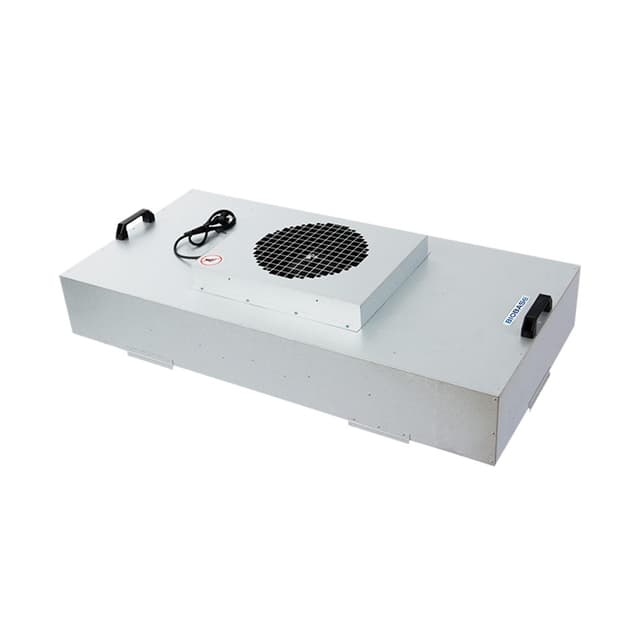
The Clean Booth operates on the principle of vertical laminar airflow to establish a unidirectional flow pattern that continuously sweeps airborne particles away from the work surface. Room air enters through the FFU system where it passes through HEPA filters rated at 99.995% efficiency for 0.3μm particles. The filtered air then flows downward through the work zone at uniform velocity, creating a particle-free environment within the enclosed booth structure.
The microprocessor control system monitors and maintains consistent airflow parameters while the anti-static curtain walls prevent external contamination infiltration. The aluminum alloy frame provides structural integrity while minimizing particle generation from the booth itself. Air exits through the bottom of the work zone, carrying away any particles introduced during work activities.
The modular FFU configuration allows airflow scaling based on booth dimensions, with larger units incorporating additional filter units to maintain uniform air velocity across the expanded work surface. The vertical flow pattern ensures that particles are continuously removed rather than recirculated within the work zone.
Features & Benefits
Shipping weight
- 390.0 lb
Shipping box
- L: 253.0 cm
- W: 200.0 cm
- H: 150.0 cm
| Model | SKU | Listed price | Status | Shipping box |
|---|---|---|---|---|
| 5000mm | BKCB-5000 | $43,990.00 | Available | 253.0 x 200.0 x 150.0 cm |
| 3000mm | BKCB-3000 | $30,990.00 | Available | 253.0 x 200.0 x 150.0 cm |
| 2000mm | BKCB-2000 | $18,990.00 | Available | 253.0 x 200.0 x 150.0 cm |
| 1500mm | BKCB-1500 | $9,900.00 | Available | 253.0 x 200.0 x 150.0 cm |
Practical Tips
Verify airflow velocity uniformity across the work surface using a calibrated anemometer at multiple measurement points during initial installation and periodic validation.
Why: Uniform airflow ensures consistent particle removal efficiency across the entire work zone.
Monitor pressure drop across HEPA filters monthly and maintain log of readings to predict filter replacement timing before performance degradation.
Why: Proactive filter maintenance prevents gradual loss of cleanliness levels that could compromise experimental results.
Allow the booth to operate for at least 15-20 minutes before beginning work to establish stable airflow patterns and remove any particles disturbed during startup.
Why: Initial purge time ensures optimal cleanliness levels are achieved before introducing materials or beginning procedures.
If particle counts begin to increase, first check for damage or gaps in curtain seals before assuming filter failure.
Why: Seal integrity problems are more common than filter failures and can be resolved without costly filter replacement.
Document particle count measurements at multiple locations within the booth and maintain records for trend analysis over time.
Why: Historical data helps identify gradual performance changes and supports regulatory compliance documentation requirements.
Ensure electrical connections meet local codes and install appropriate circuit protection before initial system startup.
Why: High-power FFU systems require proper electrical safety measures to prevent equipment damage and personnel hazards.
Position materials and equipment to avoid blocking airflow patterns, keeping the center of the work zone clear for optimal particle removal.
Why: Airflow obstruction creates turbulence zones where particles can accumulate rather than being swept away by the laminar flow.
Setup Guide
Complete installation support and operator training included. System includes HEPA/ULPA filter cartridges, electrical connections, exhaust ducting configuration, and safety interlocks. Professional installation recommended.What’s in the Box
- Aluminum alloy frame components
- HEPA filter units (4, 6, or 12 based on model)
- Fan Filter Units (FFUs)
- Anti-static dustproof curtains
- Microprocessor control system
- Electrical connection components
- Assembly hardware
- Installation manual (typical)
- Airflow verification certificate (typical)
Warranty
ConductScience provides a standard one-year manufacturer warranty covering defects in materials and workmanship, with technical support for installation guidance and operational troubleshooting.
Compliance
Comprehensive operation manuals, filter replacement procedures, maintenance schedules, airflow verification protocols, and safety documentation included. Technical support available.Have a question about this product?
Have a question? Just ask.
Send it over and we'll email you a personalized answer — no call, no scheduling.
Prefer to talk it through?
Accessories
Enhance your setup with compatible accessories