Planaria Y Maze
Y-shaped behavioral apparatus for assessing spatial learning, memory, and decision-making in planarian flatworms through binary choice testing.

Louise Corscadden, PhD
Director of Science · ConductScience
Ask Louise about Planaria Y Maze fit, setup, configuration, or quote prep.
Already working with us? Sign in to connect this with My Scientist.
Key Specifications
Full details →- Model fit
- Planaria
- SKU family
- CS-958169
- Shipping box
- 65.0 x 36.0 x 27.0 cm
- Ordering
- Online checkout and quote request available
- Category
- Behavioral Mazes
- Build notes
- Confirm accessories, station layout, and support needs before purchase
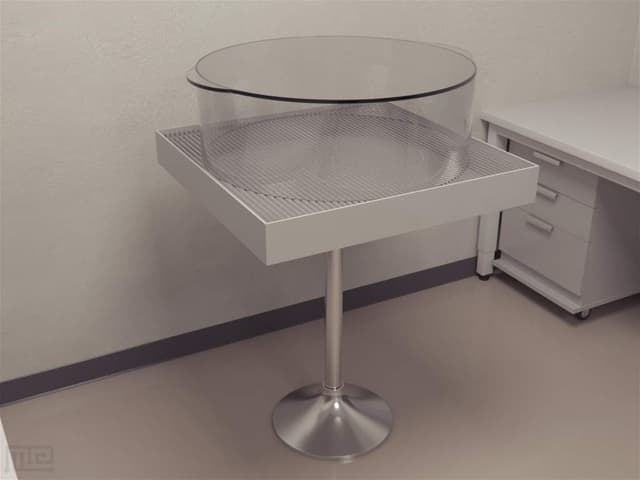
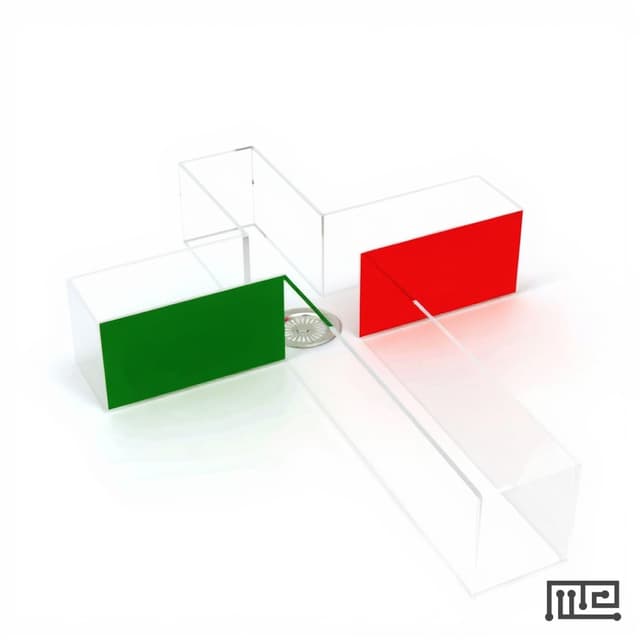
The Planaria Y Maze is a specialized behavioral apparatus designed for studying spatial learning, memory, and decision-making in planarian flatworms. This apparatus consists of a Y-shaped chamber that presents test organisms with a binary choice between two arms, allowing researchers to assess cognitive functions in these invertebrate model organisms.
Planarians serve as valuable subjects for neurobehavioral research due to their simple nervous system, regenerative capabilities, and demonstrated learning abilities. The Y-maze configuration provides a controlled environment for investigating spatial memory formation, choice preference, and the effects of various experimental manipulations on cognitive performance in these organisms.
How It Works
The Y-maze operates on the principle of binary choice testing, where planarians must navigate between two alternative pathways. The apparatus presents subjects with a decision point at the base of the Y, leading to two distinct arms that can be differentiated by environmental cues such as lighting conditions, substrate texture, or chemical gradients.
Behavioral assessment relies on measuring choice preference, response latency, and learning acquisition over repeated trials. Planarians demonstrate cognitive function through their ability to form spatial associations, remember previous experiences, and modify their behavior based on environmental feedback. The simple design allows for precise control of experimental variables while providing quantifiable measures of cognitive performance.
Features & Benefits
Behavioral Construct
- Spatial Learning
- Memory
- Choice Behavior
- Decision Making
Automation Level
- manual
Research Domain
- Behavioral Pharmacology
- Developmental Biology
- Learning and Memory
- Neuroscience
- Toxicology
Species
- Planaria
Compatible Tracking Software
- ConductVision
Shipping weight
- 6.06 lb
Shipping box
- L: 65.0 cm
- W: 36.0 cm
- H: 27.0 cm
| Feature | This Product | Typical Alternative | Advantage |
|---|---|---|---|
| Maze Complexity | Simple Y-shaped binary choice design | Some models offer multi-arm configurations with 4-8 choice points | Reduces confounding variables and simplifies data interpretation for basic cognitive assessment |
| Species Compatibility | Optimized for planarian flatworms | Generic designs may not account for species-specific behavioral requirements | Provides appropriate scale and environmental conditions for reliable planarian behavioral testing |
| Construction Material | Aquatic-compatible transparent construction | Some mazes use opaque materials limiting observation capabilities | Enables continuous visual monitoring and video documentation of subject behavior |
| Setup Requirements | Simple fill-and-test configuration | Complex mazes may require elaborate cue systems and multiple chambers | Minimizes preparation time and reduces potential for experimental errors |
The Planaria Y Maze provides a focused solution for binary choice behavioral testing in planarian research. Its specialized design accommodates the unique requirements of aquatic invertebrate behavioral assessment while maintaining experimental simplicity and reliability.
Practical Tips
Maintain consistent water temperature across trials and between maze arms to prevent thermal preference bias.
Why: Planarians are sensitive to temperature gradients which can confound spatial choice behavior.
Clean maze thoroughly between subjects using distilled water and allow complete drying between experiments.
Why: Chemical residues or biological traces can create unintended cues affecting subsequent behavioral tests.
Record choice latency from initial placement to first arm entry rather than final position.
Why: Initial choice behavior provides more reliable measure of cognitive processing than extended exploration patterns.
Verify arm dimensions and angles periodically to ensure geometric consistency.
Why: Structural changes over time could introduce systematic bias in choice behavior assessment.
If planarians show strong side bias, rotate maze orientation between trials to control for environmental asymmetries.
Why: Laboratory lighting or vibration sources can create unintended directional preferences independent of experimental variables.
Handle planarians gently using soft brushes or wide-bore pipettes to prevent tissue damage.
Why: Physical stress or injury can alter behavioral responses and compromise experimental validity.
Setup Guide
What’s in the Box
- Y-maze apparatus (typical)
- User manual with protocol guidelines (typical)
- Cleaning instructions (typical)
Warranty
ConductScience provides a standard one-year manufacturer warranty covering defects in materials and workmanship, with technical support available for setup and protocol optimization.
Compliance
References
Background reading relevant to this product:
What water depth should be maintained in the maze for optimal planarian behavior?
Water depth should be sufficient for normal planarian locomotion, typically 5-10mm. Maintain consistent depth across all arms to prevent bias from depth preferences.
How long should individual trials last for reliable behavioral assessment?
Trial duration varies with experimental design, but 5-15 minutes per trial is typical. Monitor for completion of choice behavior rather than strict time limits.
Can the maze be used with different planarian species?
Yes, the maze accommodates various planarian species. Consider species-specific behavioral patterns and sensory capabilities when designing experimental protocols.
What environmental cues work best for choice discrimination?
Lighting gradients, substrate texture differences, and chemical gradients are effective. Choose cues based on planarian sensory biology and experimental objectives.
How many trials are needed to establish learning curves?
Minimum 10-20 trials per subject for basic learning assessment. Extended protocols may require 50+ trials for detailed acquisition and retention analysis.
What cleaning protocols prevent behavioral artifacts?
Rinse thoroughly with distilled water between subjects. Use mild detergent if needed, followed by extensive rinsing to eliminate chemical residues that could affect behavior.
Have a question about this product?
Have a question? Just ask.
Send it over and we'll email you a personalized answer — no call, no scheduling.
Prefer to talk it through?