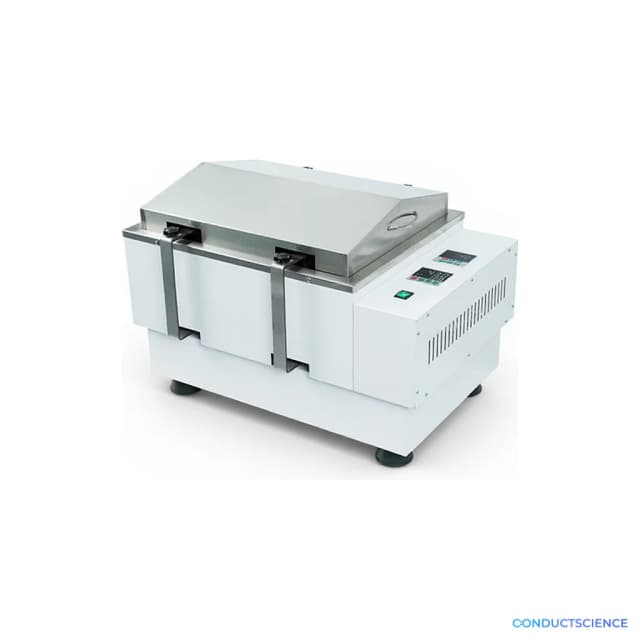
Platelet Incubator
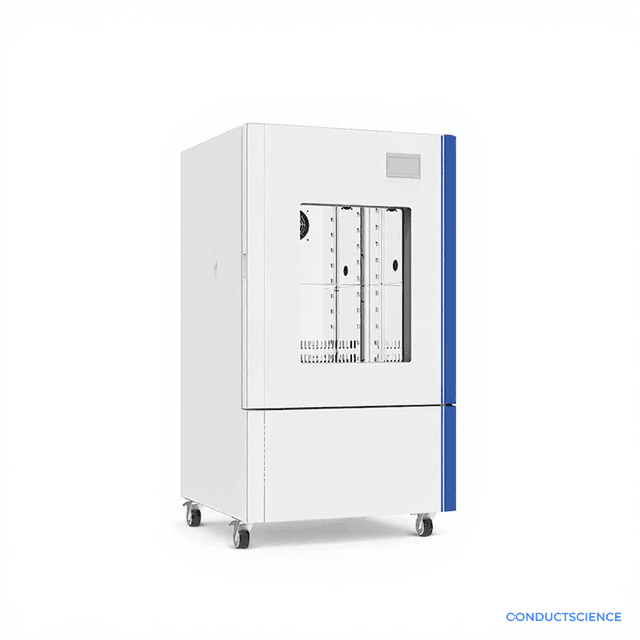
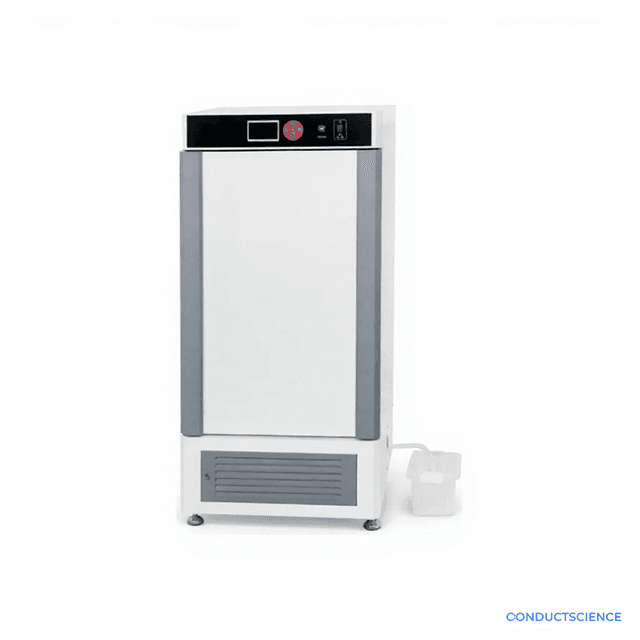
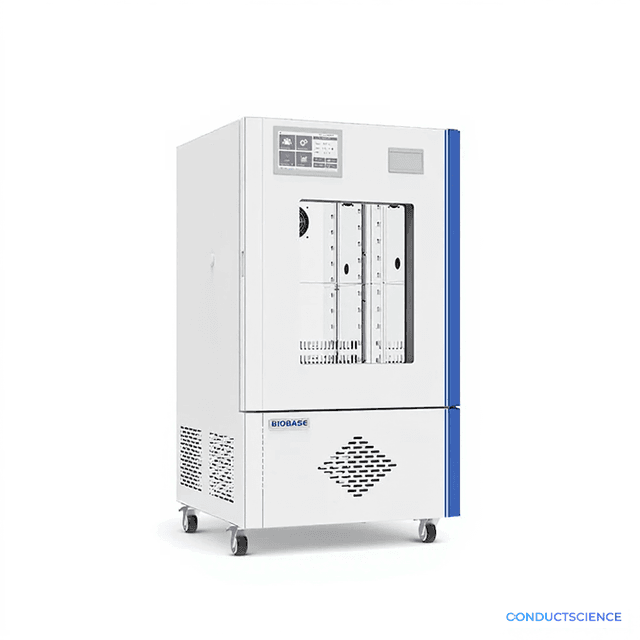
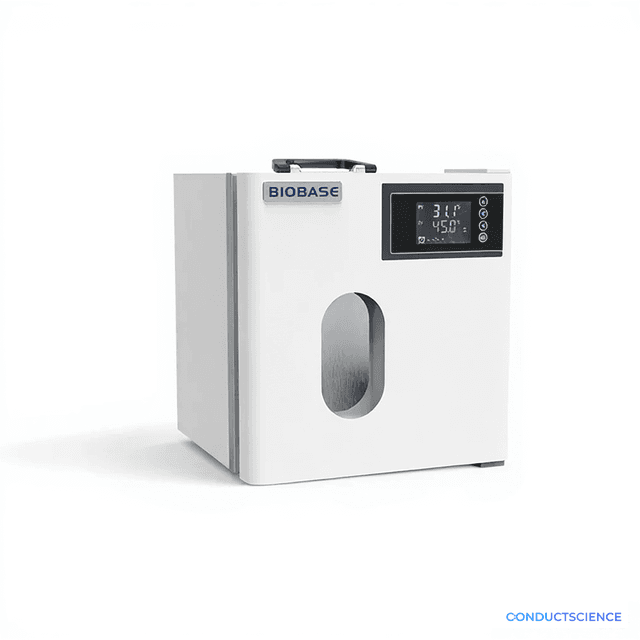
Temperature-controlled oscillating incubator maintaining 22°C±2°C with horizontal oscillation at 60 oscillations/min for platelet storage and processing applications.

Louise Corscadden, PhD
Director of Science · ConductScience
Ask Louise about Platelet Incubator fit, setup, configuration, or quote prep.
Already working with us? Sign in to connect this with My Scientist.
Key Specifications
Full details →- Model fit
- 2 selectable configurations
- SKU family
- Assigned during quote
- Sizing
- 46.0 x 50.0 x 31.0 cm
- Ordering
- Online checkout and quote request available
- Category
- Laboratory Incubators
- Build notes
- Confirm accessories, station layout, and support needs before purchase
The Platelet Incubator (BIO-0239) is a specialized temperature-controlled oscillating incubator designed for platelet storage and processing applications. This unit maintains precise temperature control at 22.0±2.0°C with horizontal oscillation at 60±5 oscillations per minute, creating optimal conditions for platelet preservation and activation studies.
The system features a 7-inch LCD touch screen interface and employs CFC-free R134a refrigerant with automatic defrost functionality. Multiple safety alarms monitor temperature excursions, oscillation device failure, and door status. The controlled environment chamber accommodates standard laboratory vessels while providing uniform temperature distribution within ±2.0°C throughout the working volume.
How It Works
The platelet incubator operates on the principle of controlled thermostatic regulation combined with continuous horizontal oscillation to maintain optimal platelet viability and prevent aggregation. The system uses a precision temperature control circuit to maintain the chamber at 22.0±2.0°C, which represents the optimal storage temperature for platelet preservation while preventing cold-induced activation.
Horizontal oscillation at 60±5 oscillations per minute with 50±5mm amplitude provides gentle agitation that prevents platelet settling and maintains suspension homogeneity without causing mechanical damage to the cells. The CFC-free R134a refrigeration system with automatic defrost ensures consistent cooling performance while the LCD touch screen interface provides real-time monitoring of temperature and oscillation parameters.
Multiple alarm systems continuously monitor critical parameters including temperature excursions beyond set limits, oscillation motor failure, and prolonged door opening events that could compromise sample integrity. This multi-layered monitoring approach ensures samples remain within acceptable storage conditions throughout extended incubation periods.
Features & Benefits
Model
- Advanced
- Standard
Weight
- 80.0 kg
Dimensions
- L: 46.0 mm
- W: 50.0 mm
- H: 31.0 mm
| Feature | This Product | Typical Alternative | Advantage |
|---|---|---|---|
| Temperature Control Range | 22.0±2.0°C with ±1.0°C fluctuation control | General incubators often provide wider temperature ranges but less precise control at specific temperatures | Optimized for platelet storage temperature with tight stability prevents cold-induced activation |
| Oscillation Integration | Built-in horizontal oscillation at 60±5 oscillations/min with 50±5mm amplitude | Separate shaker units require additional bench space and sample transfer | Eliminates temperature excursions during sample handling and reduces contamination risk |
| Temperature Display Resolution | 0.1°C resolution on 7-inch LCD touch screen | Basic units often provide 1°C resolution with limited display information | Precise monitoring enables detection of small temperature deviations critical for platelet viability |
| Alarm Monitoring | Multiple alarms for temperature, oscillation failure, and door status | Entry-level models may only provide basic temperature alarms | Comprehensive monitoring protects samples from multiple failure modes |
| Temperature Uniformity | ±2.0°C uniformity throughout chamber | Standard incubators may have larger temperature gradients | Consistent conditions across all sample positions ensure reliable experimental results |
| Environmental Design | CFC-free R134a refrigerant with automatic defrost | Older units may use less environmentally friendly refrigerants | Environmentally responsible operation with reduced maintenance requirements |
This unit combines specialized temperature control optimized for platelet storage with integrated oscillation capability and comprehensive monitoring systems. The fixed parameters and precision controls are specifically designed for platelet research applications rather than general laboratory use.
| Model | SKU | Listed price | Status | Dimensions |
|---|---|---|---|---|
| Standard | BIO-0245 | $1,490.00 | Available | 46.0 x 50.0 x 31.0 cm |
| Advanced | BIO-0239 | $3,890.00 | Available | 46.0 x 50.0 x 31.0 cm |
Practical Tips
Verify temperature accuracy monthly using NIST-traceable temperature probes placed in multiple chamber locations.
Why: Ensures maintained accuracy across the working volume for reliable experimental conditions.
Clean the chamber weekly with appropriate disinfectants and inspect oscillation mechanism for smooth operation.
Why: Prevents contamination buildup and ensures consistent mechanical function.
Allow samples to equilibrate to chamber temperature for 15-30 minutes before beginning oscillation.
Why: Prevents temperature shock that could affect platelet viability and experimental outcomes.
If temperature uniformity appears compromised, check for door seal integrity and adequate ventilation clearance.
Why: Poor sealing or blocked airflow can create temperature gradients within the chamber.
Document oscillation start time and duration for each experiment to ensure consistent agitation exposure.
Why: Standardized agitation protocols improve reproducibility between experimental runs.
Test all alarm functions monthly and ensure backup temperature monitoring is available for critical samples.
Why: Early detection of equipment failure prevents loss of valuable biological samples.
Position sample containers securely to prevent movement during oscillation that could cause sample spillage.
Why: Proper container placement maintains sample integrity and prevents cross-contamination.
Check and clean the automatic defrost system quarterly to maintain cooling efficiency.
Why: Frost buildup can reduce cooling performance and affect temperature stability.
Setup Guide
What’s in the Box
- Platelet incubator main unit
- Power cord
- User manual and documentation
- Calibration certificate (typical)
- Sample platform inserts (typical)
Warranty
ConductScience provides a standard 1-year manufacturer warranty covering parts and labor with technical support for installation and operational guidance.
Compliance
What is the temperature accuracy and how often should calibration be performed?
Temperature control maintains 22.0±2.0°C with ±1.0°C fluctuation and 0.1°C display resolution. Annual calibration verification is recommended using NIST-traceable temperature standards.
Can the oscillation parameters be adjusted for different experimental protocols?
The unit operates at fixed 60±5 oscillations/min with 50±5mm amplitude, optimized for platelet applications. Consult product datasheet for any available parameter adjustment capabilities.
What sample containers and volumes are compatible with this incubator?
Chamber dimensions of 46.0 x 50.0 x 31.0 cm accommodate standard laboratory vessels. Consult product datasheet for specific capacity and container compatibility information.
How does the alarm system notify users of parameter deviations?
Audio alarms activate for ultra-high and ultra-low temperature conditions, oscillation motor failure, and prolonged door opening events to protect sample integrity.
What maintenance is required for the oscillation mechanism?
The system includes oscillation motor failure monitoring. Regular inspection of moving components and lubrication per manufacturer specifications ensures reliable operation.
How does this compare to standard laboratory shakers for platelet work?
Unlike standard shakers, this unit combines precise temperature control at platelet storage temperature with optimized oscillation parameters specifically designed for platelet preservation.
What power requirements and environmental conditions are needed?
The 80kg unit requires stable power supply and ambient temperature between 5-35°C with adequate ventilation clearance around all sides.
Have a question about this product?
Have a question? Just ask.
Send it over and we'll email you a personalized answer — no call, no scheduling.
Prefer to talk it through?
Accessories
Enhance your setup with compatible accessories
Replacement Parts & Consumables
Upgrade Options