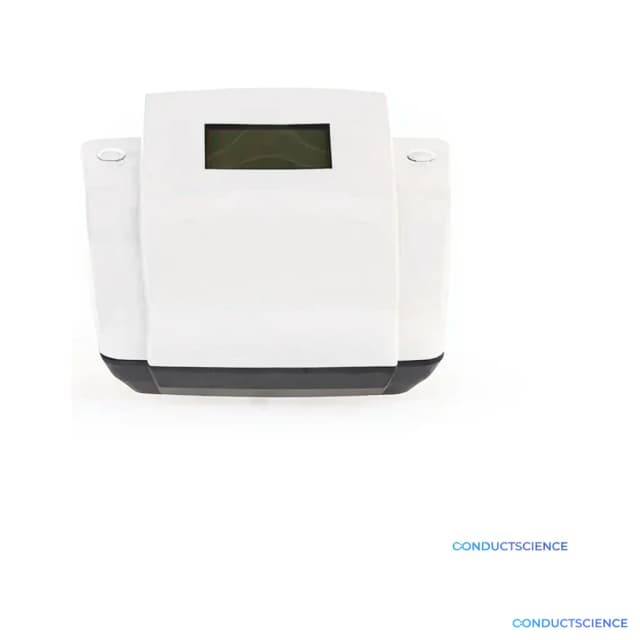
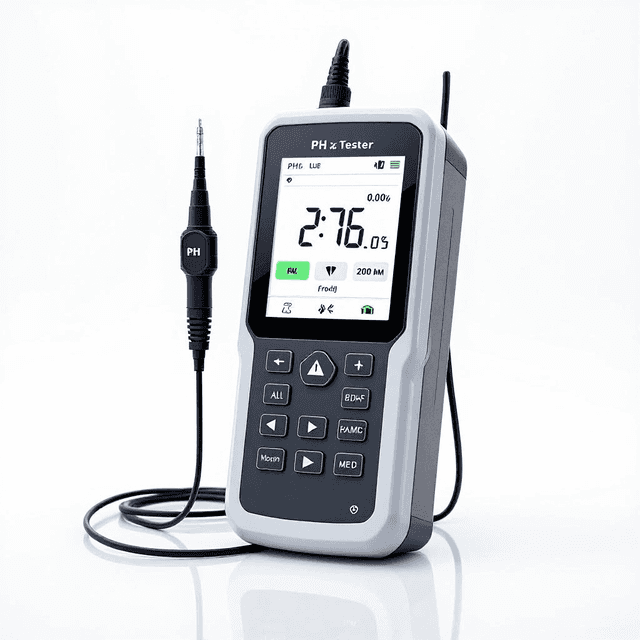
Portable Optical Dissolved Oxygen Meter
Handheld fluorescence-based dissolved oxygen meter with IP67 waterproof rating, measuring 0-20 mg/L DO and 0-200% saturation for environmental monitoring and aquaculture applications.
| Data storage | Support |
| Language | Chinese/English |
| Air pressure measurement | 50~115kPa |
| Waterproof | IP67 |
| Optional function | GPS/Wifi |
| Relative humidity | 10-85%RH(no condensation) |

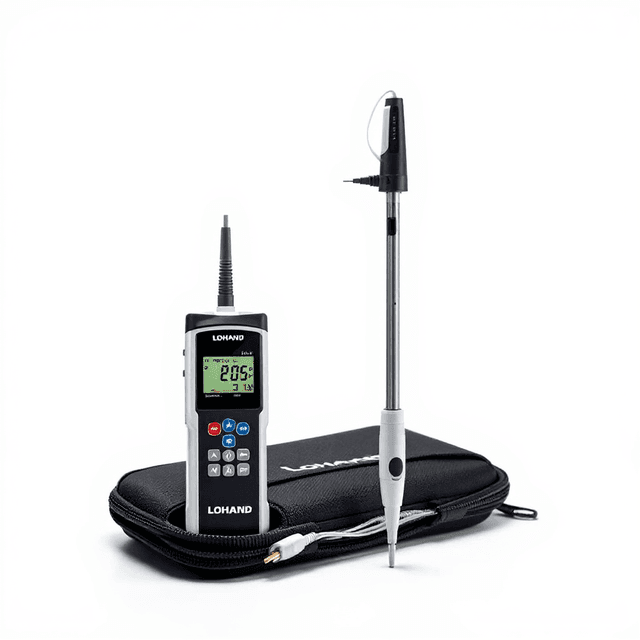
The Portable Optical Dissolved Oxygen Meter (CS-LH-DO007) is a handheld fluorescence-based analyzer designed for field and laboratory measurement of dissolved oxygen concentrations, saturation levels, and temperature in aqueous solutions. The instrument utilizes optical fluorescence quenching technology to provide accurate, real-time measurements without the consumable requirements of traditional electrochemical sensors.
Featuring a 3.3-inch monochrome LCD display and IP67 waterproof rating, this meter is engineered for continuous monitoring applications in environmental protection, aquaculture management, water treatment facilities, and biochemical research. The device operates across a dissolved oxygen range of 0-20 mg/L with saturation measurements from 0-200%, making it suitable for both oxygen-rich and oxygen-depleted environments.
How It Works
The instrument employs fluorescence quenching technology, where a fluorescent dye coating on the sensor probe is excited by blue LED light. In the absence of oxygen, the fluorescent molecules emit red light with maximum intensity and longest decay time. As dissolved oxygen concentration increases, oxygen molecules collide with excited fluorescent molecules, quenching the fluorescence and reducing both intensity and decay time proportional to oxygen concentration.
The optical sensor measures both the intensity and phase shift of the fluorescent emission relative to the excitation light. This dual-parameter measurement provides temperature-compensated dissolved oxygen values according to the Stern-Volmer relationship. The fluorescence lifetime method eliminates interference from ambient light, turbidity, and most dissolved substances that commonly affect electrochemical sensors.
Temperature compensation is achieved through integrated thermistor measurements, automatically correcting dissolved oxygen readings for temperature-dependent solubility changes. Atmospheric pressure inputs allow calculation of oxygen saturation percentages relative to air-saturated water at measured conditions.
Features & Benefits
Data storage
- Support
Language
- Chinese/English
Air pressure measurement
- 50~115kPa
Waterproof
- IP67
Optional function
- GPS/Wifi
Relative humidity
- 10-85%RH(no condensation)
Working temperature
- -10~60â
Transportation and storage conditions
- Temperature:-15~65âï¼Relative humidity:5-85%RH(no condensation)
Measurement principle
- Fluorescence
Measuring range
- Dissolved Oxygen:0-20mg/L;Saturation:0-200%;Temperature:0- 50â
Calibration
- One or two point calibration
Automation Level
- manual
Brand
- ConductScience
Display Type
- 3.3 inch monochrome LCD screen
Dimensions
- 200*101*36mm
Weight
- 420g
Power/Voltage
- 4*AA batteries
Research Domain
- Analytical Chemistry
- Environmental Monitoring
- Food Science
- Materials Science
- Microbiology
- Pharmaceutical QC
Weight
- 0.93 kg
Dimensions
- L: 7.87 mm
- W: 3.98 mm
- H: 1.42 mm
Comparison Guide
| Feature | This Product | Typical Alternative | Advantage |
|---|---|---|---|
| Measurement Technology | Fluorescence-based optical sensor | Electrochemical sensors requiring membrane and electrolyte maintenance | Eliminates consumable replacement costs and provides stable readings in chemically challenging environments. |
| Measurement Range | 0-20 mg/L dissolved oxygen, 0-200% saturation | Entry-level models often limited to 0-15 mg/L with narrower saturation range | Accommodates supersaturated conditions commonly encountered in photosynthetic environments and industrial processes. |
| Environmental Protection | IP67 waterproof rating | Many field instruments offer IP54-IP65 protection levels | Enables submersible operation and reliable performance in harsh field conditions with complete dust protection. |
| Operating Temperature Range | -10 to 60°C operational range | Standard instruments typically operate 0-50°C | Extended low-temperature capability supports winter field monitoring and cold storage applications. |
| Calibration Options | One or two-point calibration capability | Many field meters require only single-point air calibration | Two-point calibration provides enhanced accuracy across the full measurement range for critical applications. |
| Data Management | Internal storage with optional GPS/WiFi connectivity | Basic models offer limited storage without wireless capabilities | Enables comprehensive monitoring programs with automated geospatial data correlation and remote data access. |
This fluorescence-based dissolved oxygen meter provides extended measurement ranges, enhanced environmental protection, and advanced connectivity options while eliminating the consumable requirements of traditional electrochemical sensors. The optical technology and comprehensive data management capabilities make it well-suited for demanding field monitoring applications.
Practical Tips
Perform calibration using water at the same temperature as your test samples to minimize temperature-related measurement errors.
Why: Temperature affects both oxygen solubility and sensor response characteristics.
Use zero-oxygen solution (sodium sulfite) and air-saturated water for two-point calibration when maximum accuracy is required.
Why: Two-point calibration corrects for both offset and span errors across the full measurement range.
Clean the optical sensor weekly with mild detergent solution when used in algae-rich or sediment-laden waters.
Why: Biofilm and particulate deposits on the sensor window can interfere with fluorescence measurements.
Allow 30-60 seconds for sensor equilibration in each sample before recording measurements, especially when moving between different temperature conditions.
Why: Thermal equilibration ensures accurate temperature compensation and stable dissolved oxygen readings.
Input current atmospheric pressure or use the built-in barometric sensor for accurate saturation percentage calculations.
Why: Atmospheric pressure significantly affects oxygen solubility and saturation calculations, especially at different altitudes.
If readings appear unstable, check for air bubbles on the sensor surface and ensure the probe is completely submerged.
Why: Air bubbles can cause erratic optical readings by interfering with the fluorescence detection pathway.
Record measurement depth and water movement conditions when conducting field surveys for proper data interpretation.
Why: Dissolved oxygen levels vary significantly with depth and mixing conditions in natural water bodies.
Verify the integrity of the IP67 sealing before each field deployment, especially after battery changes.
Why: Compromised waterproof sealing can damage internal electronics and compromise measurement accuracy.
Setup Guide
What’s in the Box
- Portable optical dissolved oxygen meter (typical)
- Optical fluorescence sensor probe (typical)
- Calibration solutions and standards (typical)
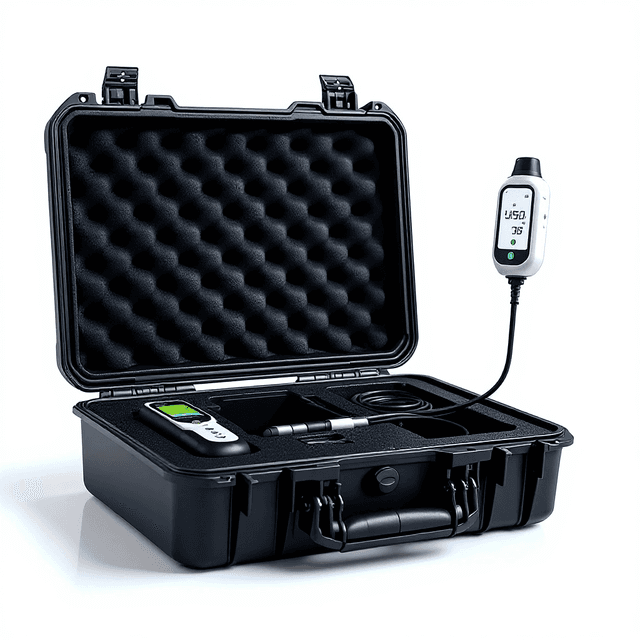
- Protective carrying case (typical)
- Battery compartment cover (typical)
- User manual and calibration certificate (typical)
- USB data cable (typical)
Warranty
ConductScience provides a standard one-year manufacturer warranty covering defects in materials and workmanship, with technical support for calibration procedures and troubleshooting assistance.
Compliance
What calibration standards are required for accurate dissolved oxygen measurements?
The meter supports one or two-point calibration using air-saturated water at known temperature or certified dissolved oxygen standard solutions. Two-point calibration using zero-oxygen and air-saturated standards provides optimal accuracy across the full measurement range.
How does the fluorescence sensor performance compare to traditional electrochemical dissolved oxygen probes?
The optical fluorescence sensor eliminates consumable membranes and electrolyte solutions while providing greater stability and reduced maintenance. Unlike electrochemical sensors, it is not affected by hydrogen sulfide, ammonia, or other reducing compounds commonly present in environmental samples.
What is the typical sensor response time and measurement precision?
Consult product datasheet for specific response time and precision specifications. Fluorescence-based sensors typically require 30-60 seconds for equilibration in still water conditions.
Can the meter operate in high-salinity or chemically aggressive solutions?
The IP67-rated housing provides protection against water ingress, but chemical compatibility depends on the specific fluorescent sensor coating. Consult product datasheet for detailed chemical resistance specifications.
How is temperature compensation performed for accurate dissolved oxygen readings?
Integrated temperature measurement from 0-50°C automatically compensates dissolved oxygen readings for temperature-dependent solubility changes according to standard solubility tables.
What data output formats are supported for integration with monitoring systems?
The device includes data storage capability with optional GPS/WiFi connectivity. Consult product datasheet for specific data formats and communication protocols supported.
What maintenance procedures are required for the optical sensor?
The fluorescence sensor requires periodic cleaning to remove biofilm or sediment deposits that could interfere with optical measurements. Sensor recalibration intervals depend on application requirements and environmental conditions.
How does atmospheric pressure affect dissolved oxygen saturation calculations?
The meter measures atmospheric pressure from 50-115 kPa to calculate accurate oxygen saturation percentages. This compensates for altitude and barometric pressure variations that significantly affect oxygen solubility in water.
Have a question about this product?
Accessories
Enhance your setup with compatible accessories