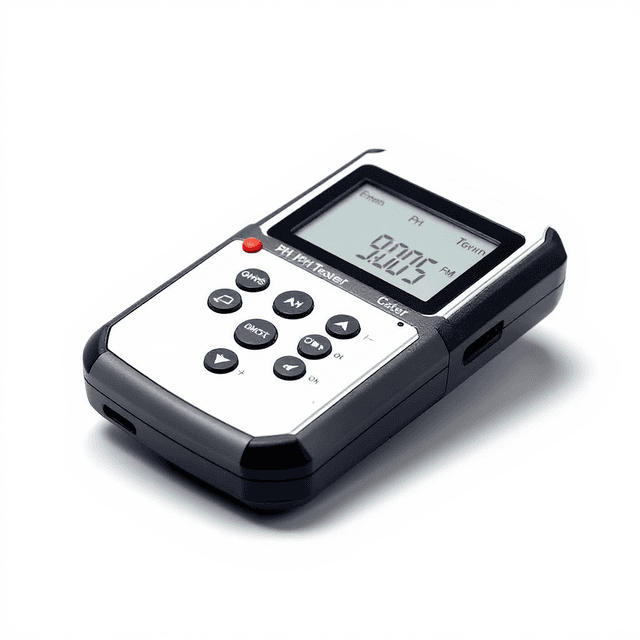
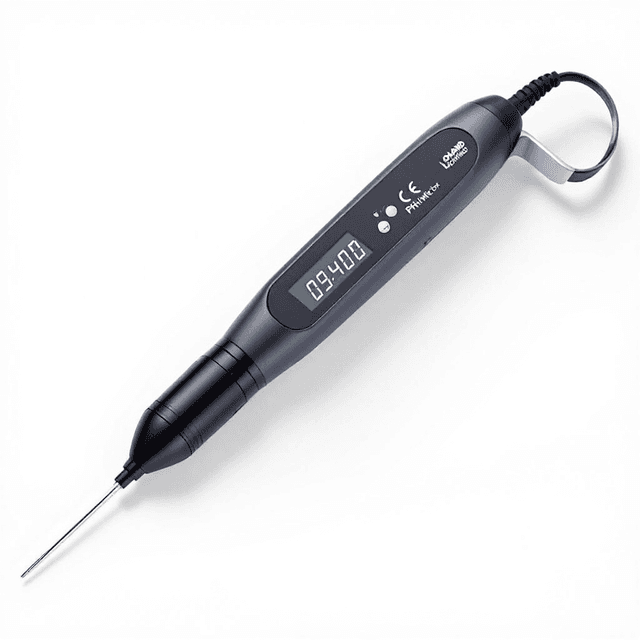
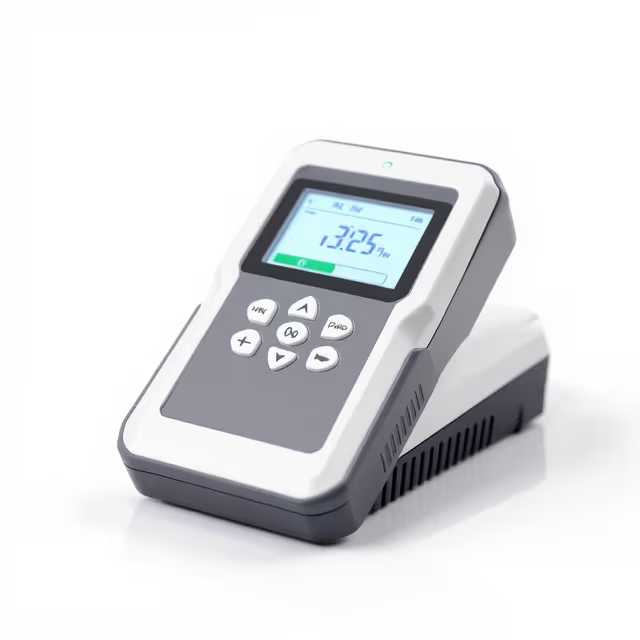
Portable pH Test Meter
Portable digital pH meter providing 0.1 pH resolution and ±0.1-0.2 pH accuracy across 0.0-14.0 range for laboratory and field pH measurement applications.
| Model | PH-107 |
| Product name | pH meter accuracy PH-107 |
| Range | 0.0 to 14.0 pH |
| Calibration | manual, 1 point |
| Environment | RH 95% max;0 to 50°C (32 to 122°F) |
| Batteries | 3 x 1.5V alkaline |

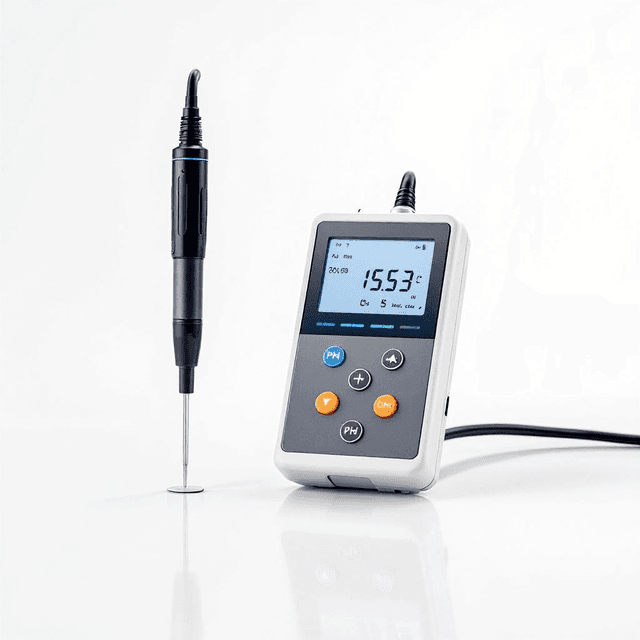
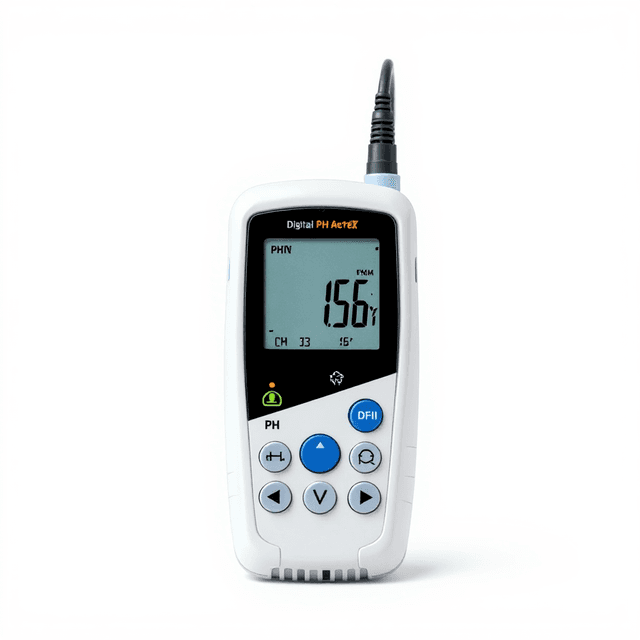
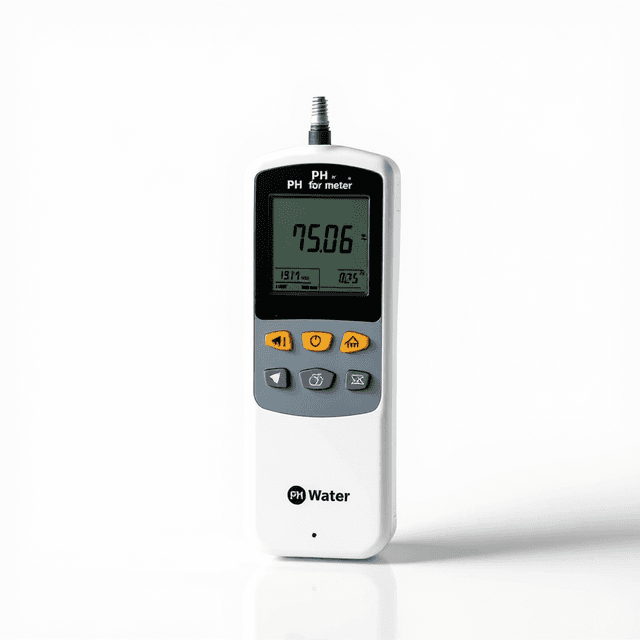
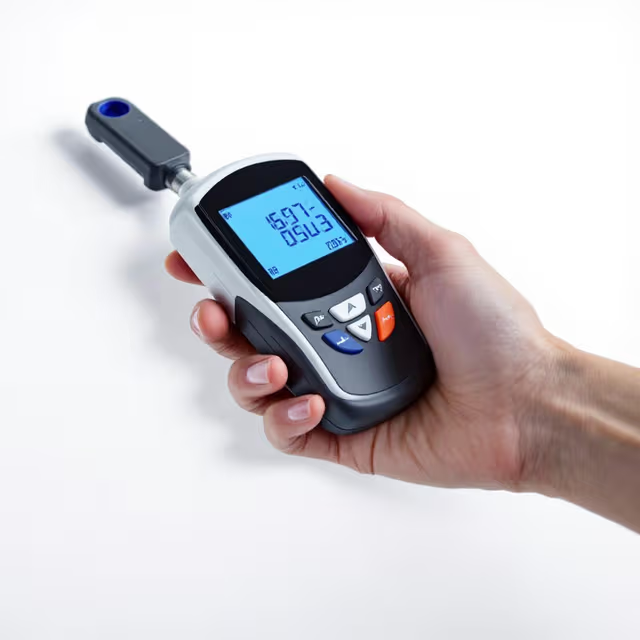
The CS-LH-PH-107 Portable pH Test Meter provides accurate pH measurement for laboratory and field applications requiring portable electrochemical analysis. This compact handheld instrument measures pH across the full 0.0-14.0 range with 0.1 pH resolution and ±0.1-0.2 pH accuracy, making it suitable for routine water quality testing, buffer verification, and solution analysis.
The instrument features a direct-reading digital display with manual single-point calibration capability using standard buffer solutions. Operating on three 1.5V alkaline batteries with approximately 150 hours of use, the meter provides reliable measurement in laboratory and field conditions within the 0-50°C operating range.
How It Works
The pH meter operates using a glass electrode that generates a voltage proportional to hydrogen ion activity in solution. The electrode contains a pH-sensitive glass membrane that develops a potential difference when exposed to solutions of different hydrogen ion concentrations. This electrochemical potential is measured against a reference electrode and converted to pH units through the instrument's electronic circuitry.
The measurement principle relies on the Nernst equation, where the electrode potential varies linearly with pH at a rate of approximately 59.16 mV per pH unit at 25°C. The digital display converts this voltage signal to direct pH readings with 0.1 unit resolution. Manual calibration using standard buffer solutions corrects for electrode drift and temperature effects.
Features & Benefits
Model
- PH-107
Product name
- pH meter accuracy PH-107
Range
- 0.0 to 14.0 pH
Calibration
- manual, 1 point
Environment
- RH 95% max;0 to 50°C (32 to 122°F)
Batteries
- 3 x 1.5V alkaline
Life
- approx. 150 hours of use
Automation Level
- manual
Brand
- ConductScience
Accuracy
- ±0.1 pH (at20°C) ±0.2 pH
Dimensions
- 52x30x21 mm(5.9x1.2x0.8")
Weight
- 50 g
Research Domain
- Analytical Chemistry
- Environmental Monitoring
- Food Science
- Industrial Hygiene
- Microbiology
- Pharmaceutical QC
Weight
- 0.11 kg
Dimensions
- L: 2.05 mm
- W: 1.18 mm
- H: 0.83 mm
Comparison Guide
| Feature | This Product | Typical Alternative | Advantage |
|---|---|---|---|
| pH Measurement Range | 0.0-14.0 pH | Entry-level models often provide narrower ranges or limited resolution | Full pH scale coverage accommodates all sample types from highly acidic to strongly alkaline solutions. |
| Measurement Accuracy | ±0.1-0.2 pH at 20°C | Basic meters may offer ±0.3-0.5 pH accuracy | Higher accuracy enables reliable quantitative analysis for quality control applications. |
| Display Resolution | 0.1 pH units | Some portable units provide only 0.2 pH or 1.0 pH resolution | Finer resolution allows detection of small pH changes during titrations or process monitoring. |
| Battery Life | 150 hours continuous use | Basic models typically offer 50-100 hours operation | Extended operation reduces battery replacement frequency during field campaigns. |
| Operating Temperature | 0-50°C range | Standard models usually specify 0-40°C or 5-45°C | Broader temperature range accommodates measurement of warm samples and field conditions. |
| Instrument Weight | 50g total weight | Comparable meters range from 60-150g depending on features | Lightweight design reduces hand fatigue during extended measurement sessions. |
The PH-107 combines laboratory-grade accuracy with portable convenience, offering 0.1 pH resolution and ±0.1-0.2 pH accuracy in a lightweight 50g package. The 150-hour battery life and 0-50°C operating range support extended field work and diverse measurement conditions.
Practical Tips
Always calibrate using buffers at the same temperature as your samples to minimize temperature-related measurement errors.
Why: Temperature affects both electrode response and buffer pH values, leading to systematic measurement bias.
Clean the electrode with distilled water and store in saturated KCl solution between uses to prevent junction fouling.
Why: Proper electrode storage maintains junction integrity and extends electrode lifetime.
Allow the display to stabilize completely before recording readings, especially with viscous or poorly buffered samples.
Why: Electrode equilibration time varies with sample composition and affects measurement accuracy.
If readings drift or become sluggish, soak the electrode in pH 7 buffer for 30 minutes to rehydrate the glass membrane.
Why: Glass electrodes require proper hydration to maintain stable response characteristics.
Verify calibration periodically using a second buffer solution to detect electrode degradation or calibration drift.
Why: Two-point verification confirms measurement accuracy across the pH range of interest.
Rinse electrode thoroughly when switching between samples to prevent cross-contamination and chemical reactions.
Why: Sample carryover can affect subsequent measurements and potentially damage the electrode.
Gently stir the sample during measurement to ensure uniform pH throughout the solution and faster equilibration.
Why: Stirring eliminates pH gradients and reduces measurement time for accurate results.
Replace the reference electrolyte solution periodically and check for air bubbles in the electrode junction.
Why: Fresh electrolyte solution maintains stable reference potential essential for accurate pH measurement.
Setup Guide
What’s in the Box
- PH-107 pH meter (typical)
- Glass pH electrode (typical)
- Protective electrode cover (typical)
- Calibration screwdriver (typical)
- User manual (typical)
- Batteries - 3×1.5V alkaline (typical)
Warranty
ConductScience provides a standard one-year manufacturer warranty covering defects in materials and workmanship, with technical support available for calibration and troubleshooting procedures.
Compliance
References
Background reading relevant to this product:
What calibration buffers are recommended for this pH meter?
The instrument is calibrated using pH 6.86 phosphate buffer at 25°C, with verification using either pH 4.01 potassium hydrogen phthalate or pH 9.18 borax buffer solutions.
How should the electrode be stored between measurements?
Store the electrode in the protective cover with a few drops of saturated KCl solution to maintain electrode performance and prevent junction fouling.
What is the minimum sample volume required for measurement?
The electrode must be immersed to the minimum immersion line marked on the probe; consult product datasheet for specific volume requirements.
How often should calibration be performed?
Calibrate before each measurement session or when switching between sample types with significantly different pH ranges to ensure accuracy.
Can this meter measure pH in organic solvents?
The glass electrode is designed for aqueous solutions; consult product datasheet for compatibility with specific organic solvents.
What factors affect measurement accuracy?
Temperature variations, electrode condition, sample ionic strength, and calibration buffer quality all influence measurement accuracy within the ±0.1-0.2 pH specification.
How does this compare to benchtop pH meters?
Offers comparable accuracy to basic benchtop units with the advantage of portability, though it lacks automatic temperature compensation and data logging features found in advanced laboratory models.
Have a question about this product?
Accessories
Enhance your setup with compatible accessories
Upgrade Options