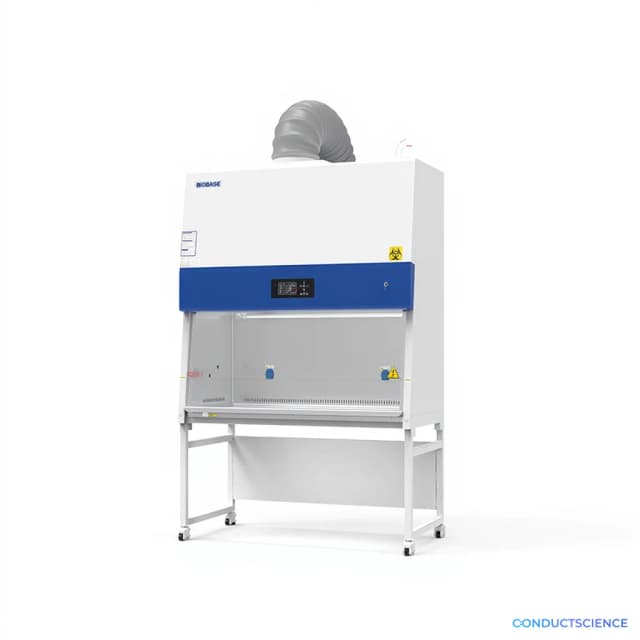
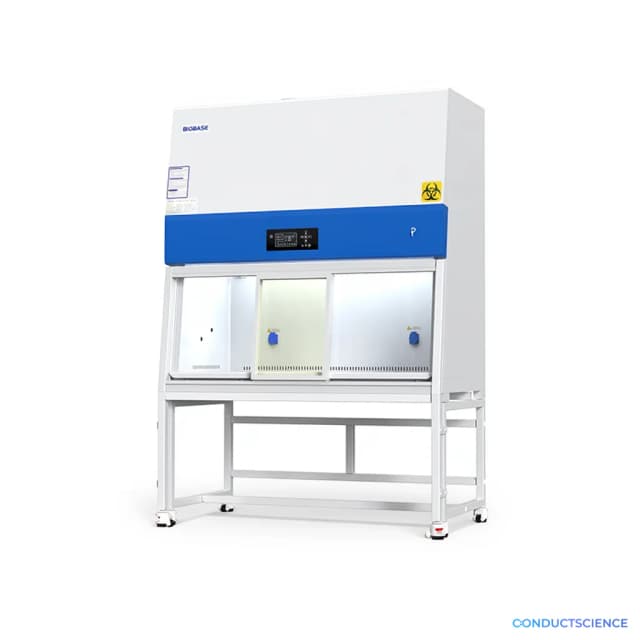
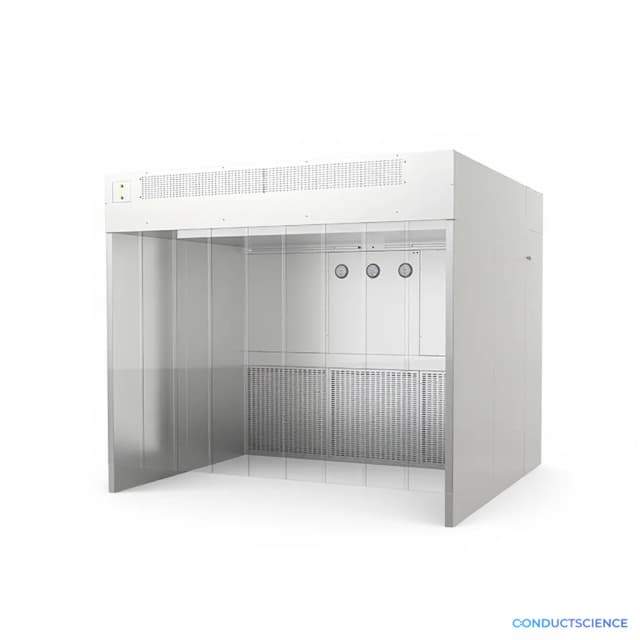
PP Vertical Laminar Flow Cabinet
Vertical laminar flow cabinet with 99.995% HEPA filtration efficiency, providing sterile work environment for contamination-sensitive laboratory procedures.
A laminar flow clean bench protects only the sample. It blows filtered air toward the user, so it is not for infectious or toxic work.

Louise Corscadden, PhD
Director of Science · ConductScience
Ask Louise about PP Vertical Laminar Flow Cabinet fit, setup, configuration, or quote prep.
Already working with us? Sign in to connect this with My Scientist.
Key Specifications
Full details →- Model fit
- Configured during quote
- SKU family
- BIO-0046
- Shipping box
- 180.0 x 80.0 x 71.0 cm
- Ordering
- Online checkout and quote request available
- Category
- Clean Benches & Fume Hoods
- Build notes
- Made of porcelain white PP, resistant to strong acid, alkali and anti-corrosion
The PP Vertical Laminar Flow Cabinet is a polypropylene cleanroom workstation designed for sterile manipulation and contamination-sensitive procedures. The cabinet creates a vertical downward laminar air flow using HEPA filtration at 99.995% efficiency at 0.3 micrometers, maintaining a controlled particulate environment within the work zone.
Constructed from porcelain white polypropylene with strong acid and alkali resistance, the cabinet features a 780x540x550mm internal work area with toughened anti-UV glass side panels. The airflow velocity is maintained at 0.3-0.5 m/s with noise levels at or below 65dB, providing consistent environmental control for aseptic technique applications.
How It Works
The vertical laminar flow cabinet operates on the principle of unidirectional air movement to create a sterile work environment. Ambient air enters through a polyester fiber pre-filter, removing larger particulates before passing through a HEPA filter with 99.995% efficiency at 0.3 micrometers. This filtration system removes bacteria, fungi, and submicron particles from the air stream.
The filtered air flows vertically downward through the work zone at a controlled velocity of 0.3-0.5 m/s, creating a laminar flow pattern that sweeps contaminants away from the work surface. The downward air movement prevents cross-contamination between samples and maintains positive pressure within the cabinet relative to the surrounding laboratory environment.
The polypropylene construction provides chemical resistance while the manual front window allows operator access while maintaining airflow integrity. The 5mm toughened anti-UV glass side panels provide visual access while protecting against UV degradation of sensitive materials within the work zone.
Features & Benefits
Automation Level
- manual
BKCB-1000P
- BKCB-1200P
External Size(W*D*H)
- 800*710*1800mm
1000*710*1800mm
- 1200*710*1800mm
Internal Size(W*D*H)
- 780*540*550mm
980*540*550mm
- 1180*540*550mm
Work Surface Height
- 750mm
Side Window
- 5mm toughened glass, anti-UV
Front Window
- Manual
Pre-filter
- Polyester fiber
HEPA Filter
- 99.995% efficiency at 0.3μm
Airflow Velocity
- 0.3~0.5m/s
Noise
- ≤65dB
Max Opening
- 400mm
Brand
- ConductScience
Research Domain
- Cell Biology
- Clinical Diagnostics
- Food Science
- Materials Science
- Microbiology
- Pharmaceutical QC
Material
- Made of porcelain white PP, resistant to strong acid, alkali and anti-corrosion
Shipping weight
- 90.0 lb
Shipping box
- L: 180.0 cm
- W: 80.0 cm
- H: 71.0 cm
| Feature | This Product | Typical Alternative | Advantage |
|---|---|---|---|
| HEPA Filter Efficiency | 99.995% at 0.3 micrometers | Entry-level models often provide 99.9% efficiency | Higher filtration efficiency removes more submicron contaminants critical for sterile technique applications. |
| Construction Material | Polypropylene with acid/alkali resistance | Steel construction with powder coating | Chemical resistance allows use of aggressive disinfectants without surface degradation or corrosion. |
| Airflow Velocity Range | 0.3-0.5 m/s adjustable | Fixed velocity designs common in basic models | Adjustable airflow accommodates different procedures while maintaining laminar flow characteristics. |
| Work Surface Height | 750mm ergonomic height | Variable heights depending on model | Optimized working height reduces operator fatigue during extended sterile manipulation procedures. |
| Noise Level | ≤65dB operation | Higher noise levels in some comparable units | Quiet operation maintains comfortable laboratory environment for extended use periods. |
| Window Operation | Manual front window with 400mm opening | Fixed openings or different access configurations | Adjustable access allows optimization of airflow while accommodating various equipment sizes. |
The cabinet combines high-efficiency HEPA filtration with chemically resistant polypropylene construction and adjustable airflow velocity. The vertical flow design provides operator protection while the ergonomic work height and quiet operation support extended laboratory use.
Practical Tips
Verify airflow velocity quarterly using a calibrated anemometer at multiple points across the work surface.
Why: Airflow velocity changes over time as filters load with particles, affecting sterile environment integrity.
Replace the polyester pre-filter every 3-6 months depending on ambient air quality and usage frequency.
Why: Pre-filter maintenance extends HEPA filter life and maintains consistent airflow performance.
Allow cabinet to run for 15-30 minutes before use to establish stable laminar flow conditions.
Why: Stable airflow patterns are essential for consistent particulate removal and sterile work environment.
If airflow seems reduced, check that items in the work area are not blocking air intake or creating turbulence.
Why: Obstructions disrupt laminar flow patterns and create areas where contaminants can accumulate.
Document filter replacement dates and airflow measurements to track cabinet performance over time.
Why: Performance trends help predict maintenance needs and ensure consistent sterile conditions for critical procedures.
Do not use the cabinet for volatile chemicals or toxic vapors as it provides particulate control, not chemical containment.
Why: Laminar flow cabinets are designed for biological contamination control and lack chemical containment features.
Clean work surfaces with appropriate disinfectant between samples and allow to dry before proceeding.
Why: Surface disinfection complements air filtration to prevent cross-contamination between samples or procedures.
Wipe down the anti-UV glass panels regularly to maintain clear visibility into the work zone.
Why: Clear visibility is essential for proper sterile technique and monitoring of procedures within the cabinet.
Setup Guide
What’s in the Box
- PP Vertical Laminar Flow Cabinet main unit
- Pre-installed polyester fiber pre-filter
- Pre-installed HEPA filter (99.995% efficiency)
- User manual and operating instructions
- Power cord (typical)
- Airflow velocity verification certificate (typical)
Warranty
ConductScience provides standard manufacturer warranty coverage including technical support for installation and operation guidance. Warranty terms typically include one year coverage for manufacturing defects and component failures under normal laboratory use conditions.
Compliance
What is the actual particulate removal efficiency of the HEPA filter?
The HEPA filter removes 99.995% of particles at 0.3 micrometers, which includes most bacteria and fungal spores commonly encountered in laboratory environments.
How do I verify the cabinet is maintaining proper airflow velocity?
Use a calibrated anemometer to measure airflow at multiple points across the work surface, confirming velocity remains within the 0.3-0.5 m/s specification range.
What chemicals can be safely used for cleaning the polypropylene surfaces?
The polypropylene construction resists strong acids and alkalis, allowing use of most laboratory disinfectants including bleach solutions and alcohol-based cleaners.
How often should the HEPA filter be replaced?
Filter replacement frequency depends on usage and ambient air quality; consult product datasheet for specific maintenance intervals and performance monitoring procedures.
Can the cabinet handle volatile organic solvents or toxic materials?
This is a laminar flow cabinet designed for particulate control, not chemical containment; use appropriate fume hoods for volatile or toxic chemical work.
What is the maximum size of items that can be placed in the work area?
The internal dimensions are 780x540x550mm, and items should not obstruct the laminar airflow pattern or exceed the 400mm front window opening.
How does this compare to horizontal laminar flow cabinets?
Vertical flow provides better operator protection by directing potentially contaminated air away from the user, while horizontal flow may blow contaminants toward the operator.
Have a question about this product?
Have a question? Just ask.
Send it over and we'll email you a personalized answer — no call, no scheduling.
Prefer to talk it through?