Predation Pressure Apparatus
Behavioral testing apparatus for evaluating anti-predatory responses and anxiety-like behaviors in laboratory animals under controlled predatory stress conditions.

Louise Corscadden, PhD
Director of Science · ConductScience
Ask Louise about Predation Pressure Apparatus fit, setup, configuration, or quote prep.
Already working with us? Sign in to connect this with My Scientist.
Key Specifications
Full details →- Model fit
- Mouse, Rat
- SKU family
- CS-958222
- Shipping box
- 65.0 x 36.0 x 27.0 cm
- Ordering
- Online checkout and quote request available
- Category
- Behavioral Mazes
- Build notes
- Confirm accessories, station layout, and support needs before purchase
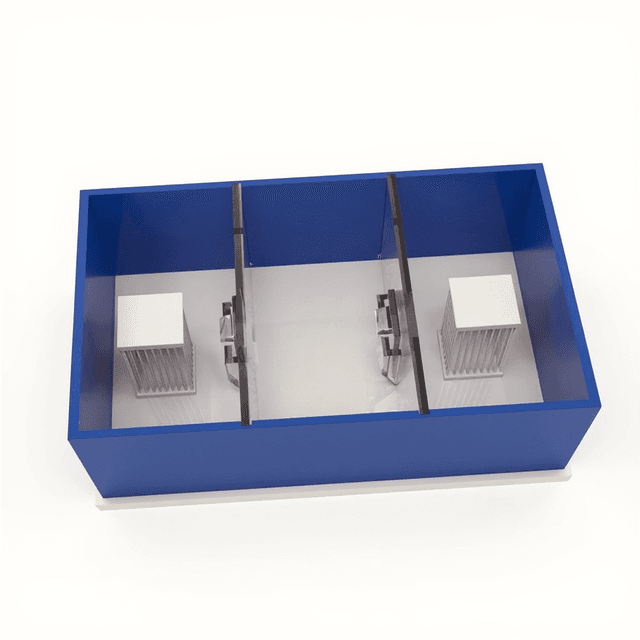
The Predation Pressure Apparatus is a specialized behavioral testing system designed to assess anti-predatory responses and anxiety-like behaviors in laboratory animals. This apparatus creates controlled predatory stress conditions through the presentation of predator-related stimuli, enabling researchers to evaluate defensive behaviors, risk assessment patterns, and stress-induced responses in a standardized laboratory environment.
The system allows for precise measurement of behavioral parameters including freezing duration, escape attempts, exploratory activity, and spatial preference patterns under varying threat conditions. The apparatus provides a controlled alternative to direct predator exposure, enabling ethical and reproducible assessment of predatory stress responses while maintaining experimental rigor required for behavioral pharmacology and neuroscience research.
How It Works
The Predation Pressure Apparatus operates on the principle of ethologically relevant threat presentation to elicit natural defensive behaviors in laboratory animals. The system utilizes controlled environmental stimuli that simulate predatory presence, including visual, olfactory, or auditory cues that trigger innate anti-predatory responses without requiring actual predator exposure.
Behavioral responses are quantified through systematic observation and measurement of species-specific defensive behaviors such as freezing, thigmotaxis, escape attempts, and risk assessment behaviors. The apparatus allows for temporal analysis of behavioral patterns, enabling researchers to distinguish between immediate threat responses and longer-term behavioral adaptations.
The controlled nature of the stimulus presentation ensures reproducible stress conditions while maintaining animal welfare standards, providing a standardized method for assessing individual differences in threat sensitivity and the efficacy of potential therapeutic interventions on stress-related behaviors.
Features & Benefits
Behavioral Construct
- Anxiety
- Fear conditioning
- Defensive behavior
- Risk assessment
- Stress response
- Exploratory behavior
Automation Level
- semi-automated
Research Domain
- Addiction Research
- Aging Research
- Anxiety and Depression
- Behavioral Pharmacology
- Learning and Memory
- Neuroscience
Species
- Mouse
- Rat
Compatible Tracking Software
- ConductVision
Shipping weight
- 6.06 lb
Shipping box
- L: 65.0 cm
- W: 36.0 cm
- H: 27.0 cm
| Feature | This Product | Typical Alternative | Advantage |
|---|---|---|---|
| Stimulus Specificity | Delivers predator-specific threat stimuli targeting natural anti-predatory responses | General anxiety tests often use novel environments or elevated platforms without ethologically relevant threats | Provides more ecologically valid stress conditions that better model natural anxiety states and survival responses |
| Behavioral Measurement | Quantifies species-specific defensive behaviors including freezing, escape attempts, and risk assessment patterns | Standard anxiety tests typically measure general locomotor activity and spatial preferences | Enables detailed analysis of natural defensive repertoires that are more relevant to understanding anxiety mechanisms |
| Experimental Control | Offers controlled predatory stimulus presentation with adjustable intensity and timing | Many anxiety paradigms rely on static environmental features without dynamic stimulus control | Allows for systematic investigation of threat intensity effects and temporal response patterns |
| Translational Relevance | Models predator-prey interactions that are conserved across mammalian species | Some anxiety tests may lack clear evolutionary basis or clinical relevance | Provides stronger translational potential for understanding anxiety disorders and developing therapeutics |
The Predation Pressure Apparatus offers ethologically relevant behavioral assessment through controlled predator stimulus presentation and species-specific defensive behavior quantification. The system provides standardized testing conditions with multi-parameter behavioral measurement capabilities for comprehensive stress response analysis.
Practical Tips
Verify stimulus delivery timing and intensity before each testing session using standardized calibration protocols.
Why: Consistent stimulus presentation is critical for reproducible behavioral responses and valid comparisons across experimental groups.
Clean all chamber surfaces with appropriate disinfectants between subjects and allow complete drying before the next session.
Why: Residual odors from previous subjects can influence behavioral responses and introduce unwanted variability in defensive behaviors.
Allow animals to habituate to the testing chamber before stimulus presentation to establish baseline behavioral patterns.
Why: Initial exploration and novelty responses can confound measurement of specific predatory stress responses if not properly controlled.
Monitor behavioral tracking accuracy in real-time and verify detection of key defensive behaviors during each session.
Why: Automated systems may miss subtle behavioral responses or misclassify movements, affecting the validity of behavioral measurements.
If animals show no response to stimuli, verify stimulus delivery systems and consider species-specific stimulus preferences.
Why: Different species and strains may show varying sensitivity to predator cues, requiring stimulus optimization for effective behavioral elicitation.
Ensure all stimulus delivery systems have appropriate safety limits to prevent excessive stress or potential harm to test subjects.
Why: Ethical research practices require balancing behavioral response elicitation with animal welfare considerations.
Conduct testing during appropriate circadian phases for the target species to optimize natural behavioral responsiveness.
Why: Many defensive behaviors show circadian variation, and testing at inappropriate times may reduce the sensitivity of behavioral measurements.
Record environmental conditions including temperature, humidity, and ambient noise levels for each testing session.
Why: Environmental factors can influence behavioral responses and should be documented for proper interpretation of experimental results.
Setup Guide
What’s in the Box
- Predation pressure testing chamber (typical)
- Stimulus delivery system components (typical)
- Behavioral tracking sensors (typical)
- Control interface unit (typical)
- Power adapter and cables (typical)
- User manual and setup guide (typical)
- Calibration standards (typical)
- Data analysis software (typical)
Warranty
ConductScience provides a standard one-year manufacturer warranty covering defects in materials and workmanship, with comprehensive technical support for setup, calibration, and troubleshooting. Extended warranty options and on-site service agreements are available for high-volume research facilities.
Compliance
What types of predator stimuli can be presented with this apparatus?
The apparatus can deliver various ethologically relevant stimuli including visual predator models, predator odor presentation, and auditory threat signals. The specific stimulus types and intensities should be selected based on the target species and experimental requirements.
How are defensive behaviors quantified and recorded?
Behavioral responses are measured through automated tracking systems that detect and quantify freezing duration, movement patterns, spatial preferences, and escape attempts. Data is recorded continuously with millisecond precision for detailed temporal analysis.
What is the typical duration for behavioral testing sessions?
Testing sessions typically range from 10-30 minutes depending on the specific protocol, with initial habituation periods followed by stimulus presentation phases and recovery observation periods.
Can the apparatus accommodate different animal sizes and species?
The system is primarily designed for standard laboratory rodents (mice and rats) but can be adapted for other small laboratory animals through chamber configuration adjustments and species-appropriate stimulus modifications.
What data formats are generated for behavioral analysis?
Consult product datasheet for specific data output formats and compatibility with common behavioral analysis software packages used in neuroscience and pharmacology research.
How does this compare to other anxiety testing paradigms?
Unlike elevated plus maze or open field tests, this apparatus specifically targets anti-predatory responses, providing more ethologically relevant stress conditions that may better model natural anxiety states and predator-prey interactions.
What calibration procedures are required?
Regular calibration includes verification of stimulus delivery systems, behavioral detection sensitivity, and timing accuracy. Detailed calibration protocols and schedules are provided in the user documentation.
Can the system be integrated with other behavioral equipment?
The apparatus can typically be integrated with complementary behavioral testing systems and physiological monitoring equipment through standard interfaces, enabling multi-parameter behavioral phenotyping studies.
Have a question about this product?
Have a question? Just ask.
Send it over and we'll email you a personalized answer — no call, no scheduling.
Prefer to talk it through?
Accessories
Enhance your setup with compatible accessories

Frequently Bought Together