Relaximetry NMR Contrast Agent Analyzer
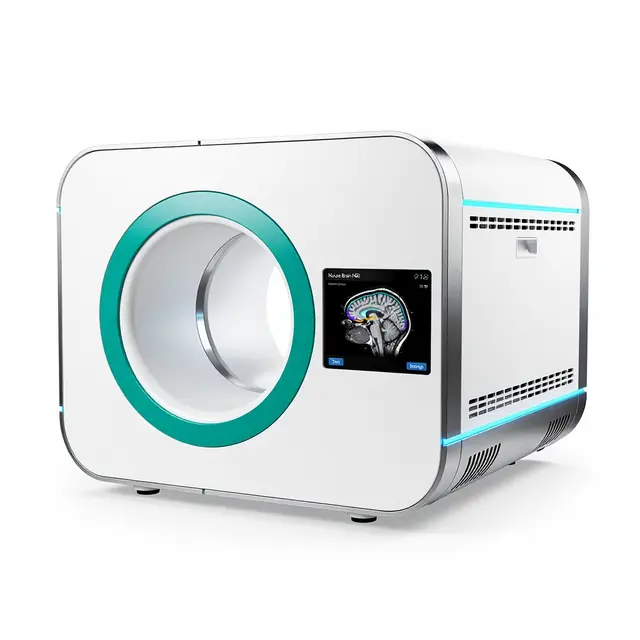
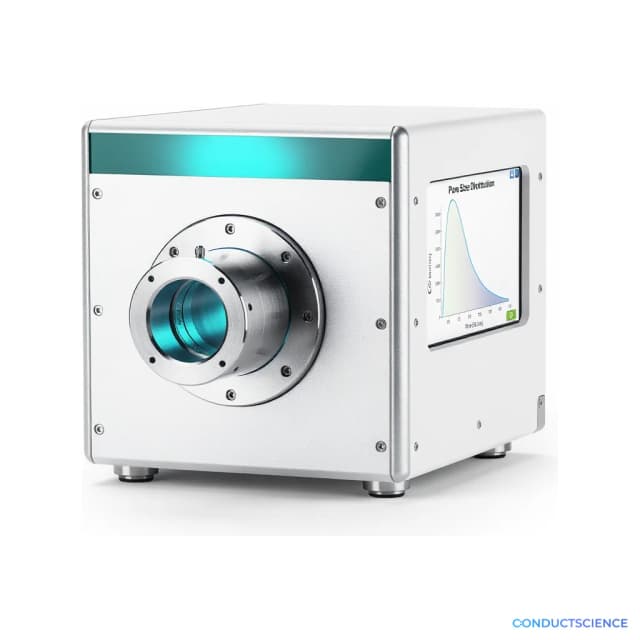
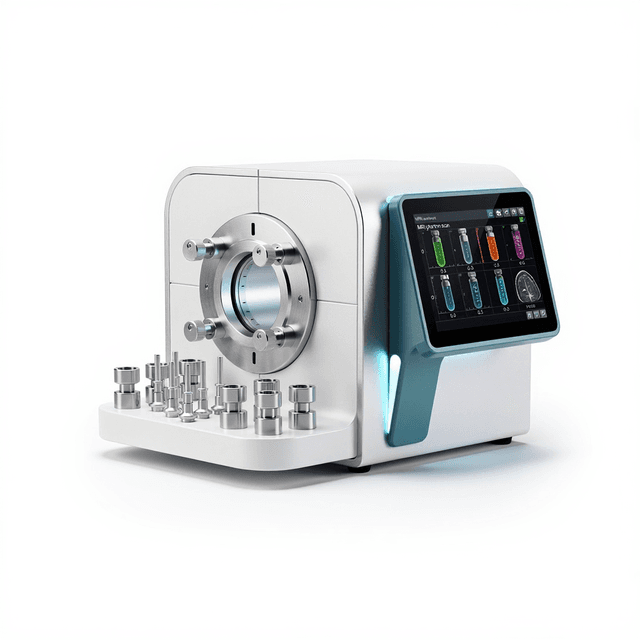
Benchtop NMR relaxometer with 0.50T permanent magnet for quantitative T1/T2 measurements of contrast agents and pharmaceutical formulations with automated sampling and temperature control.
| Field of study | Biomedical Engineering, Chemistry, Medical Imaging, Pharmacology |
| Product Application | Analytical Instruments, Laboratory Equipment, Life Sciences, Magnetic Resonance Imaging (MRI), Medical Diagnostic Equipment, Pre Medical Analysis |
| Volts | 110V, 220V |
| magnet_type | permanent magnet |
| magnetic_field_intensity | 0.50 ± 0.01T |
| magnetic_field_uniformity | ≤ 30 ppm |

The Relaximetry NMR Contrast Agent Analyzer is a specialized benchtop NMR system designed for quantitative measurement of T1 and T2 relaxation properties in contrast agents and pharmaceutical formulations. Built around a 0.50 ± 0.01T permanent magnet with ≤30 ppm field uniformity, this analyzer enables precise relaxometry measurements across pulse frequencies from 1-30 MHz with 10 ns pulse accuracy.
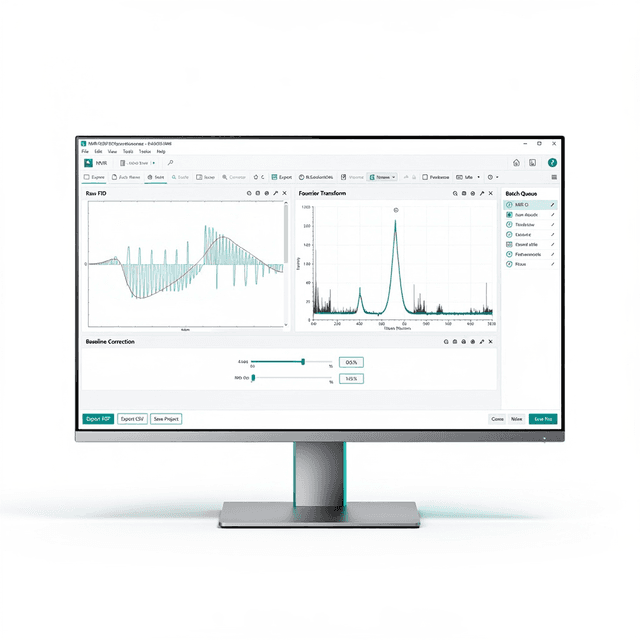
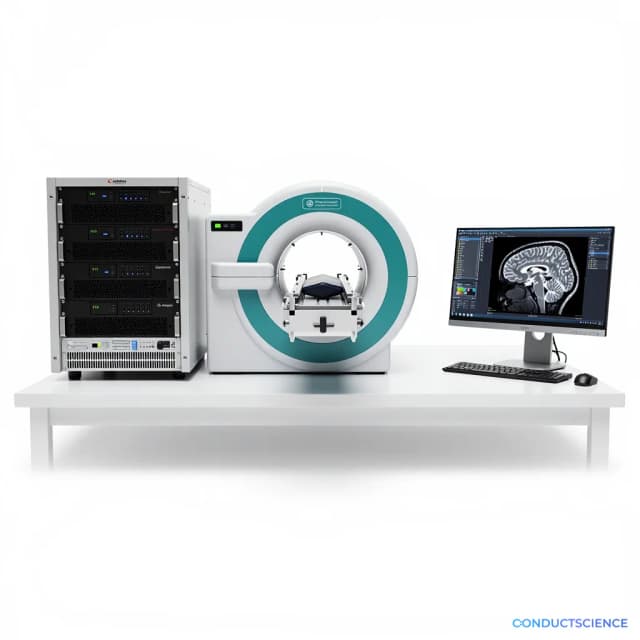
The system integrates an automated sampling module, comprehensive RF electronics including preamplifier and power amplifier, and temperature-controlled measurement environment (25°C to 35°C). The industrial control computer features an 8-core I7 processor with 8GB DDR memory for real-time data acquisition and processing. With minimum echo times of 100μs and capability for up to 18,000 echo measurements, the analyzer supports detailed T2 decay characterization essential for contrast agent development and quality control.
How It Works
The analyzer employs nuclear magnetic resonance relaxometry to measure T1 (longitudinal) and T2 (transverse) relaxation times of hydrogen nuclei in aqueous solutions containing contrast agents. The 0.50T permanent magnet creates a uniform magnetic field (≤30 ppm uniformity) that aligns nuclear magnetic moments. Radio frequency pulses generated by the pulse sequence generator excite nuclei at frequencies between 1-30 MHz with 10 ns timing precision.
For T1 measurements, the system applies inversion recovery sequences where a 180° pulse inverts the magnetization, followed by variable delay times and a 90° readout pulse. T2 measurements utilize Carr-Purcell-Meiboom-Gill (CPMG) sequences with up to 18,000 echoes, applying repeated 180° refocusing pulses with minimum echo spacing of 100μs. The 20mm inner diameter probe coil optimizes sensitivity for standard sample volumes.
Temperature control maintains measurement conditions between 25°C and 35°C, critical for physiologically relevant relaxivity characterization. The industrial control computer processes echo train data using exponential fitting algorithms to extract relaxation time constants with 0.1 Hz frequency accuracy, enabling detection of subtle changes in molecular dynamics and binding states.
Features & Benefits
Field of study
- Biomedical Engineering
- Chemistry
- Medical Imaging
- Pharmacology
Product Application
- Analytical Instruments
- Laboratory Equipment
- Life Sciences
- Magnetic Resonance Imaging (MRI)
- Medical Diagnostic Equipment
- Pre Medical Analysis
Volts
- 110V
- 220V
magnet_type
- permanent magnet
magnetic_field_intensity
- 0.50 ± 0.01T
magnetic_field_uniformity
- ≤ 30 ppm
magnetic_field_stability
- ≤ 300 Hz/Hour
pulse_frequency
- 1 - 30 MHz
pulse_accuracy
- 10 ns
maximum_bandwidth
- 5000KHz
probe_coil_inner_diameter
- 20 mm
minimum_te
- 100μs
maximum_echo_number
- 18,000
cpu
- 8-core CPU, I7 processor
memory
- 8G DDR
hard_disk
- 1T
platform
- PCI bus industrial control computer
Automation Level
- semi-automated
Brand
- Greenwaves Scientific
Power/Voltage
- > 300 W
- 110V, 220V
Temperature Range
- 25°C to 35°C
Accuracy
- 0.1 Hz
Research Domain
- Analytical Chemistry
- Materials Science
- Medical Imaging
- Pharmaceutical QC
Weight
- 175.0 kg
Dimensions
- L: 80.0 mm
- W: 60.0 mm
- H: 80.0 mm
Comparison Guide
| Feature | This Product | Typical Alternative | Advantage |
|---|---|---|---|
| Magnetic Field Strength | 0.50 ± 0.01T permanent magnet | Entry-level systems often use 0.2-0.3T magnets with lower stability | Higher field strength improves signal-to-noise ratio and spectral resolution for more precise relaxation measurements |
| Field Uniformity | ≤30 ppm uniformity | Basic systems may offer 100-200 ppm uniformity | Superior uniformity reduces measurement artifacts and enables accurate T2 characterization in complex samples |
| Echo Capability | Up to 18,000 echoes with 100μs minimum spacing | Standard systems typically limited to 2,000-5,000 echoes | Extended echo trains enable detailed characterization of multi-component relaxation processes in pharmaceutical formulations |
| Pulse Timing Accuracy | 10 ns pulse accuracy | Many systems offer 100 ns to 1 μs timing resolution | Sub-microsecond precision enables accurate short T2 measurements and reliable quantification of fast-relaxing components |
| Temperature Control Range | 25°C to 35°C controlled environment | Basic models often operate at ambient temperature only | Physiologically relevant temperature control provides clinically predictive relaxivity data for contrast agent development |
| Automated Sampling | Integrated automatic sampling module | Manual sample loading is common in entry-level systems | Automated positioning reduces measurement variability and enables higher throughput analysis of multiple formulations |
This analyzer combines high-stability permanent magnet technology with advanced pulse sequence capabilities and automated sample handling. The 0.50T field strength with ≤30 ppm uniformity provides superior measurement precision compared to lower-field alternatives, while the extended echo capability and sub-microsecond timing accuracy enable comprehensive relaxation characterization essential for pharmaceutical applications.
Practical Tips
Perform daily field stability checks using a water reference sample before measurement sessions, monitoring for field drift beyond the ≤300 Hz/Hour specification.
Why: Field stability directly affects measurement reproducibility and relaxation rate accuracy.
Calibrate pulse power using known relaxation standards like CuSO4 solutions to ensure proper 90° and 180° pulse calibration across the frequency range.
Why: Accurate pulse calibration is essential for quantitative T1 inversion recovery and T2 CPMG measurements.
Clean the probe coil monthly with appropriate solvents and inspect for corrosion, particularly when analyzing acidic or chelating contrast agents.
Why: Chemical compatibility maintains measurement accuracy and prevents probe degradation from aggressive samples.
Monitor magnet temperature stability and heating system performance, ensuring temperature variations remain within ±0.1°C during measurements.
Why: Temperature fluctuations introduce systematic errors in relaxation rate measurements.
Use identical sample volumes and positioning for comparative studies, filling the probe coil consistently to minimize RF field variations.
Why: Sample positioning affects RF homogeneity and signal intensity, impacting relaxation measurement precision.
Degas samples to remove dissolved oxygen which can significantly shorten T1 relaxation times, particularly in dilute contrast agent solutions.
Why: Dissolved oxygen acts as a paramagnetic relaxation agent that interferes with accurate contrast agent characterization.
Optimize echo train length based on sample T2 values, using 3-5 times the T2 value to capture complete decay while maintaining adequate signal-to-noise.
Why: Proper echo train optimization ensures accurate multi-exponential fitting and reliable relaxation parameter extraction.
If observing unexpected T2 shortening, check for sample aggregation or precipitation which can create susceptibility gradients affecting relaxation measurements.
Why: Physical sample changes alter relaxation mechanisms beyond the intrinsic contrast agent properties being characterized.
Setup Guide
What’s in the Box
- Magnet cabinet with integrated automatic sampling module
- Permanent magnet unit (0.50T)
- RF unit box with preamplifier and power amplifier
- Magnet temperature control system
- Heating system components
- Power supply system (110V/220V compatible)
- Industrial control computer with 8-core I7 processor
- Pulse sequence generator (PSG)
- Direct digital frequency synthesis (DDS) module
- Analog-to-digital converter (ADC) system
- Relaxometry analysis software package
- Sample holders and positioning accessories (typical)
- Calibration standards and reference materials (typical)
- User manual and technical documentation (typical)
- Power cables and system interconnects (typical)
Warranty
ConductScience provides a comprehensive 1-year manufacturer warranty covering all hardware components and software systems, with technical support for installation, calibration, and operational guidance.
Compliance
References
Background reading relevant to this product:
How does field uniformity affect relaxation time precision in paramagnetic samples?
The ≤30 ppm field uniformity specification ensures spatial homogeneity across the 20mm sample volume, critical for paramagnetic samples where field gradients can create artificial T2* effects. Better uniformity reduces measurement variance from sample positioning and enables accurate T2 measurements in gadolinium chelates where even small field variations can broaden resonance lines and affect relaxation rate determination.
What is the optimal echo spacing for characterizing multi-component T2 decay in contrast formulations?
Echo spacing depends on the shortest T2 component present. For gadolinium-based agents with T2 values ranging from 10-500ms, echo times between 100μs and 2ms capture fast-relaxing components while maintaining adequate SNR. The system's 100μs minimum echo time accommodates rapid relaxation processes, while the 18,000 echo capability enables characterization of long T2 components in complex formulations.
How does temperature control impact relaxivity measurements for clinical relevance?
Relaxation rates are temperature-dependent due to molecular tumbling rates affecting dipolar interactions. The 25°C to 35°C control range enables measurements at physiologically relevant temperatures (37°C) where relaxivity values differ significantly from room temperature. Temperature precision is essential for accurate extrapolation to in vivo conditions and for quality control consistency across different measurement sessions.
What pulse sequence modifications optimize T1 measurements for short T1 contrast agents?
For T1 values <100ms typical in high-concentration gadolinium solutions, use saturation recovery sequences with short recovery delays (5×T1 maximum) and optimize flip angles below 90° to maintain steady-state conditions. The 10 ns pulse accuracy enables precise flip angle control, while the 1-30 MHz frequency range accommodates field-dependent resonance frequency shifts in different sample matrices.
How does the 0.50T field strength compare to clinical MRI fields for contrast agent development?
While clinical MRI operates at 1.5T or 3T, the 0.50T field provides valuable intermediate-field relaxometry data for understanding frequency-dependent relaxation mechanisms. Many molecular processes governing contrast efficacy are field-independent, making 0.50T measurements valid for mechanistic studies, formulation optimization, and quality control where field-dependent extrapolation models can predict higher-field behavior.
What sample preparation considerations affect measurement reproducibility?
Sample homogeneity, degassing to remove dissolved oxygen (which affects T1), and pH buffering are critical. Use consistent sample volumes filling the 20mm coil diameter, maintain ionic strength to minimize aggregation effects, and ensure temperature equilibration before measurement. The automatic sampling module reduces positioning variability, but sample preparation consistency remains essential for reproducible relaxometry data.
How does the system handle measurements of highly concentrated contrast agent solutions?
High concentrations (>10mM gadolinium) can create significant susceptibility effects and shortened relaxation times. The 100μs minimum echo time captures fast T2 decays, while the high bandwidth (5000KHz) accommodates broadened resonances. For very high concentrations, dilution series maintain linear relaxivity relationships while staying within the system's dynamic range for accurate quantification.
What data processing approaches optimize relaxation time fitting accuracy?
Multi-exponential fitting using Levenberg-Marquardt algorithms handles complex decay profiles common in pharmaceutical formulations. The 0.1 Hz frequency accuracy enables precise determination of small relaxation rate differences. For T2 measurements, phase cycling and baseline correction are essential, while T1 measurements benefit from 3-parameter exponential fits accounting for incomplete inversion recovery in systems with multiple relaxation components.
Have a question about this product?
Frequently Bought Together