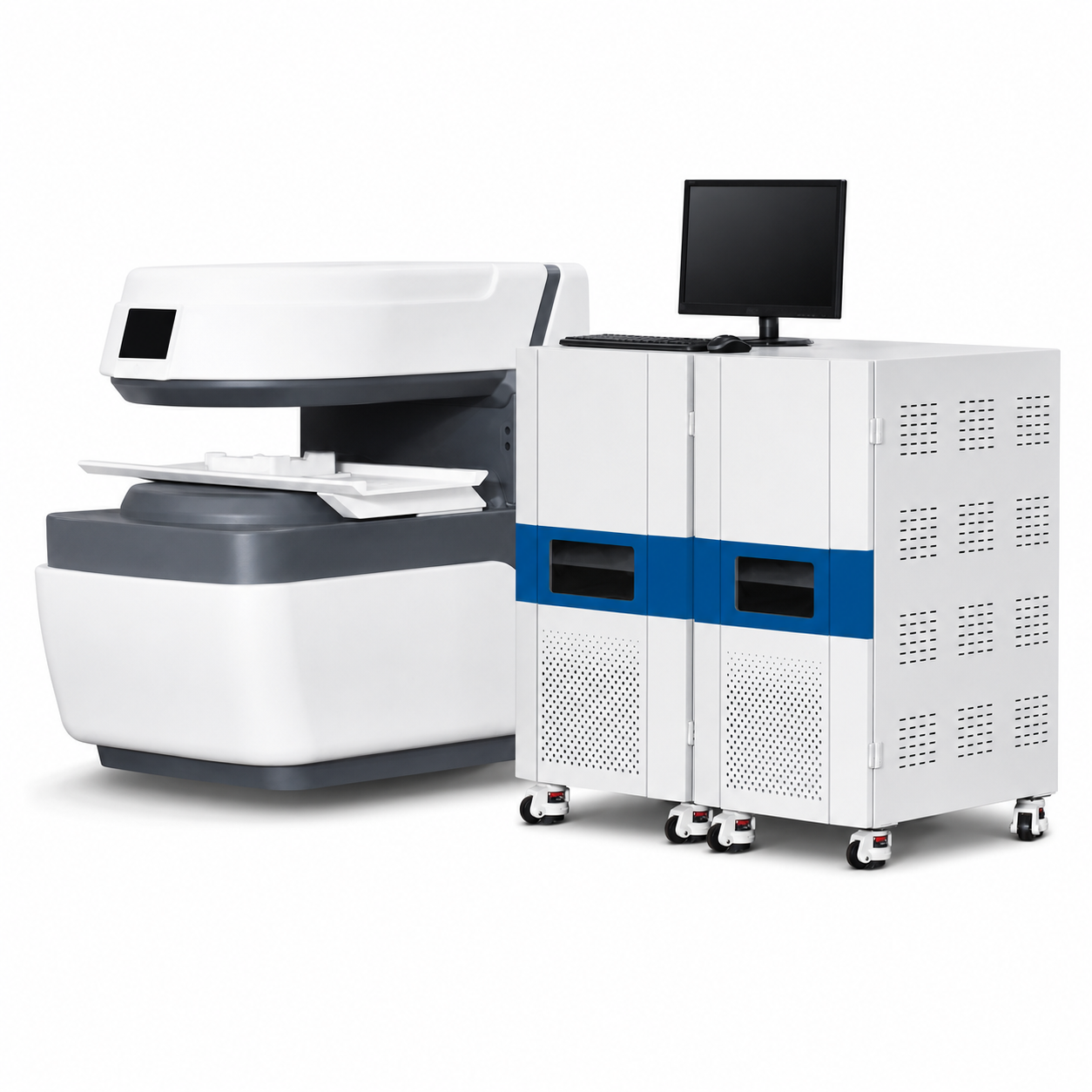
Microporous Structure NMR Imaging Analyzer
NMR relaxometry analyzer for non-destructive characterization of pore size distributions, moisture content, and permeability in cement-based and porous construction materials.

Louise Corscadden, PhD
Director of Science · ConductScience
Ask Louise about Microporous Structure NMR Imaging Analyzer fit, setup, configuration, or quote prep.
Already working with us? Sign in to connect this with My Scientist.
Key Specifications
Full details →- Model fit
- Configured during quote
- SKU family
- NMS-MICROPORE
- Shipping box
- 80.0 x 60.0 x 80.0 cm
- Ordering
- Online checkout and quote request available
- Category
- MRI Systems
- Build notes
- Confirm accessories, station layout, and support needs before purchase
The Microporous Structure NMR Imaging Analyzer utilizes nuclear magnetic resonance relaxometry to characterize pore networks in cement-based and porous construction materials. The system measures T1 and T2 relaxation times of water molecules confined within pore spaces, providing quantitative analysis of pore size distributions ranging from nanometers to micrometers. This non-destructive technique enables continuous monitoring of material properties during hydration, aging, and degradation processes.
The analyzer maps moisture content and migration pathways through complex porous media by analyzing the differential relaxation behavior of water in pores of varying sizes. Smaller pores exhibit faster relaxation rates due to increased surface-to-volume ratios, allowing for detailed pore size distribution mapping. The system estimates permeability coefficients through correlation models linking pore structure characteristics to fluid transport properties.
Applications span materials science, construction engineering, and quality control workflows where understanding pore network evolution is critical for performance prediction and durability assessment.
How It Works
The system operates by applying radiofrequency pulses to samples containing water molecules in a static magnetic field. Water molecules in different pore environments exhibit distinct nuclear magnetic resonance relaxation behaviors due to interactions with pore walls and geometric confinement effects. T1 (spin-lattice) and T2 (spin-spin) relaxation times are measured using pulse sequences such as inversion-recovery and Carr-Purcell-Meiboom-Gill (CPMG).
Surface relaxation dominates in small pores, where water molecules interact frequently with pore walls, resulting in faster relaxation rates. Bulk water in large pores exhibits slower relaxation rates similar to free water. The distribution of relaxation times directly correlates with pore size distribution through established surface-to-volume ratio relationships. Multi-exponential analysis of relaxation data reveals the complete pore size spectrum.
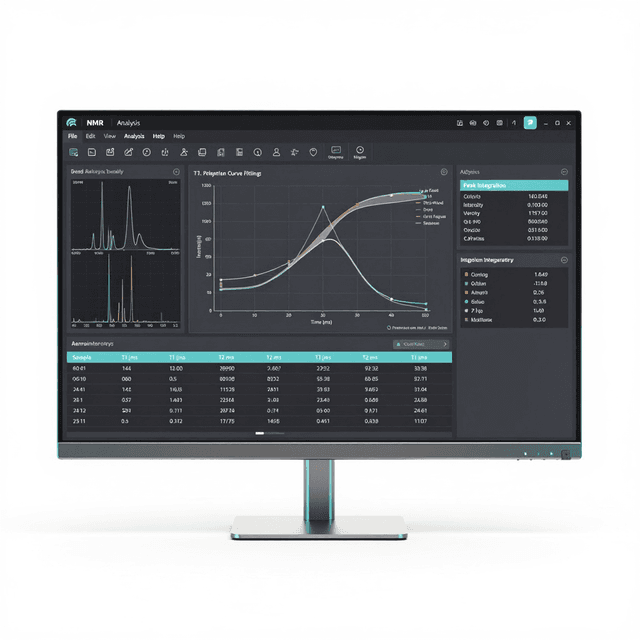
Permeability estimation utilizes empirical correlations between NMR-derived parameters (porosity, pore size distribution, surface area) and transport properties. The system integrates signal processing algorithms to convert raw NMR data into quantitative pore structure metrics and permeability coefficients for engineering applications.
Features & Benefits
Automation Level
- semi-automated
Brand
- Greenwaves Scientific
Research Domain
- Analytical Chemistry
- Environmental Monitoring
- Food Science
- Industrial Hygiene
- Materials Science
- Pharmaceutical QC
Shipping weight
- 600.0 lb
Shipping box
- L: 80.0 cm
- W: 60.0 cm
- H: 80.0 cm
| Feature | This Product | Typical Alternative | Advantage |
|---|---|---|---|
| Analysis Method | Non-destructive NMR relaxometry with repeated measurements capability | Destructive techniques like mercury intrusion require sample consumption | Enables longitudinal studies of the same sample during hydration or aging processes |
| Sample Condition | Analyzes fully water-saturated samples | Most methods require dried or evacuated samples | Provides pore characterization under realistic service conditions for cementitious materials |
| Pore Size Range | Nanometer to micrometer range through relaxation analysis | Limited ranges depending on technique | Covers the complete pore spectrum relevant to transport properties in construction materials |
| Measurement Automation | Automated protocols with multi-exponential analysis | Manual operation with basic data processing | Reduces operator variability and enables standardized measurement protocols |
| Permeability Prediction | Integrated algorithms for transport property estimation | Separate measurements required for permeability assessment | Provides engineering-relevant parameters from single measurement technique |
| System Weight | 600 kg precision instrument platform | Benchtop systems often have limited magnetic field stability | Enhanced measurement precision and stability for research-grade applications |
The system offers unique advantages for cementitious materials research through non-destructive, water-saturated analysis capabilities. The integrated approach combining pore characterization with permeability estimation provides comprehensive material property assessment from single measurements.
Practical Tips
Perform monthly calibration checks using reference standards with known relaxation properties to maintain measurement accuracy.
Why: Magnetic field drift and electronic component aging can affect relaxation time measurements over time.
Monitor system temperature stability and maintain consistent ambient conditions to minimize baseline drift.
Why: Temperature fluctuations affect both magnet stability and water relaxation properties.
Allow samples to temperature-equilibrate for at least 30 minutes before measurement to ensure consistent results.
Why: Temperature differences between sample and measurement environment can introduce artifacts in relaxation measurements.
Use multiple echo times in CPMG sequences to improve multi-exponential fitting reliability for complex pore systems.
Why: Adequate sampling of the relaxation decay is essential for accurate component separation in heterogeneous materials.
Check for air bubble formation in samples if relaxation times appear unexpectedly short or measurements become irreproducible.
Why: Air bubbles create additional interfaces that accelerate relaxation and compromise pore characterization accuracy.
Maintain proper clearance around the magnetic field and follow protocols for ferromagnetic object exclusion near the analyzer.
Why: Strong magnetic fields pose safety hazards and can damage electronic devices or cause projectile injuries.
Document sample preparation procedures and saturation protocols to ensure measurement repeatability across different operators.
Why: Variations in sample preparation are a major source of measurement uncertainty in NMR relaxometry studies.
Verify baseline signal stability before sample measurements and monitor for electronic interference from nearby equipment.
Why: External electromagnetic interference can introduce noise that compromises the signal-to-noise ratio required for accurate relaxation analysis.
Setup Guide
What’s in the Box
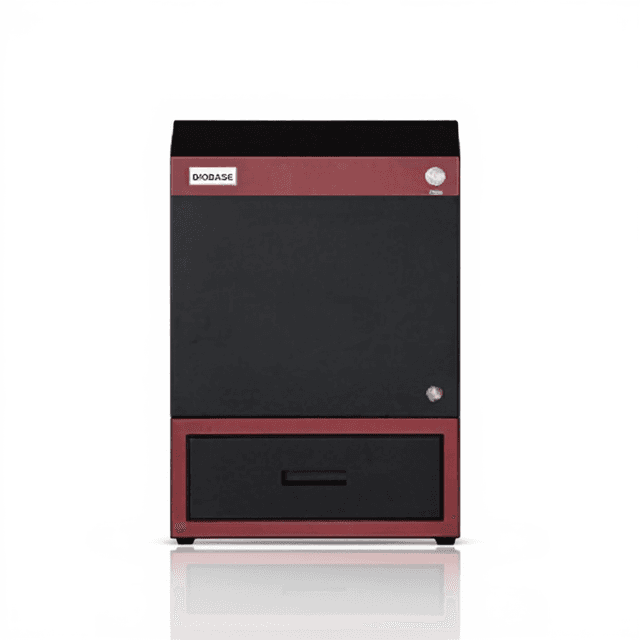
- NMR Imaging Analyzer main unit
- Magnet assembly and control electronics
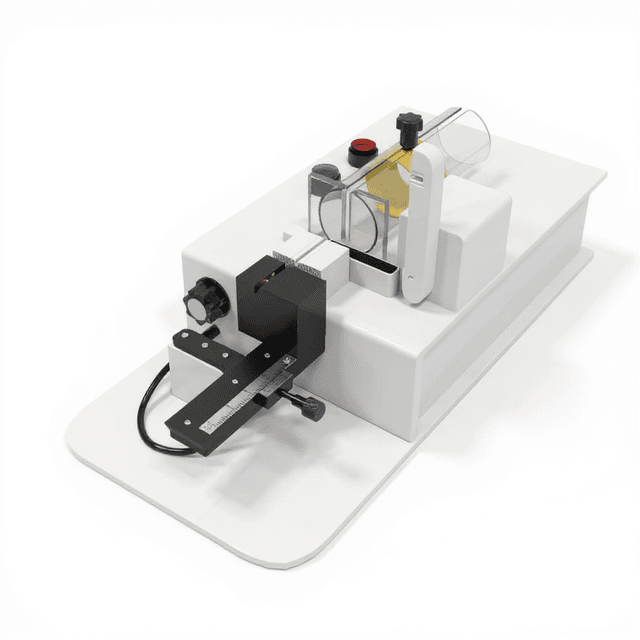
- Sample holder and positioning system
- Control computer and interface cables
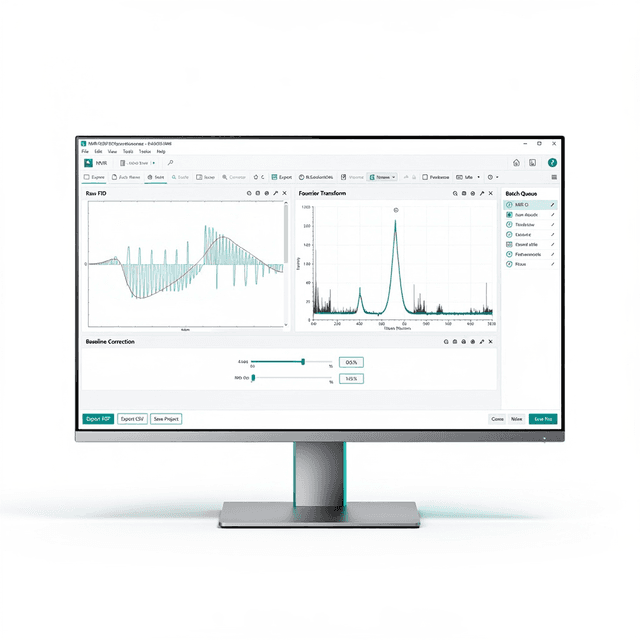
- NMR analysis software package
- Reference standards for calibration (typical)
- User manual and calibration certificates
- Power cables and grounding hardware (typical)
Warranty
ConductScience provides a comprehensive 1-year manufacturer warranty covering parts and technical support, with extended service contracts available for complex analytical instrumentation.
Compliance
References
Background reading relevant to this product:
What pore size range can the analyzer characterize?
The system characterizes pore sizes from nanometers to micrometers through NMR relaxation time analysis. Smaller pores exhibit faster relaxation rates due to surface interactions, while larger pores approach bulk water relaxation behavior.
How does sample preparation affect measurement accuracy?
Samples must be fully saturated with water and temperature-equilibrated before measurement. Air bubbles or incomplete saturation will compromise relaxation time measurements and pore size distribution accuracy.
What is the typical measurement time for pore characterization?
Measurement times vary from minutes to hours depending on required signal-to-noise ratio, sample porosity, and pore size distribution complexity. Multi-exponential fitting requires sufficient data points for accurate component separation.
Can the system monitor dynamic processes like cement hydration?
Yes, the non-destructive nature enables repeated measurements on the same sample to track pore structure evolution during hydration, allowing quantitative monitoring of porosity and pore size distribution changes over time.
How accurate are the permeability estimates?
Permeability estimates depend on the validity of NMR-permeability correlations for the specific material type. Correlations are most reliable for similar porous media and should be validated against direct permeability measurements when possible.
What maintenance is required for consistent performance?
Regular calibration with reference standards, temperature stability verification, and magnetic field homogeneity checks are essential. Consult maintenance schedule for specific service intervals and procedures.
Can the analyzer handle heterogeneous materials?
The system can analyze heterogeneous samples, but spatial averaging occurs within the measurement volume. Results represent bulk properties rather than localized heterogeneity unless imaging capabilities are employed.
What data formats are provided for analysis results?
Standard formats include relaxation time distributions, pore size histograms, and derived parameters such as porosity and permeability coefficients, typically provided in ASCII or spreadsheet-compatible formats.
Have a question about this product?
Have a question? Just ask.
Send it over and we'll email you a personalized answer — no call, no scheduling.
Prefer to talk it through?
Accessories
Enhance your setup with compatible accessories
Frequently Bought Together