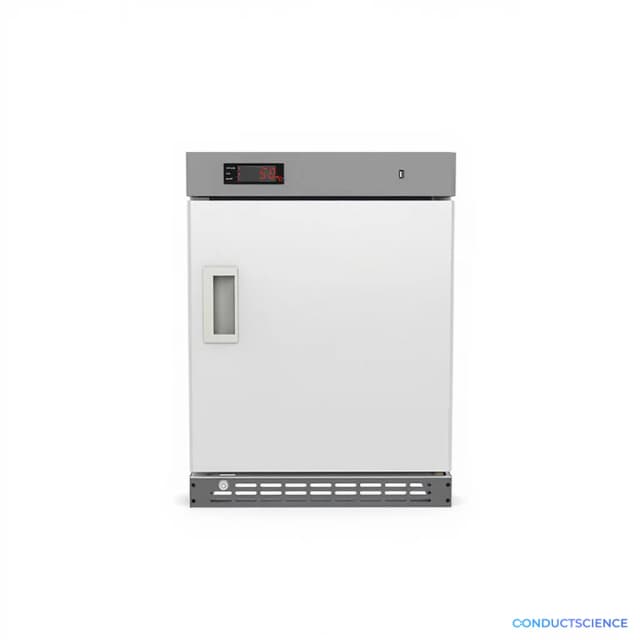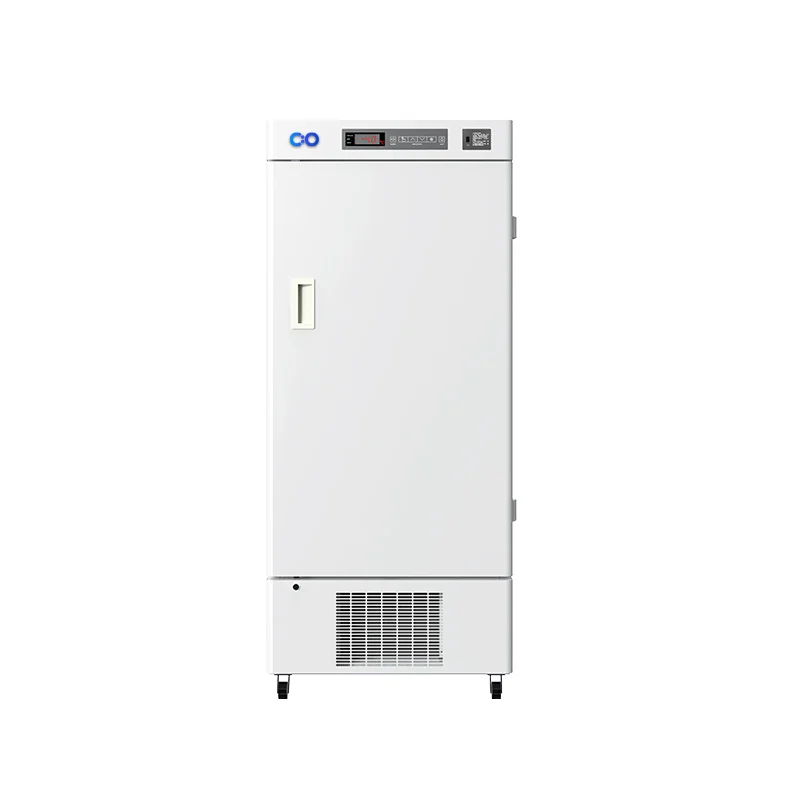
-40°C Freezer
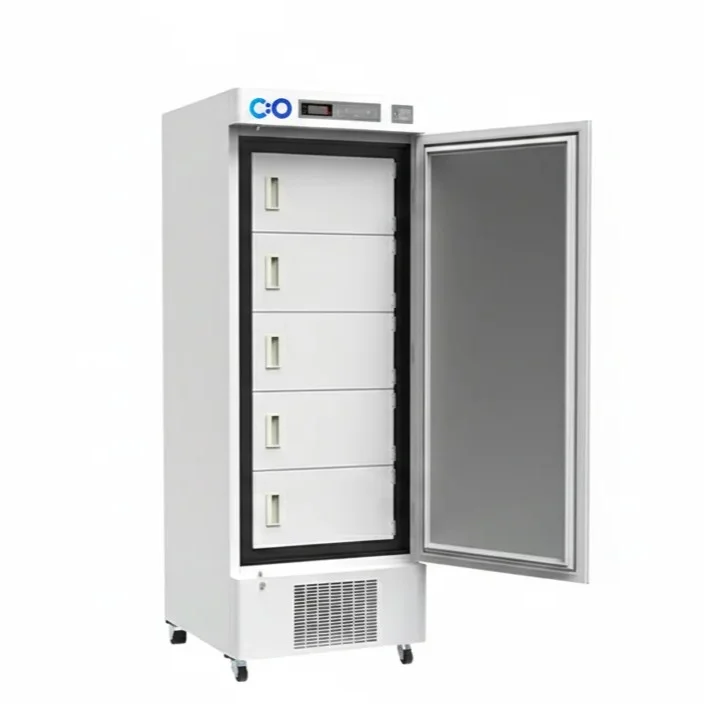
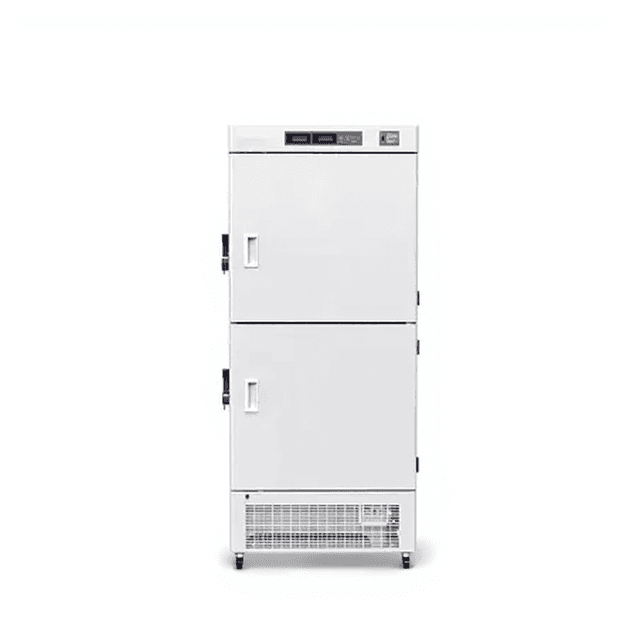
Direct-cooling -40°C freezer with dual-chamber design and independent temperature control, delivering ±0.1°C accuracy for long-term storage of biological samples, reagents, and temperature-sensitive materials.
Available in 58 L, 90 L, and 268 L capacities.

Louise Corscadden, PhD
Director of Science · ConductScience
Ask Louise about -40°C Freezer fit, setup, configuration, or quote prep.
Already working with us? Sign in to connect this with My Scientist.
Key Specifications
Full details →- Model fit
- 3 selectable configurations
- SKU family
- BIO-BDF-40V58 | BIO-BDF-40V90 | BIO-BDF-40V268
- Shipping box
- 42.0 x 43.6 x 38.0 cm
- Ordering
- Online checkout and quote request available
- Category
- Cold Storage
- Build notes
- 304 Stainless Steel
The -40°C Low Temperature Freezer delivers reliable ultra-low temperature storage with a dual-room design that enables simultaneous storage of samples requiring different temperature conditions. Independent temperature control per chamber ensures precise thermal management without cross-contamination of storage environments.
Key Features
- Direct-cooling refrigeration with R404A/R23 refrigerant for consistent −15°C to −40°C performance
- Microprocessor control with LED display for real-time temperature monitoring and adjustment
- 304 stainless steel interior for chemical resistance and easy decontamination
- Sprayed steel plate exterior with polyurethane cyclopentane foam insulation for superior thermal retention
- Manual defrost with multiple safety alarms including temperature deviation and door-open alerts
- Mobile casters included on all models for flexible laboratory placement
Model Specifications
| Specification | BIO-BDF-40V58 | BIO-BDF-40V90 | BIO-BDF-40V268 |
|---|---|---|---|
| Capacity | 58 L | 90 L | 268 L |
| Temperature Range | −15°C to −40°C | ||
| Temperature Accuracy | ±0.1°C | ||
| Temperature Uniformity | ≤4°C | ||
| Temperature Stability | ≤4°C | ||
| Power Consumption | 290 W | 252 W | 286 W |
| Internal Dimensions (mm) | 364×405×410 | 440×447×640 | 520×567×1013 |
| External Dimensions (mm) | 540×620×1115 | 600×610×945 | 690×744×1631 |
| Net Weight | 78 kg | 63 kg | 115 kg |
| Power Supply | AC220V, 50Hz (standard); 110/220V, 60Hz optional | ||
| Refrigerant | R404A/R23 | ||
| Interior Material | 304 Stainless Steel | ||
| Defrost | Manual | ||
How It Works
The freezer employs a direct-cooling refrigeration system utilizing vapor compression technology with international-grade compressors. The refrigerant circulates through copper tube heat exchangers, transferring thermal energy from the storage chamber to the external environment. Microprocessor control continuously monitors temperature sensors and modulates compressor operation to maintain the set temperature within ±0.1°C accuracy.
Polyurethane cyclopentane foam insulation provides thermal barrier properties to minimize heat transfer and maintain temperature stability. The system maintains temperature uniformity within ±4°C throughout the storage chamber through optimized air circulation patterns. LED display provides real-time temperature monitoring, while integrated alarm systems detect temperature deviations, door status changes, and system faults.
Features & Benefits
Automation Level
- Semi-Automated
Temperature Range
- -15°C to -40°C
Temperature Accuracy
- ±0.1°C
Temperature Uniformity
- ≤4°C
Temperature Stability
- ≤4°C
Capacity
- 58L
- 90L
- 268L
Power/Voltage
- 252-290W / AC220V, 50Hz
Refrigerant
- R404A/R23
Interior Material
- 304 Stainless Steel
Defrost Type
- Manual
Research Domain
- Analytical Chemistry
- Cell Biology
- Clinical Diagnostics
- Microbiology
- Pharmaceutical QC
Shipping weight
- 127.87 lb
Shipping box
- L: 42.0 cm
- W: 43.6 cm
- H: 38.0 cm
| Feature | This Product | Typical Alternative | Advantage |
|---|---|---|---|
| Temperature Range | -15°C to -40°C with 0.1°C accuracy | Entry-level models often limited to -20°C to -30°C ranges with ±1°C accuracy | Extended temperature range provides flexibility for diverse sample types requiring specific storage conditions. |
| Temperature Uniformity | ±4°C throughout storage chamber | Basic units may exhibit ±8°C to ±10°C variation | Improved uniformity prevents localized temperature variations that could compromise sample integrity. |
| Control System | Microprocessor control with LED display | Mechanical thermostats with analog displays | Digital control provides precise temperature regulation and real-time monitoring capabilities for laboratory documentation requirements. |
| Alarm Integration | Temperature, door status, and system fault monitoring | Limited alarm functions or audio-only alerts | Comprehensive monitoring protects valuable samples during unattended operation and provides early fault detection. |
| Insulation System | Polyurethane cyclopentane foam insulation | Standard polyurethane or fiberglass insulation | Enhanced insulation properties improve energy efficiency and temperature stability during extended operation. |
This system offers extended temperature capability to -40°C with 0.1°C accuracy and comprehensive alarm monitoring. The microprocessor control and LED display interface provide digital precision and real-time monitoring for critical sample storage applications.
| Model | SKU | Listed price | Status | Shipping box |
|---|---|---|---|---|
| BIO-BDF-40V268 | BIO-BDF-40V268 | $2,379.00 | Available | 69.0 x 74.4 x 163.1 cm |
| BIO-BDF-40V90 | BIO-BDF-40V90 | $1,789.00 | Available | 60.0 x 61.0 x 94.5 cm |
| BIO-BDF-40V58 | BIO-BDF-40V58 | $1,589.00 | Available | 54.0 x 62.0 x 111.5 cm |
Practical Tips
Verify temperature accuracy monthly using certified reference thermometers placed at multiple locations within the storage chamber.
Why: Independent temperature verification ensures microprocessor control maintains specified accuracy throughout the storage volume.
Perform manual defrost when ice buildup exceeds 6mm thickness on evaporator surfaces to maintain heat transfer efficiency.
Why: Excessive ice formation reduces cooling capacity and increases energy consumption while potentially affecting temperature uniformity.
Allow samples to pre-cool gradually to prevent thermal shock and maintain consistent chamber temperature during loading.
Why: Gradual temperature transition protects sample integrity and minimizes temperature fluctuations that could affect other stored materials.
Check door seals for damage if temperature recovery time increases or alarm frequency rises unexpectedly.
Why: Compromised door seals allow warm air infiltration, forcing the cooling system to work harder and potentially compromising temperature stability.
Maintain temperature logs even with alarm systems to document storage conditions for regulatory compliance and sample traceability.
Why: Written documentation provides backup records and demonstrates consistent storage conditions for critical research materials.
Ensure adequate ventilation around the unit and avoid storage in confined spaces to prevent heat buildup from condenser operation.
Why: Proper airflow prevents overheating of refrigeration components and maintains optimal cooling efficiency.
Setup Guide
What’s in the Box
- Main freezer unit
- Power cord
- User manual and documentation
- Temperature monitoring log sheets (typical)
- Adjustable storage shelves (typical)
Warranty
ConductScience provides a standard one-year manufacturer warranty covering parts and labor with comprehensive technical support for installation and operational guidance.
Compliance
References
Background reading relevant to this product:
What is the temperature recovery time after door opening?
Temperature recovery depends on ambient conditions and door opening duration, but the microprocessor control system with direct-cooling refrigeration typically restores set temperature within 15-30 minutes for brief access periods.
How frequently should manual defrost cycles be performed?
Defrost frequency depends on ambient humidity and door opening frequency, but typically ranges from weekly to monthly intervals. Monitor ice buildup on evaporator coils to determine optimal defrost scheduling.
Can the unit maintain temperature during power outages?
The insulated chamber provides thermal mass for temporary temperature maintenance, but duration depends on ambient temperature and thermal load. Consider uninterruptible power supply (UPS) for critical sample protection.
What alarm conditions trigger notifications?
The integrated alarm system monitors temperature deviations beyond set thresholds, door ajar status, and system fault conditions including compressor failures or sensor malfunctions.
Is external temperature monitoring compatible?
The LED display provides internal monitoring, but external data logging systems can typically be integrated through temperature probe access ports if present, or wireless monitoring solutions.
What maintenance procedures are required?
Regular maintenance includes manual defrost cycles, condenser coil cleaning, door seal inspection, and temperature calibration verification using certified reference thermometers.
Have a question about this product?
Have a question? Just ask.
Send it over and we'll email you a personalized answer — no call, no scheduling.
Prefer to talk it through?