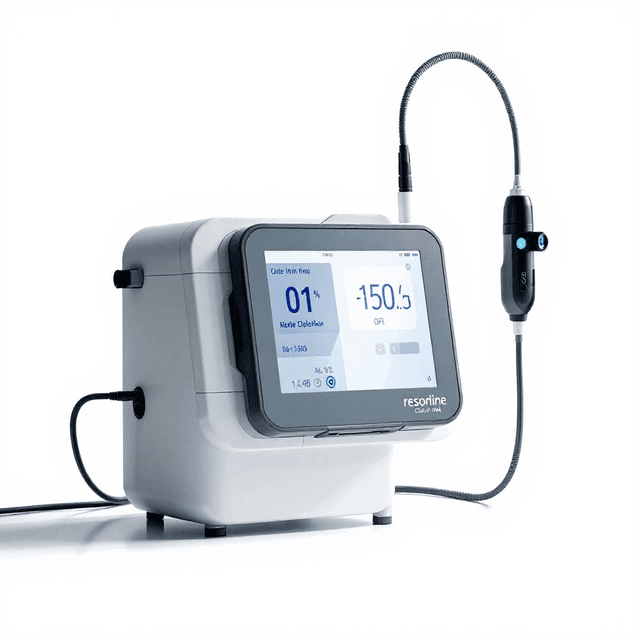
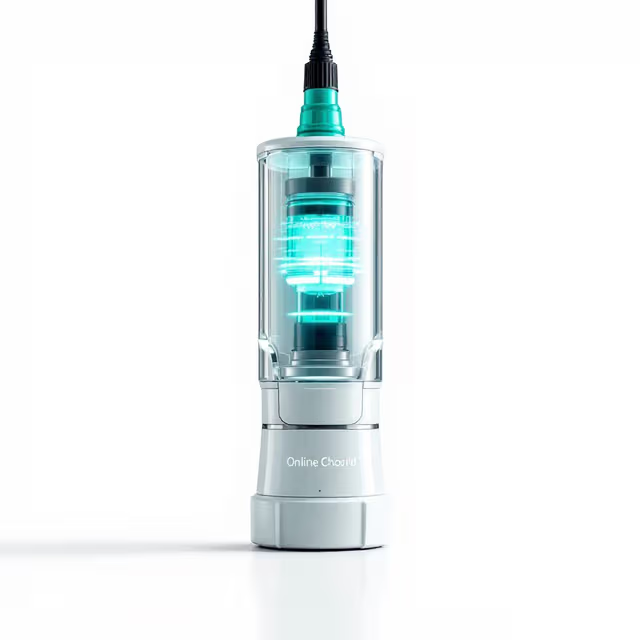
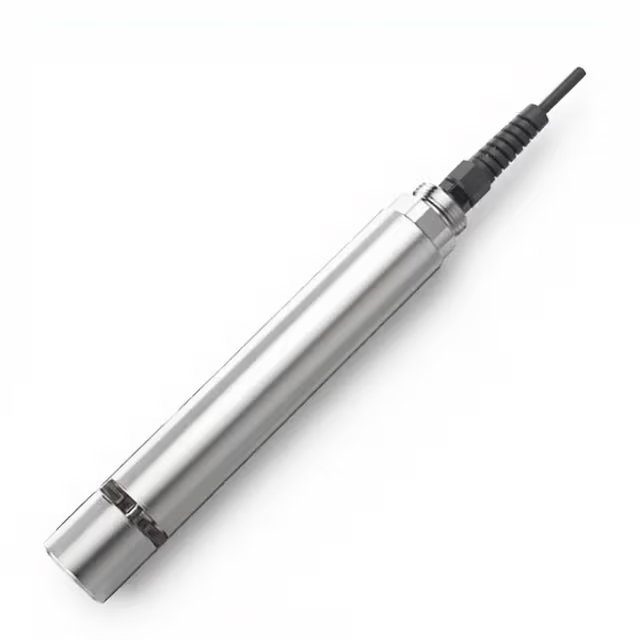
Residual Chlorine Probe
Amperometric electrochemical probe for measuring free chlorine concentrations from 0-20 mg/L in water treatment and environmental monitoring applications.
| Measuring range | 0-20mg/L |
| Lower limit | 0.05mg/L |
| Ph range | 4-8 |
| Repeatability | 0.05mg/L or 5% larger as the standard |
| Respinse time | T90ï¼120S |
| Velocity of flow | â¥20L/H |

The Residual Chlorine Probe provides amperometric measurement of free chlorine concentrations in aqueous solutions from 0-20 mg/L. The electrochemical sensor employs a gold cathode and silver/silver chloride anode configuration immersed in an electrolyte chamber, with a selective membrane that permits hypochlorous acid diffusion while preventing electrolyte leakage and contaminant infiltration. The measured current is proportional to hypochlorous acid concentration, with integrated pH compensation to determine accurate residual chlorine levels.
This probe operates across pH ranges of 4-8 with a detection limit of 0.05 mg/L and T90 response time under 120 seconds. The system accommodates flow velocities up to 20 L/H, making it suitable for both static measurements and inline monitoring applications. The ±10% accuracy (DPD method) and 0.05 mg/L repeatability provide reliable quantification for water treatment verification and environmental monitoring protocols.
How It Works
The residual chlorine probe operates on amperometric electrochemical detection principles. The sensor contains a gold working electrode (cathode) and silver/silver chloride reference electrode (anode) housed within an electrolyte chamber. A selective membrane separates the internal electrolyte from the sample solution while allowing hypochlorous acid (HOCl) to diffuse through based on concentration gradients.
When hypochlorous acid penetrates the membrane, it undergoes reduction at the gold cathode, generating a measurable current proportional to the HOCl concentration. The silver/silver chloride anode maintains a stable reference potential, enabling accurate current measurements. Integrated pH compensation algorithms account for the pH-dependent equilibrium between hypochlorous acid and hypochlorite ions, providing accurate total free chlorine determination across the 4-8 pH operating range.
The membrane design prevents electrolyte leakage and sample contamination while maintaining selective permeability to the target analyte. Current signals are processed through amplification and signal conditioning circuits to produce linear output proportional to chlorine concentration within the 0-20 mg/L measurement range.
Features & Benefits
Measuring range
- 0-20mg/L
Lower limit
- 0.05mg/L
Ph range
- 4-8
Repeatability
- 0.05mg/L or 5% larger as the standard
Respinse time
- T90ï¼120S
Velocity of flow
- â¥20L/H
Product Name
- Quantity Sold
Residual Chlorine Test Strip 0-10ppm
- 3000+
Residual Chlorine Analyzer 0-10ppm
- 500+
Residual Chlorine Kit
- 2000+
Automation Level
- semi-automated
Brand
- ConductScience
Accuracy
- ±10%ï¼DPDï¼
Research Domain
- Clinical Diagnostics
- Environmental Monitoring
- Food Science
- Industrial Hygiene
- Microbiology
- Pharmaceutical QC
Weight
- 0.26 kg
Dimensions
- L: 15.0 mm
- W: 5.0 mm
- H: 5.0 mm
Comparison Guide
| Feature | This Product | Typical Alternative | Advantage |
|---|---|---|---|
| Detection Range | 0-20 mg/L with 0.05 mg/L detection limit | Entry-level probes often limited to 0-10 mg/L ranges | Extended range eliminates need for dilution in high-chlorine applications while maintaining trace detection capability. |
| Response Time | T90 under 120 seconds | Basic electrodes may require 3-5 minutes for stable readings | Faster response enables real-time process monitoring and immediate feedback for treatment adjustments. |
| pH Operating Range | pH 4-8 with compensation | Limited pH ranges or no compensation in basic models | Broader pH tolerance accommodates varied water treatment conditions without requiring pH adjustment. |
| Flow Tolerance | Up to 20 L/H maximum flow | Static measurement only in basic systems | Inline installation capability enables continuous monitoring without sampling system complexity. |
| Electrode Configuration | Gold cathode with Ag/AgCl reference | Standard metal electrodes in basic probes | Gold electrode provides superior corrosion resistance and measurement stability in aggressive water matrices. |
This probe offers an extended 0-20 mg/L measurement range with rapid T90 response under 120 seconds and pH compensation across 4-8 range. The gold electrode configuration and selective membrane design provide enhanced durability and selectivity compared to entry-level chlorine sensors.
Practical Tips
Use freshly prepared chlorine standards and perform calibration in the same temperature range as sample measurements.
Why: Chlorine solutions degrade rapidly and temperature affects both membrane permeability and electrochemical response.
Inspect the membrane weekly for discoloration, scratches, or fouling deposits that indicate replacement is needed.
Why: Membrane integrity directly affects measurement accuracy and response time performance.
Allow 2-3 minutes for thermal equilibration when moving the probe between different temperature samples.
Why: Temperature gradients can cause measurement drift and affect membrane transport characteristics.
If response time increases significantly, check for air bubbles in the electrolyte chamber and membrane fouling.
Why: Air bubbles disrupt electrical contact while fouling reduces membrane permeability to hypochlorous acid.
Record sample pH alongside chlorine measurements to verify readings fall within the 4-8 compensation range.
Why: pH outside the specified range can lead to inaccurate chlorine speciation calculations and measurement errors.
Store and handle chlorine calibration standards in ventilated areas away from incompatible chemicals.
Why: Chlorine solutions can release toxic vapors and react with organic materials or reducing agents.
Verify zero reading in chlorine-free deionized water before each measurement session.
Why: Baseline drift can indicate electrode degradation or electrolyte contamination requiring attention.
Rinse the probe with deionized water between samples to prevent cross-contamination and membrane fouling.
Why: Sample carryover can affect subsequent measurements and accelerate membrane degradation.
Setup Guide
What’s in the Box
- Residual chlorine probe with cable (typical)
- Electrolyte solution (typical)
- Calibration standards (typical)
- Installation hardware (typical)
- User manual and calibration certificate (typical)
Warranty
ConductScience provides a one-year manufacturer warranty covering defects in materials and workmanship. Technical support includes calibration guidance and troubleshooting assistance for optimal measurement performance.
Compliance
References
Background reading relevant to this product:
What maintenance is required for the selective membrane?
The membrane requires periodic inspection for fouling or damage and replacement when response time exceeds specifications. Cleaning protocols depend on sample matrix but typically involve gentle rinsing with deionized water.
How does temperature affect measurement accuracy?
Temperature influences both membrane permeability and electrochemical reaction kinetics. Consult product datasheet for temperature compensation requirements and operating range specifications.
Can this probe measure total chlorine or only free chlorine?
This probe specifically measures free chlorine (hypochlorous acid) through selective membrane permeability. Total chlorine measurement would require different analytical approaches or sample pretreatment.
What interfering substances affect measurement accuracy?
Common interferences include heavy metals, organic chloramines, and extreme pH conditions outside the 4-8 operating range. Sample pretreatment may be required for heavily contaminated matrices.
How frequently should calibration be performed?
Calibration frequency depends on sample matrix and accuracy requirements. Daily calibration is recommended for critical applications, with weekly verification using certified reference standards.
What is the expected electrode lifespan?
Electrode lifespan varies with sample conditions and usage frequency. Typical service life ranges from 6-24 months depending on maintenance protocols and sample matrix aggressiveness.
Can this probe be used in saltwater or high ionic strength solutions?
The probe can function in moderate ionic strength solutions, but high salt concentrations may affect membrane performance and require calibration adjustments. Consult specifications for ionic strength limitations.
Have a question about this product?
Accessories
Enhance your setup with compatible accessories
Frequently Bought Together