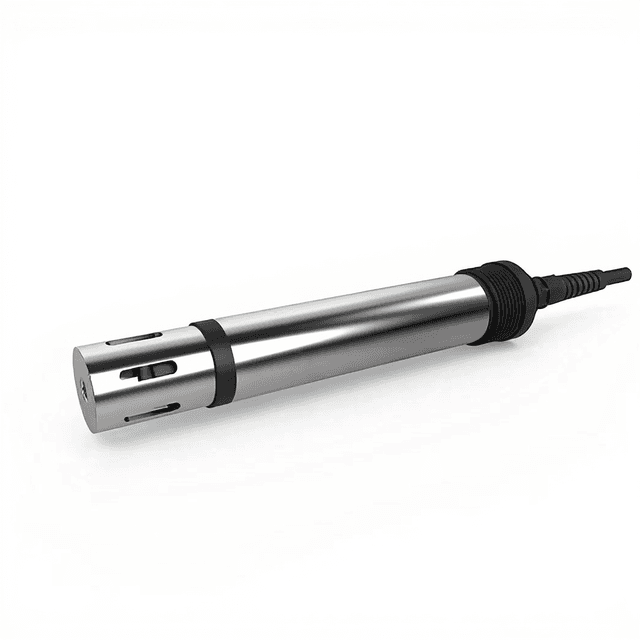
Online Conductivity Controller
Intelligent online conductivity controller with multi-range electrode support, automatic temperature compensation, and RS-485 communication for continuous aqueous solution monitoring.

Louise Corscadden, PhD
Director of Science · ConductScience
Ask Louise about Online Conductivity Controller fit, setup, configuration, or quote prep.
Already working with us? Sign in to connect this with My Scientist.
Key Specifications
Full details →- Model fit
- Configured during quote
- SKU family
- CS-LH-IND011
- Shipping box
- 15.0 x 5.0 x 5.0 cm
- Ordering
- Online checkout and quote request available
- Category
- Industrial Sensors
- Build notes
- Confirm accessories, station layout, and support needs before purchase
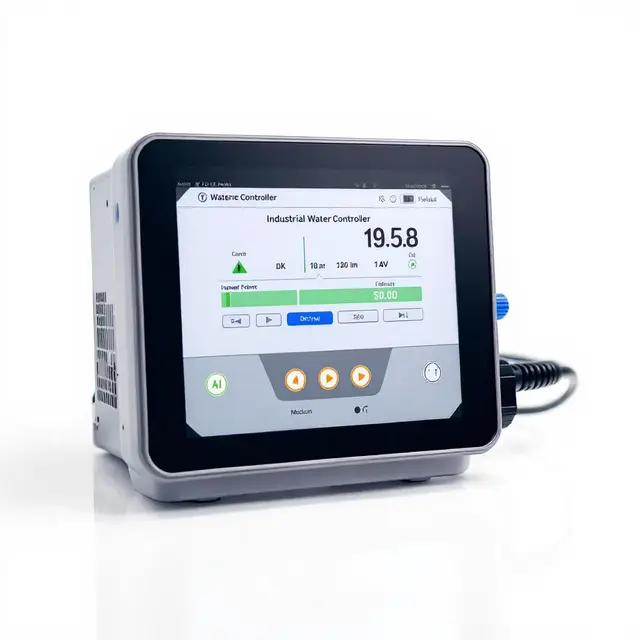
The Online Conductivity Controller is an intelligent electrochemical monitoring instrument designed for continuous conductivity measurement in aqueous solutions. Utilizing polarographic analysis technology with imported sensor components, the system provides real-time conductivity monitoring with automatic temperature compensation across the 0-60°C range. The instrument features multi-electrode capability supporting measurement ranges from 0-20.00 µS/cm to 0-20.00 mS/cm depending on electrode selection.
The controller incorporates RS-485 communication with MODBUS protocol compatibility, enabling integration into distributed monitoring networks. Data logging capabilities allow storage of 50 measurements with configurable alarm thresholds and relay outputs for automated process control. The large LCD interface provides simultaneous display of conductivity values, temperature, output current, and alarm status for comprehensive system monitoring.
How It Works
Conductivity measurement operates on the principle of ionic conductance in aqueous solutions. The instrument applies an alternating voltage across two electrodes immersed in the sample, measuring the resulting current flow. Higher ion concentrations enable greater current conduction, producing proportionally higher conductivity readings expressed in siemens per unit length (µS/cm or mS/cm).
The polarographic analysis technology minimizes electrode polarization effects by using alternating current excitation, ensuring stable long-term measurements. Automatic temperature compensation corrects conductivity values using standardized temperature coefficients, as ionic mobility varies predictably with temperature. The system supports multiple electrode cell constants (0.01, 0.1, 1.0, and 10.0 cm⁻¹) to optimize measurement accuracy across different conductivity ranges.
Digital signal processing converts analog conductivity measurements to calibrated output values, with programmable alarm thresholds triggering relay outputs for process control applications. The RS-485 interface enables remote data acquisition and integration with supervisory control systems.
Features & Benefits
CR300
- EC test range
0.01 electrode
- 0-20.00 uS/cm-1
0.1 electrode
- 0-200.0 uS/cm-1
1.0 electrode
- 0-2000 uS/cm-1
10.0 electrode
- 0-20.00 uS/cm-1
Automation Level
- semi-automated
Brand
- ConductScience
Research Domain
- Analytical Chemistry
- Environmental Monitoring
- Food Science
- Industrial Hygiene
- Pharmaceutical QC
Shipping weight
- 0.26 lb
Shipping box
- L: 15.0 cm
- W: 5.0 cm
- H: 5.0 cm
| Feature | This Product | Typical Alternative | Advantage |
|---|---|---|---|
| Electrode Range Coverage | Four electrode options covering 0-20 µS/cm to 0-20 mS/cm | Entry-level controllers often require separate instruments for different conductivity ranges | Single controller handles diverse applications from ultrapure water to process streams without equipment changes |
| Communication Interface | RS-485 with MODBUS protocol compatibility plus 4-20 mA output | Basic models may offer only analog outputs or proprietary communication | Enables integration into existing industrial control systems using standard protocols |
| Data Storage Capacity | 50-measurement internal data logger | Simple controllers often lack data logging capabilities | Provides measurement history for trend analysis and documentation requirements |
| Temperature Compensation Range | Automatic compensation across 0-60°C | Manual temperature correction or limited ATC ranges | Maintains accuracy across process temperature variations without user intervention |
| Display Information | Multi-parameter LCD showing conductivity, temperature, current output, and alarms | Single-parameter displays showing only conductivity value | Comprehensive system status monitoring reduces troubleshooting time and improves operational awareness |
| Process Control Features | Programmable alarms with relay outputs and adjustable hysteresis | Simple threshold alarms without hysteresis control | Prevents relay cycling and enables automated process control responses to measurement conditions |
This controller offers comprehensive conductivity monitoring with multi-range capability, industrial communication protocols, and integrated data logging. The automatic temperature compensation and programmable control features support continuous process monitoring applications requiring minimal operator intervention.
Practical Tips
Verify calibration using conductivity standards that bracket your typical measurement range rather than relying solely on single-point calibration.
Why: Two-point calibration across the measurement span improves accuracy and compensates for electrode aging effects.
Clean electrode surfaces weekly with appropriate solvents and store in conductivity standard solution when not in continuous use.
Why: Regular cleaning prevents fouling buildup that causes measurement drift and premature electrode failure.
Install the electrode where sample flow provides adequate mixing and representative conductivity without creating air bubbles around sensor surfaces.
Why: Proper flow conditions ensure accurate measurements and prevent trapped air that interferes with ionic conduction.
If readings become unstable, check electrode cable connections and ensure no moisture has entered cable terminations.
Why: Conductivity measurements are sensitive to electrical leakage paths that can develop with moisture infiltration.
Set alarm thresholds 10-15% beyond normal operating ranges to detect process deviations while avoiding nuisance alarms from minor fluctuations.
Why: Appropriate alarm deadbands provide early warning of process upsets without excessive false alarms that reduce operator confidence.
Ensure electrical isolation between the controller and any metallic piping systems to prevent ground loop currents affecting measurements.
Why: Ground loops can introduce electrical noise and create safety hazards in industrial installations with multiple electrical systems.
Perform temperature verification using a calibrated thermometer to confirm ATC sensor accuracy before critical measurements.
Why: Temperature compensation accuracy directly affects conductivity measurement precision, especially for solutions with high temperature coefficients.
Document electrode installation date and track calibration drift patterns to establish predictive maintenance schedules.
Why: Systematic record-keeping enables proactive electrode replacement and maintains measurement traceability for quality systems.
Setup Guide
What’s in the Box
- Online Conductivity Controller unit (typical)
- Conductivity electrode with cable (typical)
- Power supply adapter (typical)
- RS-485 communication cable (typical)
- Mounting hardware (typical)
- User manual and calibration certificate (typical)
Warranty
ConductScience provides a standard one-year manufacturer warranty covering defects in materials and workmanship, with technical support for installation and operational questions.
Compliance
What electrode cell constant should I select for drinking water analysis?
For drinking water with conductivity typically 50-800 µS/cm, use the 1.0 cell constant electrode (0-2000 µS/cm range) to achieve optimal measurement resolution and accuracy.
How frequently does the automatic temperature compensation update?
Temperature compensation operates continuously in real-time. The system measures solution temperature and applies correction factors automatically without user intervention across the 0-60°C operating range.
Can I integrate this controller with existing SCADA systems?
Yes, the RS-485 interface with partial MODBUS protocol compatibility enables connection to most industrial control systems. Verify specific MODBUS register mapping requirements with your SCADA vendor.
What calibration standards are recommended for verification?
Use NIST-traceable conductivity standards matching your measurement range: 84 µS/cm, 1413 µS/cm, or 12.88 mS/cm standards are commonly available for different electrode ranges.
How does the data logging function store measurements?
The internal memory stores 50 measurements with conductivity values, temperature, and timestamp data. Measurements can be manually logged or automatically stored based on programmable intervals.
What maintenance is required for the conductivity electrode?
Regular cleaning with appropriate solvents removes fouling deposits. Electrode life depends on solution chemistry but typically ranges 6-24 months with proper maintenance and storage in conductivity standard solution.
Can alarm thresholds be set independently for high and low limits?
Yes, the controller supports independent high and low alarm setpoints with programmable hysteresis values to prevent alarm chatter near threshold values.
What is the measurement update rate for real-time monitoring?
Consult product datasheet for specific measurement update frequency, as this affects response time for process control applications and data logging intervals.
Have a question about this product?
Have a question? Just ask.
Send it over and we'll email you a personalized answer — no call, no scheduling.
Prefer to talk it through?
Accessories
Enhance your setup with compatible accessories
Frequently Bought Together