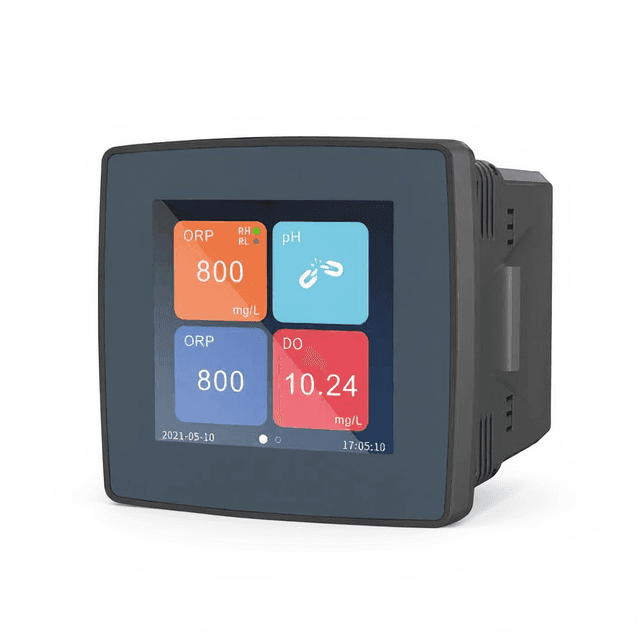
Online DO Controller
Continuous dissolved oxygen monitoring controller with polarographic sensor technology, featuring automatic temperature compensation, data logging, and RS-485 communication for industrial and research applications.

Louise Corscadden, PhD
Director of Science · ConductScience
Ask Louise about Online DO Controller fit, setup, configuration, or quote prep.
Already working with us? Sign in to connect this with My Scientist.
Key Specifications
Full details →- Model fit
- Configured during quote
- SKU family
- CS-LH-DO-530
- Shipping box
- 15.0 x 5.0 x 5.0 cm
- Ordering
- Online checkout and quote request available
- Category
- Industrial Sensors
- Build notes
- Confirm accessories, station layout, and support needs before purchase
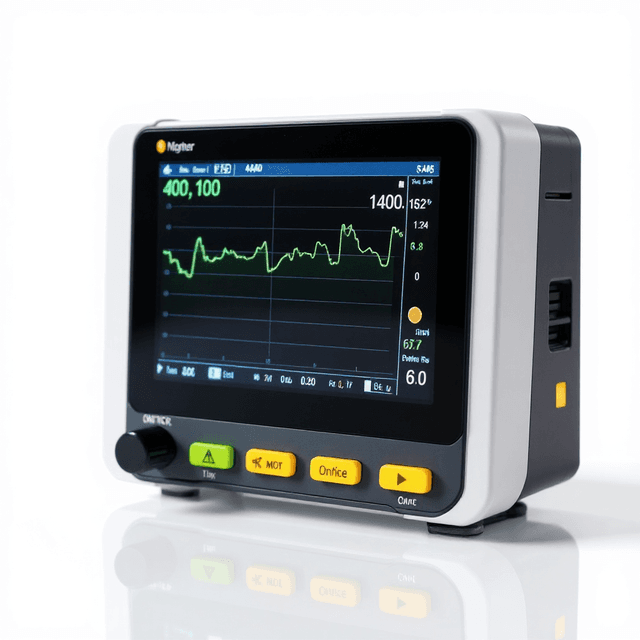
The Online DO Controller (Model DO-530) is a continuous dissolved oxygen monitoring system designed for industrial and research applications requiring real-time dissolved oxygen measurement. Built on polarographic analysis technology with imported components and dissolved oxygen film heads, this instrument provides automated monitoring with temperature compensation from 0°C to 60°C.
The system features a large LCD display with English menu operation, simultaneous multi-parameter display (dissolved oxygen value, temperature, output current, alarm points), and data logging capabilities for up to 50 measurements. With RS-485 communication interface (MODBUS protocol partially compatible) and 4-20 mA current output, the controller integrates into automated monitoring systems for continuous process control and data acquisition.
How It Works
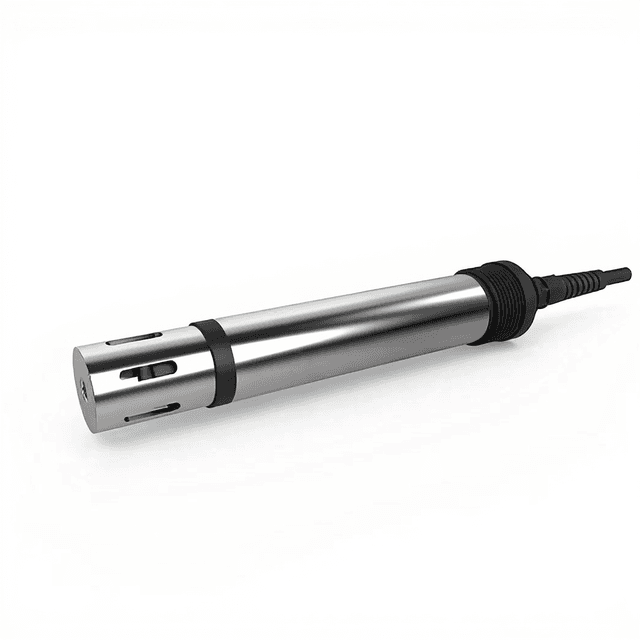
The DO-530 employs polarographic dissolved oxygen measurement technology, utilizing a specialized membrane electrode system. The sensor consists of a cathode and anode immersed in an electrolyte solution, separated from the sample by an oxygen-permeable membrane. When oxygen molecules diffuse through the membrane, they are reduced at the cathode, generating a current proportional to the dissolved oxygen concentration.
The system incorporates automatic temperature compensation across the 0°C to 60°C range, as temperature significantly affects oxygen solubility and sensor response. The controller continuously measures sample temperature and applies correction factors to provide accurate dissolved oxygen readings regardless of thermal variations. Advanced surface mount technology and imported components ensure long-term stability and reliability of the measurement system.
Real-time data processing includes alarm functionality with configurable setpoints, hysteresis control to prevent relay chatter, and watchdog function to prevent system crashes. The integrated data logger stores up to 50 measurements with timestamp information, while the RS-485 interface enables integration with SCADA systems and process controllers for automated monitoring and control applications.
Features & Benefits
Model
- DO-530
Model No.
- Test Item
DO-530
- Dissolved oxygen
Automation Level
- semi-automated
Brand
- ConductScience
Research Domain
- Environmental Monitoring
- Food Science
- Industrial Hygiene
- Microbiology
- Pharmaceutical QC
Shipping weight
- 0.44 lb
Shipping box
- L: 15.0 cm
- W: 5.0 cm
- H: 5.0 cm
| Feature | This Product | Typical Alternative | Advantage |
|---|---|---|---|
| Temperature Compensation Range | Automatic compensation from 0°C to 60°C | Entry-level models often provide narrower compensation ranges or manual temperature correction | Wide automatic temperature compensation eliminates manual adjustments and maintains accuracy in variable temperature environments. |
| Communication Interface | RS-485 with MODBUS protocol compatibility | Basic models typically offer limited or no communication capabilities | Network communication enables integration with SCADA systems for centralized monitoring and process automation. |
| Data Storage | Notebook function stores 50 measurements | Many controllers lack internal data storage capabilities | Built-in data logging provides measurement history for trend analysis and compliance documentation without external data loggers. |
| Display System | Large LCD with multi-parameter simultaneous display | Basic models often show single parameters or have smaller displays | Comprehensive display provides complete system status at a glance, improving operational efficiency and troubleshooting capabilities. |
| System Reliability | Watchdog function prevents system crashes | Standard controllers may lack advanced system protection features | Enhanced reliability features ensure continuous operation in critical monitoring applications where system downtime is costly. |
The DO-530 offers comprehensive dissolved oxygen monitoring with advanced features including wide-range automatic temperature compensation, network communication capabilities, and integrated data logging. The system provides industrial-grade reliability with watchdog protection and configurable alarm functions for process control applications.
Practical Tips
Perform calibration in solutions at the same temperature as your measurement environment when possible.
Why: Temperature matching during calibration minimizes compensation errors and improves measurement accuracy.
Monitor sensor response time during routine checks - slow response indicates membrane degradation.
Why: Response time is an early indicator of membrane condition before measurement accuracy is significantly affected.
Ensure adequate sample flow past the sensor probe to prevent measurement artifacts from oxygen depletion.
Why: Stagnant conditions can cause localized oxygen depletion at the sensor membrane, leading to artificially low readings.
Check for air bubbles in sensor cable connections if readings become erratic or unstable.
Why: Air in the sensor system can cause measurement drift and affect the electrochemical cell performance.
Set appropriate hysteresis values to prevent alarm chatter in applications with naturally fluctuating dissolved oxygen levels.
Why: Proper hysteresis prevents excessive relay switching while maintaining responsive alarm operation for true process upsets.
Install the controller in a location protected from water spray and ensure proper electrical grounding.
Why: Moisture ingress can damage electronics and improper grounding may create electrical safety hazards in wet environments.
Store calibration solutions according to manufacturer specifications to maintain their stability and accuracy.
Why: Degraded calibration standards lead to measurement bias that affects all subsequent dissolved oxygen readings.
Keep spare membranes and electrolyte solution on hand for quick replacement during critical monitoring periods.
Why: Having replacement parts readily available minimizes downtime when sensor maintenance is required during important experiments or processes.
Setup Guide
What’s in the Box
- DO-530 Online Controller (typical)
- Dissolved oxygen sensor probe with cable (typical)
- Power adapter (typical)
- User manual and calibration procedures (typical)
- Mounting hardware (typical)
- Communication cable (typical)
Warranty
ConductScience provides a standard one-year manufacturer warranty covering defects in materials and workmanship, with technical support for calibration procedures and system integration assistance.
Compliance
References
Background reading relevant to this product:
What calibration standards are required for the polarographic DO sensor?
The system typically requires two-point calibration using zero oxygen solution (sodium sulfite) and air-saturated water at known temperature. Consult the product datasheet for specific calibration solutions and procedures recommended for your application range.
How frequently does the dissolved oxygen membrane require replacement?
Membrane replacement frequency depends on sample conditions and measurement frequency. In clean water applications, membranes typically last 3-6 months, while harsh industrial conditions may require more frequent replacement. Monitor response time and calibration stability to determine replacement intervals.
Can the 4-20 mA output be configured for different dissolved oxygen ranges?
Yes, the current output scaling can be configured to correspond to different dissolved oxygen measurement ranges. The output scaling is user-configurable through the menu system to match your specific process requirements.
What sample flow requirements are needed for accurate measurement?
Consult the product datasheet for specific flow requirements. Polarographic sensors typically require minimum sample flow to ensure adequate oxygen transport to the membrane surface and prevent measurement artifacts from stagnant conditions.
How does temperature compensation affect measurement accuracy?
The automatic temperature compensation corrects for oxygen solubility changes and sensor response variations across the 0°C to 60°C range. This ensures accurate dissolved oxygen readings without manual temperature corrections, critical for applications with significant temperature variations.
What communication protocols are supported beyond basic MODBUS?
The RS-485 interface provides partial MODBUS protocol compatibility. Consult the product datasheet for specific MODBUS function codes supported and any proprietary communication protocols available for integration with different SCADA systems.
Can multiple controllers be networked together?
The RS-485 communication interface allows multiple controllers to be connected on the same communication network. Each controller requires a unique device address for proper network communication and data collection.
What maintenance is required for long-term operation?
Regular maintenance includes periodic calibration verification, membrane and electrolyte replacement, sensor cleaning, and verification of alarm setpoints. Establish a maintenance schedule based on your application conditions and accuracy requirements.
Have a question about this product?
Have a question? Just ask.
Send it over and we'll email you a personalized answer — no call, no scheduling.
Prefer to talk it through?
Accessories
Enhance your setup with compatible accessories
Frequently Bought Together