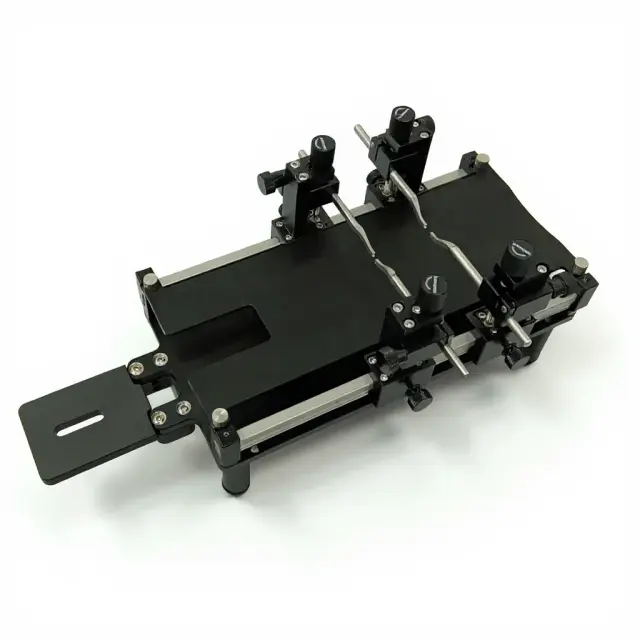
Industrial Water Controller
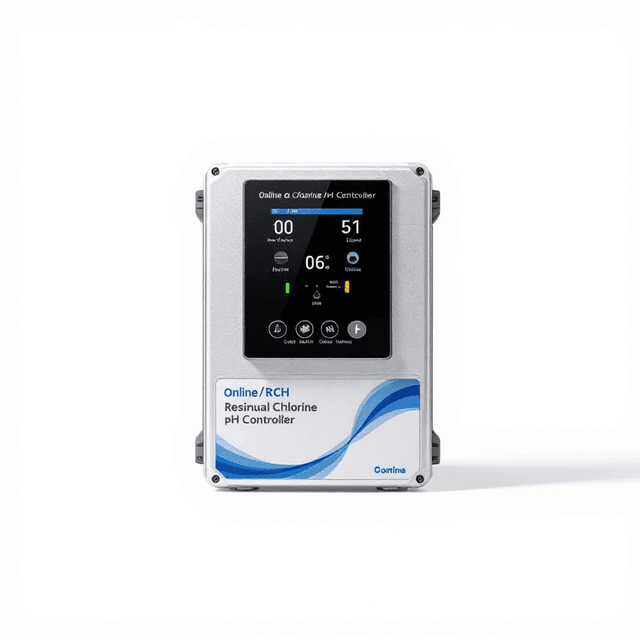
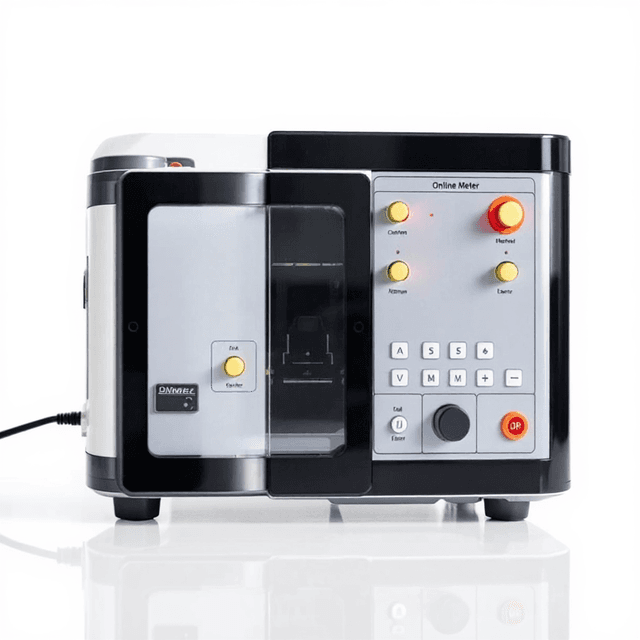
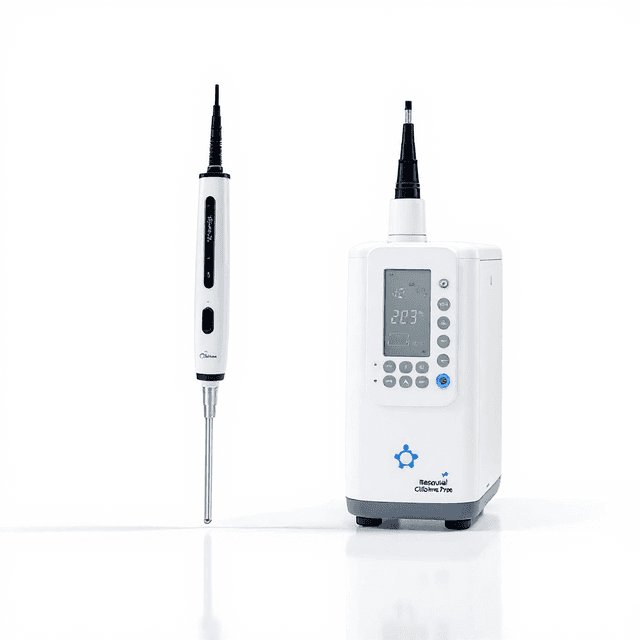
Multi-parameter industrial water quality controller featuring simultaneous pH, ORP, residual chlorine, turbidity, and temperature monitoring with touchscreen interface and wireless connectivity for real-time process control.

Louise Corscadden, PhD
Director of Science · ConductScience
Ask Louise about Industrial Water Controller fit, setup, configuration, or quote prep.
Already working with us? Sign in to connect this with My Scientist.
Key Specifications
Full details →- Model fit
- Configured during quote
- SKU family
- CS-LH-IND006
- Shipping box
- 15.0 x 5.0 x 5.0 cm
- Ordering
- Online checkout and quote request available
- Category
- Industrial Sensors
- Build notes
- Confirm accessories, station layout, and support needs before purchase
The Industrial Water Controller is a comprehensive multi-parameter monitoring system designed for real-time assessment of critical water quality indicators in industrial and laboratory environments. This instrument simultaneously measures pH (0-14), oxidation-reduction potential (-2000 to 2000 mV), residual chlorine (0-1.5 mg/L as hypochlorous acid), turbidity, and temperature through a unified 10-inch touchscreen interface with wireless connectivity capabilities.
The system incorporates high-precision signal acquisition circuits with automatic temperature compensation for pH measurements and digital electrode technology for turbidity and ORP sensing. Remote monitoring capabilities via wireless SIM card connection and mobile app integration enable continuous oversight of water quality parameters. Three-channel relay outputs provide automated control functionality for dosing pumps and alarm systems, making this suitable for environments requiring active water quality management and regulatory monitoring compliance.
How It Works
The Industrial Water Controller employs multiple electrochemical and optical sensing technologies to provide comprehensive water quality assessment. pH measurement utilizes glass electrode potentiometry with automatic temperature compensation, comparing the potential difference between a pH-sensitive glass membrane and a reference electrode to determine hydrogen ion concentration with ±0.05 pH unit accuracy.
ORP (oxidation-reduction potential) sensing uses a platinum electrode to measure the sample's oxidizing or reducing capacity relative to a standard hydrogen electrode, providing indication of disinfection potential and chemical stability across a -2000 to 2000 mV range. Residual chlorine detection specifically measures hypochlorous acid concentration through amperometric sensing, with automatic pH compensation to account for the pH-dependent equilibrium between hypochlorous acid and hypochlorite ions.
Turbidity measurement employs digital nephelometric detection, using light scattering principles to quantify suspended particle concentration. The integrated signal processing system amplifies and digitizes sensor outputs through high-precision acquisition circuits, while the touchscreen interface provides real-time data visualization and remote connectivity via wireless SIM card communication.
Features & Benefits
Item
- Specification
AC power supply
- 186-240V 50/60Hz
Working condition
- Ambient temperature0-60âï¼relative humidity<90%RH
pH alarm and control
- Relay load AC220V 10A
Residual Chlorine alarm and control
- Relay load AC220V 10A
ORP measuring range
- -2000mV-2000mV
ORP accuracy
- ±6mV
ORP resolution
- 1mV
pH measuring range
- 0-14
pH resolution
- 0.01
pH accuracy
- ±0.05
pH standard solution
- 6.86/4.00/9.18
Hypochlorous acid measuring range
- 0-1.5mg/L
Hypochlorous acid resolution
- 0.01mg/L
Residual Chlorine accuracy
- When the pH value is between 5.0-7.2 and constant, the residual chlorine accuracy ±0.03 mg/L or 3%, whichever is greater(Under constant pH test, pH within the error range of±0.2ï¼
Automation Level
- semi-automated
Brand
- ConductScience
Research Domain
- Analytical Chemistry
- Environmental Monitoring
- Food Science
- Industrial Hygiene
Shipping weight
- 0.26 lb
Shipping box
- L: 15.0 cm
- W: 5.0 cm
- H: 5.0 cm
| Feature | This Product | Typical Alternative | Advantage |
|---|---|---|---|
| Parameter Integration | Five parameters (pH, ORP, residual chlorine, turbidity, temperature) in single unit | Most competitors require separate instruments for each parameter | Reduces installation complexity and provides correlated measurements from single sampling point. |
| Display Interface | 10-inch high-definition LCD touchscreen | Entry-level models often feature smaller displays or basic LED readouts | Large interface enables simultaneous parameter viewing and intuitive operation in industrial settings. |
| pH Accuracy | ±0.05 pH units with automatic temperature compensation | Standard instruments typically offer ±0.1 pH accuracy | Enhanced precision supports critical applications requiring tight pH control specifications. |
| Connectivity Options | Wireless SIM card with mobile app and analog outputs | Basic models often limited to wired connections or no remote capability | Enables remote monitoring and integration with existing control systems for comprehensive oversight. |
| Environmental Protection | IP65 rating with 0-60°C operating range | Lower-cost alternatives may have limited environmental ratings | Suitable for harsh industrial environments while maintaining measurement reliability. |
| Control Outputs | Three relay outputs (AC220V 10A) plus analog outputs | Many competitors offer fewer output options or lower current ratings | Directly interfaces with dosing pumps and control systems without additional relay modules. |
This controller integrates multiple critical water quality parameters with industrial-grade connectivity and control capabilities in a single touchscreen interface. The combination of high-accuracy measurements, wireless monitoring, and automated control outputs provides comprehensive water quality management suitable for demanding industrial applications.
Practical Tips
Perform pH calibration using temperature-equilibrated buffer solutions and utilize the automatic standard recognition feature for consistent results.
Why: Temperature-matched buffers eliminate thermal effects that can introduce calibration errors in automated systems.
Clean sensor electrodes regularly with appropriate solutions and inspect cable connections for corrosion or water ingress.
Why: Sensor fouling and connection degradation are primary causes of measurement drift in industrial water monitoring.
Position sensors to ensure representative sampling while avoiding areas with excessive turbulence or stagnant zones.
Why: Sample location directly affects measurement accuracy and correlation with overall water quality conditions.
Use the watchdog reset function if the system becomes unresponsive, and verify wireless signal strength for reliable remote communication.
Why: Environmental interference can affect both electronic stability and wireless connectivity in industrial settings.
Monitor parameter correlation patterns to identify sensor malfunctions - pH and ORP typically show inverse relationships.
Why: Cross-parameter validation helps detect measurement anomalies before they impact process control decisions.
Ensure proper grounding of all electrical connections and verify relay load ratings before connecting external control equipment.
Why: Electrical safety is critical when integrating high-current control outputs with industrial automation systems.
Store pH buffers in sealed containers and replace when showing signs of contamination or after extended use periods.
Why: Buffer solution integrity directly affects calibration accuracy and long-term measurement reliability.
Configure alarm thresholds with appropriate deadbands to prevent control system cycling during normal parameter fluctuations.
Why: Proper alarm logic reduces unnecessary system activation while ensuring response to genuine excursions.
Setup Guide
What’s in the Box
- Industrial Water Controller main unit
- pH electrode with temperature sensor (typical)
- ORP electrode (typical)
- Residual chlorine sensor (typical)
- Turbidity sensor (typical)
- Power cable (typical)
- Sensor connection cables (typical)
- pH calibration buffer set (pH 4.00, 6.86, 9.18) (typical)
- User manual and quick start guide (typical)
- SIM card and connectivity documentation (typical)
Warranty
ConductScience provides a standard one-year manufacturer warranty covering defects in materials and workmanship, with technical support available for installation, calibration, and operational guidance.
Compliance
References
Background reading relevant to this product:
What is the measurement accuracy for pH under varying temperature conditions?
The system provides ±0.05 pH unit accuracy across the 0-14 range with automatic temperature compensation. Temperature effects are corrected automatically without manual adjustment, maintaining specified accuracy across the 0-60°C operating range.
How does the residual chlorine measurement account for pH effects on chlorine speciation?
The instrument specifically measures hypochlorous acid (0-1.5 mg/L) with automatic pH compensation. Accuracy of ±0.03 mg/L (or 3%) is maintained when pH remains between 5.0-7.2, accounting for the pH-dependent equilibrium between hypochlorous acid and hypochlorite forms.
What data logging and export capabilities are available for regulatory documentation?
The system stores historical data accessible through the touchscreen interface and mobile app. Remote connectivity via SIM card enables real-time data transmission. Specific data export formats and storage capacity should be confirmed in the product datasheet.
Can the relay outputs be configured for multiple alarm conditions?
Three relay outputs (AC220V 10A each) are available for pH, residual chlorine, and general alarm/control functions. Each can be programmed for specific parameter thresholds. Detailed configuration options for multiple alarm conditions should be verified with the technical specifications.
What calibration frequency is recommended for maintaining measurement accuracy?
The pH system uses automatic standard solution recognition for convenient calibration with provided buffers. ORP electrodes require periodic calibration with standard solutions. Turbidity sensors use digital technology with reset settings that minimize calibration requirements. Specific intervals depend on application and water chemistry.
Is the system suitable for continuous monitoring in corrosive industrial environments?
The IP65-rated enclosure provides protection against dust and water ingress. Operating conditions specify 0-60°C ambient temperature with <90% relative humidity. Sensor compatibility with specific industrial chemicals should be evaluated based on individual application requirements.
How does the wireless connectivity affect data security and network integration?
Wireless communication utilizes SIM card technology for remote monitoring and mobile app connectivity. Specific security protocols, data encryption, and network integration capabilities should be confirmed with the technical documentation for compliance with organizational IT requirements.
Have a question about this product?
Have a question? Just ask.
Send it over and we'll email you a personalized answer — no call, no scheduling.
Prefer to talk it through?
Accessories
Enhance your setup with compatible accessories
Frequently Bought Together
Upgrade Options