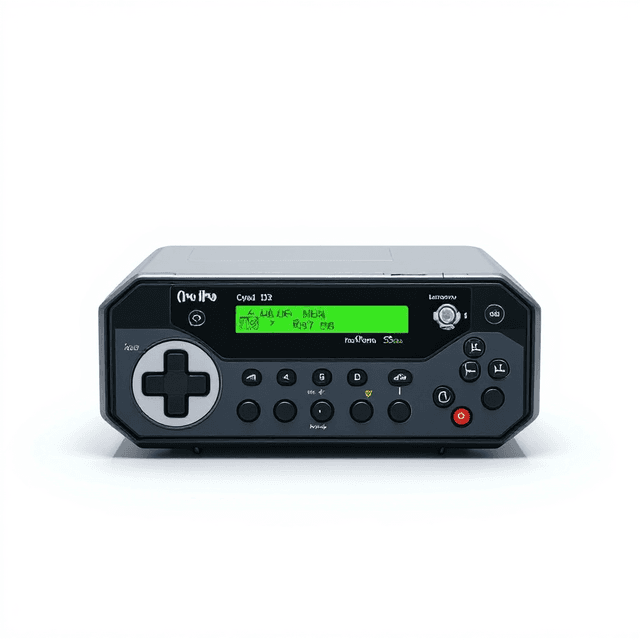
Online DO Probe
Luminescence-based dissolved oxygen probe providing continuous monitoring with 0-20.00 mg/L range, ±1% accuracy, and MODBUS/RS485 digital interface for industrial water quality applications.

Louise Corscadden, PhD
Director of Science · ConductScience
Ask Louise about Online DO Probe fit, setup, configuration, or quote prep.
Already working with us? Sign in to connect this with My Scientist.
Key Specifications
Full details →- Model fit
- Configured during quote
- SKU family
- CS-LH-IND010
- Shipping box
- 15.0 x 5.0 x 5.0 cm
- Ordering
- Online checkout and quote request available
- Category
- Industrial Sensors
- Build notes
- Confirm accessories, station layout, and support needs before purchase
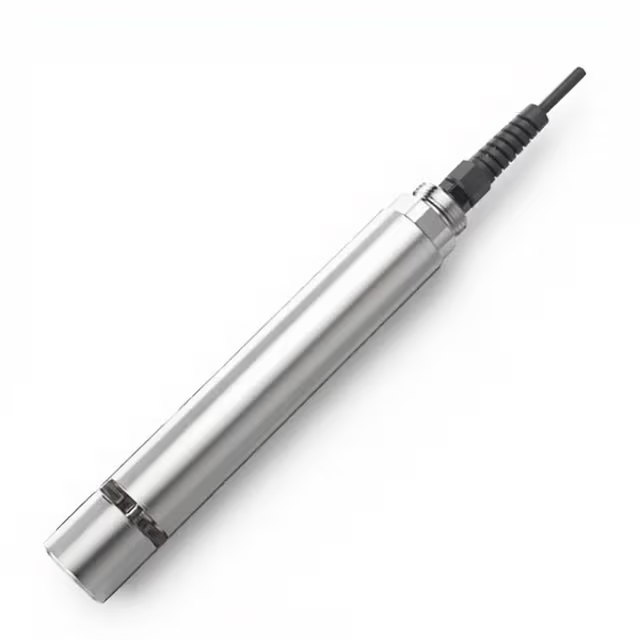
The Online DO Probe (CS-LH-IND010) is a luminescence-based dissolved oxygen sensor designed for continuous monitoring in industrial water systems. This probe utilizes optical sensing technology where blue light excites a luminescent coating on the sensor surface, which then emits red light. The decay time of this red luminescence correlates inversely with oxygen concentration, providing accurate dissolved oxygen measurements from 0-20.00 mg/L or 0-200% air saturation.
The sensor incorporates digital temperature compensation via an integrated DS18B20 temperature sensor and communicates through MODBUS/RS485 digital interface for seamless integration into industrial monitoring systems. With ±1% full scale accuracy and 0.01 mg/L resolution, this probe supports real-time water quality assessment in aquaculture, wastewater treatment, and industrial process monitoring applications.
How It Works
The Online DO Probe operates on luminescence quenching principles for dissolved oxygen measurement. The sensor surface is coated with a luminescent material that responds to excitation by blue light from an internal LED. When excited, this coating emits red fluorescence with a characteristic decay time that is inversely proportional to the concentration of dissolved oxygen in the sample.
Oxygen molecules act as quenchers, reducing both the intensity and lifetime of the luminescent emission. The sensor measures the phase shift or decay time of the red luminescence relative to the excitation pulse. Higher dissolved oxygen concentrations result in shorter decay times, while oxygen-depleted samples exhibit longer luminescence lifetimes. A reference red LED provides internal calibration to compensate for temperature and aging effects.
Temperature compensation is achieved through an integrated DS18B20 digital temperature sensor that automatically adjusts readings based on the temperature-dependent solubility of oxygen in water. The MODBUS/RS485 digital interface enables real-time data transmission to monitoring systems with standardized industrial communication protocols.
Features & Benefits
Measuring range
- Accuracy
0-20.00mg/L 0 to 200 % air saturation
- ±1% F.S
Automation Level
- semi-automated
Brand
- ConductScience
Research Domain
- Analytical Chemistry
- Environmental Monitoring
- Food Science
- Industrial Hygiene
- Microbiology
Shipping weight
- 0.26 lb
Shipping box
- L: 15.0 cm
- W: 5.0 cm
- H: 5.0 cm
| Feature | This Product | Typical Alternative | Advantage |
|---|---|---|---|
| Sensing Technology | Luminescence-based optical sensing with internal reference LED | Entry-level models often use electrochemical or polarographic sensors | Eliminates membrane fouling and electrolyte depletion issues common in electrochemical sensors. |
| Measurement Range | 0-20.00 mg/L or 0-200% air saturation | Basic sensors may offer narrower ranges or single unit options | Dual-scale capability supports both process control and environmental monitoring applications. |
| Temperature Compensation | DS18B20 digital temperature sensor with automatic compensation | Manual compensation or analog temperature sensors in lower-cost models | Digital compensation eliminates calculation errors and provides consistent accuracy across temperature range. |
| Communication Interface | MODBUS/RS485 digital protocol | Analog outputs or proprietary protocols in many alternatives | Standard industrial protocol enables direct integration into existing SCADA and monitoring systems. |
| Resolution | 0.01 mg/L resolution | Lower-cost sensors typically offer 0.1 mg/L resolution | Higher resolution enables detection of subtle changes critical for early warning systems and trend analysis. |
This probe combines luminescence-based optical sensing with digital temperature compensation and industrial communication protocols. The 0.01 mg/L resolution and ±1% accuracy specifications support both precise laboratory measurements and continuous process monitoring applications.
Practical Tips
Perform two-point calibration monthly using freshly prepared sodium sulfite solution for zero oxygen and air-saturated water at measured temperature.
Why: Regular calibration maintains measurement accuracy as the luminescent coating ages and environmental conditions change.
Clean the sensor head weekly with soft brush to remove biofilm and sediment buildup that can affect optical measurements.
Why: Fouling on the sensor surface reduces light transmission and can cause measurement errors or response time delays.
Install the probe in areas with adequate water flow (>0.3 m/s) and avoid stagnant zones or air bubble entrainment.
Why: Good flow conditions ensure representative sampling and prevent oxygen depletion in the boundary layer around the sensor.
Monitor both dissolved oxygen and temperature trends together to identify sensor drift versus actual environmental changes.
Why: Temperature and dissolved oxygen are inversely correlated, so simultaneous monitoring helps distinguish sensor issues from natural variations.
Check MODBUS communication settings and cable connections if data transmission becomes intermittent or unreliable.
Why: Digital interface problems often manifest as intermittent data loss rather than obvious sensor failures.
Ensure proper electrical grounding when deploying in conductive water environments to prevent ground loops and signal interference.
Why: Electrical interference can affect both sensor readings and communication reliability in industrial monitoring applications.
Record barometric pressure during air-saturation calibration as oxygen solubility varies with atmospheric pressure.
Why: Pressure variations affect the true dissolved oxygen concentration at air saturation, impacting calibration accuracy.
Setup Guide
What’s in the Box
- Online DO Probe with luminescent sensor head
- MODBUS/RS485 interface cable (typical)
- Protective sensor cap (typical)
- User manual and calibration instructions (typical)
- Mounting hardware (typical)
Warranty
ConductScience provides a standard 1-year manufacturer warranty covering defects in materials and workmanship. Technical support includes calibration guidance and troubleshooting assistance for optimal sensor performance.
Compliance
References
Background reading relevant to this product:
What calibration standards are required for accurate dissolved oxygen measurements?
Two-point calibration using oxygen-free water (sodium sulfite solution) for 0 mg/L point and air-saturated water at known temperature for the high point. Calibration should be performed monthly or when accuracy verification indicates drift.
How does temperature affect dissolved oxygen readings and compensation?
The DS18B20 digital temperature sensor automatically compensates for temperature-dependent oxygen solubility changes. Oxygen solubility decreases with increasing temperature according to Henry's Law, with the sensor applying standard temperature correction algorithms.
What flow rate is required around the sensor for accurate measurements?
Minimum flow velocity of 0.3 m/s around the sensor head is recommended to prevent oxygen depletion in the boundary layer and ensure representative sampling of bulk dissolved oxygen concentrations.
How long does the luminescent coating remain stable before replacement?
Luminescent coatings typically maintain stability for 2-3 years under normal operating conditions. The internal reference LED system monitors coating performance and indicates when sensor replacement is needed.
Can this probe measure dissolved oxygen in saline or contaminated water?
Yes, luminescence-based sensing is unaffected by salinity, turbidity, or most dissolved contaminants that interfere with electrochemical sensors. However, heavy fouling may require periodic cleaning of the sensor surface.
What MODBUS register addresses are used for data communication?
Consult product datasheet for specific MODBUS register mapping. Typically includes dissolved oxygen value, temperature reading, sensor status, and calibration parameters accessible through standard function codes.
How does this optical method compare to electrochemical dissolved oxygen sensors?
Optical sensors eliminate membrane and electrolyte maintenance, provide better stability in contaminated water, and are unaffected by hydrogen sulfide or other interferents that poison electrochemical sensors.
Have a question about this product?
Have a question? Just ask.
Send it over and we'll email you a personalized answer — no call, no scheduling.
Prefer to talk it through?
Accessories
Enhance your setup with compatible accessories
Frequently Bought Together