1 / 3
Rodent Trident Maze
SKU CS-958345
$3,580.00
IncludesStandard care
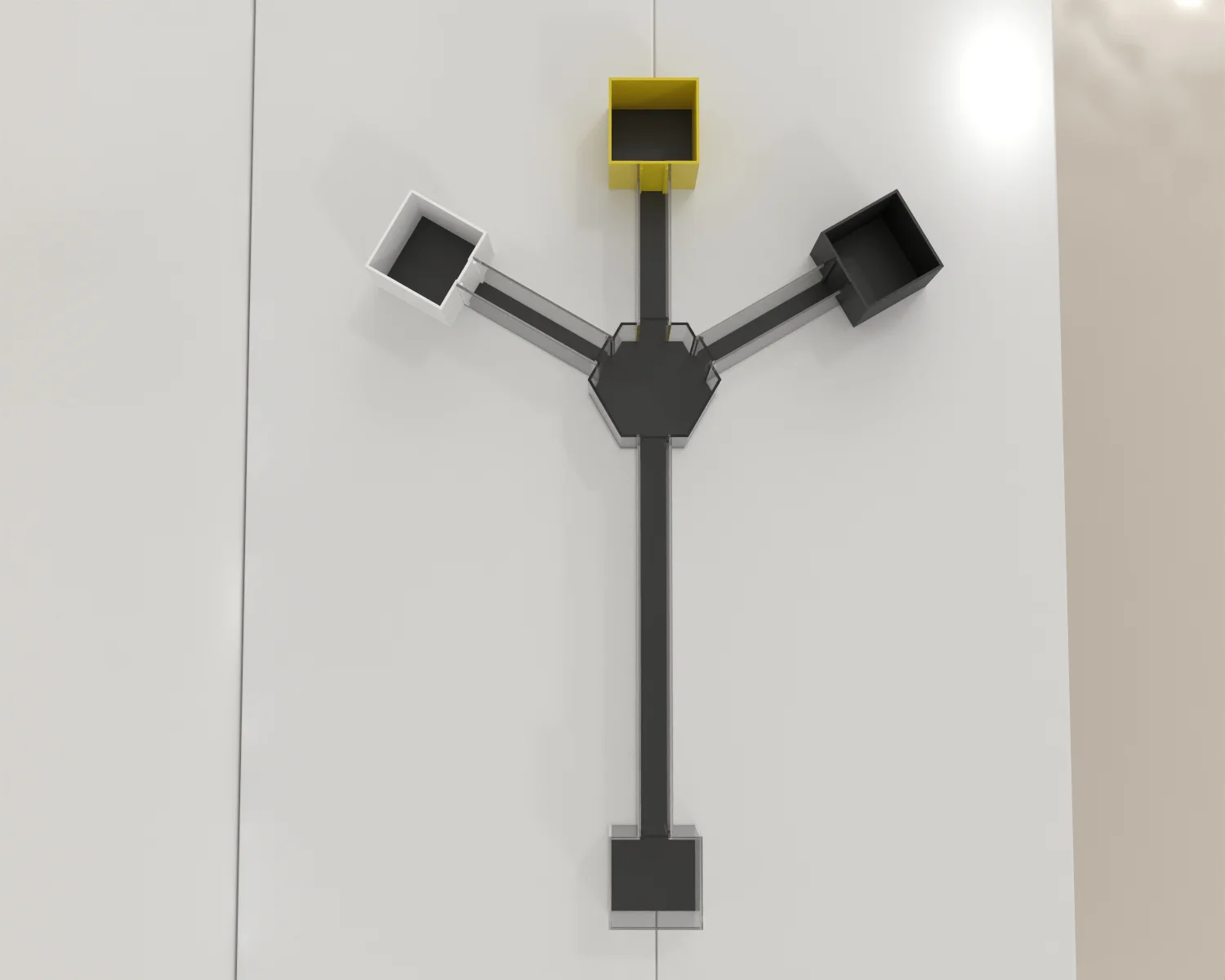
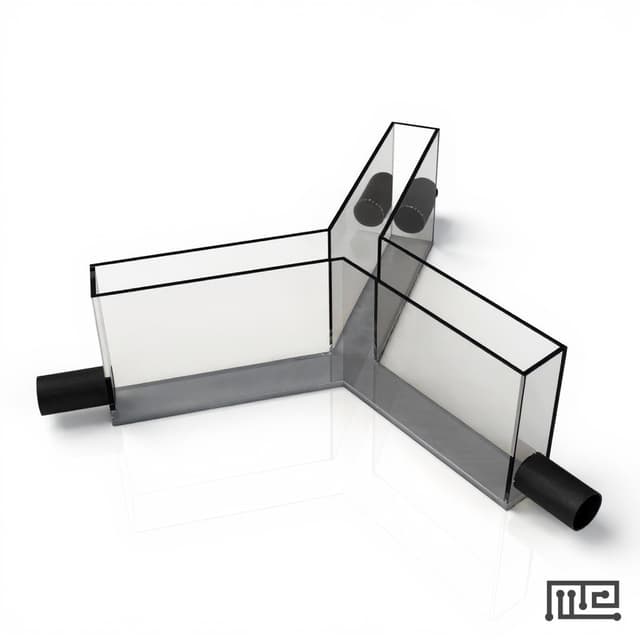
Y-shaped behavioral maze with hexagonal central platform and three goal arms for studying spatial memory and motivational interactions in mice and rats.
CE MarkedBAA available
Scientist guidance

Louise Corscadden, PhD
Director of Science · ConductScience
Ask Louise about Rodent Trident Maze fit, setup, configuration, or quote prep.
Already working with us? Sign in to connect this with My Scientist.
Key Specifications
Full details →- Model fit
- Mouse, Rat
- SKU family
- CS-958345
- Sizing
- Mouse: Start arm: 51 cm long, 3.8 cm wide, with edges 2.5 cm high; Hexagonal central platform: 10.7 cm across; Three goal arms: 29 cm long, 3.8 cm wide, with edges 2.5 cm high, separated by 45° angle; Three interchangeable goal boxes: 18 cm high, 9 cm wide and 8.1 cm deep; Rat: Start arm: 85 cm long, 6.4 cm wide, with edges 2.5 cm high; Hexagonal central platform: 17.8 cm across; Three goal arms: 49 cm long, 6.4 cm wide, with edges 2.5 cm high, separated by 45° angle; Three interchangeable goal boxes: 30 cm high, 15 cm wide and 13.5 cm deep
- Ordering
- Online checkout and quote request available
- Category
- Behavioral Mazes
- Build notes
- Acrylic
The Rodent Trident Maze is a specialized behavioral apparatus designed to examine interactions between motivational state and spatial memory in rodents. This Y-shaped maze variant features a hexagonal central platform with three goal arms separated by 45° angles, allowing researchers to study adaptive decision-making under controlled experimental conditions. The apparatus is constructed from acrylic with a matte finish to minimize visual artifacts during behavioral tracking.
Available in configurations for both mice and rats, the maze accommodates standard food or water deprivation paradigms commonly used in learning and memory research. The interchangeable goal boxes at each arm terminus enable flexible experimental designs, while the smooth acrylic construction facilitates cleaning with 70% ethanol between trials to minimize olfactory cues.
How It Works
The Trident Maze operates on spatial working memory principles, requiring animals to navigate from a central starting position to one of three goal locations based on learned associations or environmental cues. The 45° angular separation between goal arms creates sufficient spatial distinction while maintaining cognitive load appropriate for rodent spatial processing capabilities.
Animals typically undergo food or water deprivation protocols to establish motivation for reward-seeking behavior. During trials, subjects are placed on the hexagonal central platform and must choose among the three available arms to locate rewards. The maze design allows for various experimental paradigms including win-stay, win-shift, and spatial alternation tasks depending on reward contingencies programmed by the researcher.
The acrylic construction provides visual transparency for behavioral tracking while the matte finish reduces reflective glare that could interfere with video analysis. Goal boxes can be configured with different reward types or environmental cues to assess flexibility in spatial learning strategies.
Features & Benefits
Hexagonal central platform design
Provides equal access to all three goal arms while maintaining spatial orientation cues for consistent behavioral analysis
45° angular separation between arms
Creates optimal spatial discrimination requirements for rodent cognitive assessment without excessive difficulty
Interchangeable goal boxes
Enables flexible experimental designs with different reward types, environmental cues, or sensory modalities
Acrylic construction with matte finish
Eliminates visual reflections during video tracking while providing durable, easily cleaned surfaces
Species-specific sizing options
Optimized dimensions for mouse (3.8 cm arm width) and rat (6.4 cm arm width) ensure appropriate behavioral responses
Ethanol-compatible materials
Supports thorough cleaning protocols between trials to eliminate olfactory confounds in spatial memory tasks
Compatible with standard tracking software
Integrates with Noldus EthoVision and ANY-Maze systems for automated behavioral analysis and data collection
Sizes by model
| Measurement | Mouse | Rat |
|---|---|---|
| Size | Start arm: 51 cm long, 3.8 cm wide, with edges 2.5 cm high; Hexagonal central platform: 10.7 cm across; Three goal arms: 29 cm long, 3.8 cm wide, with edges 2.5 cm high, separated by 45° angle; Three interchangeable goal boxes: 18 cm high, 9 cm wide and 8.1 cm deep | Start arm: 85 cm long, 6.4 cm wide, with edges 2.5 cm high; Hexagonal central platform: 17.8 cm across; Three goal arms: 49 cm long, 6.4 cm wide, with edges 2.5 cm high, separated by 45° angle; Three interchangeable goal boxes: 30 cm high, 15 cm wide and 13.5 cm deep |
- Acrylic
- Easy clean with 70% Ethanol
- No Odors
- Matte Finish to remove shine
- Mouse: Start arm: 51 cm long, 3.8 cm wide, with edges 2.5 cm high
- Mouse: Hexagonal central platform: 10.7 cm across
- Mouse: Three goal arms: 29 cm long, 3.8 cm wide, with edges 2.5 cm high, separated by 45° angle
- Mouse: Three interchangeable goal boxes: 18 cm high, 9 cm wide and 8.1 cm deep
- Rat: Start arm: 85 cm long, 6.4 cm wide, with edges 2.5 cm high
- Rat: Hexagonal central platform: 17.8 cm across
- Rat: Three goal arms: 49 cm long, 6.4 cm wide, with edges 2.5 cm high, separated by 45° angle
- Rat: Three interchangeable goal boxes: 30 cm high, 15 cm wide and 13.5 cm deep
Arm Angle
- 45° angles
Number of Arms
- 3 interchangeable arms
Central Platform Shape
- hexagonal
Goal Boxes
- 3 goal boxes at arm ends
Behavioral Construct
- spatial working memory
- spatial navigation
- decision-making
- motivational state
- reward-seeking behavior
- spatial alternation
Automation Level
- manual
Material
- Acrylic
Color
- Black
- Blue
- Clear
- Grey
- White
Research Domain
- Aging Research
- Anxiety and Depression
- Behavioral Pharmacology
- Learning and Memory
- Neurodegeneration
- Neuroscience
Compatible Tracking Software
- ConductVision
Shipping weight
- 6.06 lb
Shipping box
- L: 65.0 cm
- W: 36.0 cm
- H: 27.0 cm
| Feature | This Product | Typical Alternative | Advantage |
|---|---|---|---|
| Number of Choice Arms | 3 interchangeable arms with 45° separation | Simple Y-mazes offer 2 arms while radial arm mazes provide 8 or more choices | Optimal cognitive load for detecting subtle memory deficits without overwhelming impaired subjects |
| Central Platform Design | Hexagonal platform providing equal access to all arms | Circular or triangular platforms with varying arm accessibility | Eliminates spatial bias while maintaining consistent orientation cues across trials |
| Goal Box Configuration | Interchangeable goal boxes at arm termini | Fixed reward locations or open-ended arms | Enables flexible experimental designs with different reward modalities and environmental cues |
| Material Construction | Acrylic with matte finish | Various materials including wood, metal, or glossy plastic | Provides durability and easy cleaning while preventing visual artifacts during automated tracking |
| Species Sizing Options | Optimized dimensions for mice (3.8 cm width) and rats (6.4 cm width) | Single size configurations or manually adjustable components | Ensures appropriate spatial scale for species-specific behavioral responses and movement patterns |
The Rodent Trident Maze provides intermediate complexity spatial memory testing with flexible reward configurations and optimized tracking compatibility. The hexagonal platform design and interchangeable goal boxes offer experimental versatility while maintaining standardized dimensions across laboratories.
| Model | Size | SKU | Listed price | Status | Shipping box |
|---|---|---|---|---|---|
| Mouse | Start arm: 51 cm long, 3.8 cm wide, with edges 2.5 cm high; Hexagonal central platform: 10.7 cm across; Three goal arms: 29 cm long, 3.8 cm wide, with edges 2.5 cm high, separated by 45° angle; Three interchangeable goal boxes: 18 cm high, 9 cm wide and 8.1 cm deep | CS-958345 | $2,485.00 | Available | 65.0 x 36.0 x 27.0 cm |
| Rat | Start arm: 85 cm long, 6.4 cm wide, with edges 2.5 cm high; Hexagonal central platform: 17.8 cm across; Three goal arms: 49 cm long, 6.4 cm wide, with edges 2.5 cm high, separated by 45° angle; Three interchangeable goal boxes: 30 cm high, 15 cm wide and 13.5 cm deep | CS-958345 | $3,580.00 | Available | 65.0 x 36.0 x 27.0 cm |
Learning & Memory
Assessing spatial working memory performance under different motivational states using food or water reward paradigms.
Behavioral Pharmacology
Evaluating drug effects on spatial navigation and decision-making processes in controlled choice environments.
Neuroscience
Recording hippocampal neural activity during spatial navigation tasks to correlate behavioral performance with neuronal firing patterns.
Aging Research
Comparing spatial memory capabilities between young and aged rodents to model age-related cognitive decline.
Neurodegeneration
Monitoring progressive spatial memory deficits in transgenic disease models through longitudinal behavioral assessments.
Anxiety and Depression
Examining how affective states influence spatial decision-making and exploration patterns in rodent models.
Practical Tips
Calibration
Verify maze arm dimensions and angles before beginning experiments using a standard ruler and protractor.
Why: Ensures consistency with published protocols and enables comparison across laboratories.
Maintenance
Inspect goal box connections weekly and tighten any loose fittings to prevent movement during trials.
Why: Maintains structural integrity and prevents artifacts in behavioral tracking data.
Best Practices
Allow 5-10 minutes between trials for complete ethanol evaporation to eliminate residual odors.
Why: Prevents olfactory cues from influencing spatial navigation decisions in subsequent subjects.
Data Quality
Position the maze center under uniform lighting to minimize shadows and tracking artifacts.
Why: Ensures consistent video analysis and reduces false positives in automated behavior scoring.
Best Practices
Habituate animals to the maze environment for 5-10 minutes before formal testing begins.
Why: Reduces exploration behavior and anxiety responses that could confound spatial memory measurements.
Troubleshooting
If animals show arm preference bias, rotate the maze 120° between sessions to redistribute spatial cues.
Why: Eliminates environmental influences that could mask true spatial memory performance.
Safety
Ensure arm edges are 2.5 cm high to prevent falls while allowing normal climbing behavior.
Why: Maintains animal safety while preserving natural movement patterns essential for valid behavioral assessment.
Maintenance
Store goal boxes separately from the main maze to prevent warping and maintain precise fit.
Why: Preserves component dimensions and ensures consistent experimental conditions over time.
Setup Guide
Unpack and Inspect
Remove maze components from packaging and inspect acrylic surfaces for damage. Verify all goal boxes and platform sections are included.
Assemble Maze Structure
Connect goal arms to hexagonal central platform ensuring secure fit. Attach goal boxes to arm termini and verify structural stability.
Position in Testing Environment
Place assembled maze on level surface with adequate lighting for video tracking. Ensure minimal environmental distractors in surrounding area.
Clean and Prepare
Wipe all surfaces with 70% ethanol and allow complete drying to eliminate odor cues. This step is critical before each experimental session.
Configure Goal Boxes
Set up reward contingencies in goal boxes according to experimental protocol. Ensure rewards are appropriate for species and motivation paradigm.
Test Video Tracking
Verify compatibility with tracking software (EthoVision, ANY-Maze) and adjust camera positioning for complete maze coverage.
Run Initial Trials
Conduct pilot sessions to establish baseline behavior and verify all systems are recording correctly before beginning formal experiments.
What’s in the Box
- Hexagonal central platform
- Three goal arms with containment edges
- Start arm with containment edges
- Three interchangeable goal boxes
- Assembly hardware
- User manual with protocol guidelines (typical)
Warranty
ConductScience provides a standard 1-year manufacturer warranty covering defects in materials and construction. Technical support is available for setup assistance and protocol optimization.
Compliance
ARRIVE GuidelinesSupports standardized reporting of behavioral experiments through consistent maze dimensions and protocols across laboratories
NIH Guidelines for Care and Use of Laboratory AnimalsCompatible with approved behavioral testing protocols when used under appropriate IACUC oversight
Protocol and background
Introduction
The Rodent Trident Maze was created to examine the interactions between motivational state and memory demand. Episodic memory is organized by spatial, temporal, and personal contexts, and can be modulated by motivational states arising from interoceptive cues. The hippocampus plays a key role in episodic memory by encoding organized associations among the multimodal elements that characterize an experience, and hippocampal neurons respond to organizing features of experience other than spatial context. Different motivational states can elicit distinct hippocampal codes in identical places, which can influence memory processes and help select among adaptive behaviors based on past experience. Using the Rodent Trident Maze, the motivational state examined was hunger and this on memory demand.
Apparatus and Equipment
The Rodent Trident Maze is composed of acrylic which is available in the colours black, grey, blue, white, and clear. A start arm leads to hexagonal central platform. From the platform, three interchangeable arms radiate outwards at 45° angles. At the end of each is located a goal box.
Rodent location can be tracked using a video tracking software package such as Noldus EthoVision, ANY-Maze, or BehaviorCloud.
Training Protocol
Pre-Training
Rats were food and water deprived on alternate days
Training:
Rats were trained to approach one goal box for food reward when hungry, a second goal box for water reward when thirsty, and to avoid a third goal box that was never rewarded. The goal boxes were moved randomly between the 3 possible goal locations after each trial. Rats were trained for 6 trials/day with 10-min inter-trial intervals until they reached and maintained an 80% correct choice criterion level of performance.
Data Analysis
The following can be assessed using the Rodent Trident Maze
- The task exploits the innate explorative nature of rodents and subjects them to tasks that require them to alternate between the goal arms to retrieve food rewards.
- Protocols include Forced Alternation task and Spontaneous Alternation tasks
- The Rodent Trident can be easily adapted to investigate the different aspects of spatial learning and for different subjects.
- The Rodent Trident Maze can be used to study of hippocampal functions, age-related cognitive decline and anxiety.
- The Rodent Trident Maze can also be utilized in understanding the effects of drugs and toxins and in understanding the underlying pathology of diseases on spatial learning and memory.
Summary
- The Rodent Trident Maze is used to explore goal-directed behaviours during different motivational states.
- This maze can also be used to study other aspects of spatial learning with a range of different subjects.
- Other protocols include forced Alternation tasks and Spontaneous Alternation tasks.
- It is composed of acrylic and is available in a wide variety of colors.
- A start arm leads to a hexagonal platform with 3 interchangeable arms radiating outwards, each interchangeable arm has a goal box at the end.
- Protocols include Forced Alternation task and Spontaneous Alternation tasks
- The Rodent Trident can be easily adapted to investigate the different aspects of spatial learning and for different subjects.
- The Rodent Trident Maze can be used to study hippocampal functions, age-related cognitive decline and anxiety and the understanding of the effects of drugs and toxins and in understanding the underlying pathology of diseases on spatial learning and memory.
References
Kennedy, P. J., & Shapiro, M. L. (2009). Motivational states activate distinct hippocampal representations to guide goal-directed behaviors. Proceedings of the National Academy of Sciences, 106(26), 10805–10810. doi:10.1073/pnas.0903259106
Are you an academic scientist and creator?
Learn how your lab can tech transfer this and similar devices from your lab to industry.
From the Maze Engineers documentation for this apparatus.
Q
What video tracking systems are compatible with this maze?
A
The maze is compatible with Noldus EthoVision and ANY-Maze behavioral tracking software. The matte acrylic finish eliminates reflections that could interfere with automated tracking algorithms.
Q
How do I clean the maze between experimental sessions?
A
Clean all surfaces with 70% ethanol and allow complete drying between trials. The acrylic construction is designed to be odor-free and resistant to ethanol cleaning without degradation.
Q
Can the goal boxes accommodate different types of rewards?
A
Yes, the interchangeable goal boxes can be configured with food pellets, water access ports, or environmental cues depending on your experimental design and motivation paradigm.
Q
What is the recommended deprivation protocol for motivation?
A
Consult your IACUC-approved protocol for specific deprivation schedules. Common approaches include maintaining animals at 85% free-feeding weight or providing restricted water access according to institutional guidelines.
Q
How many animals can be tested per session?
A
This depends on your experimental timeline and trial duration. The maze accommodates single animals per trial, so throughput is determined by individual trial time and inter-trial cleaning requirements.
Q
What spatial memory paradigms can be implemented?
A
The maze supports win-stay, win-shift, delayed alternation, and spatial discrimination tasks. The three-arm configuration is particularly suited for examining choice flexibility and working memory load.
Q
Are there age or strain considerations for rodent subjects?
A
Young adult animals (8-12 weeks for mice, 10-14 weeks for rats) typically show optimal performance. Strain differences in spatial ability should be considered when designing experiments and interpreting results.
Have a question about this product?
Track rodents with ConductVision
ConductVision is our video-tracking software. Record your sessions on video, and it scores standard rodent tests, such as those listed below.
Examples of tests it scores
To check whether ConductVision scores your protocol in this apparatus, ask in your quote request.
Ask a question
Have a question? Just ask.
Send it over and we'll email you a personalized answer — no call, no scheduling.
Personalized email reply
Usually within one business day
Helpful answers published here
Prefer to talk it through?
Accessories
Enhance your setup with compatible accessories

Total: $0.00
Frequently Bought Together
+
+
Total: $2,530.00

Rodent Trident Maze
$3,580.00
Added to quoteView Quote