ConductVision
$1,490 per year for one computerA 5-year license is $3,990 in total.
Results export as CSV files.

Motorized cylindrical chamber for controlled sleep deprivation studies in rodents, featuring programmable rotation schedules and integrated monitoring capabilities for sleep research applications.

Director of Science · ConductScience
Ask Louise about Sleep Deprivation Chamber fit, setup, configuration, or quote prep.
Already working with us? Sign in to connect this with My Scientist.
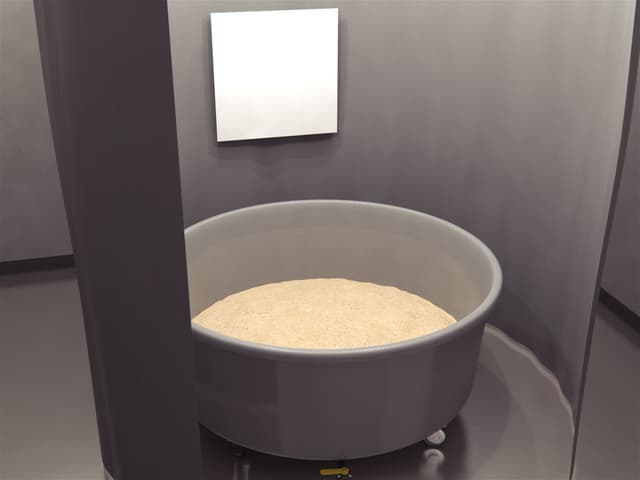
The Sleep Deprivation Chamber is a precision behavioral apparatus designed for controlled sleep restriction studies in rodents. This cylindrical chamber employs motorized rotation to prevent sleep onset while allowing natural movement, feeding, and drinking behaviors. The system features programmable rotation schedules with customizable timing parameters, enabling researchers to implement various sleep deprivation protocols including total sleep deprivation, REM sleep restriction, and fragmented sleep paradigms.
The apparatus accommodates up to 10 mice or 3 rats simultaneously within a 15″ x 12″ chamber constructed of plexiglass for optimal visibility. Integrated food and water systems maintain physiological needs during extended protocols, while lid slots allow for simultaneous EEG monitoring, optogenetic stimulation, or other experimental interventions. The system operates with minimal acoustic interference (<30dB) and provides precise temporal control with 1-second accuracy for reproducible experimental conditions.
The Sleep Deprivation Chamber operates on the principle of gentle locomotor activation to prevent sleep onset without inducing excessive stress. The motorized platform rotates at programmable speeds and patterns, requiring animals to maintain wakefulness and periodic movement to avoid contact with the chamber wall. This method preserves normal feeding, drinking, and grooming behaviors while effectively disrupting sleep architecture.
The rotation parameters can be customized for specific experimental requirements, with speeds ranging from 0-100 meters per minute and precision control to 0.01 m/min. The system supports multiple rotation modes including clockwise, counterclockwise, alternating, and random patterns to prevent habituation. Recommended operational speeds of 10-40 revolutions per minute provide effective sleep disruption while minimizing stress responses that could confound behavioral measurements.
Integrated food and water delivery systems ensure physiological maintenance during extended protocols up to 900 hours. The transparent plexiglass construction allows continuous visual monitoring while lid slots accommodate simultaneous physiological recordings such as EEG, EMG, or optogenetic interventions for comprehensive sleep-wake state analysis.
| Add-on | Size | Price |
|---|---|---|
| Sleep Deprivation Chamber | 15" x 12 "/ 38 cm x 30 cm (diameter x height) Dimensions can be customized upon request Fits up to 10 mice or 3 rats (average-sized) Lid slots allow for cables, cannulas for applications in optogenetics, EEG etc | $3,390 |
Add any of these to your quote request.
These IDs come from NCBI Taxonomy. Use them in data records and methods sections.
NCBITaxon:10090 NCBITaxon:10116 Ready for RO-Crate, the open standard for sharing data.
| Feature | This Product | Typical Alternative | Advantage |
|---|---|---|---|
| Chamber Capacity | Up to 10 mice or 3 rats simultaneously | Many systems accommodate fewer animals or require individual housing | Enables efficient group studies and reduces between-subject variability in sleep deprivation protocols. |
| Rotation Control Precision | 0.01 m/min precision with multiple directional modes | Basic systems often lack precise speed control or directional options | Allows fine-tuning of sleep pressure and prevents habituation through varied rotation patterns. |
| Session Duration Capacity | 900-hour maximum duration | Limited operation time in basic models | Supports chronic sleep restriction studies and long-term investigations of sleep debt effects. |
| Integrated Life Support | Built-in food and water delivery systems | Many systems require external feeding arrangements | Maintains physiological homeostasis while isolating sleep-specific experimental variables. |
| Monitoring Integration | Lid slots for EEG, optogenetics, and other interventions | Enables simultaneous physiological monitoring and experimental manipulations during sleep deprivation protocols. | |
| Noise Level | Sub-30dB operation | Higher noise levels in some motorized systems | Minimizes acoustic stress that could confound sleep and behavioral measurements in sensitive studies. |
This system offers precise programmable control, integrated life support, and low-noise operation for standardized sleep deprivation studies. The high-capacity design and comprehensive monitoring integration support both acute and chronic sleep research protocols with minimal experimental confounds.
| Model | SKU | Listed price | Status | Shipping box |
|---|---|---|---|---|
| Mouse | ME-5603 | $4,990.00 | Available | 50.8 × 50.8 × 68.58 cm |
| Rat | ME-5604 | $4,990.00 | Available | 50.8 × 50.8 × 68.58 cm |
Verify rotation speed accuracy weekly using the motor precision display and compare against external timing references.
Why: Maintains experimental reproducibility and ensures consistent sleep deprivation pressure across study periods.
Clean food and water delivery systems between animal groups and inspect for blockages that could compromise nutrition access.
Why: Prevents confounding nutritional factors and maintains animal welfare during extended sleep deprivation protocols.
Program alternating rotation directions and variable break periods to prevent behavioral adaptation to predictable patterns.
Why: Maintains consistent sleep disruption effectiveness throughout long-term protocols and reduces habituation effects.
Acclimate animals to the chamber environment for 1-2 hours before initiating sleep deprivation protocols.
Why: Reduces novelty stress and allows baseline behavior establishment for more accurate interpretation of sleep-specific effects.
Synchronize chamber timing with external recording equipment using the 1-second precision display as a reference.
Why: Ensures accurate temporal alignment of behavioral and physiological data for precise analysis of sleep-dependent processes.
Monitor rotation smoothness and inspect for mechanical resistance that could increase noise levels or motor wear.
Why: Prevents acoustic stress artifacts and maintains the sub-30dB noise specification critical for sensitive behavioral measurements.
Position emergency stop controls within easy reach and establish protocols for immediate protocol termination if animal distress is observed.
Why: Ensures rapid intervention capability to maintain animal welfare standards during extended sleep deprivation studies.
ConductScience provides a standard 1-year manufacturer warranty covering defects in materials and workmanship, with technical support for setup optimization and protocol development.
Specifications, models, materials, and operating envelopes
What rotation speeds are recommended for effective sleep deprivation without excessive stress?
The recommended range is 10-40 revolutions per minute. This provides sufficient locomotor activation to prevent sleep while allowing normal feeding, drinking, and grooming behaviors. Lower speeds may permit microsleep episodes, while higher speeds can induce stress responses that confound behavioral measurements.
Can the system simultaneously accommodate EEG monitoring for sleep stage verification?
Yes, the chamber lid includes slots specifically designed for EEG cables and cannulas. The low-noise motor operation (<30dB) minimizes electrical interference, and the rotation speed can be synchronized with recording systems for artifact identification during analysis.
How does the system maintain animal welfare during extended protocols?
Integrated food and water systems ensure continuous access to nutrition and hydration. The gentle rotation method preserves natural behaviors while preventing sleep, and the transparent construction allows constant visual monitoring. Break periods of 0-240 seconds can be programmed to provide rest intervals as needed.
What data outputs are available for protocol documentation?
The system logs rotation parameters, timing events, break periods, and total session duration with 1-second precision. Data can be exported via USB port for integration with laboratory information management systems or statistical analysis software.
How does this approach compare to other sleep deprivation methods?
The rotation method produces more consistent sleep restriction compared to manual gentle handling, while being less stressful than water platform techniques. The programmable parameters allow standardization across laboratories and reproducible manipulation of sleep debt accumulation.
What maintenance is required for continuous operation?
Regular cleaning of the plexiglass chamber, inspection of food and water delivery systems, and periodic calibration of rotation speeds. The motor unit is designed for continuous operation up to 900 hours with minimal maintenance requirements.
Can multiple chambers be synchronized for large-scale studies?
Individual chambers can be programmed with identical parameters using the saved configuration feature. While direct synchronization between units is not specified, the 1-second timing precision allows for coordinated protocol initiation across multiple chambers.
What video tracking systems are compatible for behavioral analysis?
The system is compatible with Noldus EthoVision, AnyMaze, and ConductVision software platforms. The transparent construction and controlled lighting conditions optimize video tracking accuracy during rotation protocols.
Research data
299 animal research papers in PubMed from 2021 to 2025 mention sleep deprivation and a behavioral test
These counts are for the animal model, whoever made the equipment, not for this product.
Hover over or tap a bar to show that year's counts above the chart. On a keyboard, tab to the chart and use the arrow keys to move between years.
A paper can mention more than one species, test or condition, so the percentages can add up to more than 100%.
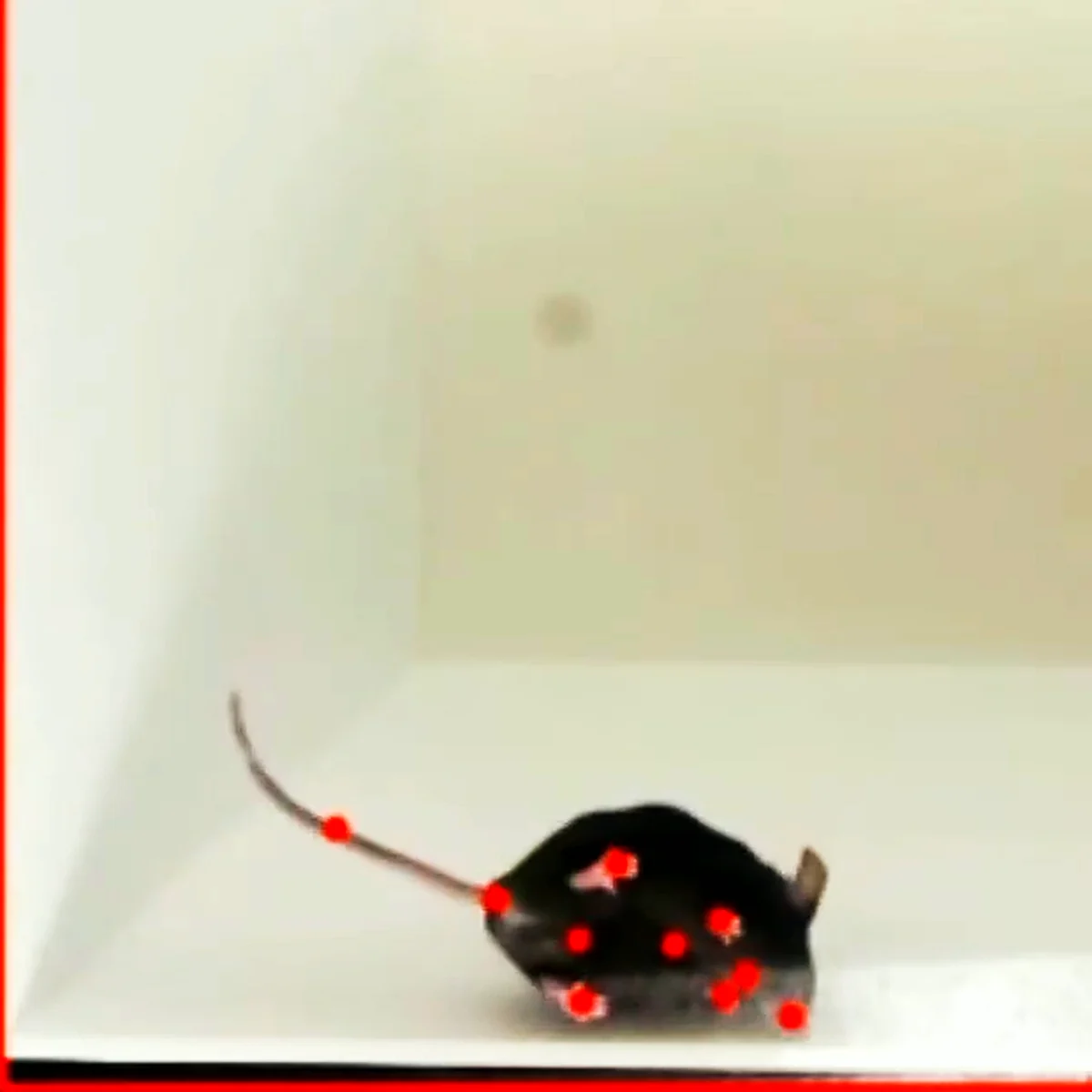
ConductVision is our video-tracking software. Record your sessions on video, and it scores standard rodent tests, such as those listed below.
To check whether ConductVision scores your protocol in this apparatus, ask in your quote request.
A 5-year license is $3,990 in total.
Results export as CSV files.
Send it over and we'll email you a personalized answer, with no call or scheduling.
Prefer to talk it through?
Enhance your setup with compatible accessories
§ 1
The Sleep Deprivation Chamber is study-enabling infrastructure that keeps rodents awake for a controlled interval so the consequences of sleep loss can be measured against rested controls. Experimental sleep deprivation is a standard tool for probing memory and physiology, and its value depends on how cleanly the deprivation dose is delivered and verified. 1
The core readouts are the deprivation dose and the homeostatic response to it: total sleep lost, EEG-confirmed wake time, and the sleep rebound that follows. Because different methods deliver very different amounts of actual sleep loss, quantifying and verifying the dose is what separates a controlled manipulation from an uncontrolled one. 1
Method stress, forced locomotion, food and water access, circadian timing, and individual-housing stress all change physiology independent of sleep loss itself. A defensible protocol verifies wakefulness with EEG where possible, reports body-weight change and corticosterone as welfare and stress controls, and fixes the time of day so the deprivation dose is not confounded by the circadian phase. 1
§ 2
Controlled deprivation with EEG verification, rebound recording, and stress and welfare quality control.
Critical methodological constraints
Core sleep-deprivation endpoints for deprivation dose, homeostatic response, and stress and welfare control.
Total Sleep Loss
Deprivation dose
EEG-Confirmed Wake
Verification
Sleep Rebound
Homeostatic response
Body-Weight Change
Welfare QC
Corticosterone
Stress confound
+ Additional metrics: REM versus NREM loss, food and water intake, locomotor activity, slow-wave activity, recovery duration, and per-animal EEG notes.
A compact fraction of the deprivation window during which wakefulness was actually enforced.
Estimate the N per group needed to detect a literature-anchored sleep-loss effect at the endpoint you plan to report. Override the defaults with your own pilot numbers.
§ 3
Representative output from a 6-hour gentle-handling deprivation with EEG verification and recovery recording.
§ 4
Limitations of the paradigm, methodological caveats, and current directions.
Variables that can shift Sleep Deprivation Chamber results apart from the effect under study.
Platform-over-water methods add immersion and forced-locomotion stress, while gentle handling minimizes it. The method itself, not only the sleep loss, shapes the outcome.
Methods that keep animals moving impose physical activity that affects metabolism and stress independent of wakefulness. Report the activity demand of the method.
Some deprivation setups restrict access to food and water. Pre-specify and document access so nutritional and hydration effects are not read as sleep-loss effects.
The same hours awake produce different effects depending on circadian phase. Fix the start time relative to the light-dark cycle across all groups.
Deprivation often requires single housing, which is itself a stressor. Match housing across deprived and control groups so isolation does not confound the comparison.
Sleep deprivation is interpretable only when the deprivation dose is verified and the method's stress is controlled. Confirm wakefulness with EEG, quantify total sleep lost rather than assuming the nominal window, and report corticosterone, body weight, and housing so downstream effects can be attributed to sleep loss rather than to the method. 1
Use gentle handling when the question is the effect of sleep loss per se and added stress would confound it. Reserve platform-over-water methods for cases that specifically require selective REM deprivation, and report the extra stress they impose.
EEG and EMG are the standard way to confirm wakefulness and quantify actual sleep loss. Without them the delivered deprivation dose is unknown, so EEG verification is strongly preferred whenever feasible.
Corticosterone rises with the deprivation method itself, so sampling it separates the stress component from the sleep-loss component. Without it, a stress effect can be misattributed to loss of sleep.
Quarterly editorial review of emerging Sleep Deprivation Chamber methodology. Q2 2026
Reporting EEG-confirmed wake and quantified total sleep loss rather than nominal deprivation windows makes the delivered dose comparable across studies.
Automated gentle-handling stimuli reduce experimenter burden and the added stress of platform methods while keeping the deprivation dose controlled.
Reporting corticosterone and body weight alongside sleep loss is increasingly expected so method stress is not conflated with the effects of sleep deprivation.
Wireless EEG and EMG telemetry lets verification and rebound recording continue without tethering, reducing handling artifacts during long deprivation intervals.
§ 5
5 selected methods and validation studies of the Sleep Deprivation Chamber, from any lab.