Temperature Control Electric Sand Bath
12L electric sand bath providing uniform heating up to 300°C with ±1°C temperature stability for laboratory thermal applications.
| Automation Level | manual |
| Power/Voltage | Standard: AC220V, 50Hz; Optional: 220V, 60Hz; 100V, 50/60Hz |
| Temp. Fluctuation | ±1℃ |
| Temp. Accuracy | 1℃ |
| Thermostatic function | No |
| Consumption | 2000W |

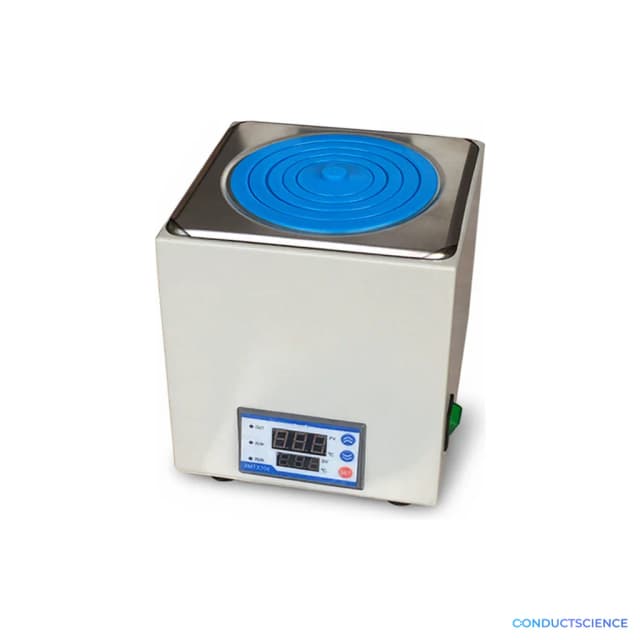
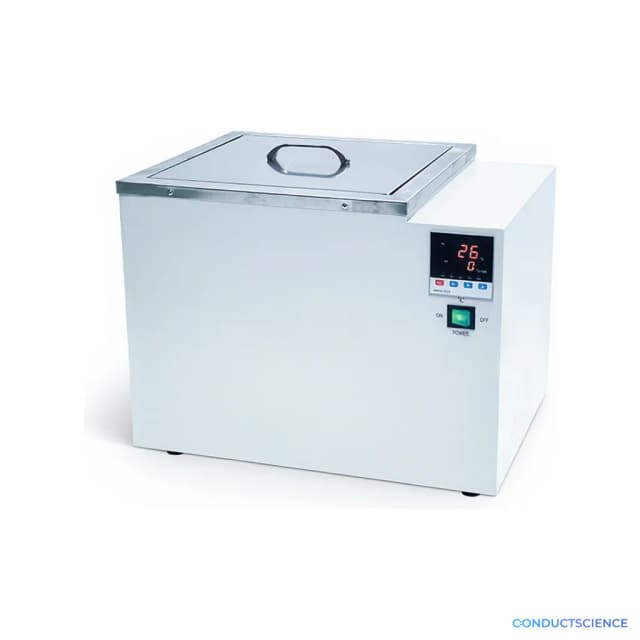
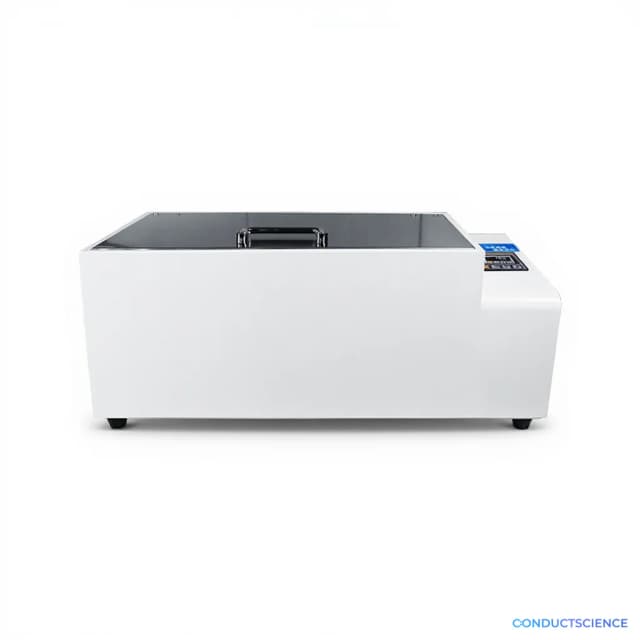
The Temperature Control Electric Sand Bath provides uniform heating for laboratory applications requiring precise temperature control up to 300°C. The 12L capacity unit utilizes sand as the heat transfer medium, offering superior thermal uniformity compared to air-based heating systems. The sand bath configuration enables direct contact heating of vessels while maintaining temperature stability within ±1°C.
The unit features a pointer voltmeter display for temperature monitoring and operates at 2000W power consumption. Internal dimensions of 400×300×100mm accommodate various vessel sizes and configurations. The absence of thermostatic function requires manual temperature monitoring and adjustment, making it suitable for applications where operator control is preferred.
How It Works
The electric sand bath operates through resistive heating elements that transfer thermal energy to a sand medium contained within the internal chamber. Sand provides excellent thermal mass and conductivity, creating uniform temperature distribution across the heating surface. The high thermal capacity of sand minimizes temperature fluctuations when vessels are added or removed.
Temperature control is achieved through manual adjustment of electrical power input, monitored via the analog voltmeter display. The operator adjusts heating intensity based on the voltage reading, which correlates with temperature output. The sand medium maintains thermal equilibrium through conduction, ensuring consistent heating contact with laboratory vessels placed on the surface.
Features & Benefits
Automation Level
- manual
Power/Voltage
- Standard: AC220V, 50Hz; Optional: 220V, 60Hz; 100V, 50/60Hz
Temp. Fluctuation
- ±1℃
Temp. Accuracy
- 1℃
Thermostatic function
- No
Consumption
- 2000W
External Size(L*W*H)mm
- 530*340*190
Temp. Range
- RT~300℃
Internal Size(L*W*H)mm
- 400*300*100
Package Size (L*W*H)mm
- 590*400*250
Net Weight(kg)
- 15.5
Gross Weight(kg)
- 17
Brand
- ConductScience
Research Domain
- Analytical Chemistry
- Clinical Diagnostics
- Environmental Monitoring
- Food Science
- Materials Science
- Pharmaceutical QC
Capacity
- 12L
Display Type
- Pointer voltmeter
Weight
- 34.17 kg
Dimensions
- L: 15.75 mm
- W: 11.81 mm
- H: 3.94 mm
Comparison Guide
| Feature | This Product | Typical Alternative | Advantage |
|---|---|---|---|
| Temperature Range | RT to 300°C | Many basic models limited to 100-200°C range | Enables high-temperature applications including thermal decomposition and advanced material processing |
| Temperature Stability | ±1°C fluctuation | Entry-level models often show ±2-3°C variation | Provides consistent thermal environment for reproducible experimental results |
| Heating Medium | Sand bath configuration | Air-heated dry baths common in lower-cost models | Superior thermal uniformity and contact heating compared to air-based systems |
| Power Output | 2000W consumption | Lower-power units often provide 1000-1500W | Faster heating and better temperature maintenance under varying load conditions |
| Internal Capacity | 12L volume (400×300×100mm) | Smaller units typically offer 4-8L capacity | Accommodates larger vessels or multiple samples for batch processing efficiency |
This sand bath combines high-temperature capability up to 300°C with stable ±1°C temperature control and substantial 12L capacity. The 2000W power output and sand medium configuration provide superior thermal performance for demanding laboratory applications.
Practical Tips
Create a temperature calibration curve during initial setup by recording voltmeter readings at known sand temperatures using an external thermometer.
Why: The voltmeter display requires correlation with actual temperature for accurate process control.
Replace sand medium if it becomes discolored, contaminated, or shows signs of thermal degradation.
Why: Clean sand maintains optimal heat transfer and prevents contamination of laboratory samples.
Allow 15-20 minutes for thermal equilibrium before beginning experiments and avoid frequent vessel removal during operation.
Why: Thermal stability ensures consistent experimental conditions and accurate temperature-dependent procedures.
Use appropriate heat-resistant gloves and tongs when handling vessels on the heated sand surface.
Why: High surface temperatures up to 300°C present burn hazards requiring proper protective equipment.
If temperature appears uneven, redistribute sand medium and check for proper vessel contact with the surface.
Why: Poor sand distribution or air gaps reduce heat transfer efficiency and cause temperature variations.
Monitor ambient room temperature and ventilation as these affect heating performance and equilibrium time.
Why: Environmental conditions influence thermal stability and energy consumption of the heating system.
Record actual sand temperatures using external thermometry rather than relying solely on voltmeter readings for critical applications.
Why: Independent temperature verification ensures accuracy for temperature-dependent experimental protocols.
Setup Guide
What’s in the Box
- Temperature Control Electric Sand Bath main unit
- Power cable
- User manual and operating instructions (typical)
- Sand medium (typical)
Compliance
Warranty & ConductCare
ConductScience provides a standard 1-year manufacturer warranty covering defects in materials and workmanship. Technical support is available for setup, calibration, and troubleshooting assistance.
How do I correlate the voltmeter reading with actual temperature?
Use an external thermometer to measure sand temperature at various voltmeter readings during initial setup. Create a calibration curve plotting voltage against temperature for future reference during operation.
What type of sand should be used in the bath?
Use clean, dry laboratory-grade sand with uniform particle size. Avoid beach sand or construction sand which may contain contaminants or irregular particles affecting heat distribution.
How long does it take to reach operating temperature?
Allow 15-20 minutes for thermal equilibrium at the desired temperature setting. Heating time varies with target temperature and ambient conditions.
Can the unit be used for overnight heating applications?
Manual temperature control requires periodic monitoring and adjustment. For extended operations, consider implementing external temperature monitoring or operator check intervals.
What is the maximum vessel weight the sand surface can support?
Consult product datasheet for specific weight limits. The sand medium distributes load across the heating surface, but avoid excessive concentrated weights.
How often should the sand medium be replaced?
Replace sand if it becomes contaminated, discolored, or shows signs of degradation. Regular cleaning and inspection maintain optimal heat transfer properties.
What maintenance is required for the heating elements?
Keep sand clean and dry to prevent corrosion of heating elements. Periodic inspection of electrical connections and cleaning of external surfaces maintains optimal performance.
Have a question about this product?