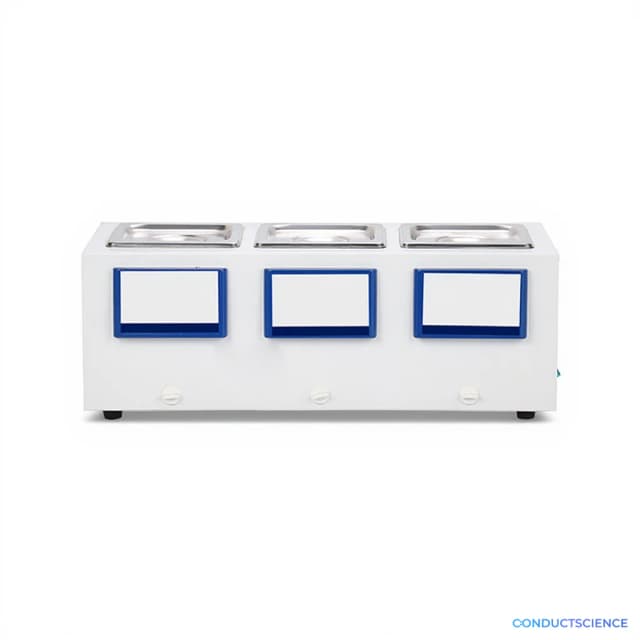
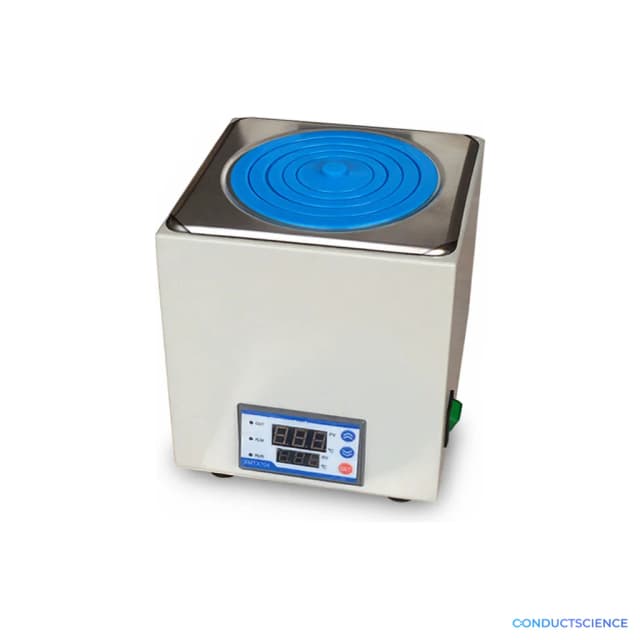
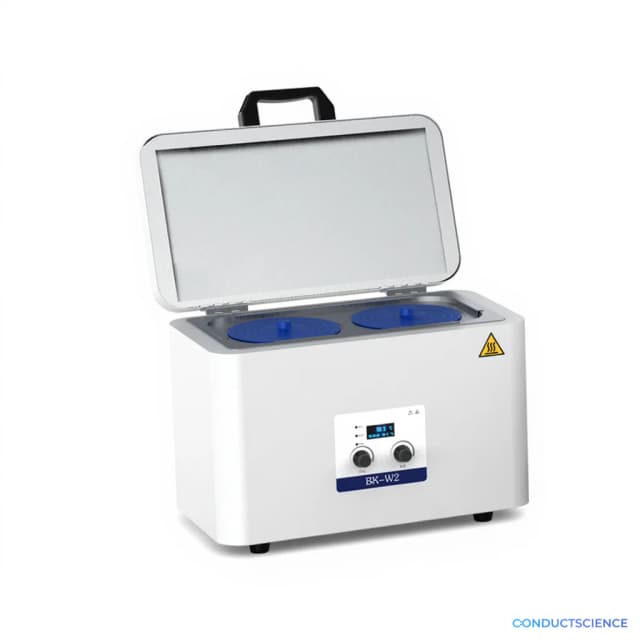
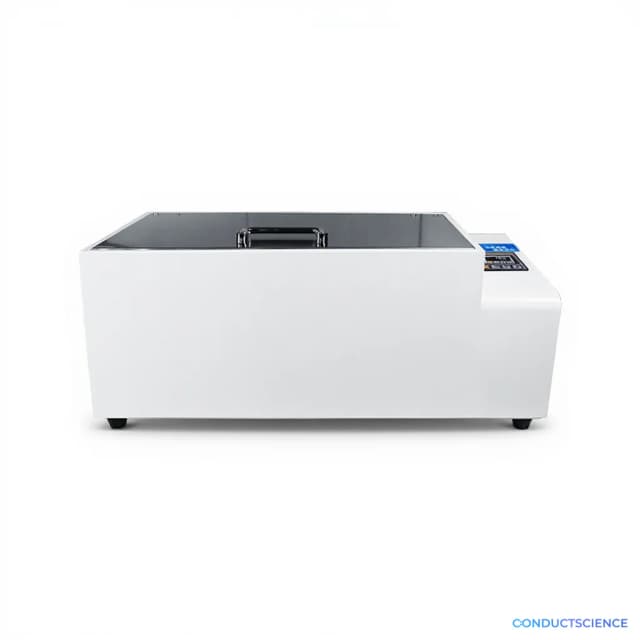
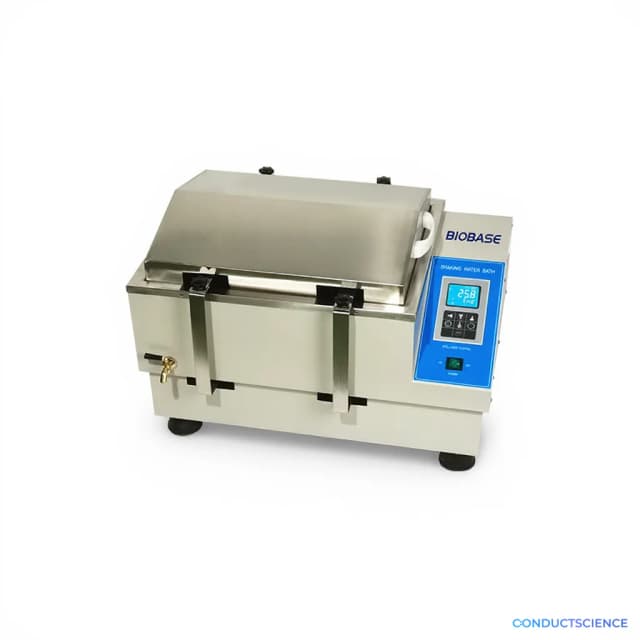
SY Series Laboratory Thermostatic Water Bath
SY Series laboratory thermostatic water bath available in seven models (3–23 L, 300–2000 W), all with RT–100 °C range, ±0.5 °C fluctuation, PID microprocessor control, LED display, and 0–999 min timer.

Louise Corscadden, PhD
Director of Science · ConductScience
Ask Louise about SY Series Laboratory Thermostatic Water Bath fit, setup, configuration, or quote prep.
Already working with us? Sign in to connect this with My Scientist.
Key Specifications
Full details →- Model fit
- Configured during quote
- SKU family
- BIO-0682
- Shipping box
- 42.0 x 43.6 x 38.0 cm
- Ordering
- Online checkout and quote request available
- Category
- Water Baths
- Build notes
- Confirm accessories, station layout, and support needs before purchase
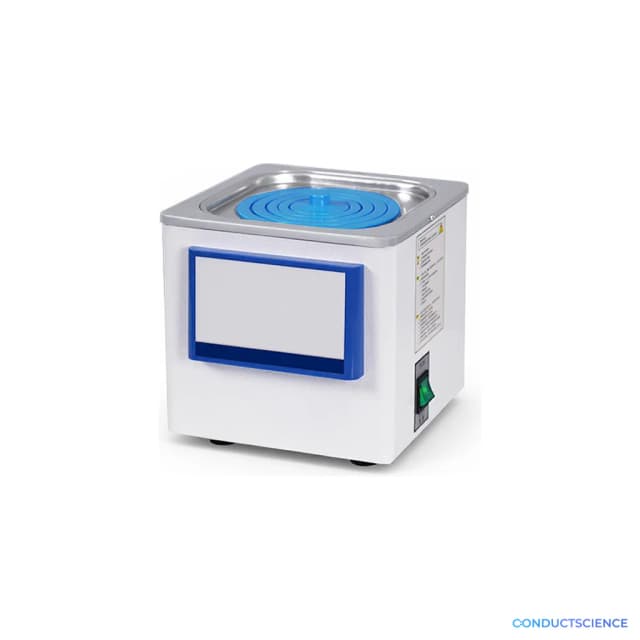
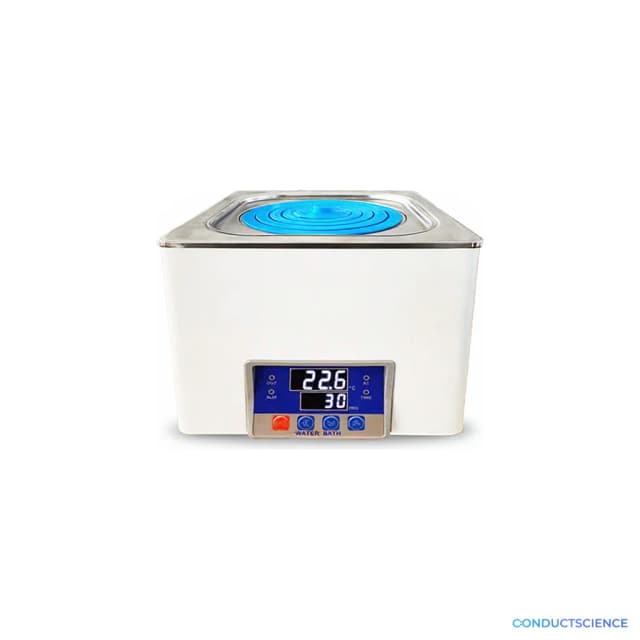
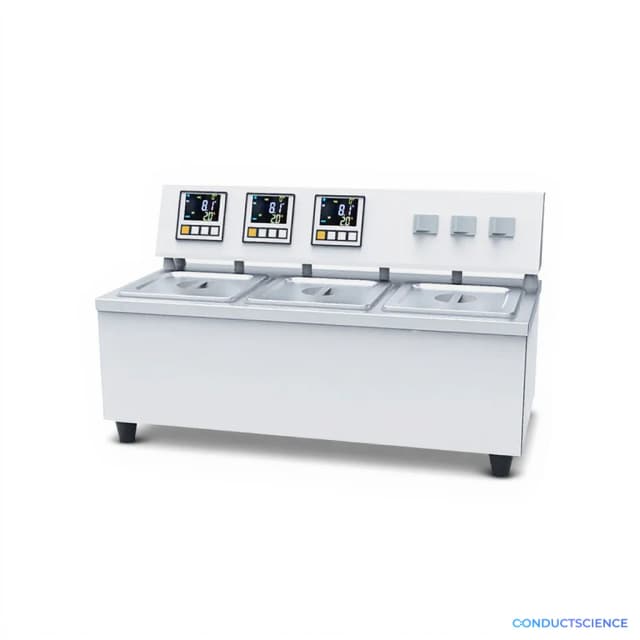
The SY Series Laboratory Thermostatic Water Bath provides precise temperature control for enzyme incubations, reagent preparation, sample warming, and general laboratory heating protocols. A stainless steel inner chamber and upper cover prevent steam leakage, while PID microprocessor control with LED display maintains temperature fluctuation within ±0.5 °C across the full RT–100 °C range. Seven models span 3 L to 23 L capacity, with single-row and double-row configurations and heating powers from 300 W to 2000 W.
Technical Specifications
| Model | Capacity | Power | Internal Size (mm) |
|---|---|---|---|
| SY-1L1H | 3 L | 300 W | 140×150×150 |
| SY-1L2H | 6 L | 500 W | 300×150×150 |
| SY-1L4H | 13 L | 1000 W | 600×180×120 |
| SY-1L6H | 20 L | 1500 W | 900×180×120 |
| SY-2L4H | 11 L | 1000 W | 320×300×150 |
| SY-2L6H | 18 L | 1500 W | 500×300×150 |
| SY-2L8H | 23 L | 2000 W | 620×320×120 |
| Common Parameters | Value |
|---|---|
| Temperature Range | RT–100 °C |
| Temperature Fluctuation | ±0.5 °C |
| Temperature Accuracy | ≤±1 °C |
| Timing Range | 0–999 min |
| Power Supply | AC 110/220 V ±10%, 50/60 Hz |
Key Features
- Seven models from 3 L to 23 L covering a wide range of throughput requirements
- PID microprocessor control with LED display and ±0.5 °C temperature fluctuation
- Stainless steel inner chamber and upper cover to prevent steam leakage
- Universal fixtures included on select models
- Dual-voltage compatible (110/220 V, 50/60 Hz)
How It Works
Thermostatic water baths operate through convective heat transfer, where electrical heating elements warm the water medium to create a stable thermal environment. The thermostatic control system continuously monitors water temperature via integrated sensors and adjusts heating power to maintain the setpoint within specified tolerances.
Uniform temperature distribution is achieved through thermal convection currents within the water bath chamber. The heated water rises while cooler water descends, creating circulation patterns that minimize temperature gradients across the working volume. This convective mixing ensures consistent thermal conditions for all samples positioned within the bath.
The heating elements are designed to provide rapid temperature ramp-up while maintaining stability during extended operation periods. Temperature control accuracy depends on the sensor placement, thermal mass of the water volume, and the responsiveness of the heating control circuit to temperature deviations.
Features & Benefits
Automation Level
- manual
SY-1L1H
- SY-1L2H
SY-1L4H
- SY-1L6H
SY-2L4H
- SY-2L6H
3L
- 6L
13L
- 20L
11L
- 18L
300W
- 500W
1000W
- 1500W
2
- 4
10
- 13
6.5
- 9
3
- 5
11
- 14.5
7.5
- 10
Brand
- ConductScience
Research Domain
- Analytical Chemistry
- Cell Biology
- Food Science
- Histopathology
- Immunology
- Materials Science
- Microbiology
- Pharmaceutical QC
Shipping weight
- 29.98 lb
Shipping box
- L: 42.0 cm
- W: 43.6 cm
- H: 38.0 cm
| Feature | This Product | Typical Alternative | Advantage |
|---|---|---|---|
| Capacity Range | 1L to 20L configurations available | Many models limited to smaller volumes under 10L | Accommodates both small-scale research and larger production-scale sample preparation requirements |
| Heating Power Options | 300W to 1500W heating capacity | Fixed heating power often undersized for larger volumes | Matched heating capacity ensures appropriate temperature ramp rates and stability for each bath size |
| Multi-Position Configurations | Single and multi-position models available | Many units offer only single-position operation | Increases sample throughput and laboratory efficiency for parallel processing workflows |
| Model Variety | Multiple model configurations within series | Limited model selection requiring compromise on specifications | Allows selection of optimal capacity and configuration for specific laboratory requirements |
The SY Series provides comprehensive capacity options from research-scale to production volumes with appropriately matched heating systems. The availability of multi-position configurations and diverse model selection supports varied laboratory throughput requirements.
Practical Tips
Verify temperature accuracy using a calibrated thermometer placed at the sample location rather than relying solely on the built-in display.
Why: Temperature variations can exist between the sensor location and sample position within the bath.
Change water regularly and use distilled water to prevent mineral buildup on heating elements and internal surfaces.
Why: Mineral deposits reduce heating efficiency and can cause temperature control instability.
Allow adequate equilibration time after temperature changes and avoid overcrowding the bath with sample containers.
Why: Thermal mass and restricted circulation can compromise temperature uniformity across all sample positions.
Ensure heating elements remain submerged at all times and monitor water levels during extended operation periods.
Why: Exposed heating elements can overheat and create safety hazards while reducing component lifespan.
Document actual bath temperature alongside sample treatment protocols for reproducibility and method validation.
Why: Temperature variations between experiments can significantly affect results in temperature-sensitive applications.
If temperature stability is poor, check for adequate water circulation and ensure the bath is not positioned near heat sources or drafts.
Why: External temperature influences and restricted circulation patterns can interfere with thermostatic control performance.
Setup Guide
What’s in the Box
- SY Series water bath unit
- Power cord (typical)
- User manual and operating instructions (typical)
- Temperature probe or sensor (typical)
Warranty
ConductScience provides a standard one-year manufacturer warranty covering defects in materials and workmanship, with technical support available for installation and operational guidance.
Compliance
What temperature range and accuracy can be achieved with the SY Series water baths?
Temperature range and accuracy specifications vary by model. Consult the product datasheet for specific performance parameters for your selected configuration.
How long does it take to reach target temperature from ambient conditions?
Heat-up time depends on bath volume, heating power, and target temperature. Larger volumes require proportionally longer equilibration times, typically 15-45 minutes for full thermal stability.
Can these water baths be used for applications requiring temperatures above 100°C?
Water baths are limited to temperatures below the boiling point of water at atmospheric pressure. For higher temperature applications, consider oil baths or other heating systems.
What type of temperature monitoring and calibration is recommended?
Independent temperature verification using calibrated thermometers is recommended. Regular calibration against traceable temperature standards ensures measurement accuracy for critical applications.
Are there specific container materials or sizes that work best with these baths?
Glass and plastic containers compatible with the operating temperature range work well. Ensure containers fit within the bath dimensions while allowing adequate water circulation around all surfaces.
How do I prevent contamination between different sample types?
Use sealed containers for samples and maintain clean water in the bath. Consider using separate water baths for incompatible sample types or applications with strict contamination controls.
Have a question about this product?
Have a question? Just ask.
Send it over and we'll email you a personalized answer — no call, no scheduling.
Prefer to talk it through?