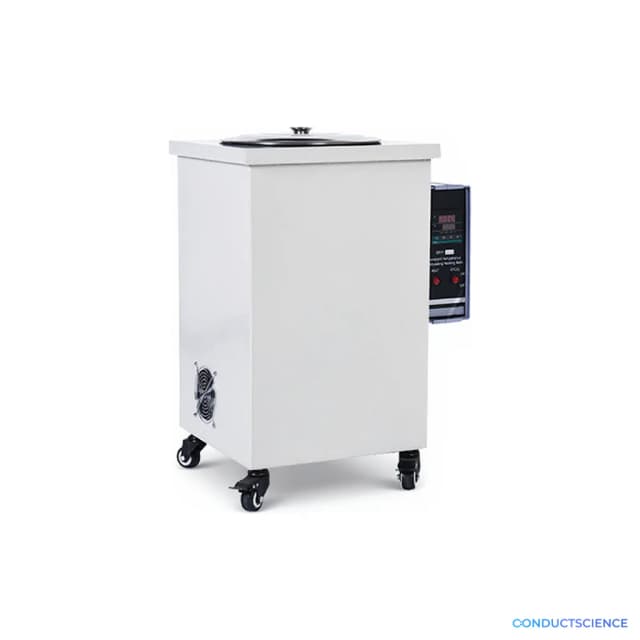
Thermostatic Water Tank 5L 10L 20L
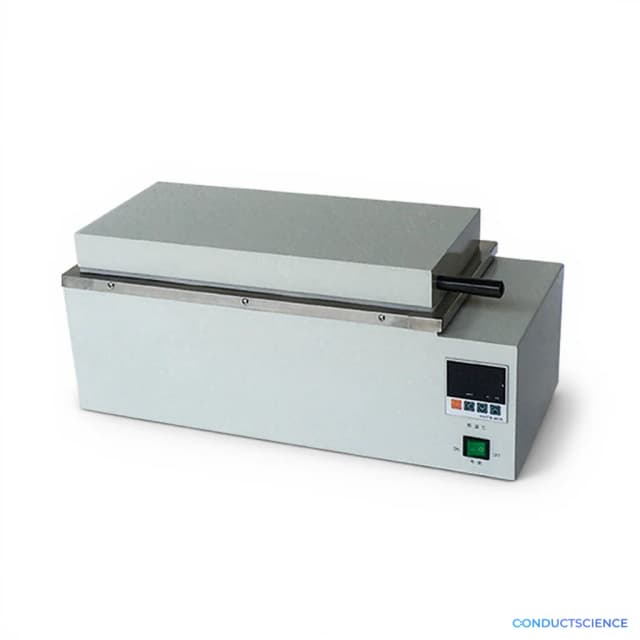
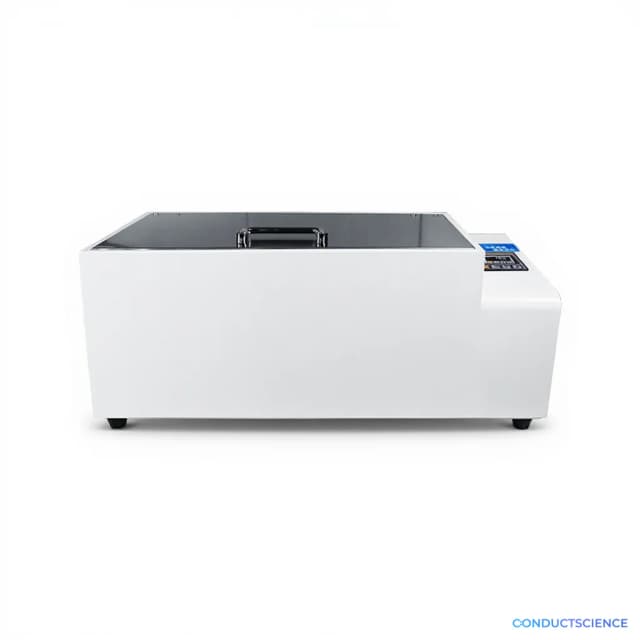
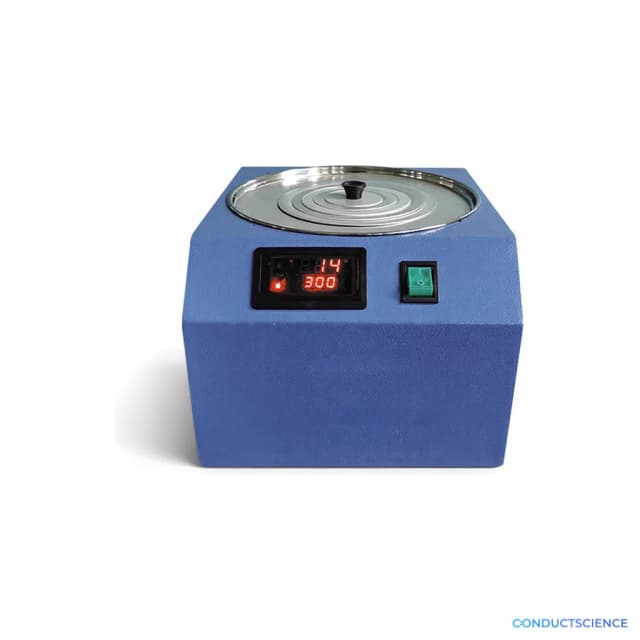
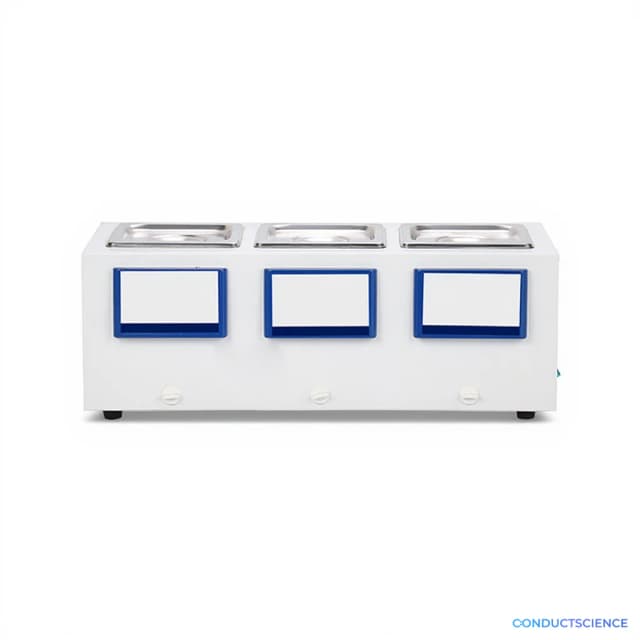
Thermostatic water tank (BK-W2/BK-W4/BK-W6) with OLED display, stainless steel chamber, and 5–20 L capacity.
RT–100 °C, ±0.5 °C fluctuation, intelligent low-water shutoff, and adjustable lid for various container sizes.

Louise Corscadden, PhD
Director of Science · ConductScience
Ask Louise about Thermostatic Water Tank 5L 10L 20L fit, setup, configuration, or quote prep.
Already working with us? Sign in to connect this with My Scientist.
Key Specifications
Full details →- Model fit
- Configured during quote
- SKU family
- BIO-0663
- Shipping box
- 15.0 x 30.0 x 15.0 cm
- Ordering
- Online checkout and quote request available
- Category
- Water Baths
- Build notes
- Confirm accessories, station layout, and support needs before purchase
The Thermostatic Water Tank (BK-W series) provides all-round heating with rapid temperature rise and stable constant-temperature operation for laboratory sample incubation and thermal treatment. An OLED display shows real-time temperature, time, and operating parameters. Intelligent monitoring automatically stops heating when the water level is low, protecting both samples and the instrument. The adaptable lid accommodates various container diameters.
Technical Specifications
| Parameter | BK-W2 | BK-W4 | BK-W6 |
|---|---|---|---|
| Capacity | 5 L | 10 L | 20 L |
| Temperature Range | RT–100 °C | ||
| Temperature Fluctuation | ±0.5 °C | ||
| Display | OLED | ||
| Chamber Material | Stainless steel | ||
| Power Consumption | 600 W | 1000 W | 1500 W |
| Power Supply | AC 220 V, 50/60 Hz (AC 110 V optional) | ||
| Internal Dimensions (W×D×H) | 300×150×150 mm | 325×300×145 mm | 505×300×150 mm |
| External Dimensions (W×D×H) | 385×280×275 mm | 385×420×275 mm | 570×420×275 mm |
| Net Weight | 6.15 kg | 7.85 kg | 11.3 kg |
Key Features
- OLED display with real-time temperature, time, and parameter readout
- Intelligent low-water monitoring — stops heating automatically when level is low
- All-round heating for rapid temperature rise and stable operation
- Adaptable lid for various container sizes
- Freely adjustable working time
How It Works
The thermostatic water tank operates through convective heat transfer, where an immersion heating element maintains water temperature while a circulation system ensures uniform thermal distribution throughout the chamber. The thermostat controller monitors temperature via integrated sensors and adjusts heating power to maintain the setpoint within ±0.5°C fluctuation.
The stainless steel chamber provides excellent thermal conductivity and chemical resistance, while the water medium transfers heat efficiently to immersed samples or containers. The OLED display provides real-time temperature readouts, and the timing function enables automated protocol control for reproducible experimental conditions.
Features & Benefits
Automation Level
- semi-automated
BK-W4
- BK-W6
10L
- 20L
Chamber
- Stainless steel
Temp. Range
- RT~100℃
Temp. Fluctuation
- ±0.5℃
Timing
- Yes
Consumption
- 600W
1000W
- 1500W
Internal Size(W*D*H)
- 300*150*150mm
325*300*145mm
- 505*300*150mm
External Size(W*D*H)
- 385*280*275mm
Brand
- ConductScience
Research Domain
- Analytical Chemistry
- Cell Biology
- Food Science
- Materials Science
- Microbiology
- Pharmaceutical QC
Capacity
- 5L
Display Type
- OLED
Power/Voltage
- AC220V, 50/60Hz(Standard); AC110V, 50/60Hz(Optional)
Shipping weight
- 6.15 lb
Shipping box
- L: 15.0 cm
- W: 30.0 cm
- H: 15.0 cm
| Feature | This Product | Typical Alternative | Advantage |
|---|---|---|---|
| Temperature Stability | ±0.5°C fluctuation | Entry-level models often provide ±1.0-2.0°C stability | Tighter temperature control ensures more reproducible results for temperature-sensitive protocols |
| Chamber Material | Stainless steel construction | Plastic chambers common in budget models | Provides superior chemical resistance and thermal conductivity for demanding applications |
| Display Technology | OLED display | LED or LCD displays more common | OLED technology offers enhanced visibility and contrast under various laboratory lighting conditions |
| Capacity Options | 5L, 10L, 20L configurations | Limited capacity ranges in single product lines | Multiple sizes accommodate different laboratory scales and sample volumes within single product family |
| Timing Integration | Built-in timing functionality | External timers required for many basic models | Integrated timing reduces bench clutter and provides coordinated temperature-time control |
This thermostatic water tank provides ±0.5°C temperature stability with stainless steel chamber construction and OLED display technology. The integrated timing function and multiple capacity options offer operational flexibility for diverse laboratory applications.
Practical Tips
Verify temperature accuracy using a calibrated thermometer positioned at typical sample locations within the water bath.
Why: Ensures accurate temperature readings across the working volume of the chamber.
Use distilled water and change regularly to prevent mineral deposits on heating elements and chamber walls.
Why: Mineral buildup reduces heat transfer efficiency and can affect temperature uniformity.
Allow 15-20 minutes for thermal equilibration after reaching setpoint temperature before placing samples.
Why: Ensures stable thermal conditions throughout the water volume for consistent experimental results.
Maintain water level between minimum and maximum indicators to prevent heating element exposure.
Why: Exposed heating elements can overheat and damage the unit while creating safety hazards.
Position containers to avoid direct contact with heating elements while ensuring adequate water circulation.
Why: Maintains temperature uniformity and prevents localized heating effects that could affect sample integrity.
Check for air bubbles on heating elements if temperature control becomes unstable.
Why: Air bubbles reduce heat transfer efficiency and can cause temperature fluctuations beyond specifications.
Use appropriate container lids or covers to minimize evaporation during extended incubations.
Why: Reduces water loss and maintains consistent thermal mass for stable temperature control.
Setup Guide
What’s in the Box
- Thermostatic water tank main unit
- Power cord
- User manual
- Warranty documentation (typical)
- Initial calibration certificate (typical)
Warranty
ConductScience provides standard one-year manufacturer warranty covering defects in materials and workmanship, with technical support for operational guidance and troubleshooting assistance.
Compliance
What is the temperature uniformity across the water bath chamber?
The system maintains ±0.5°C temperature fluctuation through convective circulation and stainless steel construction. Consult product datasheet for specific uniformity mapping data across chamber volume.
Can the unit accommodate different container sizes and shapes?
The stainless steel chamber dimensions vary by capacity model, from 300×150×150mm (5L) to 505×300×150mm (20L), accommodating standard laboratory glassware and containers within these dimensions.
What maintenance procedures are required for optimal performance?
Regular water changes with distilled water prevent mineral buildup. Chamber cleaning with appropriate laboratory detergents maintains chemical compatibility and thermal performance.
How does the timing function integrate with experimental protocols?
The integrated timing system provides automated duration control visible on the OLED display. Specific timing ranges and programming options should be verified in the product manual.
What power requirements are necessary for installation?
Standard configuration operates on AC220V, 50/60Hz with optional AC110V, 50/60Hz availability. Power consumption ranges from 600W to 1500W depending on capacity model.
Is external temperature calibration verification recommended?
Independent temperature verification using calibrated thermometers ensures accuracy for critical applications. Calibration frequency depends on usage requirements and laboratory quality standards.
How does this compare to dry block heaters for temperature control?
Water baths provide superior temperature uniformity and accommodation of various container shapes compared to dry blocks, while dry blocks offer contamination-free operation and faster temperature changes.
Have a question about this product?
Have a question? Just ask.
Send it over and we'll email you a personalized answer — no call, no scheduling.
Prefer to talk it through?
Frequently Bought Together