Anesthesia Induction Chamber
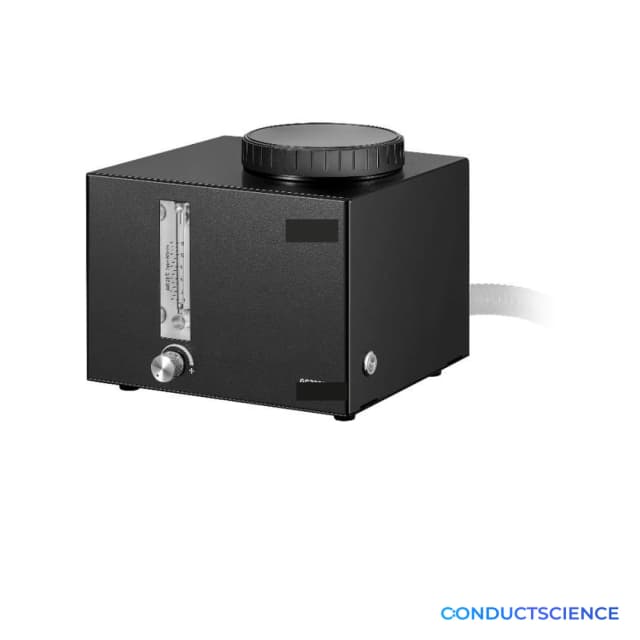
Transparent plexiglass anesthesia induction chamber family for small-animal inhalation anesthesia setup, with coaxial or separate inlet/outlet interface planning, 11 mm thick lid and seal-strip leak control, quick induction before surgery, chamber exhaust routing to charcoal canister support, and selectable mouse, mouse/rat, rabbit/cat, or large-animal chamber sizes.

Louise Corscadden, PhD
Director of Science · ConductScience
Ask Louise about Anesthesia Induction Chamber fit, setup, configuration, or quote prep.
Already working with us? Sign in to connect this with My Scientist.
Key Specifications
Full details →- Model fit
- 5 selectable configurations
- SKU family
- RWD-AICM-V100/RWD-AICR-V101/RWD-AICRC-V102/RWD-AICLS-V105
- Shipping box
- 34.0 x 39.0 x 33.0 cm
- Ordering
- Online checkout and quote request available
- Category
- Anesthesia & Ventilation
- Build notes
- Transparent plexiglass with animal-viewing chamber walls
Overview
The Anesthesia Induction Chamber is a transparent plexiglass chamber family for small-animal inhalation anesthesia induction. It gives the lab a sealed, observable space for initial induction before surgery, stereotaxic positioning, imaging preparation, mask maintenance, or other bench workflows where animals should be anesthetized before transfer to the working station.
The source-supported chamber family separates two practical interface designs. Coaxial I/O configurations use a concentric inlet/outlet connector path to reduce table-space use. Separate I/O configurations place the air inlet and exhaust interfaces separately for stations that need a clearer gas-in and gas-out route with compatible anesthesia machines. Both designs route anesthetic gas into the chamber and exhaust gas toward corrugated tubing and charcoal-canister support.
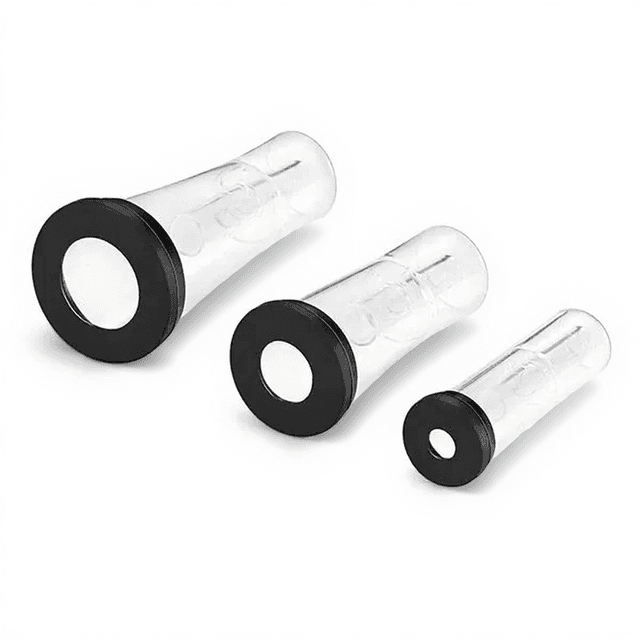
Size selection is the core purchasing decision. The family covers mouse 150 x 100 x 100 mm, mouse/rat 240 x 120 x 150 mm, rabbit/cat 380 x 280 x 250 mm, and a large-animal 500 x 300 x 300 mm coaxial option. The chamber should be selected around animal size, induction workflow, gas source, scavenging path, absorber replacement plan, and the masks or surgical station used after induction.
Scientific Use
Induction chambers are commonly used in rodent and small-animal inhalation anesthesia workflows when researchers need quick induction before moving the animal to a nose cone, stereotaxic mask, surgical field, imaging station, warming pad, or ventilator-assisted setup. Transparent chamber walls help the operator monitor the animal during the induction phase while the inlet/outlet path keeps gas delivery and exhaust planning connected to the anesthesia station.
Buying Fit
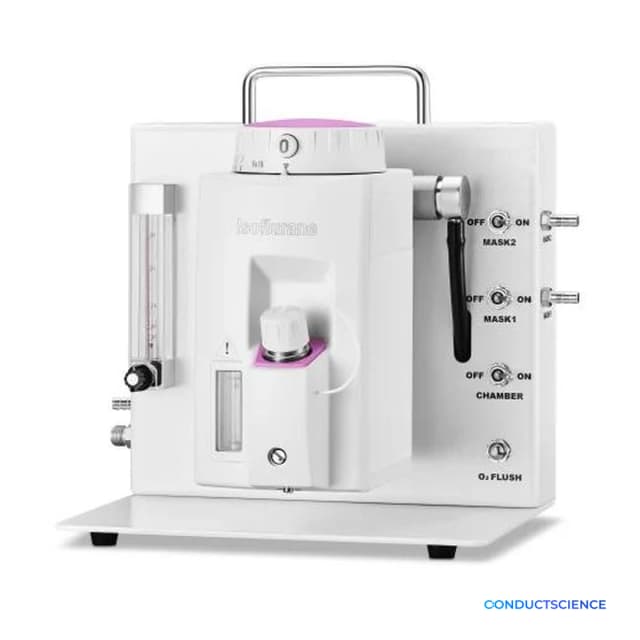
Choose this page when the lab is selecting the chamber that sits between the anesthesia machine and the downstream mask or procedure station. Pair the selected chamber with a tabletop anesthesia machine, vaporizer, air pump or oxygen generator, activated-carbon canister or absorber set, tubing, cone or stereotaxic masks, warming, and monitoring products for a complete small-animal anesthesia workflow.
How It Works
Gas anesthesia induction operates through pulmonary uptake of volatile anesthetic agents that cross the blood-brain barrier to depress central nervous system activity. Inhalant agents such as isoflurane activate GABA and glycine receptors while inhibiting NMDA receptors, producing unconsciousness, analgesia, and muscle relaxation. The chamber creates a controlled atmosphere where anesthetic vapor concentration can be precisely managed through the inlet flow system.
The plexiglass chamber confines the animal within the anesthetic atmosphere while allowing visual monitoring of respiratory patterns and response to stimulation. Gas circulation through the 1.2m bellows system ensures uniform anesthetic distribution throughout the chamber volume. The integrated filtration system captures waste gases, preventing environmental contamination and operator exposure.
Red transparent construction in low-stress models exploits rodent photoreceptor physiology, as these species lack red-sensitive cone cells, reducing visual stress during induction while maintaining researcher observation capability. This approach minimizes stress-induced physiological changes that could confound experimental results.
Features & Benefits
Chamber material
- Transparent plexiglass with animal-viewing chamber walls
Induction workflow
- Initial inhalation anesthesia before surgery, imaging, stereotaxic setup, or mask maintenance
Lid and seal
- 11 mm thick lid and seal-strip closure design
Exhaust path
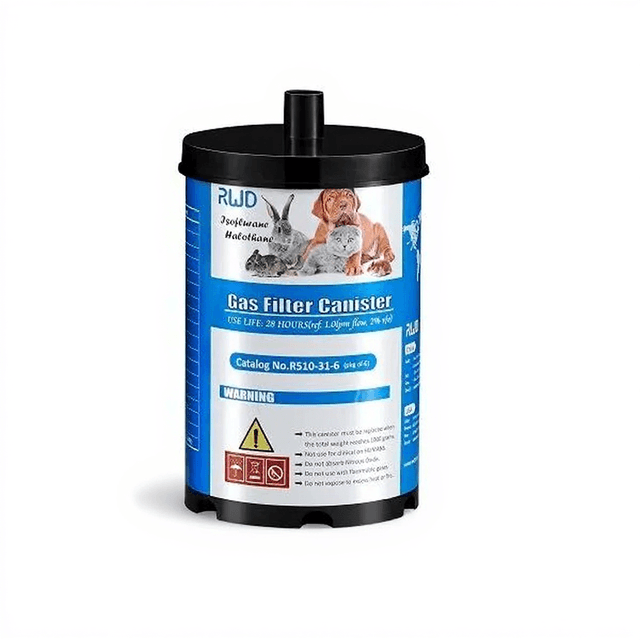
- Chamber exhaust routed through corrugated tubing toward charcoal canister or absorber support
Plan with
- Anesthesia machine, vaporizer, gas source, flowmeter, tubing, absorber/canister, masks, warming, and monitoring
Shipping weight
- 8.27 lb
Shipping box
- L: 34.0 cm
- W: 39.0 cm
- H: 33.0 cm
Standard Series vs. Low Stress Series
| Standard (V100–V102) | Low Stress (V105–V106) | |
|---|---|---|
| Enclosure color | Clear transparent | Red transparent |
| Species covered | Mouse, Rat, Rabbit / Cat | Mice; Mice and Rats |
| Stress reduction | Standard | Reduced — rodents lack red-wavelength photoreceptors |
| Circadian-sensitive studies | Not recommended | Suitable |
| Gas evacuation pipeline | Included | Included (pre-connected) |
Model Dimensions
| Model | Series | Species | Dimensions (L × W × H) |
|---|---|---|---|
| RWD-AICM-V100 | Standard | Mouse | 15 × 10 × 10 cm |
| RWD-AICR-V101 | Standard | Rat | 24 × 12 × 18 cm |
| RWD-AICRC-V102 | Standard | Rabbit / Cat | 40 × 18.5 × 25 cm |
| RWD-AICLS-V105 | Low Stress | Mice and Rats | 29 × 15 × 17 cm |
| RWD-AICLS-V106 | Low Stress | Mice | 16 × 10 × 11 cm |
Choosing the Right Model
- V100 — Mouse only, standard lighting
- V101 — Rat, standard lighting
- V102 — Rabbit or cat
- V105 — Mixed mouse/rat colony; stress-sensitive or circadian protocols
- V106 — Mouse only; stress-sensitive or circadian protocols; smaller footprint than V105
| Model | SKU | Listed price | Status | Shipping box |
|---|---|---|---|---|
| Mouse+Rat Low-Stress | RWD-AICLS-V105 | $390.00 | Available | 29 x 15 x 19 cm |
| Mouse Low-Stress (Small) | RWD-AICLS-V106 | $380.00 | Available | 16 x 10 x 11 cm |
| Rabbit/Cat | RWD-AICRC-V102 | $250.00 | Available | 40 x 18.5 x 25 cm |
| Rat | RWD-AICR-V101 | $220.00 | Available | 24 x 12 x 18 cm |
| Mouse | RWD-AICM-V100 | $190.00 | Available | 15 x 10 x 10 cm |
Practical Tips
Choose the chamber size around the largest animal expected in the induction workflow rather than only the current protocol.
Why: Mouse, mouse/rat, rabbit/cat, and large-animal sizes change chamber volume, animal handling, and transfer workflow.
Use coaxial I/O for compact connector planning and separate I/O when the station benefits from distinct gas inlet and exhaust ports.
Why: The inlet/outlet layout affects tubing routing, bench footprint, and how the chamber connects to scavenging or absorber hardware.
Plan tubing, absorber canister, anesthesia machine, vaporizer, gas source, masks, warming, and monitoring with the chamber order.
Why: The chamber works best when induction, exhaust handling, animal transfer, and mask maintenance are planned as one anesthesia station.
Setup Guide
What’s in the Box
- Selected transparent plexiglass induction chamber configuration
- Coaxial I/O chamber sizes: mouse 150 x 100 x 100 mm, mouse/rat 240 x 120 x 150 mm, rabbit/cat 380 x 280 x 250 mm, and large-animal 500 x 300 x 300 mm
- Separate I/O chamber sizes: mouse 150 x 100 x 100 mm, mouse/rat 240 x 120 x 150 mm, and rabbit/cat 380 x 280 x 250 mm
- 11 mm thick lid and seal-strip chamber closure design
- Inlet and outlet connector planning for anesthesia gas routing and exhaust removal
- Tubing, charcoal canister, absorber replacement, masks, machine, and gas-source accessories configured around the selected station
Warranty
Support, replacement, and fulfillment terms are confirmed with the final quote and institutional purchasing requirements.
Compliance
References
Background reading relevant to this product:
Which chamber sizes can I select?
The selectable family covers mouse 150 x 100 x 100 mm, mouse/rat 240 x 120 x 150 mm, rabbit/cat 380 x 280 x 250 mm, and a large-animal 500 x 300 x 300 mm coaxial option.
What is the difference between coaxial and separate I/O?
Coaxial I/O uses a concentric inlet/outlet connector path to reduce bench footprint. Separate I/O uses distinct inlet and exhaust interfaces for stations that need a clearer gas-in and gas-out route.
What does the chamber connect to?
Plan the chamber with the anesthesia machine, vaporizer, flowmeter, gas source, corrugated tubing, activated-carbon canister or absorber path, and the mask used after induction.
Why does the lid and seal design matter?
The listed chamber design uses an 11 mm thick lid and seal-strip closure, helping the chamber maintain a controlled induction environment while the animal is being observed.
How should this fit into a complete anesthesia station?
Use the chamber for induction, then move the animal to cone-mask, stereotaxic-mask, surgical, imaging, warming, or monitoring support selected around the lab workflow.
Have a question about this product?
Have a question? Just ask.
Send it over and we'll email you a personalized answer — no call, no scheduling.
Prefer to talk it through?
Accessories
Enhance your setup with compatible accessories
Frequently Bought Together
Upgrade Options