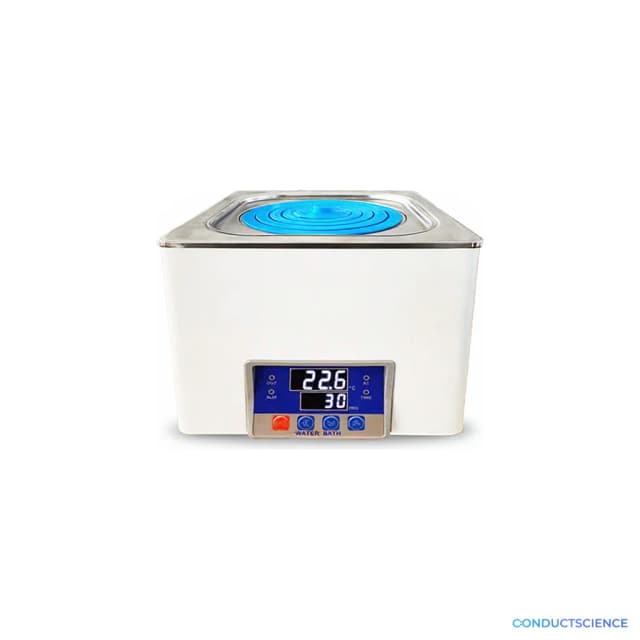
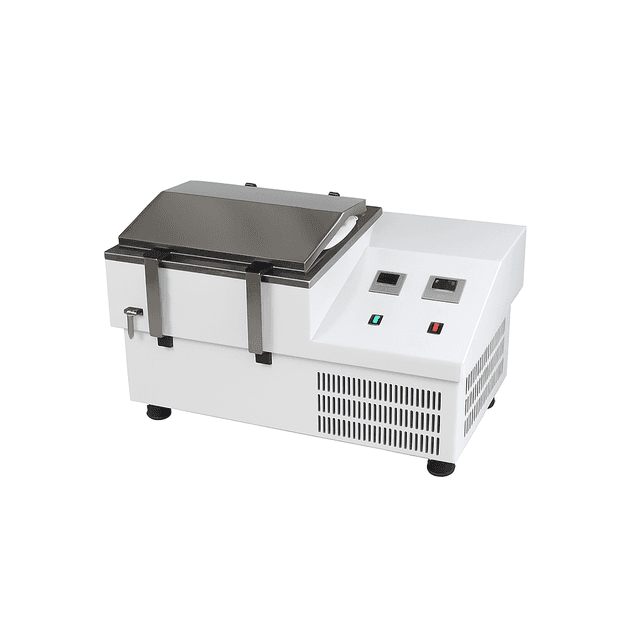
Thermostatic Oil Bath 23.5L 37L
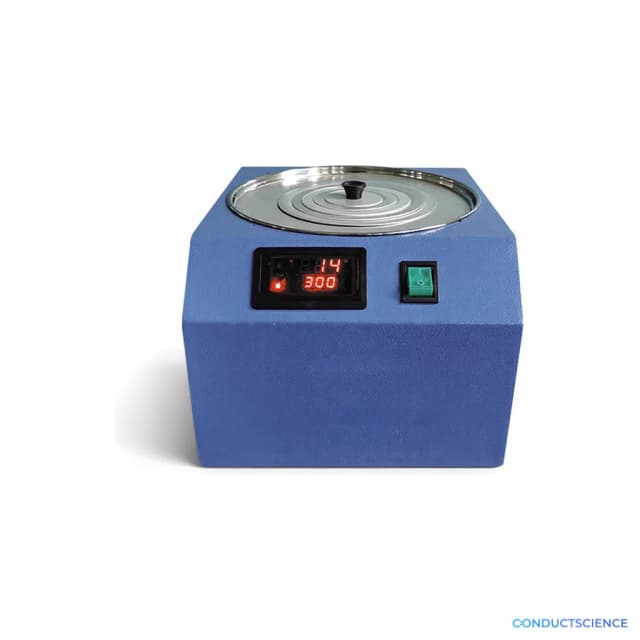
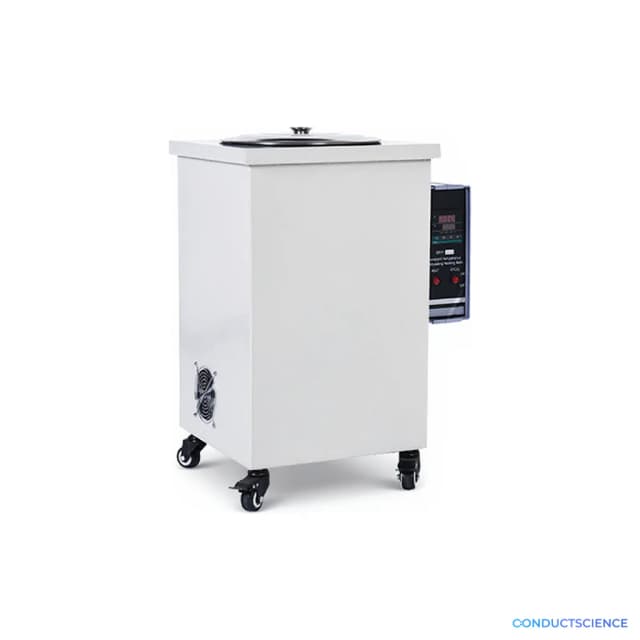
Thermostatic oil bath in two capacities: OB-1 (23.5 L, no circulation) and OB-2 (37 L, with 6 L/min circulation pump).
Both models offer RT–300 °C range, ≤1 °C fluctuation, LED display, and 2000 W heating with automatic overheating protection.

Louise Corscadden, PhD
Director of Science · ConductScience
Ask Louise about Thermostatic Oil Bath 23.5L 37L fit, setup, configuration, or quote prep.
Already working with us? Sign in to connect this with My Scientist.
Key Specifications
Full details →- Model fit
- Configured during quote
- SKU family
- BIO-0676
- Shipping box
- 30.0 x 28.0 x 28.0 cm
- Ordering
- Online checkout and quote request available
- Category
- Water Baths
- Build notes
- Confirm accessories, station layout, and support needs before purchase
The Thermostatic Oil Bath (OB-1 / OB-2) provides precise, uniform temperature control for chemical reactions, sample digestion, and material synthesis requiring stable heating to 300 °C. The imported stainless steel inner liner resists corrosion and thermal cycling. An LED display and automatic overheating protection ensure safe, reliable operation. The OB-2 model adds an advanced circulation pump system for enhanced temperature uniformity across the 37 L working volume.
Technical Specifications
| Parameter | OB-1 | OB-2 |
|---|---|---|
| Capacity | 23.5 L | 37 L |
| Temperature Range | RT–300 °C | RT–300 °C |
| Temperature Fluctuation | ≤1 °C | ≤1 °C |
| Temperature Precision | ≤1 °C | ≤1 °C |
| Display | LED | LED |
| Circulatory System | None | Present |
| Pump Flow Rate | — | 6 L/min |
| Power Consumption | 2000 W | 2000 W |
| Power Supply | 110/220 V ±10%, 50/60 Hz | |
| Internal Dimensions (L×W×H) | 280×280×300 mm | 300×300×280 mm |
| Package Dimensions (L×W×H) | 520×420×400 mm | 710×460×570 mm |
| Gross Weight | 15 kg | 33 kg |
Key Features
- OB-1: 23.5 L standard oil bath for bench-scale heating applications
- OB-2: 37 L oil bath with integrated 6 L/min circulation pump for superior temperature uniformity
- Imported stainless steel inner liner
- LED display with automatic overheating protection
- Steel body with baking varnish finish
- Dual-voltage compatible (110/220 V)
How It Works
Thermostatic oil baths operate through controlled resistance heating of a thermal transfer medium, typically mineral oil or specialized heat transfer fluids. The heating element generates thermal energy that is distributed throughout the oil volume, creating a uniform temperature environment. Temperature sensors monitor the oil temperature and provide feedback to the control system, which modulates heating power to maintain the setpoint within the specified precision range.
The oil medium provides superior temperature uniformity compared to air-based heating systems due to its higher thermal conductivity and heat capacity. This allows for stable temperature conditions around immersed containers and samples. The LED display interface shows real-time temperature readings and allows setpoint adjustment across the full operating range from room temperature to 300°C.
Features & Benefits
Automation Level
- manual
Temperature Fluctuation
- ≤1℃
Temperature Precision
- ≤1℃
Consumption
- 2000W
Circulatory System
- None
Circuation Pump Flow Rate
- None
Internal Size(L*W*H)
- 280*280*300mm
Package Size(L*W*H)
- 520*420*400mm
Brand
- ConductScience
Research Domain
- Analytical Chemistry
- Environmental Monitoring
- Food Science
- Materials Science
- Pharmaceutical QC
Capacity
- 23.5L
Temperature Range
- RT~300℃
Display Type
- LED display
Power/Voltage
- 110V/220V±10%, 50/60Hz
Weight
- 15KG
Shipping weight
- 15.0 lb
Shipping box
- L: 30.0 cm
- W: 28.0 cm
- H: 28.0 cm
| Feature | This Product | Typical Alternative | Advantage |
|---|---|---|---|
| Chamber Capacity | 23.5L internal volume | Entry-level units often provide 10-15L capacity | Larger volume allows batch processing of multiple samples or accommodation of larger containers |
| Temperature Range | RT to 300°C operating range | Basic models typically limited to 200-250°C maximum | Extended temperature capability supports high-temperature syntheses and specialized analytical procedures |
| Temperature Control | ±1°C precision and fluctuation | Standard units often specify ±2-3°C control | Tighter temperature control ensures reproducible results in temperature-sensitive applications |
| Heating Power | 2000W heating element | Lower-capacity models often use 1000-1500W heating | Higher wattage provides faster heat-up times and maintains temperature with larger thermal loads |
| Power Compatibility | 110V/220V universal supply | Many units require specific voltage selection | Eliminates need for voltage conversion or region-specific models in international laboratories |
This oil bath combines substantial 23.5L capacity with extended 300°C temperature range and precise ±1°C control. The 2000W heating system and universal power supply make it well-suited for diverse laboratory heating applications requiring stable thermal conditions.
Practical Tips
Verify temperature accuracy using NIST-traceable reference thermometer at multiple points across your operating range.
Why: Ensures measurement traceability and identifies any temperature offset for correction in protocols.
Change oil regularly when it becomes discolored or viscous, especially after repeated high-temperature use.
Why: Degraded oil reduces heat transfer efficiency and can produce fumes or contaminants.
Allow 15-20 minutes for temperature equilibration before introducing samples, particularly for precise applications.
Why: Ensures uniform temperature distribution throughout the oil volume and eliminates thermal gradients.
Use appropriate heat-resistant gloves and tools when handling containers at temperatures above 60°C.
Why: Prevents thermal burns and allows safe manipulation of hot laboratory glassware and samples.
If temperature overshoots target, check for proper oil level and ensure heating element is fully immersed.
Why: Exposed heating elements can create hot spots and poor temperature control leading to overshooting.
Record actual oil temperature alongside display readings during critical temperature-dependent procedures.
Why: Provides documentation of actual thermal conditions and identifies any calibration drift over time.
Setup Guide
What’s in the Box
- Thermostatic oil bath unit
- Power cord
- User manual and operating instructions
- Temperature calibration certificate (typical)
- Drain valve key (typical)
Warranty
ConductScience provides a standard one-year manufacturer warranty covering defects in materials and workmanship, with technical support for operational guidance and troubleshooting assistance.
Compliance
What type of heat transfer fluid should be used with this oil bath?
Use mineral oil or specialized heat transfer fluids rated for temperatures up to 300°C. Avoid water-based solutions which have lower boiling points and may cause safety hazards at high temperatures.
How long does it take to reach target temperature from room temperature?
Heat-up time depends on target temperature and thermal load, but the 2000W heating capacity typically achieves 100°C in 15-20 minutes and higher temperatures proportionally longer.
Can this unit be used for continuous operation at maximum temperature?
Yes, the system is designed for continuous operation at 300°C, though regular monitoring of oil levels and condition is recommended for extended high-temperature use.
What is the temperature uniformity across the chamber volume?
Consult product datasheet for specific uniformity specifications, though oil-based systems typically provide better temperature distribution than air-based heating.
How often should temperature calibration be verified?
Verify calibration annually or per laboratory quality procedures using NIST-traceable reference thermometers at key operating temperatures.
What safety precautions are needed for high-temperature operation?
Ensure adequate ventilation, use appropriate PPE when handling hot containers, and maintain proper oil levels to prevent overheating of heating elements.
Have a question about this product?
Have a question? Just ask.
Send it over and we'll email you a personalized answer — no call, no scheduling.
Prefer to talk it through?
Accessories
Enhance your setup with compatible accessories
Frequently Bought Together