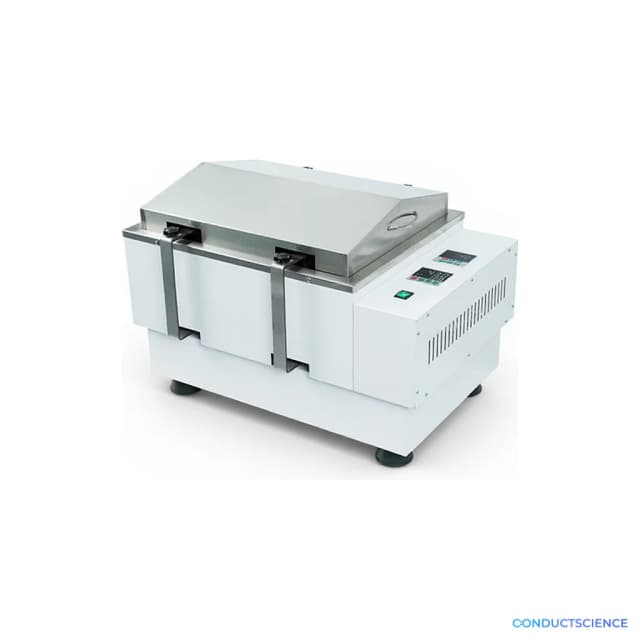
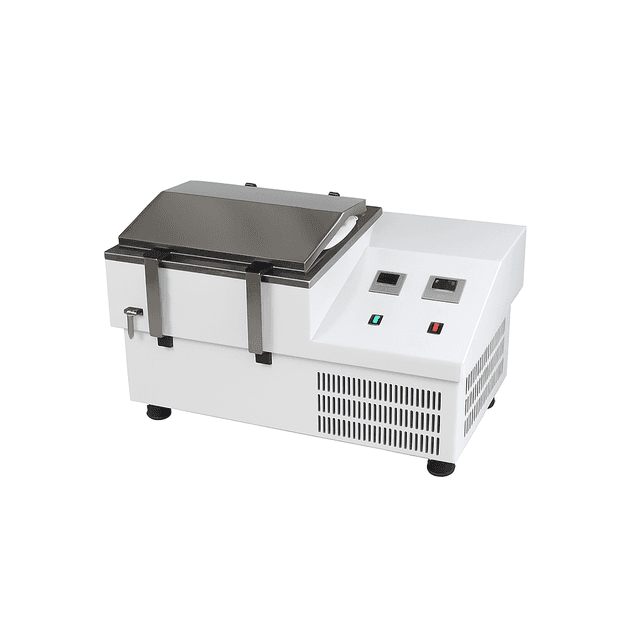
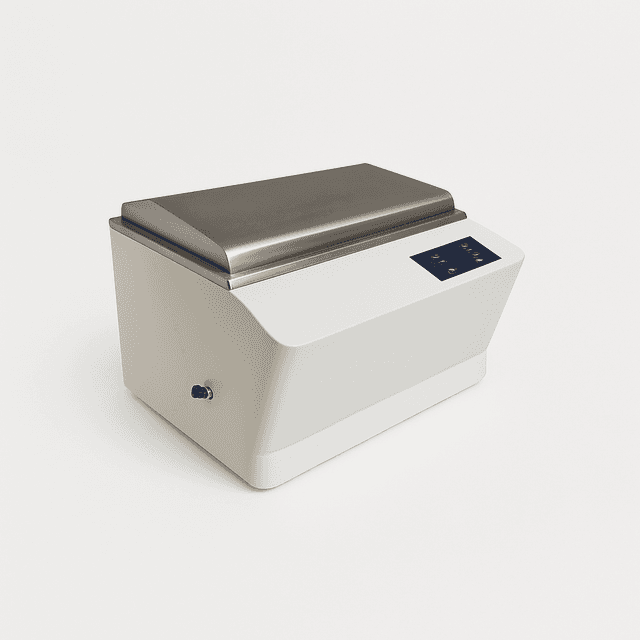
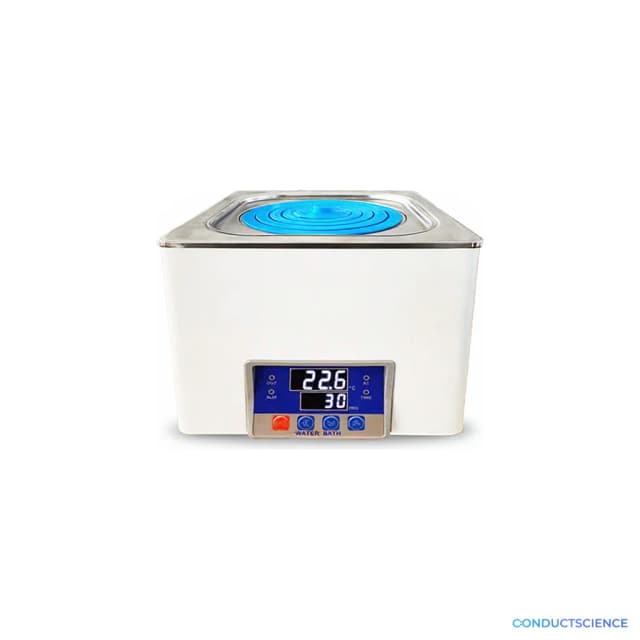
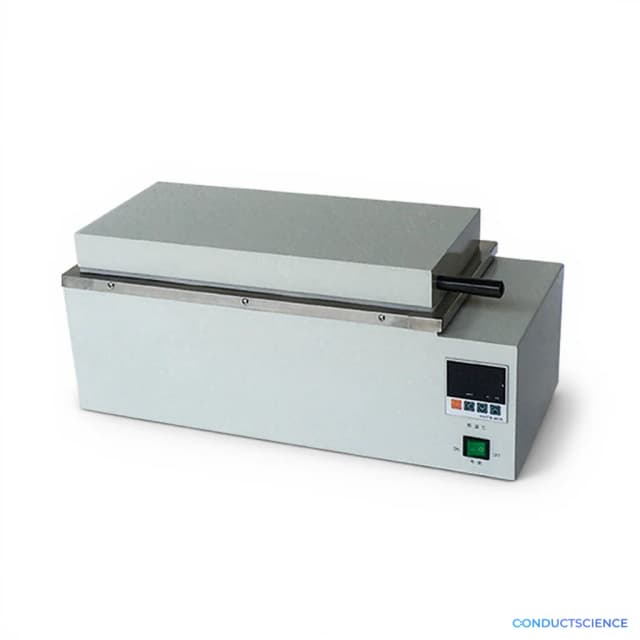
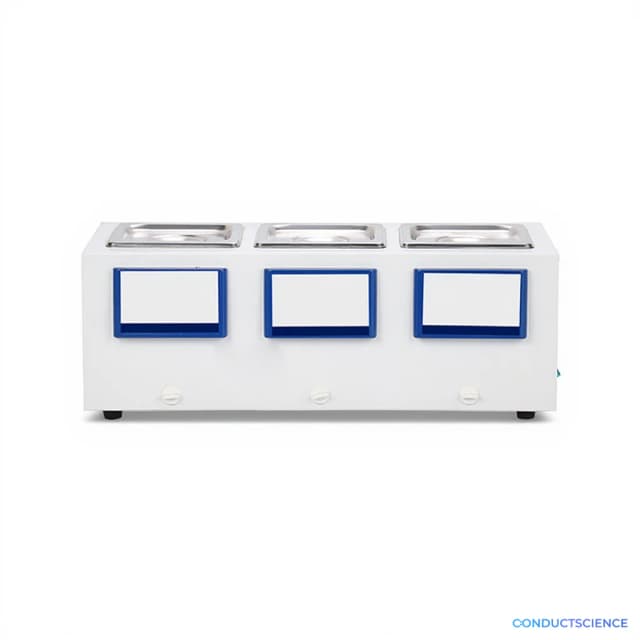
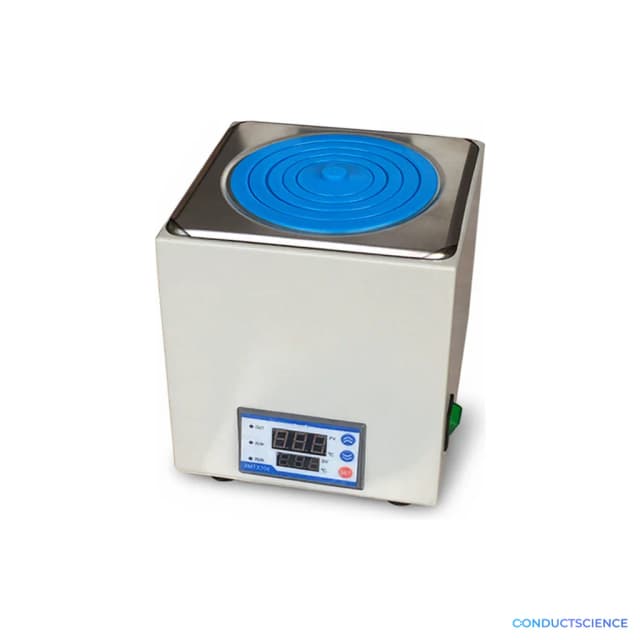
Thermostatic Shaking Water Bath SWB-A SWB-B SWB-C
Thermostatic shaking water bath available in three shaking modes: SWB-A (rotation oscillation), SWB-B (rotation + reciprocating), and SWB-C (reciprocating).
All models deliver 60–280 rpm, ±0.5 °C temperature precision, and RT–100 °C range with LED display and 0–9999 min programmable timer.

Louise Corscadden, PhD
Director of Science · ConductScience
Ask Louise about Thermostatic Shaking Water Bath SWB-A SWB-B SWB-C fit, setup, configuration, or quote prep.
Already working with us? Sign in to connect this with My Scientist.
Key Specifications
Full details →- Model fit
- Configured during quote
- SKU family
- BIO-0667
- Shipping box
- 17.0 x 49.0 x 39.0 cm
- Ordering
- Online checkout and quote request available
- Category
- Water Baths
- Build notes
- Confirm accessories, station layout, and support needs before purchase
The Thermostatic Shaking Water Bath (SWB-A / SWB-B / SWB-C) is a high-precision laboratory instrument delivering controlled heating and uniform continuous shaking simultaneously. Microprocessor control with LED display enables precise temperature management, while the choice of three shaking modes allows the unit to be matched to specific application requirements — from standard incubation and hybridization (rotation, SWB-A) to protocols requiring combined motion patterns (SWB-B) or linear reciprocating agitation (SWB-C).
Technical Specifications
| Parameter | SWB-A | SWB-B | SWB-C |
|---|---|---|---|
| Shaking Method | Rotation oscillation, continuous | Rotation oscillation & reciprocating, continuous | Reciprocating, continuous |
| Shaking Amplitude | ≥20 mm | ≥20 mm | ≥20 mm |
| Rotary Speed | 60–280 rpm | 60–280 rpm | 60–280 rpm |
| Temperature Range | RT–100 °C | RT–100 °C | RT–100 °C |
| Temperature Precision | ±0.5 °C | ±0.5 °C | ±0.5 °C |
| Timing Range | 0–9999 min | 0–9999 min | 0–9999 min |
| Display | LED | LED | LED |
| Power Consumption | 1500 W | 1500 W | 1500 W |
| Power Supply | AC 110/220 V ±10%, 50/60 Hz | ||
| Internal Size (L×W×H) | 490×390×170 mm | ||
| External Size (L×W×H) | 700×530×480 mm | ||
| Packing Size (L×W×H) | 800×600×560 mm | 810×600×580 mm | 810×600×580 mm |
| Gross Weight | 48 kg | 52 kg | 48 kg |
Key Features
- Three shaking modes: rotation (SWB-A), rotation + reciprocating (SWB-B), reciprocating (SWB-C)
- High-precision temperature control (±0.5 °C) with microprocessor and LED display
- Programmable timer 0–9999 min for long-duration incubations
- Dual-voltage compatible (110/220 V) for international use
- Continuous operation mode for extended protocols
How It Works
The thermostatic water bath operates through a combination of electrical heating elements and temperature feedback control to maintain precise water temperatures. A thermostat system continuously monitors the water temperature using precision sensors and adjusts heating output to maintain setpoint temperatures within narrow tolerances.
The integrated shaking mechanism provides controlled mechanical agitation through an orbital or reciprocating motion system. This agitation serves dual purposes: ensuring uniform temperature distribution throughout the water bath and providing consistent mixing action for samples. The shaking motion prevents thermal stratification and maintains homogeneous conditions across all sample positions.
Heat transfer occurs through water immersion, providing efficient and uniform thermal conductivity to samples. The water medium acts as both the heating reservoir and the mechanical coupling system for transmitting shaking motion to immersed vessels and samples.
Features & Benefits
Automation Level
- semi-automated
Research Domain
- Analytical Chemistry
- Cell Biology
- Immunology
- Materials Science
- Microbiology
- Pharmaceutical QC
Shipping weight
- 48.0 lb
Shipping box
- L: 17.0 cm
- W: 49.0 cm
- H: 39.0 cm
| Feature | This Product | Typical Alternative | Advantage |
|---|---|---|---|
| Temperature Control System | Thermostatic control with water bath heating | Basic models may use simple on-off heating without precise temperature regulation | Provides stable thermal conditions essential for reproducible biological and chemical processes |
| Agitation Capability | Integrated shaking mechanism with water bath | Many water baths lack agitation or require separate orbital shakers | Combines temperature control and mixing in one instrument, reducing equipment needs and improving workflow efficiency |
| Heat Distribution | Water medium for uniform heat transfer | Air incubators may have temperature gradients and slower thermal response | Water provides superior thermal conductivity and temperature uniformity across all sample positions |
| Construction Quality | 48 kg robust construction | Lightweight models may have stability issues during shaking operation | Heavy-duty construction minimizes vibration and ensures stable operation during continuous use |
This thermostatic shaking water bath combines precise temperature control with integrated agitation capability in a robust, compact design. The 48 kg construction provides operational stability while the water bath system ensures uniform heat distribution for consistent experimental conditions.
Practical Tips
Verify temperature accuracy monthly using a NIST-traceable thermometer placed at the sample level in the water bath.
Why: Temperature accuracy is critical for reproducible results and regulatory compliance in many applications.
Change the water weekly and clean the bath interior monthly to prevent bacterial growth and mineral buildup.
Why: Clean water ensures accurate heat transfer and prevents contamination of samples during incubation.
Allow 30 minutes for temperature equilibration after changing setpoints before introducing samples.
Why: Thermal equilibration ensures all sample positions reach the target temperature for consistent experimental conditions.
Always secure sample vessels with appropriate clamps or holders before starting shaking operation.
Why: Proper vessel restraint prevents spillage, sample loss, and potential safety hazards during agitation.
If temperature oscillations occur, check water level and reduce shaking speed to minimize surface disturbance.
Why: Excessive surface agitation can interfere with temperature sensing and control system performance.
Document water bath model, settings, and calibration data in experimental protocols for traceability.
Why: Complete documentation enables method validation and supports regulatory compliance requirements.
Setup Guide
What’s in the Box
- Thermostatic shaking water bath main unit
- Power cord (typical)
- Sample vessel holders or clamps (typical)
- Water level indicators or markers (typical)
- Operating manual and safety instructions (typical)
- Temperature calibration certificate (typical)
Warranty
ConductScience provides a standard one-year manufacturer warranty covering defects in materials and workmanship, with technical support available for installation, calibration, and troubleshooting assistance.
Compliance
What temperature range and stability can this water bath maintain?
Consult product datasheet for specific temperature range and stability specifications, as these critical parameters vary by model and are essential for protocol development.
What shaking speeds and motion types are available?
Consult product datasheet for shaking speed range, motion pattern (orbital vs linear), and amplitude specifications to ensure compatibility with your experimental requirements.
What sample vessel types and sizes can be accommodated?
The water bath typically accepts various vessels through interchangeable holders and clamps. Consult product specifications for maximum vessel dimensions and weight capacity.
How frequently should temperature calibration be performed?
Temperature calibration should be verified monthly or according to laboratory quality procedures, using NIST-traceable thermometers for accuracy verification.
Can the unit operate with heating only or shaking only modes?
Most models allow independent control of heating and shaking functions, enabling temperature-only incubation or ambient temperature mixing as needed.
What maintenance is required for long-term reliability?
Regular water changes, cleaning of heating elements, lubrication of shaking mechanisms, and periodic calibration verification ensure optimal performance and longevity.
Is the unit suitable for overnight or extended incubation periods?
Water baths are designed for continuous operation, but extended runs should include monitoring protocols and water level maintenance to prevent damage.
Have a question about this product?
Have a question? Just ask.
Send it over and we'll email you a personalized answer — no call, no scheduling.
Prefer to talk it through?
Frequently Bought Together