Total Chromium Pack Test
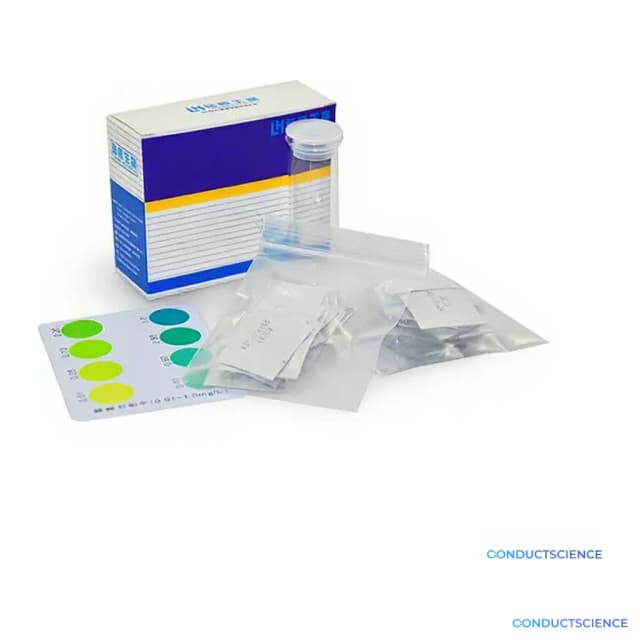
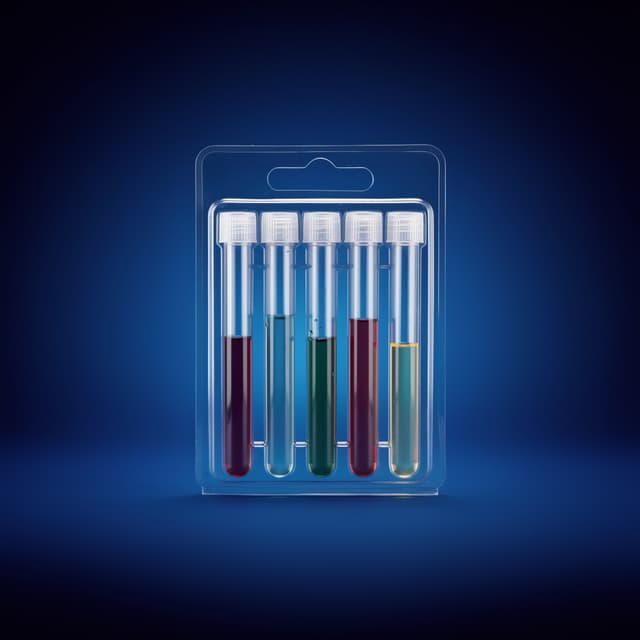
The Total Chromium Pack Test is a colorimetric field testing kit designed for quantitative measurement of hexavalent and trivalent chromium in water samples without laboratory equipment within a range of 0.5-1-2-5-10-20mg/L.

The Total Chromium Pack Test is a colorimetric field testing kit designed for quantitative measurement of hexavalent and trivalent chromium in water samples without laboratory equipment within a range of 0.5-1-2-5-10-20mg/L.
The pack test format provides rapid results through visual color comparison, making it suitable for field monitoring and preliminary screening applications.
The test kit operates within a normal pH range below 10 and requires sample preparation for particulate-containing samples using acid digestion or appropriate reagents to solubilize precipitated chromium. The test tube is filled to half capacity for optimal reaction conditions, providing a standardized approach to chromium quantification in aqueous matrices.
How It Works
The Total Chromium Pack Test employs colorimetric chemistry based on chromium complexation reactions that produce measurable color changes proportional to total chromium concentration. The test reagents are pre-loaded in the test tube and react with both trivalent and hexavalent chromium species present in the sample. For samples containing particulates or precipitates, acid digestion is required to solubilize bound chromium into the dissolved phase for accurate measurement.
The reaction occurs under controlled pH conditions (below pH 10), with pH adjustment using diluted sulfuric acid when necessary. The test tube is filled to half capacity to ensure proper reagent-to-sample ratios and optimal color development. Results are obtained through visual comparison with a color reference chart, providing semi-quantitative to quantitative chromium measurements suitable for field applications.
Features & Benefits
Pack Size
- 25-Pack
- 50-Pack
Weight
- 0.26 kg
Dimensions
- L: 8.8 mm
- W: 7.3 mm
- H: 5.9 mm
Comparison Guide
| Feature | This Product | Typical Alternative | Advantage |
|---|---|---|---|
| Portability and Field Use | Portable pack test format requiring no instrumentation | Laboratory-based methods require sample transport and instrumentation | Enables immediate on-site decision making for environmental assessments and process control |
| Technical Skill Requirements | No specialized personnel required for operation | Instrumental methods typically require trained analytical chemists | Allows field personnel and non-specialists to perform chromium monitoring |
| Result Turnaround Time | Rapid colorimetric results within minutes | Laboratory analysis often requires hours to days for results | Supports time-sensitive environmental monitoring and emergency response applications |
| Sample Volume Requirements | Half-fill test tube protocol for standardized analysis | Instrumental methods may require larger sample volumes | Suitable for limited sample situations and reduces sample handling requirements |
The Total Chromium Pack Test offers immediate field testing capability with simple operation protocols, making chromium monitoring accessible for non-specialized personnel in environmental and industrial applications. The colorimetric approach provides rapid screening results to guide sampling strategies and process control decisions.
Practical Tips
Perform pH adjustment before adding sample to test tube to ensure optimal reaction conditions throughout the analysis.
Why: Proper pH control is critical for consistent color development and accurate chromium quantification.
Use known chromium standards periodically to verify color chart accuracy and operator consistency.
Why: Visual color comparison can vary between operators and lighting conditions, affecting result reliability.
Store test kits in cool, dry conditions away from direct sunlight to preserve reagent stability.
Why: Heat and light exposure can degrade colorimetric reagents and compromise test accuracy.
Record ambient temperature and lighting conditions when performing color comparisons for result traceability.
Why: Environmental factors can influence visual color perception and result interpretation.
If no color development occurs, verify sample pH is below 10 and chromium is fully dissolved in solution.
Why: High pH or precipitated chromium can prevent proper reaction with test reagents.
Use appropriate personal protective equipment when handling acid reagents for pH adjustment and sample digestion.
Why: Acid solutions can cause chemical burns and require safe handling protocols.
Document all sample pretreatment steps including acid additions and digestion procedures for quality assurance.
Why: Proper documentation ensures result traceability and method reproducibility for regulatory applications.
Setup Guide
What’s in the Box
- Pack test tubes with pre-loaded reagents (typical)
- Color reference chart (typical)
- Instruction manual with protocols (typical)
- pH adjustment reagents (typical)
- Sample preparation guidelines (typical)
Warranty
ConductScience provides standard warranty coverage for consumable test kits with technical support for proper application protocols and result interpretation.
Compliance
What is the detection range and sensitivity of the pack test for chromium measurement?
Consult product datasheet for specific concentration ranges and detection limits, as these vary by pack test formulation.
Can the test differentiate between hexavalent and trivalent chromium species?
The pack test measures total chromium (both Cr³⁺ and Cr⁶⁺ combined). Separate tests or sample treatments are required for speciation analysis.
What sample pretreatment is required for turbid or particulate-containing samples?
Acid digestion or appropriate reagent addition is necessary to dissolve chromium bound to particulates before testing for accurate total chromium measurement.
How does temperature affect the color development and accuracy of results?
Consult product documentation for temperature specifications, as colorimetric reactions can be temperature-dependent.
What is the shelf life and storage requirements for the pack test reagents?
Store according to manufacturer specifications and check expiration dates, as reagent stability affects test accuracy.
Can results from pack tests be used for regulatory compliance reporting?
Pack tests provide screening data; confirmatory instrumental analysis may be required for regulatory reporting depending on jurisdiction requirements.
What interferences can affect chromium measurement accuracy?
High ionic strength, competing metal ions, and extreme pH conditions may interfere; consult product literature for specific interference information.
Have a question about this product?
Accessories
Enhance your setup with compatible accessories
Frequently Bought Together