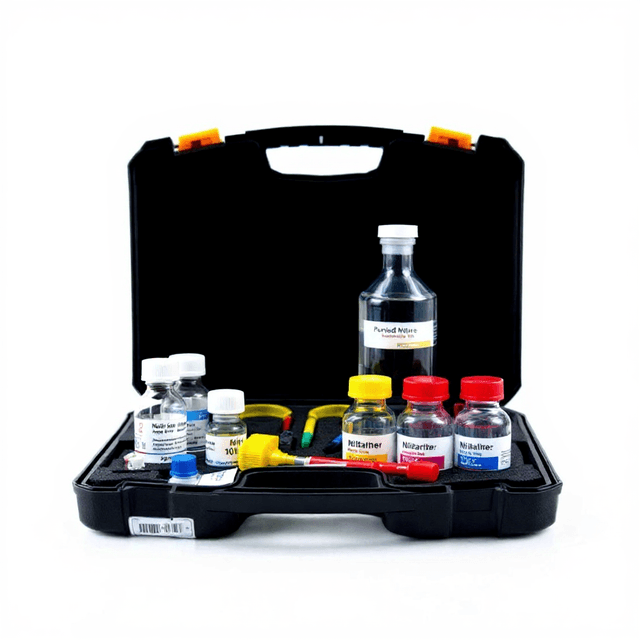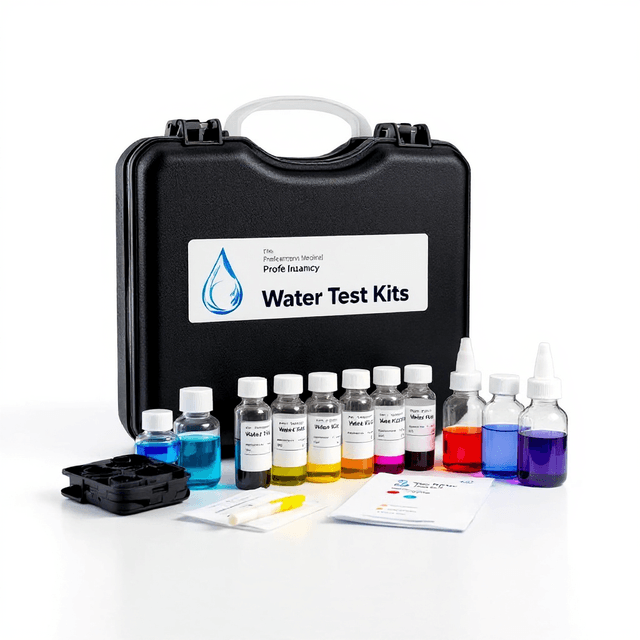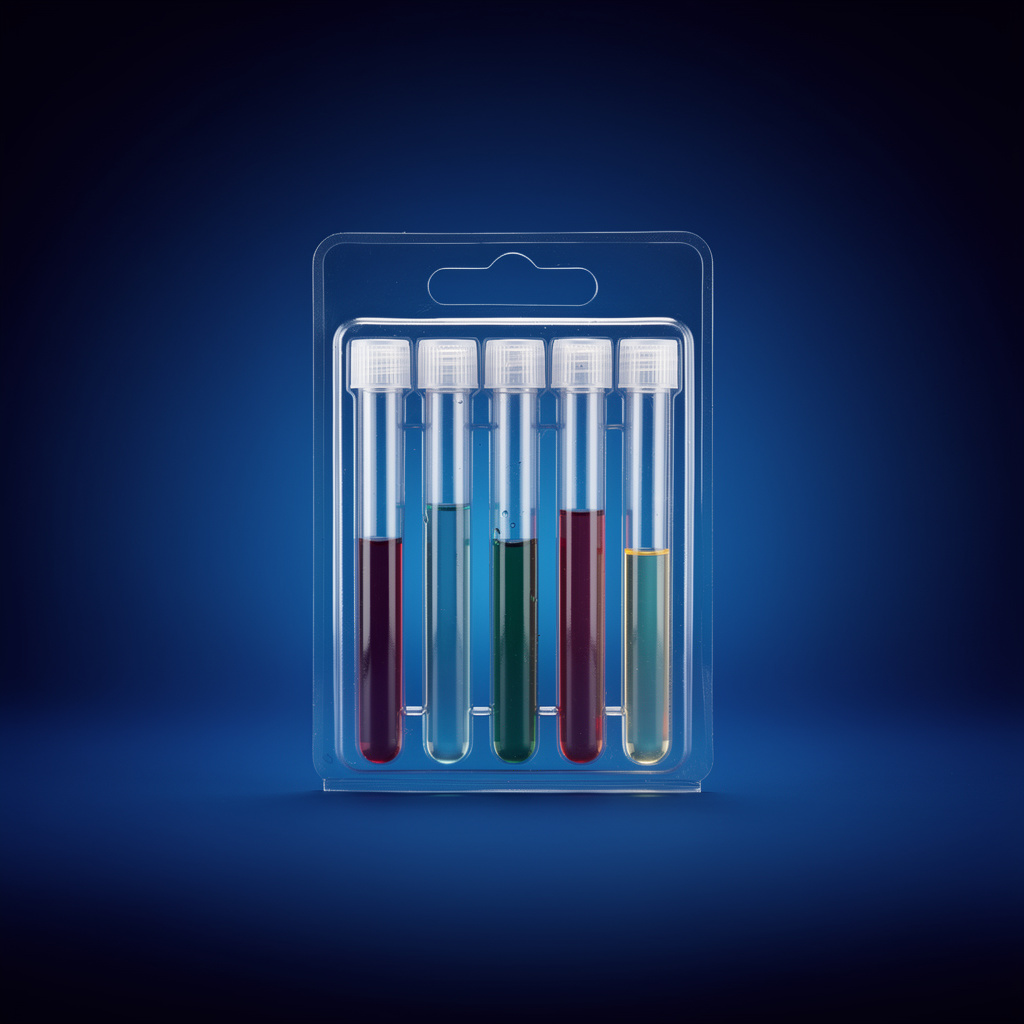
Nickel Test Tube
Portable colorimetric test tubes for rapid nickel determination in aqueous samples, measuring 0.1-10 mg/L concentration range through visual color comparison.

Louise Corscadden, PhD
Director of Science · ConductScience
Ask Louise about Nickel Test Tube fit, setup, configuration, or quote prep.
Already working with us? Sign in to connect this with My Scientist.
Key Specifications
Full details →- Model fit
- 1 selectable configurations
- SKU family
- CS-LH-LAB009
- Shipping box
- 8.8 x 7.3 x 5.9 cm
- Ordering
- Online checkout and quote request available
- Category
- Water Test Kits
- Build notes
- Confirm accessories, station layout, and support needs before purchase
The Nickel Test Tube provides rapid colorimetric determination of nickel concentrations in aqueous samples using established analytical chemistry principles. This portable test kit utilizes chromogenic reagents sealed within polyethylene tubes to deliver semi-quantitative nickel analysis across a measuring range of 0.1-10 mg/L in discrete concentration steps (0.1, 0.2, 0.5, 1, 2, 5, 10 mg/L).
The test employs standardized colorimetric chemistry where nickel ions react with specific chelating agents to produce measurable color changes proportional to nickel concentration. Results are obtained through visual color comparison within 3-5 minutes, eliminating the need for sophisticated instrumentation or specialized laboratory personnel. Each tube is aluminum foil sealed to maintain reagent stability for 18 months under normal storage conditions.
How It Works
The test operates on colorimetric analysis principles where nickel ions in aqueous solution react with pre-loaded chromogenic reagents within the sealed polyethylene tube. Upon sample addition and mixing, nickel forms colored coordination complexes with specific chelating ligands, producing distinctive color changes that correlate directly with nickel concentration.
The visual color comparison method relies on standardized color charts or reference standards corresponding to discrete concentration levels (0.1, 0.2, 0.5, 1, 2, 5, and 10 mg/L). The intensity and hue of the developed color are compared against these reference points to determine the approximate nickel concentration. The reaction reaches completion within 3-5 minutes under ambient conditions, with color stability maintained for sufficient time to perform accurate visual assessment.
Each tube contains sufficient reagent for a single determination and is sealed with aluminum foil to prevent oxidation and maintain reagent integrity during storage. The polyethylene construction provides chemical compatibility with the test reagents while remaining lightweight and portable for field applications.
Features & Benefits
Shipping weight
- 0.26 lb
Shipping box
- L: 8.8 cm
- W: 7.3 cm
- H: 5.9 cm
| Feature | This Product | Typical Alternative | Advantage |
|---|---|---|---|
| Measurement Range | 0.1-10 mg/L in discrete steps | Strip tests often cover 0-50 mg/L with lower resolution | Focused range provides better resolution for typical environmental and industrial nickel levels. |
| Reaction Time | 3-5 minutes | Strip tests may require 10-15 minutes for full color development | Faster results enable higher sample throughput in field screening applications. |
| Shelf Stability | 18 months with aluminum foil seal | Strip tests often have 12-month expiration | Extended shelf life reduces inventory turnover and waste from expired reagents. |
| Reagent Protection | Individual aluminum foil seals | Multi-use bottles may degrade after opening | Each tube maintains reagent integrity until use, preventing batch contamination. |
| Sample Format | Liquid aqueous samples | Some systems require sample drying or solid matrix preparation | Direct liquid analysis eliminates sample preparation steps and associated errors. |
The Nickel Test Tube provides focused concentration range coverage with rapid colorimetric analysis and extended shelf stability through individual tube sealing. The system emphasizes simplicity and reliability for aqueous sample screening applications.
Practical Tips
Allow samples to reach room temperature before testing to ensure consistent color development kinetics.
Why: Temperature variations can affect reaction rates and final color intensity.
Verify color chart accuracy periodically using certified nickel reference standards at known concentrations.
Why: Color charts may fade over time or vary between production lots.
Store unopened tubes in cool, dry conditions away from direct sunlight to maximize shelf life.
Why: Heat and UV exposure can degrade reagents even through aluminum foil seals.
Test duplicate samples when nickel concentration appears near decision thresholds.
Why: Visual color discrimination has inherent uncertainty at concentration boundaries.
If no color develops, verify sample pH is within acceptable range and consider matrix interference effects.
Why: Extreme pH or competing metal ions can inhibit chromogenic reactions.
Wear appropriate PPE and handle test tubes as chemical reagents according to SDS requirements.
Why: Colorimetric reagents may contain chemicals requiring standard laboratory safety precautions.
Document lighting conditions when performing visual color comparisons for result reproducibility.
Why: Ambient lighting affects color perception and can introduce systematic bias in readings.
Setup Guide
What’s in the Box
- Nickel test tubes with pre-loaded reagents (typical)
- Color comparison chart (typical)
- Instructions for use (typical)
- Safety data sheet (typical)
Warranty
ConductScience provides standard manufacturer warranty coverage for materials and workmanship. Technical support is available for method questions and troubleshooting assistance.
Compliance
References
Background reading relevant to this product:
What is the detection limit and accuracy of this colorimetric method?
The method provides semi-quantitative results with discrete concentration points at 0.1, 0.2, 0.5, 1, 2, 5, and 10 mg/L. Accuracy depends on visual color discrimination and should be validated against certified reference materials for specific applications.
What interferences might affect nickel determination?
Common interferences include high concentrations of other transition metals, extreme pH conditions, and high ionic strength solutions. Consult product datasheet for specific interference data and sample pretreatment recommendations.
Can these tubes be used for non-aqueous samples?
The test is designed for aqueous samples. Non-aqueous matrices may require dissolution, extraction, or other sample preparation steps to achieve compatibility with the aqueous colorimetric chemistry.
How should samples be preserved before testing?
Follow standard trace metals preservation protocols including acidification and refrigeration. Consult EPA or ASTM methods for specific preservation requirements based on sample matrix and holding time needs.
What is the shelf life after opening aluminum foil seals?
Test tubes should be used immediately after removing aluminum foil seals to prevent reagent degradation. Unopened tubes maintain 18-month shelf life under normal storage conditions.
Can results be quantified beyond visual color comparison?
Visual comparison provides semi-quantitative results at discrete levels. For precise quantification, consider using these tubes for screening followed by instrumental methods like ICP-MS or atomic absorption spectroscopy.
What sample volume is required for each test?
Consult product instructions for specific sample volume requirements, which may vary based on reagent loading and tube capacity.
How do these compare to instrumental nickel analysis methods?
These tubes provide rapid field screening with immediate results but lower precision than instrumental methods. They are ideal for preliminary assessment before committing to more expensive instrumental analysis.
Have a question about this product?
Have a question? Just ask.
Send it over and we'll email you a personalized answer — no call, no scheduling.
Prefer to talk it through?