1 / 3
Tube Dominance Test Optogenetics
SKU CS-958206
$1,079.99
IncludesStandard care
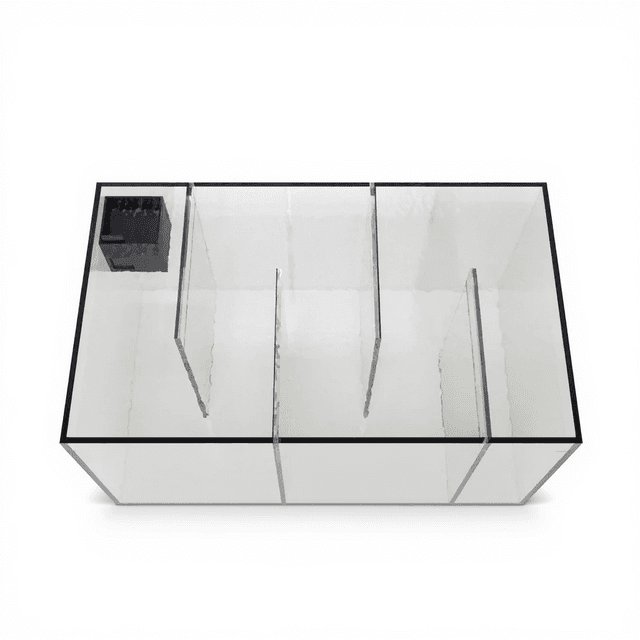
Behavioral assessment system for investigating social dominance hierarchies in rodents during optogenetic neural circuit manipulation.
Scientist guidance

Louise Corscadden, PhD
Director of Science · ConductScience
Ask Louise about Tube Dominance Test Optogenetics fit, setup, configuration, or quote prep.
Already working with us? Sign in to connect this with My Scientist.
Key Specifications
Full details →- Model fit
- Mouse, Rat
- SKU family
- CS-958206
- Shipping box
- 65.0 x 36.0 x 27.0 cm
- Ordering
- Online checkout and quote request available
- Category
- Behavioral Mazes
- Build notes
- Confirm accessories, station layout, and support needs before purchase
The Tube Dominance Test Optogenetics is a specialized behavioral assessment apparatus designed for investigating social dominance hierarchies in laboratory rodents under optogenetic manipulation. This system enables researchers to precisely evaluate how light-activated neural circuits influence dominance behaviors in controlled dyadic encounters.
The apparatus provides a standardized protocol for measuring dominance relationships through competitive tube traversal tasks while simultaneously delivering targeted optogenetic stimulation. Researchers can assess real-time changes in dominance behavior as specific neural populations are activated or inhibited, offering insights into the neural mechanisms underlying social hierarchy formation and maintenance.
How It Works
The tube dominance test operates on the principle that rodents exhibit natural competitive behaviors when forced to traverse a narrow tube from opposite ends. When two animals meet in the center, the dominant individual typically forces the subordinate to retreat, providing a quantifiable measure of social hierarchy.
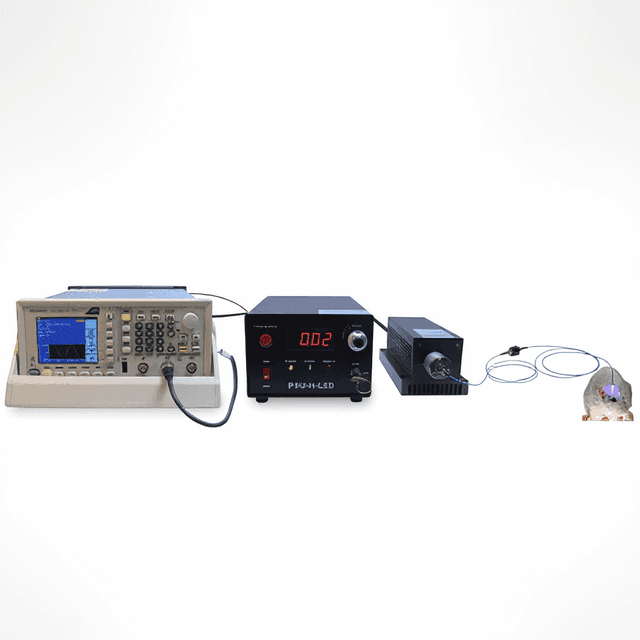
The optogenetics integration allows researchers to deliver precisely timed light stimulation to genetically modified neurons expressing channelrhodopsin or other opsins. Light delivery can be synchronized with behavioral events, enabling real-time modulation of neural activity during dominance encounters.
Behavioral outcomes are recorded through video analysis or sensor-based detection systems, allowing quantification of retreat behaviors, interaction duration, and dominance reversals under different optogenetic stimulation paradigms.
Features & Benefits
Integrated optogenetic stimulation capability
Enables precise temporal control of neural circuit activation during dominance testing for mechanistic studies
Standardized tube traversal paradigm
Provides reproducible and quantifiable measures of social dominance across different experimental conditions
Real-time behavioral monitoring
Allows immediate assessment of dominance outcomes and behavioral changes during optogenetic manipulation
Synchronized stimulation and recording
Ensures precise temporal correlation between neural circuit modulation and behavioral responses
Compatible with multiple rodent species
Supports comparative studies across different animal models with species-appropriate tube dimensions
Behavioral Construct
- Social Dominance
- Competitive Behavior
- Social Hierarchy
- Territorial Behavior
Automation Level
- semi-automated
Research Domain
- Anxiety and Depression
- Behavioral Pharmacology
- Learning and Memory
- Neuroscience
- Social Behavior
Species
- Mouse
- Rat
Compatible Tracking Software
- ConductVision
Shipping weight
- 4.41 lb
Shipping box
- L: 65.0 cm
- W: 36.0 cm
- H: 27.0 cm
| Feature | This Product | Typical Alternative | Advantage |
|---|---|---|---|
| Optogenetic Integration | Built-in optogenetic stimulation capability | Basic behavioral apparatus without neural circuit manipulation | Enables causal investigation of neural mechanisms underlying dominance behavior rather than correlative studies. |
| Behavioral Paradigm | Standardized tube traversal protocol | Open-field social interaction tests with variable outcomes | Provides more controlled and reproducible measures of dominance relationships. |
| Data Synchronization | Synchronized stimulation and behavioral recording | Separate systems requiring manual coordination | Ensures precise temporal correlation between neural manipulation and behavioral outcomes. |
| Species Compatibility | Adaptable for multiple rodent species | Single-species configurations | Supports comparative studies across different animal models within the same experimental setup. |
This system combines traditional dominance testing with optogenetic neural circuit manipulation, enabling researchers to investigate causal relationships between specific brain regions and social behavior. The integrated design provides synchronized stimulation and behavioral recording for mechanistic neuroscience studies.
Neuroscience
Investigating how optogenetic manipulation of specific brain regions affects dominance behavior establishment and maintenance in dyadic rodent interactions.
Behavioral Pharmacology
Evaluating how pharmacological interventions combined with optogenetic stimulation influence competitive social behaviors and hierarchy formation.
Social Behavior
Examining the neural circuits underlying territorial competition and social rank determination through controlled tube traversal paradigms.
Learning and Memory
Assessing how animals learn and remember dominance relationships under different patterns of optogenetic circuit activation.
Anxiety and Depression
Measuring changes in competitive motivation and social confidence following optogenetic manipulation of mood-related neural circuits.
Practical Tips
Calibration
Verify light output power and wavelength specifications before each experimental session to ensure consistent optogenetic stimulation.
Why: Inconsistent light delivery can produce variable behavioral effects and compromise experimental reproducibility.
Maintenance
Clean the tube apparatus thoroughly between trials and inspect for wear that might affect animal movement or behavior.
Why: Contamination or physical damage can introduce confounding variables into dominance assessments.
Best Practices
Establish baseline dominance relationships without optogenetic stimulation before testing circuit manipulation effects.
Why: Baseline data provides essential controls for interpreting stimulation-induced behavioral changes.
Data Quality
Record multiple trials per animal pair to account for natural variability in dominance expression.
Why: Social behaviors can vary across trials, requiring statistical analysis of multiple measurements for reliable conclusions.
Safety
Monitor animals closely during and after optogenetic stimulation for any signs of stress or adverse reactions.
Why: Neural circuit manipulation can potentially produce unintended behavioral or physiological effects requiring immediate intervention.
Troubleshooting
If dominance relationships appear unstable, verify that tube dimensions are appropriate for the species and that animals cannot turn around within the apparatus.
Why: Improper tube sizing can disrupt natural competitive behaviors and produce unreliable dominance measures.
Setup Guide
Equipment Assembly
Assemble the tube apparatus ensuring proper alignment and secure mounting of all components.
Optogenetic System Integration
Connect light delivery components and verify proper fiber optic coupling and light output calibration.
Recording System Setup
Position cameras or sensors for optimal behavioral monitoring and ensure synchronization with optogenetic stimulation timing.
Animal Preparation
Prepare test animals with appropriate optogenetic constructs and verify expression levels prior to behavioral testing.
Baseline Assessment
Conduct initial dominance trials without optogenetic stimulation to establish baseline hierarchy relationships.
Stimulation Protocol
Implement systematic optogenetic stimulation patterns during subsequent trials to assess circuit-specific effects on dominance behavior.
What’s in the Box
- Tube dominance apparatus (typical)
- Optogenetic light delivery system (typical)
- Mounting hardware (typical)
- Control software (typical)
- User manual and setup guide (typical)
- Calibration tools (typical)
Warranty
ConductScience provides standard manufacturer warranty coverage with technical support for setup, calibration, and troubleshooting assistance.
Compliance
NIH Guidelines for Research Involving Recombinant DNACommonly referenced in laboratories conducting optogenetic research requiring biosafety oversight for genetically modified organisms.
IACUC Protocol RequirementsSupports behavioral testing protocols subject to institutional animal care and use committee review for social behavior studies.
Q
What optogenetic systems are compatible with this apparatus?
A
The system typically accommodates standard fiber optic light delivery systems and can be integrated with various LED or laser-based optogenetic stimulation platforms. Consult product specifications for specific compatibility requirements.
Q
How are dominance outcomes quantified and recorded?
A
Dominance is measured through retreat behaviors, with the animal that backs out of the tube considered subordinate. Recording methods may include video analysis, sensor detection, or manual scoring depending on system configuration.
Q
What tube dimensions are appropriate for different rodent species?
A
Tube diameter and length must be optimized for the species being tested to ensure appropriate competitive dynamics while preventing animals from turning around within the tube. Species-specific recommendations should be confirmed with product documentation.
Q
Can the system accommodate bilateral optogenetic stimulation?
A
Integration capabilities for bilateral stimulation depend on the specific light delivery configuration. Multiple fiber positions may require custom mounting solutions or multi-channel stimulation systems.
Q
What is the recommended acclimation protocol before testing?
A
Animals typically require habituation to the testing environment and handling procedures, plus verification of optogenetic construct expression levels prior to behavioral assessment. Specific protocols should be established based on experimental requirements.
Q
How is stimulation timing synchronized with behavioral events?
A
Synchronization methods vary by system configuration but may include manual triggering, automated behavioral detection, or pre-programmed stimulation protocols during defined trial phases.
Have a question about this product?
Track rodents with ConductVision
ConductVision is our video-tracking software. Record your sessions on video, and it scores standard rodent tests, such as those listed below.
Examples of tests it scores
To check whether ConductVision scores your protocol in this apparatus, ask in your quote request.
Ask a question
Have a question? Just ask.
Send it over and we'll email you a personalized answer — no call, no scheduling.
Personalized email reply
Usually within one business day
Helpful answers published here
Prefer to talk it through?
Accessories
Enhance your setup with compatible accessories
Total: $0.00
Frequently Bought Together
Total: $10,783.99


Tube Dominance Test Optogenetics
$1,079.99
Added to quoteView Quote