ConductVision
$1,490 per year for one computerA 5-year license is $3,990 in total.
Results export as CSV files.

Standardized acrylic tube apparatus for quantitative assessment of social dominance and hierarchy behaviors in mice and rats through controlled competitive interactions.

Director of Science · ConductScience
Ask Louise about Tube Dominance Test fit, setup, configuration, or quote prep.
Already working with us? Sign in to connect this with My Scientist.
“Behavioral, neurotransmitter and transcriptomic analyses in male and female Fmr1 KO mice”
The apparatus consisted of a Plexiglass tube approximately 17 inches long and 1 inch internal diameter (Maze Engineers, Skokie, IL; Spencer et al., 2005).
Maze Engineers, the maker named in the paper, is part of ConductScience.
As of , this is the only study we’ve found that used this product.
From 2021 to 2025, 51 animal research papers mentioned the tube test for social dominance. The count covers the test on any apparatus, not only this one.
The Tube Dominance Test is a standardized apparatus for assessing social hierarchy and dominance behaviors in rodents. This behavioral assay utilizes a transparent acrylic tube with controlled entry points to evaluate competitive interactions between two animals, providing quantitative measures of dominance relationships within social groups.
The apparatus features species-specific dimensions optimized for mouse and rat studies, with precise spacing between entry doors and standardized tube diameters. The test paradigm measures displacement behaviors when two animals encounter each other in the confined tube space, allowing researchers to establish dominance rankings and investigate social behavioral phenotypes in various experimental contexts.
The tube dominance test operates on the principle of competitive displacement behavior in a spatially restricted environment. When two animals are introduced simultaneously from opposite ends of the tube, their natural territorial and competitive instincts drive behavioral interactions that reveal dominance relationships.
The standardized tube dimensions create a controlled spatial constraint where only one animal can occupy the central space comfortably. The animal that successfully displaces its opponent by forcing it to retreat through its entry point demonstrates dominant behavior. Multiple trials between pairs establish consistent dominance rankings.
The transparent acrylic construction allows for direct behavioral observation and video recording, enabling detailed analysis of interaction patterns, latency to displacement, and behavioral strategies employed during competitive encounters.
These IDs come from NCBI Taxonomy. Use them in data records and methods sections.
NCBITaxon:10090 NCBITaxon:10116 | Measurement | Mouse | Rat |
|---|---|---|
| Length | 30 cm | — |
| Diameter | 3.175 cm | — |
| Distance between doors | 4 cm | — |
| Size | Length: 18.9" or 48cm.; Diameter: 2" or 5.5cm -recommended for 125 - 250gr rats; Entry to Door: 7.8" or 20cm.; Distance between doors: 3.1" or 8 cm; Acrylic: 0.2" or 0.6cm thick |
Ready for RO-Crate, the open standard for sharing data.
| Feature | This Product | Typical Alternative | Advantage |
|---|---|---|---|
| Species-Specific Sizing | Dedicated mouse (3.5cm) and rat (5.5cm) diameter configurations | Single-size designs requiring manual scaling | Optimized dimensions ensure appropriate spatial constraints for natural competitive behaviors in each species. |
| Construction Material | 0.6cm thick transparent acrylic construction | Thinner materials or opaque constructions | Robust walls withstand repeated use while maintaining optical clarity for behavioral observation. |
| Assembly Design | Modular assembly with included storage system | Fixed construction designs | Facilitates thorough cleaning, sterilization, and compact laboratory storage between sessions. |
| Dimensional Standardization | Precise door spacing (4cm mouse, 8cm rat) with standardized entry distances | Variable or non-standardized dimensions | Consistent spatial parameters ensure reproducible results across different research groups and studies. |
This apparatus provides species-optimized dimensions with robust acrylic construction and modular assembly design. The standardized spatial parameters support reproducible dominance testing protocols across laboratory settings.
| Model | Size | SKU | Listed price | Status | Shipping box |
|---|---|---|---|---|---|
| Mouse | Length 30 cm · Diameter 3.175 cm · Distance between doors 4 cm | 4901 | $590.00 | Available | 38.1 × 17.78 × 7.62 cm |
| Rat | Length: 18.9" or 48cm.; Diameter: 2" or 5.5cm -recommended for 125 - 250gr rats; Entry to Door: 7.8" or 20cm.; Distance between doors: 3.1" or 8 cm; Acrylic: 0.2" or 0.6cm thick | 4902 | $790.00 | Available | 48 × 36.0 × 27.0 cm |
Verify tube alignment and door spacing measurements before initial use and periodically during extended studies.
Why: Precise spatial parameters are critical for standardized behavioral responses and reproducible dominance measurements.
Disassemble apparatus weekly for thorough cleaning and inspect acrylic surfaces for scratches that could affect visibility.
Why: Regular maintenance prevents contamination buildup and ensures optimal optical clarity for behavioral observation.
Conduct habituation trials with individual animals before pairwise testing to reduce novelty effects on competitive behavior.
Why: Familiarity with the apparatus environment isolates dominance behaviors from exploration responses.
Randomize testing order and time intervals between trials to control for temporal effects on dominance expression.
Why: Systematic randomization prevents confounding variables from influencing dominance hierarchy establishment.
Record multiple trials between each animal pair and analyze consistency of dominance outcomes across sessions.
Why: Statistical verification of dominance relationships requires multiple data points to distinguish stable hierarchies from random interactions.
If animals avoid entering the tube, reduce environmental stressors and ensure appropriate temperature and lighting conditions.
Why: Environmental comfort is essential for natural competitive behaviors to emerge during dominance testing.
Monitor animal interactions continuously and terminate trials if aggressive behaviors exceed normal competitive displacement.
Why: Ensuring animal welfare while maintaining scientific validity requires careful observation of behavioral escalation.
ConductScience provides a one-year manufacturer warranty covering defects in materials and workmanship, with technical support available for experimental protocol optimization and apparatus maintenance.
Background reading relevant to this product:
Specifications, models, materials, and operating envelopes
What is the recommended trial duration for dominance testing?
Standard protocols typically employ 3-5 minute trials with multiple repetitions between pairs to establish consistent dominance relationships, though specific durations should be optimized for individual experimental designs.
How many animals can be tested simultaneously?
The apparatus is designed for pairwise testing of two animals per trial, with dominance rankings established through systematic testing of all possible pairs within a social group.
What cleaning protocols are recommended between trials?
Thorough cleaning with 70% ethanol between trials removes scent traces that could influence subsequent behavioral interactions, with complete disinfection recommended between different experimental groups.
Can the apparatus accommodate juvenile animals?
The standardized dimensions are optimized for adult animals; consult product datasheet for specific size requirements when testing juvenile or smaller animal strains.
How is dominance determined from the behavioral interactions?
Dominance is typically scored based on which animal successfully forces its opponent to retreat through the entry door, with multiple trials establishing statistical significance of dominance relationships.
What video recording setup is recommended?
Overhead camera positioning provides optimal visibility of displacement behaviors, with additional side-angle recording useful for detailed behavioral analysis and latency measurements.
How does this compare to other dominance testing methods?
The tube test provides more controlled spatial constraints compared to home cage observations, offering standardized conditions for quantitative dominance assessment with reduced environmental variables.
Each paper below used this product. Under each title is the paper’s own sentence naming the equipment it used.
The apparatus consisted of a Plexiglass tube approximately 17 inches long and 1 inch internal diameter (Maze Engineers, Skokie, IL; Spencer et al., 2005).
Research data
51 animal research papers in PubMed from 2021 to 2025 mention the tube test for social dominance
3.9 times as many as the 13 papers from 2011 to 2015
These counts are for the test, whoever made the apparatus, not for this product.
The lists below cover 2021 to 2025, the years in the band.
Hover over a bar to see its year. Click or tap a bar to show only that year in the lists below, or drag across the bars to show a span of years. On a keyboard, use the arrow keys on the chart to read each year, and the menus below it to pick the years.
A paper can mention more than one species, test or condition, so the percentages can add up to more than 100%.
To put a whole battery on one quote, open the test battery tool and start from the tube test for social dominance. Pick the other tests your study will run, then add the apparatus we sell for each.
By papers from 2021 to 2025, the tube test for social dominance ranks 68th of the 90 tests we track.
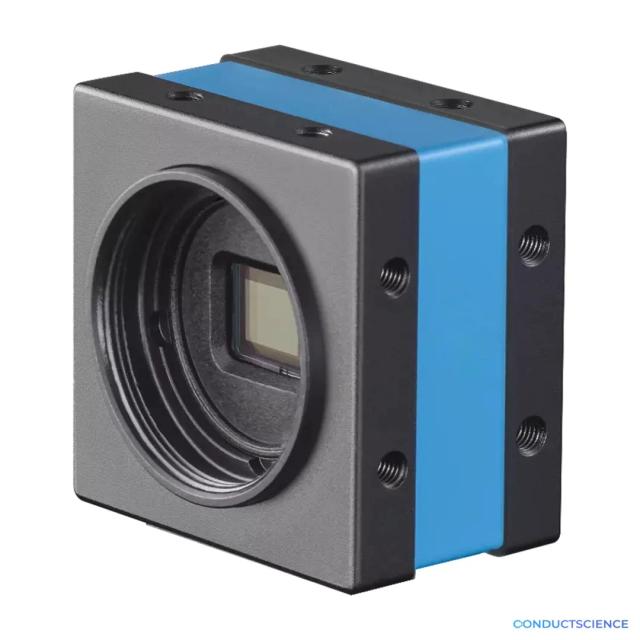
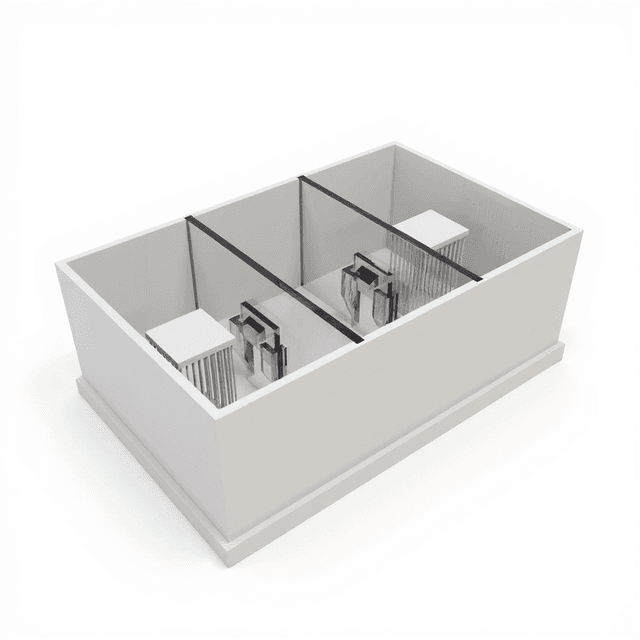
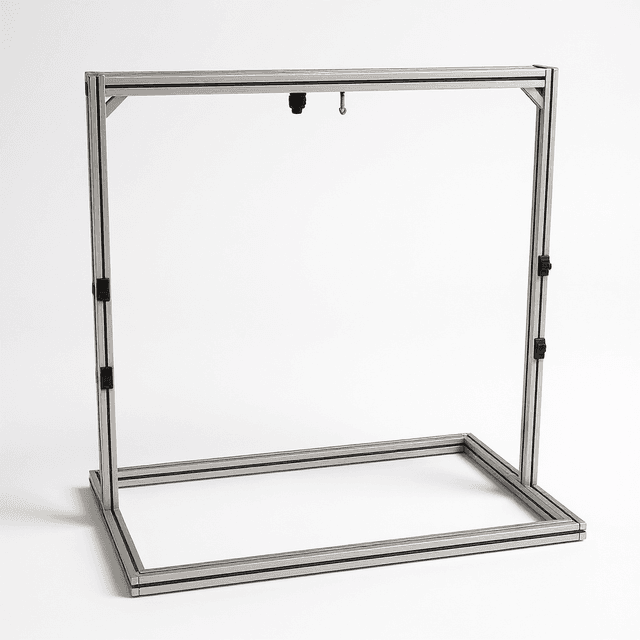
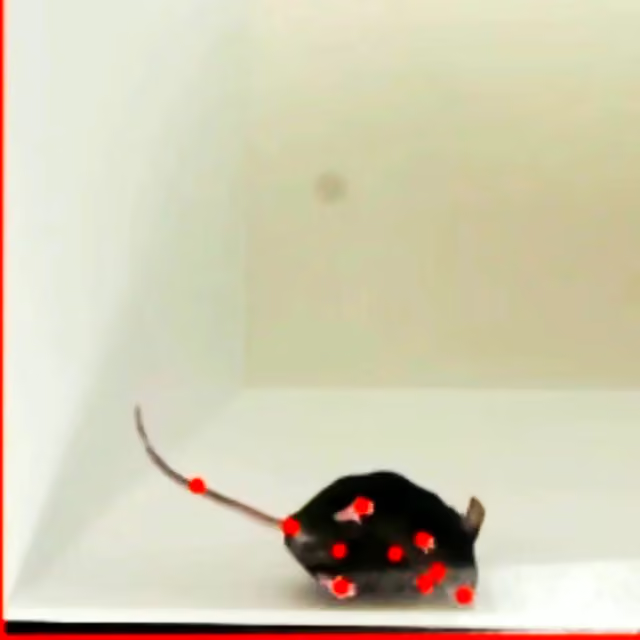
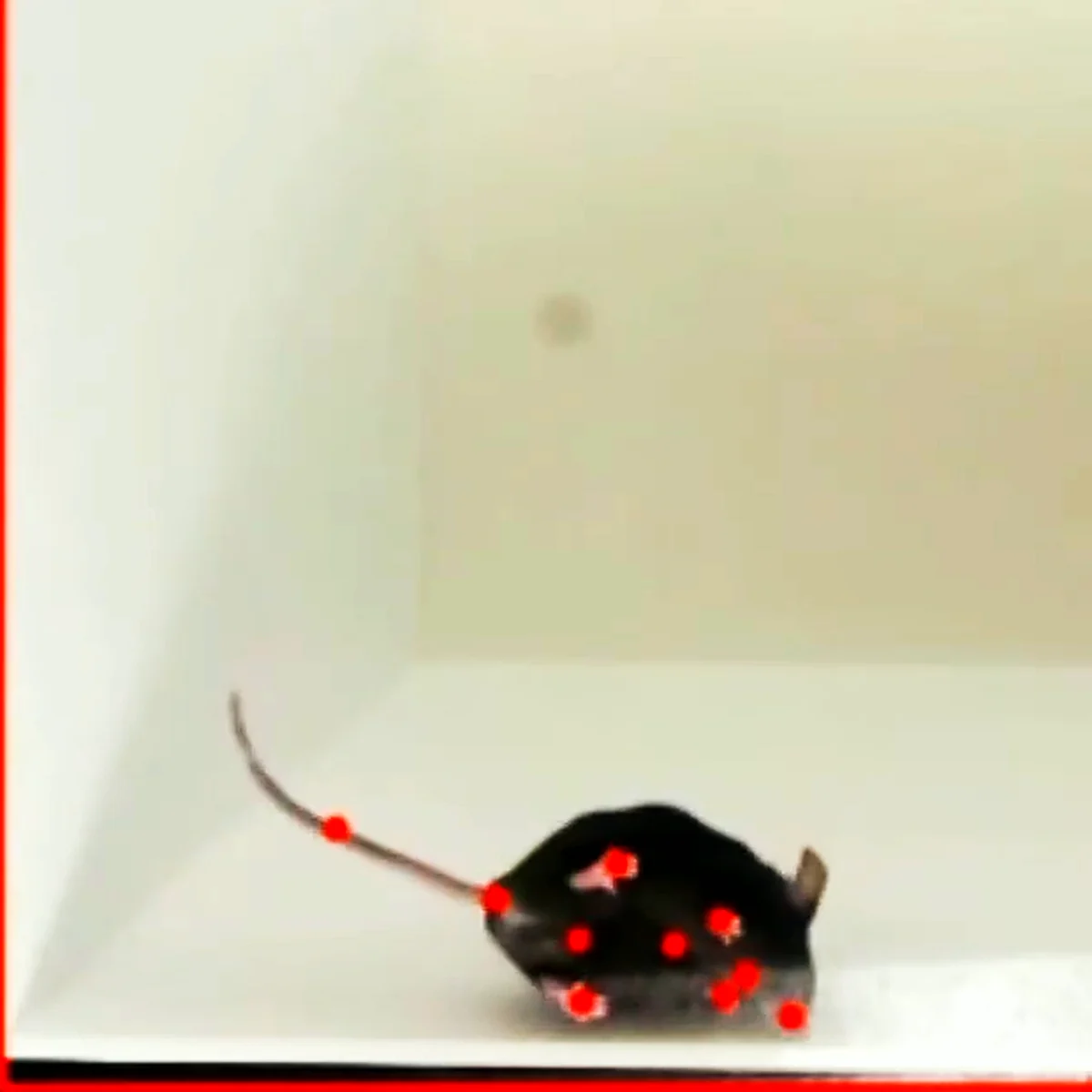
ConductVision is our video-tracking software. Record your sessions on video, and it scores standard rodent tests, such as those listed below.
To check whether ConductVision scores your protocol in this apparatus, ask in your quote request.
A 5-year license is $3,990 in total.
Results export as CSV files.
Send it over and we'll email you a personalized answer, with no call or scheduling.
Prefer to talk it through?
Enhance your setup with compatible accessories
Creator Insights
Gardner Lindzey (1920–2008) was an American social and personality psychologist who held appointments at Harvard, the University of Minnesota and the University of Texas at Austin, and later directed the Center for Advanced Study in the Behavioral Sciences at Stanford. In 1961, with Harold Winston and Martin Manosevitz, he published a brief Nature report showing that inbred mouse strains differ consistently in social dominance, measured by which mouse retreats when two are placed at opposite ends of a narrow tube. The paper established the tube test’s core scoring logic — the displaced mouse is the subordinate — and demonstrated its reliability across strains. The tube test has since become a standard assay of social hierarchy in models of autism, aggression and neurodevelopment.
To view Gardner Lindzey’s publications, visit PubMed.
Did you work with Gardner Lindzey? to suggest corrections or share material for these Creator Insights.
ConductScience celebrates method creators: researchers who, through rigorous and often ingenious experiments, develop the tools that reveal how the brain and body work. These are real scientific discoveries that become everyday instruments for the labs that follow.
Use this apparatus with
§ 1
The Tube Dominance Test measures social rank by recording which of two animals forces the other to back out of a narrow tube they enter from opposite ends. Lindzey and colleagues introduced the tube contest as a simple, repeatable index of social dominance among cage-mates. 1
The core readout is the win-loss ratio across pairings, which yields a rank order within a cage and, when run as a round-robin, a near-transitive hierarchy. The test became a standard assay for the neural basis of social dominance because contest outcomes are discrete, fast to score, and stable across repeated testing. 1
Body weight, prior social experience, tube diameter, side and start bias, and fatigue from repeated pairings all change contest outcomes independent of true rank. A defensible protocol balances start sides, fixes the tube diameter, schedules round-robin pairings, and tests rank stability across days before treating the order as a hierarchy. 1
§ 2
Round-robin tube contests with side-balancing, win and retreat scoring, and rank-stability checks.
Critical methodological constraints
Core tube-dominance endpoints for social rank, contest dynamics, and test-retest quality control.
Win Rate
Social rank
Match Duration
Contest intensity
Push Events
Active dominance
Retreat Events
Subordination
Rank Stability
Test-retest QC
+ Additional metrics: body weight, transitivity of the hierarchy, latency to first push, start side, tube diameter, and per-contest video notes.
A compact fraction of an animal's contests that ended in a win.
Estimate the N per group needed to detect a literature-anchored social-rank effect at the endpoint you plan to report. Override the defaults with your own pilot numbers.
§ 3
Representative output from a round-robin tube contest within a four-animal cage.
§ 4
Limitations of the paradigm, methodological caveats, and current directions.
Variables that can shift Tube Dominance Test results apart from the effect under study.
Heavier animals can win contests on mass rather than social rank. Report body weight and consider it as a covariate when groups differ in size.
Past winning or losing biases future contests through winner and loser effects. Document group history so experience does not masquerade as innate rank.
A bore that lets animals turn or pass changes the contest entirely.
A consistent start side can look like dominance. Balance start ends across pairings to cancel direction effects.
Many contests in close succession fatigue animals and shift later outcomes. Space pairings and randomize order across the round-robin.
The tube test is strongest when tube diameter, start sides, pairing schedule, and rank-stability checks are fixed before testing. A single round is a noisy index; balance start sides, run a round-robin, and confirm the order is stable across days, ideally cross-validating rank with an independent social assay. 1
A single round is noisy. Run a round-robin so every animal meets every cage-mate, then repeat across days and report rank stability before treating the order as a hierarchy.
It can. Heavier animals may win on mass rather than rank, so report body weight and consider it as a covariate when groups differ in size.
Balance which animal starts from which end across pairings. A consistent start side can mimic dominance, so alternating ends cancels the direction advantage.
Quarterly editorial review of emerging Tube Dominance Test methodology. Q2 2026
Full round-robin pairing with balanced start sides yields a near-transitive hierarchy that is more defensible than isolated pairwise contests.
Side-view video and automated detection of pushes and retreats reduce observer burden and capture contest dynamics beyond the win-loss outcome.
Reporting test-retest concordance across days is increasingly expected because a single round can misorder a cage by chance.
Tube-test rank is paired with warm-spot, ultrasonic, and barbering measures to confirm a hierarchy converges across independent social readouts.
§ 5
5 selected methods and validation studies of the Tube Dominance Test, from any lab.