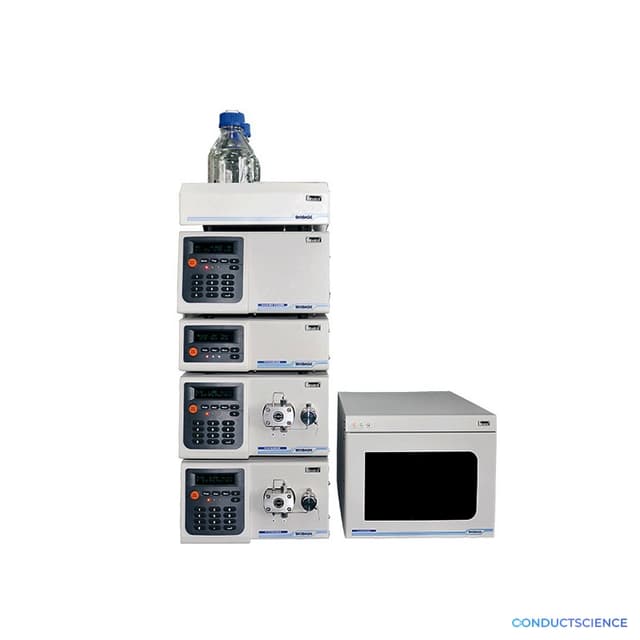
Ultra High Performance Liquid Chromatography System (Customized)
High-performance liquid chromatography system with customizable configuration for advanced separation and quantitative analysis of complex samples across research and analytical applications.
| Automation Level | semi-automated |
| Brand | ConductScience |

The Ultra High Performance Liquid Chromatography System (Customized) represents a comprehensive analytical platform designed for high-resolution separation and quantitative analysis of complex mixtures. This system integrates precision pumps, advanced column technology, and sensitive detection capabilities to deliver superior chromatographic performance across diverse analytical applications. The customized configuration allows researchers to tailor the system components to specific analytical requirements, optimizing separation efficiency and detection sensitivity for targeted compound classes.
Built for demanding laboratory environments, this UHPLC system operates at elevated pressures to accommodate sub-2-micron particle columns, enabling faster analysis times and enhanced peak resolution compared to conventional HPLC systems. The platform supports multiple detection modes and can be configured with various injector types, column compartments, and data acquisition systems to meet specific analytical protocols. Research teams benefit from the system's ability to handle complex biological matrices, environmental samples, and pharmaceutical formulations with high precision and reproducibility.
How It Works
Ultra High Performance Liquid Chromatography operates on the principle of differential partitioning of analytes between a mobile phase (solvent system) and a stationary phase (column packing material). The system pumps the mobile phase through a column packed with sub-2-micron particles at pressures up to 15,000 psi or higher, creating optimal conditions for enhanced mass transfer and reduced peak broadening. This high-pressure operation enables the use of smaller particle sizes, which dramatically improves separation efficiency according to the van Deemter equation.
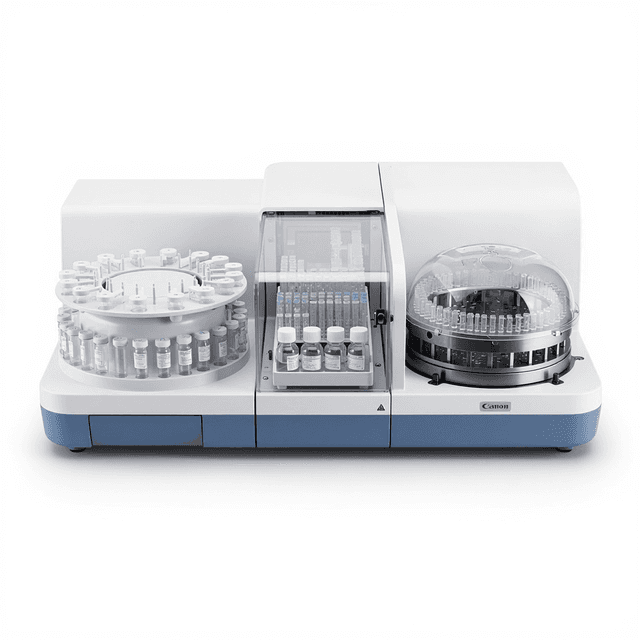
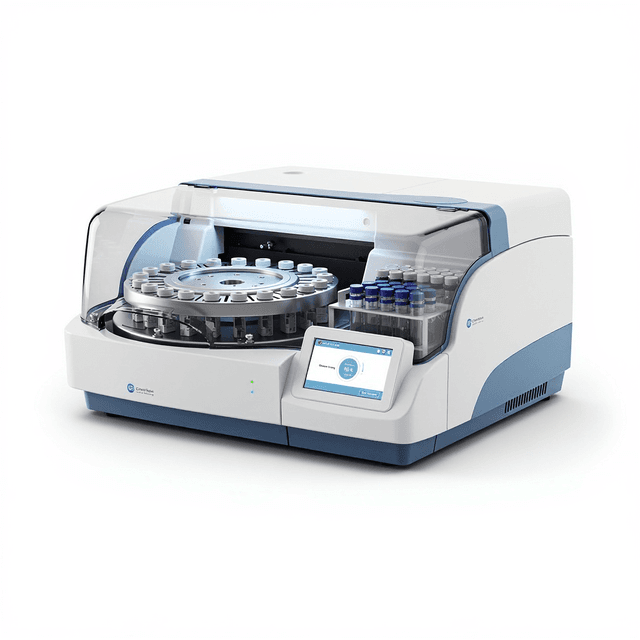
Sample introduction occurs through a high-pressure injection system that delivers precise volumes into the mobile phase stream. As the sample travels through the column, different compounds interact with the stationary phase to varying degrees based on their chemical properties, resulting in temporal separation. The separated analytes then pass through one or more detectors, which generate signals proportional to analyte concentration. Common detection methods include UV-visible absorbance, fluorescence, and mass spectrometry, each providing specific selectivity and sensitivity characteristics.
The customizable nature of this system allows researchers to optimize each component for their specific analytical needs, including pump configuration, injection system, column dimensions, detection wavelengths, and data acquisition parameters. This flexibility enables method development and validation across diverse sample types and analytical requirements.
Features & Benefits
Automation Level
- semi-automated
Brand
- ConductScience
Research Domain
- Analytical Chemistry
- Clinical Diagnostics
- Environmental Monitoring
- Food Science
- Materials Science
- Pharmaceutical QC
Weight
- 29.98 kg
Dimensions
- L: 42.0 mm
- W: 43.6 mm
- H: 38.0 mm
Comparison Guide
| Feature | This Product | Typical Alternative | Advantage |
|---|---|---|---|
| Operating Pressure Range | Consult product datasheet for pressure specifications | Entry-level systems often limited to 6,000-9,000 psi maximum pressure | Higher pressure capability enables use of smaller particle columns for enhanced separation efficiency and reduced analysis time. |
| Configuration Flexibility | Fully customizable pump, injector, column, and detector configuration | Fixed configurations with limited upgrade options | Customization allows optimization for specific analytical requirements and future method development needs. |
| Detection Options | Multi-detector compatibility including UV-Vis, fluorescence, and MS | Single detector systems or limited detector upgrade paths | Multiple detection modes provide comprehensive analyte characterization and method development flexibility. |
| Data System Integration | Integrated chromatography software with method development tools | Basic data acquisition with limited analysis features | Comprehensive software streamlines method development, sequence processing, and regulatory compliance documentation. |
This customized UHPLC system provides enhanced analytical performance through high-pressure operation, flexible configuration options, and integrated data management capabilities. The platform's customizable nature allows researchers to optimize system components for specific analytical challenges while maintaining upgrade flexibility for future requirements.
Practical Tips
Perform system suitability tests with retention time and peak area standards before each analytical sequence.
Why: Ensures system performance meets method requirements and provides documentation for quality control.
Flush the system with 100% organic solvent at the end of each day when using buffer-containing mobile phases.
Why: Prevents salt precipitation in fluidic pathways that can cause pressure buildup and system damage.
Allow 15-20 minutes for column and detector equilibration after mobile phase changes before sample analysis.
Why: Ensures stable baseline and reproducible retention times for accurate quantitative results.
Include quality control samples at regular intervals throughout analytical sequences to monitor system drift.
Why: Provides real-time assessment of system performance and enables correction for any analytical bias.
Monitor system pressure trends over time to identify developing issues before they affect analytical performance.
Why: Pressure changes often indicate column degradation, blockages, or pump seal wear that require attention.
Ensure adequate ventilation and use appropriate personal protective equipment when handling organic solvents.
Why: Protects operators from solvent vapor exposure and maintains safe laboratory working conditions.
Setup Guide
What’s in the Box
- UHPLC main unit with customized configuration (typical)
- Power cables and connection hardware (typical)
- Mobile phase tubing and fittings kit (typical)
- Sample vials and caps starter set (typical)
- System control software and license (typical)
- Installation and operation manuals (typical)
- Performance verification standards (typical)
- Warranty documentation (typical)
Warranty
ConductScience provides a comprehensive one-year manufacturer warranty covering all system components and technical support for installation, training, and method development assistance.
Compliance
What column types are compatible with this UHPLC system?
The system accommodates standard 2.1mm and 4.6mm ID columns with various lengths and particle sizes, including sub-2-micron particles for UHPLC applications. Column compatibility depends on pressure rating and end-fitting specifications.
How does the customization process work for specific analytical needs?
Customization involves selecting pump configuration, injection system capacity, detector types, and software modules based on your analytical requirements. Technical specialists work with you to optimize the system configuration for target analytes and sample matrices.
What maintenance intervals are recommended for optimal performance?
Routine maintenance includes daily system prime and purge, weekly mobile phase reservoir cleaning, monthly pump seal inspection, and quarterly detector lamp replacement as needed. Column replacement frequency depends on sample load and matrix complexity.
Can the system handle both gradient and isocratic separations?
Yes, the pump system supports both isocratic and gradient elution modes with precise solvent mixing capabilities. Gradient profiles can be programmed for complex separations requiring mobile phase composition changes during the run.
What data formats does the system export for regulatory compliance?
The data system exports results in multiple formats including PDF reports, Excel spreadsheets, and native chromatography data formats. Electronic signatures and audit trails can be enabled for 21 CFR Part 11 compliance when properly configured.
How does this system compare to conventional HPLC in terms of analysis time?
UHPLC typically reduces analysis time by 5-10x compared to conventional HPLC while maintaining or improving resolution, due to the ability to use smaller particle sizes and higher flow rates at elevated pressures.
Have a question about this product?
Accessories
Enhance your setup with compatible accessories
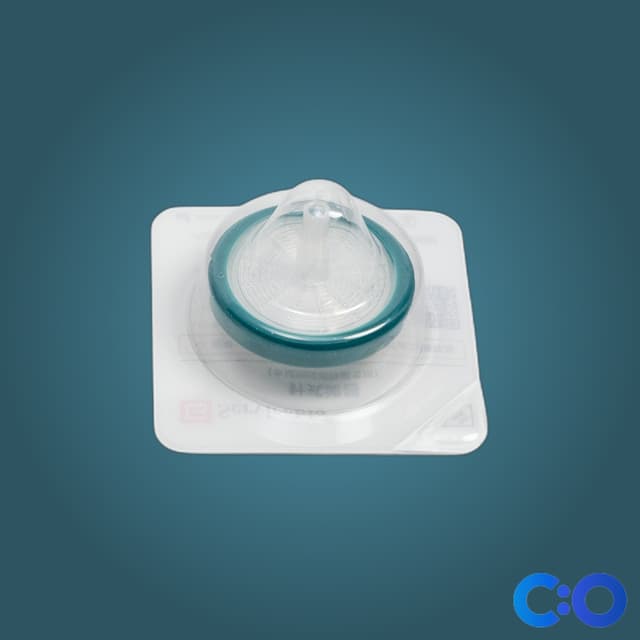
Frequently Bought Together