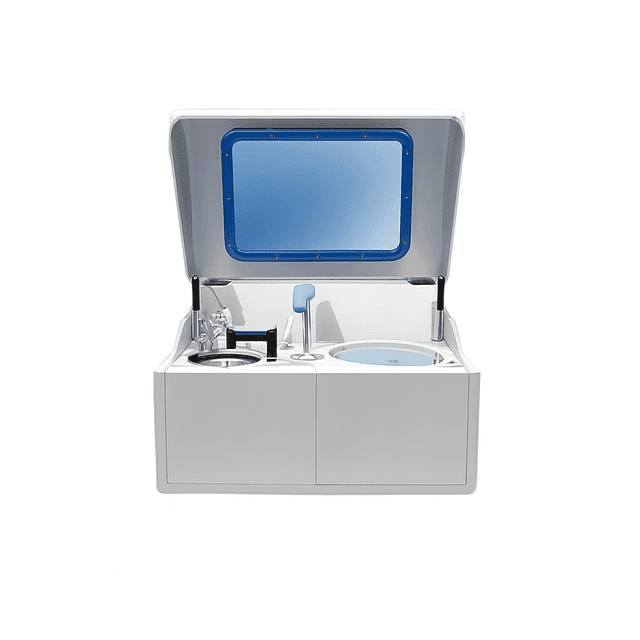
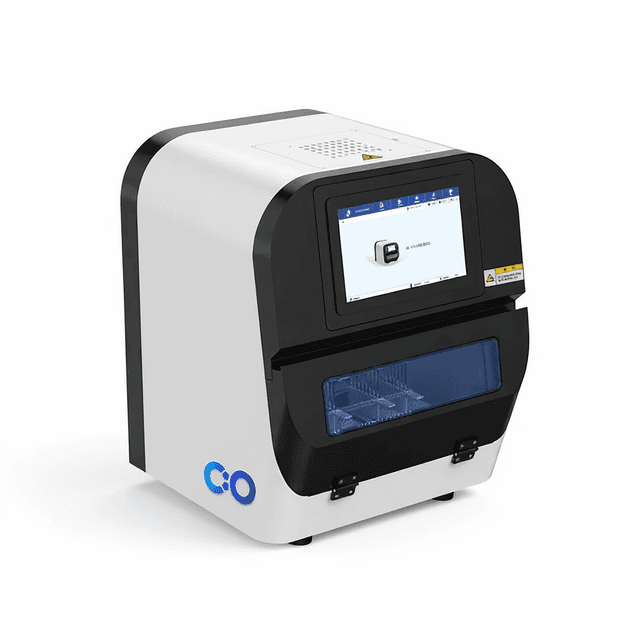
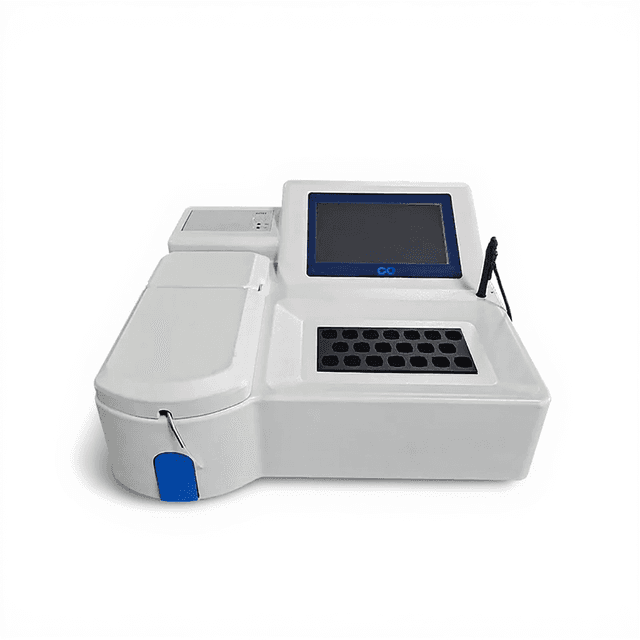
Automated Clinical Chemistry Analyzer — 360 Tests/Hour, Dual Probe
High-throughput clinical chemistry analyzer with dual-probe system processing 360 tests per hour for research applications requiring automated biochemical analysis.

Louise Corscadden, PhD
Director of Science · ConductScience
Ask Louise about Automated Clinical Chemistry Analyzer — 360 Tests/Hour, Dual Probe fit, setup, configuration, or quote prep.
Already working with us? Sign in to connect this with My Scientist.
Key Specifications
Full details →- Model fit
- Configured during quote
- SKU family
- BSN-0003
- Shipping box
- 22.6 x 18.8 x 15.1 cm
- Ordering
- Online checkout and quote request available
- Category
- Imaging & Analysis
- Build notes
- Confirm accessories, station layout, and support needs before purchase
The Automated Clinical Chemistry Analyzer delivers high-throughput analytical capabilities for research laboratories requiring rapid processing of clinical chemistry assays. This dual-probe system processes 360 tests per hour, enabling efficient analysis of large sample batches in research protocols. The instrument supports multiple analytical methodologies commonly employed in clinical chemistry research, including spectrophotometric, potentiometric, and turbidimetric measurements.
Designed for research use only, this analyzer provides automated sample handling, reagent dispensing, and measurement protocols that reduce manual intervention while maintaining analytical precision. The dual-probe configuration allows for simultaneous sample and reagent handling, optimizing throughput for time-sensitive research applications. The system accommodates standard laboratory sample containers and integrates with common laboratory information management systems for streamlined data handling.
How It Works
The analyzer employs photometric detection principles, utilizing monochromatic light sources to measure absorbance changes in reaction mixtures. Sample and reagent aliquots are precisely dispensed into reaction vessels where enzymatic or chemical reactions produce measurable color changes proportional to analyte concentration. The dual-probe system enables independent sample aspiration and reagent addition, allowing overlapping incubation and measurement cycles that maximize throughput.
Temperature-controlled reaction chambers maintain optimal conditions for enzymatic assays, while automated mixing ensures homogeneous reaction conditions. The optical system measures absorbance at specific wavelengths corresponding to reaction products, comparing sample readings against calibration curves generated from reference standards. Data processing algorithms account for sample blanks, reagent blanks, and interference corrections to ensure analytical accuracy.
The system's workflow management coordinates sample identification, reagent selection, incubation timing, and measurement sequences. Quality control samples are processed alongside test samples to monitor analytical precision and detect systematic errors. Results are automatically calculated using stored calibration curves and flagged for manual review when values exceed expected ranges or quality control limits.
Features & Benefits
Instrument Type
- Clinical Chemistry Analyzer
Throughput
- 360 tests/hour
Probes
- Dual
Use
- Research Use Only
Automation Level
- fully-automated
Brand
- ConductScience
Research Domain
- Aging Research
- Analytical Chemistry
- Cardiovascular
- Metabolic Research
- Pharmaceutical QC
- Toxicology
Shipping weight
- 4.41 lb
Shipping box
- L: 22.6 cm
- W: 18.8 cm
- H: 15.1 cm
| Feature | This Product | Typical Alternative | Advantage |
|---|---|---|---|
| Throughput Capacity | 360 tests per hour | Entry-level analyzers often provide 100-200 tests per hour | Higher throughput reduces analysis time for large research studies and enables same-day results for time-sensitive protocols. |
| Probe Configuration | Dual-probe system | Single-probe systems are common in basic analyzers | Dual probes enable simultaneous sample and reagent handling, improving efficiency and reducing cross-contamination risk. |
| Automation Level | Fully automated operation | Semi-automated systems require manual intervention | Full automation reduces operator time and minimizes manual errors in high-volume research applications. |
| Application Focus | Clinical chemistry research applications | General-purpose spectrophotometers have broader applications | Specialized design optimizes performance for biochemical assays commonly used in clinical and pharmaceutical research. |
This analyzer combines high-throughput processing capabilities with automated sample handling designed specifically for clinical chemistry research applications. The dual-probe configuration and 360 tests per hour capacity provide efficient processing for laboratories requiring rapid turnaround of biochemical analyses.
Practical Tips
Process calibrators and samples at similar temperatures to minimize matrix effects on photometric measurements.
Why: Temperature variations can affect reaction kinetics and optical properties, potentially introducing systematic bias.
Perform probe cleaning cycles between different assay types to prevent reagent interference.
Why: Residual reagents from previous assays can cause false results or reduced sensitivity in subsequent measurements.
Include quality control samples at the beginning, middle, and end of each analytical run.
Why: Regular quality control monitoring detects analytical drift and ensures consistent performance throughout extended analysis sessions.
Review reaction kinetics and endpoint measurements for samples that produce results outside expected ranges.
Why: Abnormal reaction patterns may indicate sample interference, reagent degradation, or instrument malfunction.
Monitor reagent volume levels and expiration dates to prevent analysis interruptions and result variability.
Why: Insufficient reagent volumes or degraded reagents can cause incomplete reactions and erroneous results.
Ensure proper ventilation around the instrument to manage reagent vapors and maintain optimal operating conditions.
Why: Adequate ventilation protects operators from chemical exposure and prevents condensation that could affect optical measurements.
Establish sample processing schedules that account for reagent stability and assay-specific requirements.
Why: Some analytes degrade rapidly while others require specific timing intervals for optimal measurement accuracy.
Setup Guide
What’s in the Box
- Clinical chemistry analyzer main unit
- Dual probe assembly
- Sample racks and positioning guides
- Reagent bottle holders
- Waste collection containers
- Power cable and interface cables
- User manual and installation guide
- System software and drivers (typical)
- Calibration verification materials (typical)
Warranty
ConductScience provides a one-year manufacturer warranty covering parts and technical support. Extended service plans and calibration services are available to maintain analytical performance and measurement traceability.
Compliance
What sample volume is required for each test?
Sample volume requirements depend on the specific assay panel and analytical methodology employed. Consult the reagent package inserts and instrument specifications for minimum sample volumes for your intended test protocols.
How frequently does the system require calibration?
Calibration frequency varies by analyte stability and laboratory quality control requirements. Most clinical chemistry assays require calibration every 24 hours or after reagent changes, with some stable assays extending to weekly calibration intervals.
Can the analyzer process serum, plasma, and urine samples?
The system accommodates standard clinical sample types including serum, plasma, and urine. Sample-specific protocols may require different dilution factors or processing parameters depending on the analyte and matrix effects.
What data output formats are supported?
The analyzer typically provides data export in standard laboratory formats including CSV, LIS communication protocols, and database-compatible formats. Consult product specifications for specific connectivity options and data management capabilities.
How does the dual-probe system prevent carryover?
The dual-probe design includes independent wash cycles between samples, using appropriate wash solutions to minimize analyte carryover. System validation should include carryover testing for your specific analytical methods.
What maintenance procedures are required?
Routine maintenance includes daily probe cleaning, weekly fluidics system cleaning, and periodic replacement of tubing and seals. Follow manufacturer maintenance schedules to ensure optimal analytical performance and system longevity.
Can custom assays be programmed into the system?
The analyzer typically supports user-programmable assay parameters for research applications. Programming capabilities may include custom reaction protocols, measurement timing, and calculation algorithms. Consult technical specifications for programming limitations.
Have a question about this product?
Have a question? Just ask.
Send it over and we'll email you a personalized answer — no call, no scheduling.
Prefer to talk it through?
Accessories
Enhance your setup with compatible accessories