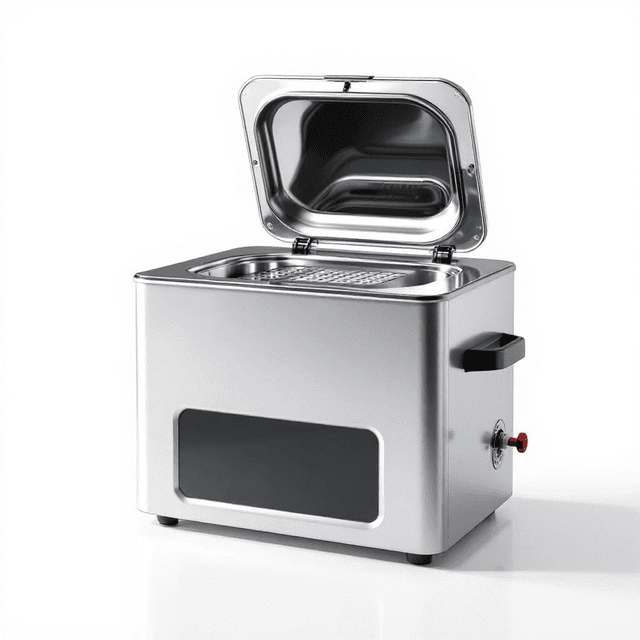
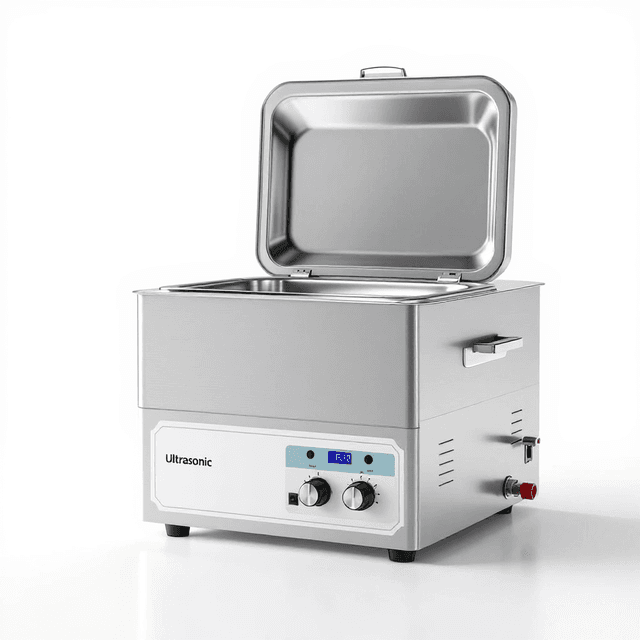
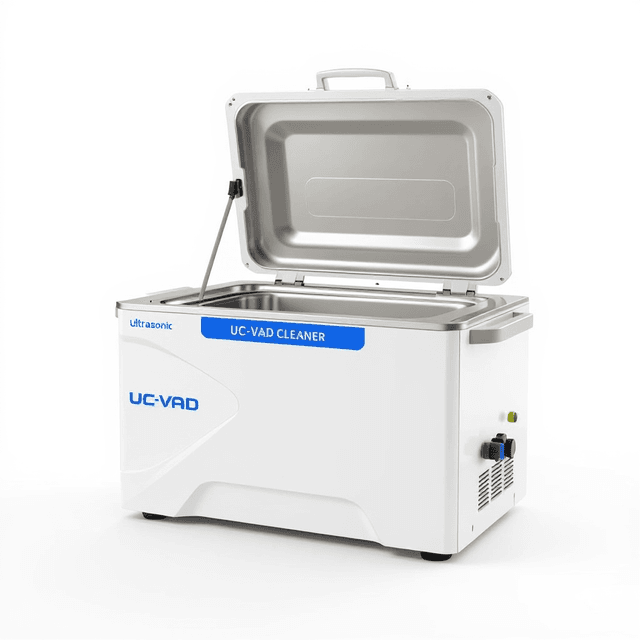
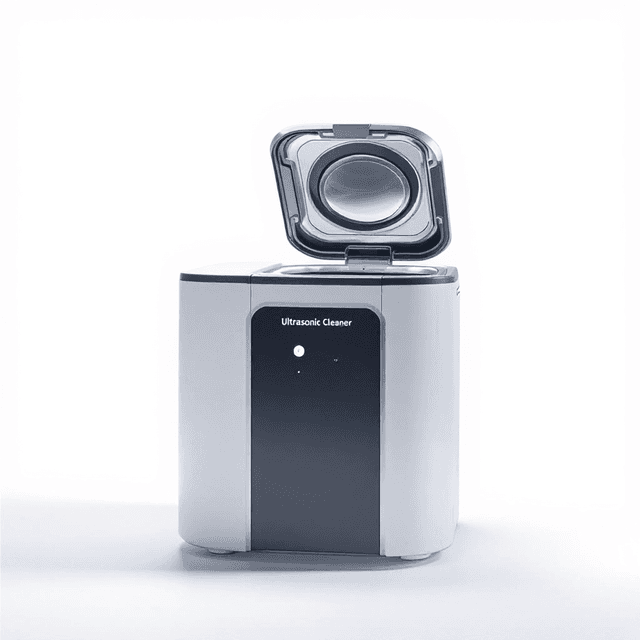
Ultrasonic Cleaner Double Adjustable Frequencies Type
Multi-frequency ultrasonic cleaning system with adjustable parameters and temperature control for laboratory instrument and glassware decontamination.

Louise Corscadden, PhD
Director of Science · ConductScience
Ask Louise about Ultrasonic Cleaner Double Adjustable Frequencies Type fit, setup, configuration, or quote prep.
Already working with us? Sign in to connect this with My Scientist.
Key Specifications
Full details →- Model fit
- Configured during quote
- SKU family
- BIO-0705
- Shipping box
- 19.69 x 11.81 x 7.09 cm
- Ordering
- Online checkout and quote request available
- Category
- Cleaners
- Build notes
- Confirm accessories, station layout, and support needs before purchase
The Ultrasonic Cleaner Double Adjustable Frequencies Type provides precision cleaning capabilities for laboratory glassware, instruments, and components through high-frequency acoustic cavitation. This system features dual frequency operation with adjustable parameters, allowing researchers to optimize cleaning protocols for different materials and contamination types. Multiple tank configurations accommodate varying sample volumes and throughput requirements.
The system incorporates both heating and timing controls, enabling standardized cleaning protocols essential for reproducible research outcomes. Digital frequency adjustment allows fine-tuning of cavitation intensity to match specific cleaning requirements while preventing damage to delicate instruments. Temperature control up to 80°C enhances cleaning efficacy for stubborn residues commonly encountered in analytical and synthetic chemistry applications.
How It Works
Ultrasonic cleaning operates through acoustic cavitation, where high-frequency sound waves create alternating high and low pressure cycles in the cleaning solution. During low-pressure phases, microscopic bubbles form throughout the liquid. When pressure increases, these bubbles collapse violently, creating localized high-energy implosions that generate cleaning action at surfaces.
The dual frequency capability allows optimization of bubble size and collapse intensity. Lower frequencies (around 25-40 kHz) produce larger bubbles with more aggressive cleaning action suitable for heavy contamination, while higher frequencies generate smaller bubbles providing gentler cleaning for delicate surfaces. Temperature control enhances molecular activity in the cleaning solution, improving solvent action and reducing surface tension for more effective contaminant removal.
Digital frequency adjustment enables precise control over cavitation patterns, allowing researchers to match cleaning intensity to specific materials and contamination types while avoiding damage to sensitive instrument surfaces or coatings.
Features & Benefits
Automation Level
- semi-automated
Adjustable Ultrasonic Frequency(KHz)
- Time Range/Heating Temp
UC-30SDG
- 13
45
- 80
1~480min/0~80°C
- 300
400
- 300*150*150
840*670*730
- 73
UC-50SD
- 27
500
- 800
500*300*180
- 1100*690*800
UC-60ST
- 27
600
- 800
UC-70ST
- 27
700
- 800
UC-20SD
- 6
Brand
- ConductScience
Research Domain
- Analytical Chemistry
- Clinical Diagnostics
- Environmental Monitoring
- Materials Science
- Microbiology
- Pharmaceutical QC
Shipping weight
- 12.63 lb
Shipping box
- L: 19.69 cm
- W: 11.81 cm
- H: 7.09 cm
| Feature | This Product | Typical Alternative | Advantage |
|---|---|---|---|
| Frequency Adjustment | Dual adjustable frequency operation with digital control | Single fixed frequency operation | Enables optimization of cleaning intensity for different materials and contamination types in a single unit |
| Temperature Control | Adjustable heating up to 80°C with digital control | Room temperature operation only | Enhanced cleaning efficacy for temperature-stable contamination and faster processing times |
| Tank Capacity Options | Multiple configurations from 13L to 27L capacity | Single capacity models | Accommodates different throughput requirements and laboratory space constraints |
| Timing Control | 1-480 minute digital timer control | Limited timing options or manual monitoring | Precise cycle control for reproducible cleaning protocols and unattended operation |
| Power Settings | Multiple power configurations from 300W to 800W | Fixed power output | Scalable cleaning intensity matching application requirements and energy efficiency |
The system provides comprehensive cleaning parameter control through dual frequency adjustment, temperature control, and precise timing capabilities. Multiple configuration options accommodate diverse laboratory requirements from precision instrument cleaning to high-throughput glassware processing.
Practical Tips
Degas fresh cleaning solutions for 5-10 minutes before adding items to optimize cavitation effectiveness.
Why: Dissolved gases interfere with bubble formation and reduce cleaning efficiency.
Verify temperature accuracy monthly using calibrated thermometer in operating solution.
Why: Temperature control precision affects cleaning reproducibility and protocol validation.
Clean tank thoroughly after each use and inspect transducers for deposits or damage.
Why: Residue buildup reduces ultrasonic transmission efficiency and can cause uneven cleaning.
Document cleaning parameters and results for each protocol to establish validated procedures.
Why: Consistent documentation enables protocol optimization and regulatory compliance verification.
Ensure adequate ventilation when using volatile solvents and maintain proper solution levels during operation.
Why: Prevents solvent vapor accumulation and protects transducers from dry operation damage.
If cleaning effectiveness decreases, check solution contamination levels and replace when visibly dirty or after multiple cycles.
Why: Contaminated solutions reduce cleaning efficiency and can redeposit contaminants on cleaned items.
Use appropriate baskets or holders to prevent item contact with tank walls and optimize ultrasonic energy transmission.
Why: Direct contact with tank walls can cause damage and creates acoustic dead zones reducing cleaning effectiveness.
Setup Guide
What’s in the Box
- Ultrasonic cleaner main unit (typical)
- Power cord (typical)
- Cleaning basket or holder (typical)
- User manual and operation guide (typical)
- Warranty documentation (typical)
Warranty
ConductScience provides standard one-year manufacturer warranty covering defects in materials and workmanship, with technical support for operation and maintenance guidance.
Compliance
What cleaning solutions are compatible with the ultrasonic system?
The system accommodates aqueous and solvent-based cleaning solutions. Consult product datasheet for specific chemical compatibility and recommended solution types for different applications.
How do I select appropriate frequency settings for different materials?
Lower frequencies provide more aggressive cleaning for heavy contamination, while higher frequencies offer gentler action for delicate surfaces. Start with manufacturer recommendations and adjust based on cleaning effectiveness and material tolerance.
What maintenance procedures are required for consistent performance?
Regular tank cleaning, transducer inspection, and solution replacement are essential. Degassing fresh solutions before use optimizes cavitation effectiveness.
Can the system handle temperature-sensitive materials?
Yes, temperature control allows room temperature operation for sensitive materials, with gradual heating capability up to 80°C for enhanced cleaning of temperature-tolerant items.
How do I validate cleaning effectiveness for critical applications?
Implement standardized test contamination and analytical verification methods. Document cleaning parameters and results for protocol validation and regulatory compliance.
What factors affect cleaning cycle timing requirements?
Contamination type, material properties, solution chemistry, and frequency settings all influence required cleaning time. Start with recommended protocols and adjust based on cleaning verification results.
Is the system suitable for cleaning precision analytical instruments?
Yes, adjustable frequency and power settings enable gentle cleaning suitable for precision instruments while maintaining effective contamination removal.
Have a question about this product?
Have a question? Just ask.
Send it over and we'll email you a personalized answer — no call, no scheduling.
Prefer to talk it through?
Accessories
Enhance your setup with compatible accessories