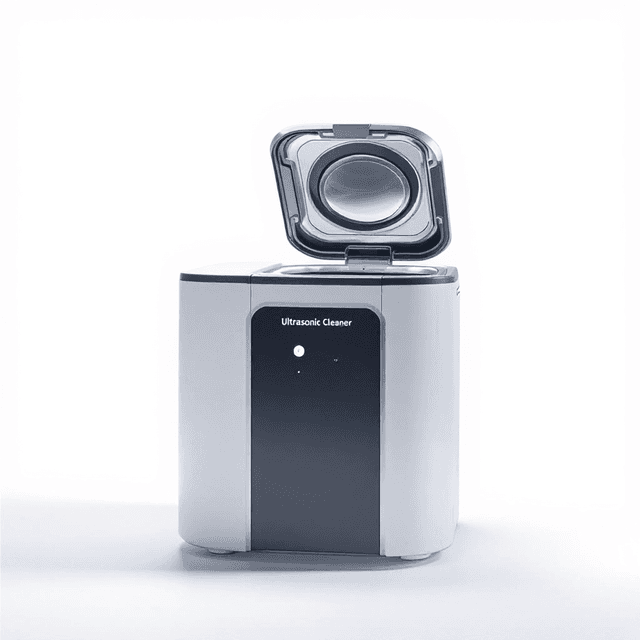
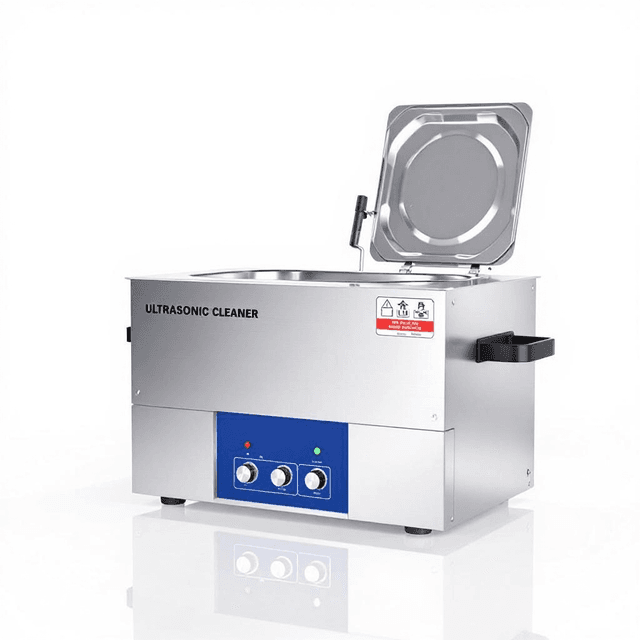
Ultrasonic Cleaner UC-VAD Series
Dual-frequency ultrasonic cleaning system (28/40 kHz) with temperature control and programmable timing for research laboratory glassware and instrument decontamination.

Louise Corscadden, PhD
Director of Science · ConductScience
Ask Louise about Ultrasonic Cleaner UC-VAD Series fit, setup, configuration, or quote prep.
Already working with us? Sign in to connect this with My Scientist.
Key Specifications
Full details →- Model fit
- Configured during quote
- SKU family
- BIO-0701
- Shipping box
- 11.81 x 5.91 x 5.91 cm
- Ordering
- Online checkout and quote request available
- Category
- Cleaners
- Build notes
- Confirm accessories, station layout, and support needs before purchase
The ConductScience UC-VAD Series represents a dual-frequency ultrasonic cleaning system designed for research laboratory applications requiring precise contamination removal from delicate instruments and glassware. Operating at both 28 kHz and 40 kHz frequencies, the system provides comprehensive cleaning capabilities across different material types and contamination levels through controlled cavitation processes.
Available in four capacity configurations (6.5L, 10L, 15L, and 22.5L), the UC-VAD series integrates temperature-controlled heating (RT to 80°C) with programmable timing (1-99 minutes) to optimize cleaning protocols for various research applications. The system's variable ultrasonic power output ranges from 180W to 600W depending on model selection, enabling researchers to scale cleaning intensity based on specific contamination challenges and substrate sensitivity requirements.
How It Works
Ultrasonic cleaning operates through acoustic cavitation, where high-frequency sound waves (28 kHz and 40 kHz) create alternating high and low pressure cycles in the cleaning solution. During low-pressure phases, microscopic vapor bubbles form in the liquid, which then collapse violently during high-pressure phases, generating localized energy release of approximately 5000K temperature and 1000 atmospheres pressure at the bubble collapse sites.
The dual-frequency operation provides complementary cleaning mechanisms: 28 kHz generates larger cavitation bubbles suitable for removing bulk contamination and particles, while 40 kHz produces smaller bubbles that penetrate into microscopic crevices and surface irregularities. The integrated heating system (RT-80°C) reduces solution viscosity and enhances cavitation efficiency, while also activating cleaning chemistry for improved contaminant solubilization.
Programmable timing control (1-99 minutes) allows optimization of exposure duration based on contamination type and substrate material sensitivity, preventing over-cleaning that could damage delicate surfaces while ensuring complete contaminant removal for critical research applications.
Features & Benefits
Automation Level
- semi-automated
UC-24VAD
- UC-36VAD
UC-48VAD
- UC-60VAD
Capacity(L)
- 6.5
10
- 15
22.5
- 30
Ultrasonic Frequency
- Double frequency, 28/40khz
Time Range/Heating Temperature
- 1~99min/RT~80℃
Ultrasonic Power
- 180W
240W
- 360W
480W
- 600W
Heating Power
- 500W
Tank Size(mm)
- 300*150*150
300*240*150
- 330*300*150
Brand
- ConductScience
Research Domain
- Analytical Chemistry
- Cell Biology
- Environmental Monitoring
- Materials Science
- Microbiology
- Pharmaceutical QC
Power/Voltage
- 220V, 50Hz
Shipping weight
- 3.15 lb
Shipping box
- L: 11.81 cm
- W: 5.91 cm
- H: 5.91 cm
| Feature | This Product | Typical Alternative | Advantage |
|---|---|---|---|
| Frequency Options | Dual-frequency operation at 28/40 kHz | Single frequency operation, commonly 40 kHz only | Enables optimization for both bulk contamination removal and fine-scale cleaning in a single system. |
| Temperature Control Range | Room temperature to 80°C with 500W heating | Limited or no temperature control in basic models | Allows protocol optimization through enhanced cleaning chemistry activation and solution viscosity reduction. |
| Capacity Range | Four models from 6.5L to 22.5L capacity | Fixed capacity options with fewer size choices | Accommodates different laboratory scales and throughput requirements within a single product series. |
| Power Scalability | 180W to 600W ultrasonic power across models | Fixed power output regardless of tank size | Maintains optimal power density and cleaning intensity across different capacity configurations. |
| Timer Programming | 1-99 minute programmable timing control | Basic timer functions or manual operation | Enables precise protocol standardization and prevents over-cleaning of sensitive materials. |
The UC-VAD series combines dual-frequency operation with integrated temperature control and scalable capacity options for comprehensive laboratory cleaning applications. The system's programmable parameters and power scalability provide protocol optimization capabilities across different contamination challenges and laboratory throughput requirements.
Practical Tips
Verify temperature accuracy using an independent thermometer and adjust heating parameters if readings deviate from setpoint.
Why: Accurate temperature control ensures consistent cleaning chemistry activation and reproducible results.
Clean tank surfaces weekly with appropriate solvents to prevent contamination buildup and maintain cavitation efficiency.
Why: Residue accumulation on tank walls and transducers reduces acoustic energy transmission and cleaning performance.
Pre-rinse heavily contaminated items before ultrasonic cleaning to prevent excessive solution contamination.
Why: Reduces cleaning solution replacement frequency and maintains consistent performance throughout cleaning cycles.
Document cleaning parameters (frequency, temperature, duration) for each protocol to ensure experimental reproducibility.
Why: Standardized cleaning procedures contribute to consistent baseline conditions for subsequent analytical measurements.
If cavitation activity appears reduced, check solution level and degassing status, as dissolved gases can dampen bubble formation.
Why: Proper solution preparation and filling ensure optimal acoustic energy transfer and cleaning effectiveness.
Always wear appropriate PPE when handling heated cleaning solutions and ensure adequate ventilation for volatile solvents.
Why: Elevated temperatures and ultrasonic agitation can increase solvent vapor generation requiring proper safety precautions.
Allow items to cool to room temperature before ultrasonic cleaning if they were previously heated above 80°C.
Why: Prevents thermal shock to tank materials and maintains optimal temperature control during cleaning cycles.
Setup Guide
What’s in the Box
- UC-VAD ultrasonic cleaner main unit
- Cleaning basket (typical)
- Power cord for 220V connection
- User manual and operating instructions
- Drain valve and fittings (typical)
Warranty
ConductScience provides a standard one-year manufacturer warranty covering defects in materials and workmanship, with technical support for operational guidance and troubleshooting assistance.
Compliance
What cleaning solutions are compatible with the dual-frequency operation?
The system accommodates aqueous detergent solutions, organic solvents, and specialized cleaning chemistries. Solution selection should consider temperature stability up to 80°C and compatibility with stainless steel tank construction.
How do I select between 28 kHz and 40 kHz frequencies for different applications?
Use 28 kHz for bulk contamination removal and larger particles, 40 kHz for fine residues and penetration into small crevices. Many protocols benefit from sequential use of both frequencies during the cleaning cycle.
What is the recommended loading capacity for optimal cleaning performance?
Load items to approximately 70% of tank volume to ensure adequate solution circulation and cavitation energy distribution. Avoid overcrowding which can create acoustic shadows and reduce cleaning efficiency.
Can temperature and ultrasonic action be controlled independently?
Yes, heating and ultrasonic functions operate independently, allowing researchers to pre-heat solutions before ultrasonic activation or maintain temperature during cleaning cycles as protocol requirements dictate.
What maintenance is required for consistent cleaning performance?
Regular tank cleaning with appropriate solvents, periodic replacement of cleaning solutions, and inspection of transducer surfaces for deposit buildup ensure maintained cavitation efficiency and cleaning performance.
How does tank size selection affect cleaning uniformity?
Larger tanks provide more uniform acoustic field distribution but may require higher power levels for equivalent cleaning intensity. Select tank size based on item dimensions and batch throughput requirements.
What safety considerations apply to heated ultrasonic operation?
Monitor solution temperature to prevent overheating of temperature-sensitive items, ensure adequate ventilation for solvent vapors, and use appropriate PPE when handling heated cleaning solutions.
Have a question about this product?
Have a question? Just ask.
Send it over and we'll email you a personalized answer — no call, no scheduling.
Prefer to talk it through?
Accessories
Enhance your setup with compatible accessories
Frequently Bought Together
Upgrade Options